
Jump to Recipe
Lampredotto is the street food Florence is most serious about. You find it at the buca, the white-tiled kiosks dotted across the city, where the trippaio serves it from a dented pot that never fully cools down.
The cut is the abomasum, the fourth and final stomach of the cow. It has a darker, softer texture than the more common cagliola or reticolo tripe, and it cooks down to something genuinely tender rather than rubbery if you give it enough time.
The classic presentation is in a semelle, a plain Florentine bread roll, dipped briefly in the cooking broth on the bottom half so it soaks through without falling apart. It gets salsa verde on top, and often a spoonful of salsa piccante for heat.
You can absolutely make this at home. The technique is straightforward: a soffritto, a tomato base, a long low simmer. What you need most is time and a butcher willing to source lampredotto for you.
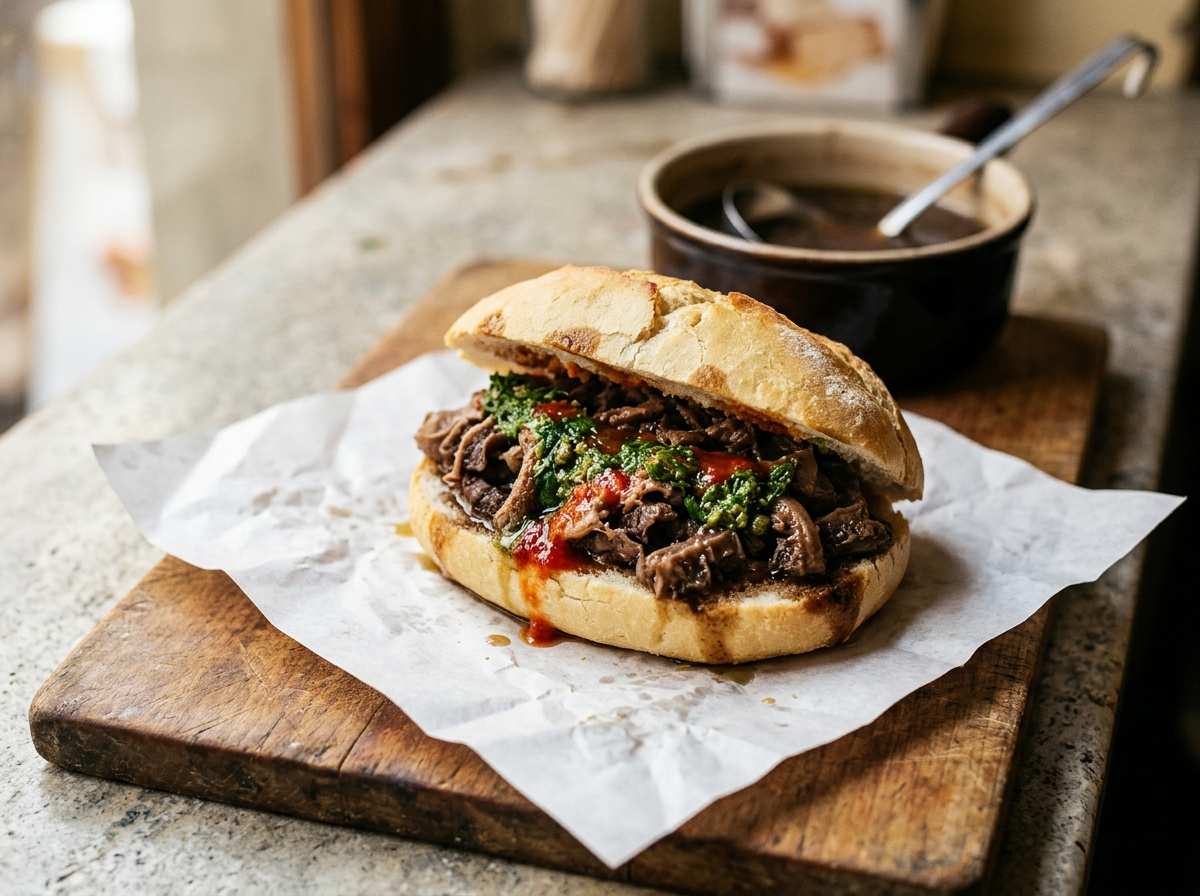
Why You’ll Love This Recipe
- Deep, savory broth you’ll want to eat separately as soup
- Authentic Florentine street food made in your own kitchen
- Budget cut that costs a fraction of premium beef
- Salsa verde brightens every rich, soft bite
Ingredient Notes
- Lampredotto (beef abomasum): Ask your butcher specifically for abomasum, the fourth stomach of the cow. It’s sold pre-cleaned and blanched in most Italian butcher shops. If unavailable, honeycomb tripe (reticolo) works but will have a firmer texture and milder flavor.
- Semelle rolls: A plain, slightly firm Florentine bread roll is the traditional vessel. A good ciabatta or a plain crusty hoagie roll works fine, just make sure the crumb is tight enough to hold up to a quick dip in broth.
- San Marzano tomatoes (canned): Whole peeled San Marzano tomatoes give the broth a clean acidity. Crushed regular tomatoes work, but the flavor will be slightly sharper.
- Salsa verde: Flat-leaf parsley, capers, anchovy, garlic, and olive oil blended roughly. I make it coarse rather than smooth so it has texture against the soft lampredotto. A small jar of store-bought salsa verde is a fair shortcut.
- Salsa piccante: The Florentine trippaio keeps a jar of chili-spiked tomato condiment on the counter. At home, harissa thinned with a little olive oil is close enough.
- Celery, carrot, white onion: The standard soffritto base. Cut them chunky since they’ll simmer for over an hour alongside the lampredotto and you’ll want to be able to fish them out.
Lampredotto Fiorentino: Florence’s Classic Tripe Sandwich
Ingredients
Method
- Combine the parsley, anchovy fillets, capers, and garlic in a small food processor. Pulse 4 to 5 times until roughly chopped.
- Add the olive oil and red wine vinegar. Pulse once more until you have a coarse, textured sauce, not a smooth paste. Season with a pinch of salt, taste, and set aside at room temperature for at least 30 minutes before serving.
- Stir together the tomato passata, chili, olive oil, and grated garlic in a small bowl. Season with salt. Leave to sit at room temperature while you cook the lampredotto.
- Heat the olive oil in a large heavy-bottomed saucepan over medium heat. Add the onion halves cut-side down, the celery, and the carrot. Cook for 5 to 6 minutes until the edges are pale gold and the onion is fragrant.
- Add the crushed garlic and parsley sprigs. Stir for 1 minute until the garlic is just fragrant but not browned.
- Pour in the crushed tomatoes and stir to coat the vegetables. Cook for 3 minutes until the tomato darkens slightly.
- Add the whole lampredotto to the pot. Pour in the water until the lampredotto is submerged by at least 3 cm. Bring to a simmer over medium-high heat, then reduce to the lowest setting.
- Simmer very gently, with the lid slightly ajar, for 90 to 120 minutes. The lampredotto is done when a fork slides through the thickest part with no resistance. Add a little boiling water if the level drops too low during cooking.
- Remove the lampredotto to a board. Taste the broth and adjust salt. Keep the broth at a low simmer on the stove.
- Slice the lampredotto across the grain into strips about 8 to 10 mm wide. Return the strips to the warm broth.
- Split each roll. Using tongs or a ladle, briefly dip the bottom half of each roll into the hot broth for 3 to 4 seconds until the crumb is moist but the roll still holds its shape.
- Use tongs to pile a generous amount of lampredotto strips onto the bottom of each roll, then spoon over a little extra broth to keep it juicy.
- Add a generous spoonful of salsa verde over the lampredotto. Add salsa piccante to taste. Close the sandwich and serve immediately, wrapped in paper if you want the full buca effect.
Notes
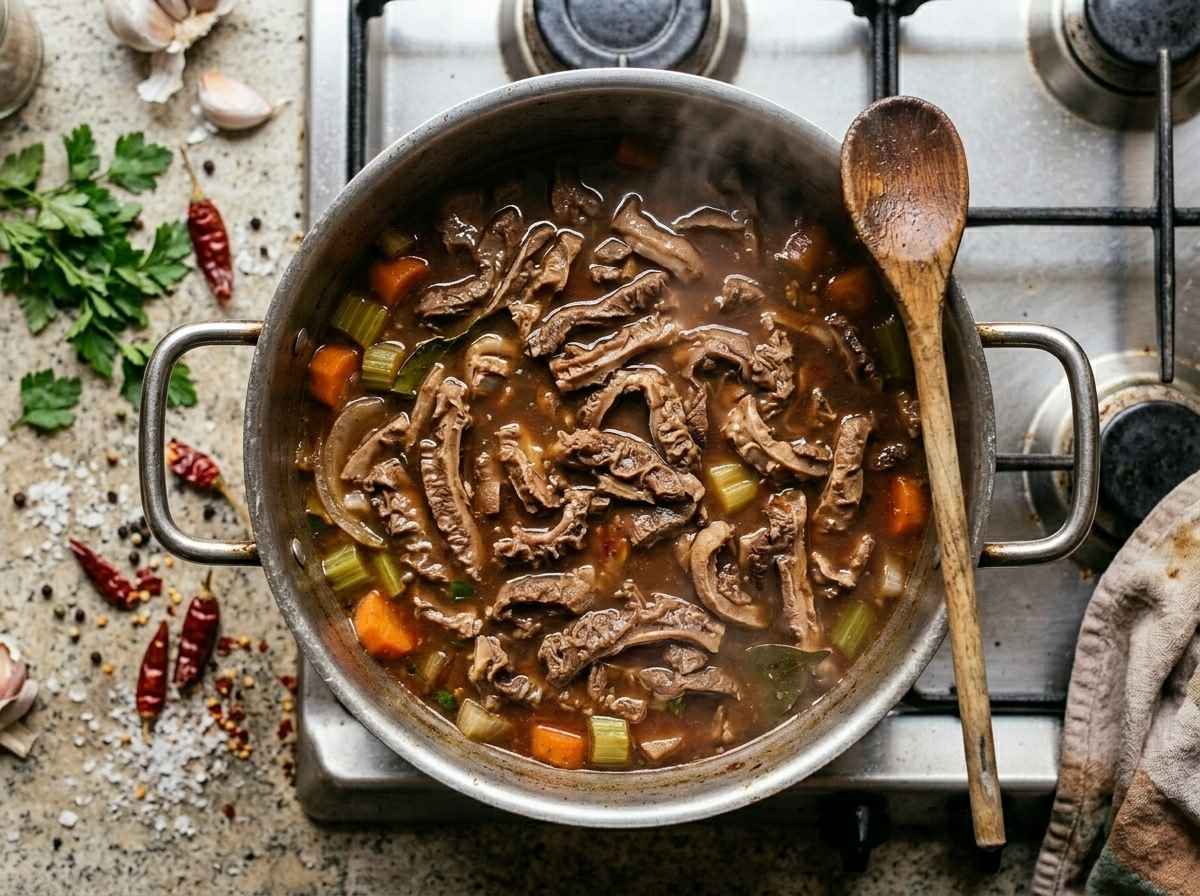
Tips for Success
- Simmer lampredotto at a bare bubble, never a rolling boil, to keep the texture silky rather than stringy.
- Dip only the bottom half of the roll into the hot broth for 3 to 4 seconds, enough to moisten without soaking.
- Slice the cooked lampredotto across the grain into strips no wider than 1 cm for the best mouthfeel in the sandwich.
- Taste the broth before serving and adjust salt only at the end, since the lampredotto releases its own saltiness as it cooks.
- Make the salsa verde at least 30 minutes before serving so the parsley flavor has time to mellow into the oil.
Variations
- Add a handful of borlotti beans to the broth in the last 20 minutes for a heartier, more filling version.
- Serve lampredotto without a roll, plated with white beans and a drizzle of cooking broth as a sit-down secondo.
- Stir a spoonful of salsa piccante directly into the broth for a spiced, arrabbiata-style braising liquid.
Storage and Reheating
Cooked lampredotto keeps in its broth in a sealed container in the fridge for up to 3 days. Store them together, not separately, or the meat dries out.
To reheat, bring the broth to a gentle simmer in a saucepan and let the sliced lampredotto warm through for 5 to 6 minutes. Avoid the microwave if you can, it toughens the texture.
The salsa verde should be made fresh or stored separately in the fridge for no more than 2 days, pressed flat with a layer of olive oil on top to keep it from oxidizing.
Serving Suggestions
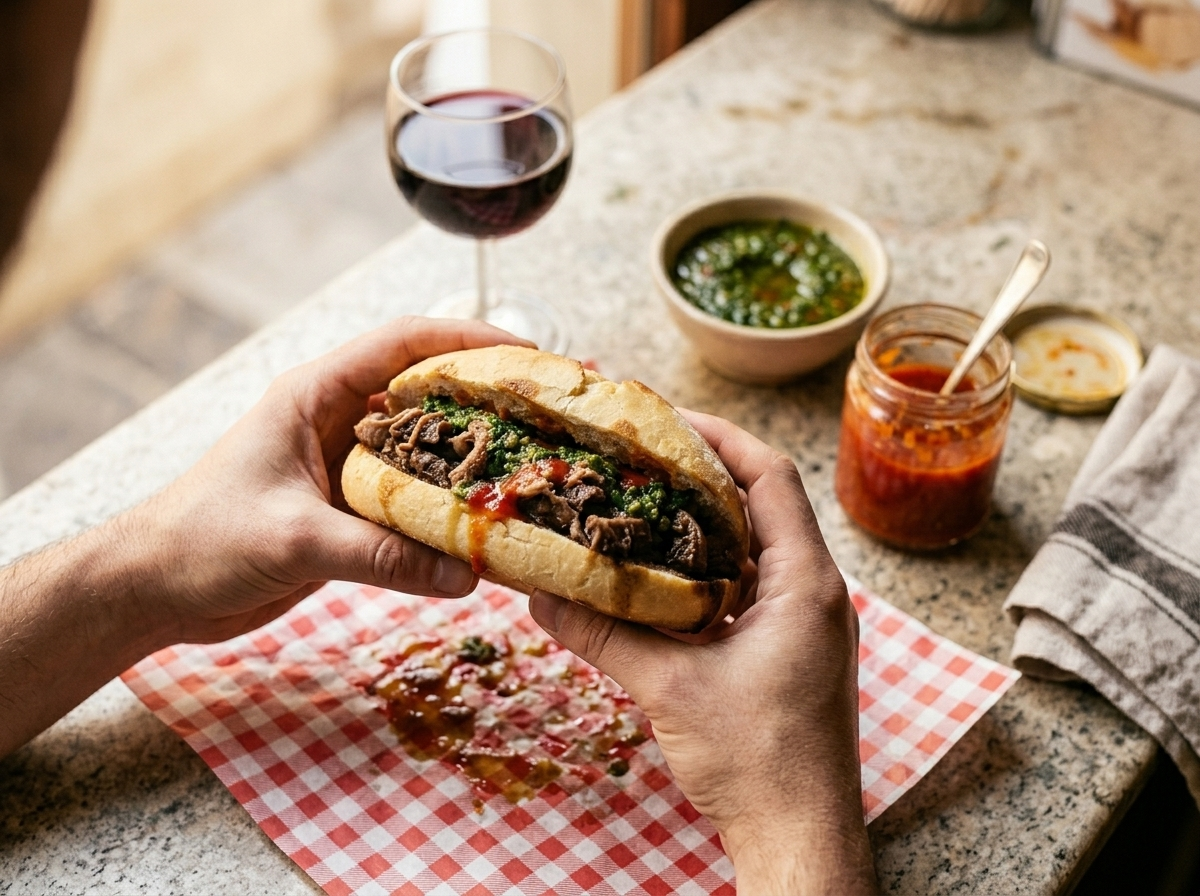
In Florence, this is eaten standing at the buca, the sandwich wrapped in white paper, with no plate. That’s the right way. Get the roll, dip the bottom half in the hot broth, load it with lampredotto, hit it with salsa verde and piccante, and eat it immediately.
If you’re serving it at a table, a glass of Chianti Classico or a simple Morellino di Scansano cuts through the richness well. A cold Peroni works just as well.
For a more structured meal, start with a light ribollita or a plate of crostini di fegatini, then serve the lampredotto as the main, the way you might anchor a spread that opens with something like Tuscan garlic-rubbed grilled bread. Keep the sides minimal, the sandwich is already a complete thing.
FAQ
Why does my lampredotto turn rubbery instead of silky?
The most common cause is simmering too hard. Lampredotto needs a very gentle, barely-moving bubble for at least 90 minutes to break down the connective tissue properly. If the pot is boiling actively, the texture tightens instead of relaxing.
Can I use honeycomb tripe instead of abomasum for this Florentine sandwich?
You can, but the result won’t be quite the same. Honeycomb tripe (reticolo) is firmer and milder than abomasum, so the sandwich loses some of that distinctive dark, rich flavor that defines lampredotto. It’s a workable substitute if abomasum isn’t available.
How do I know when the lampredotto is done cooking?
Pierce a thick piece with a fork and it should offer almost no resistance, the texture should feel like soft braised meat rather than chewy offal. At 90 minutes you’ll usually be close, but some pieces need up to 2 hours depending on thickness.
Can I freeze cooked lampredotto fiorentino?
Yes, freeze the lampredotto submerged in its strained broth in an airtight container for up to 2 months. Thaw overnight in the fridge and reheat gently in the broth on the stovetop. The texture holds reasonably well, though it softens slightly after freezing.
What is the difference between lampredotto and other types of Florentine tripe?
Lampredotto comes specifically from the abomasum, the fourth stomach of the cow, which is darker, softer, and more intensely flavored than the other three stomach types, the way offal-forward Italian cooking rewards patience, much like a slow Neapolitan beef and onion sauce rewards time over heat. Trippa alla fiorentina, the other famous Florentine tripe dish, uses the reticolo or cagliola, which are lighter in color and chewier.
Is lampredotto fiorentino gluten-free?
The simmered lampredotto itself is naturally gluten-free. The sandwich format is not, because it’s served in a wheat bread roll. To make a gluten-free version, serve the lampredotto in a bowl with its broth and salsa verde on the side.