Jump to Recipe
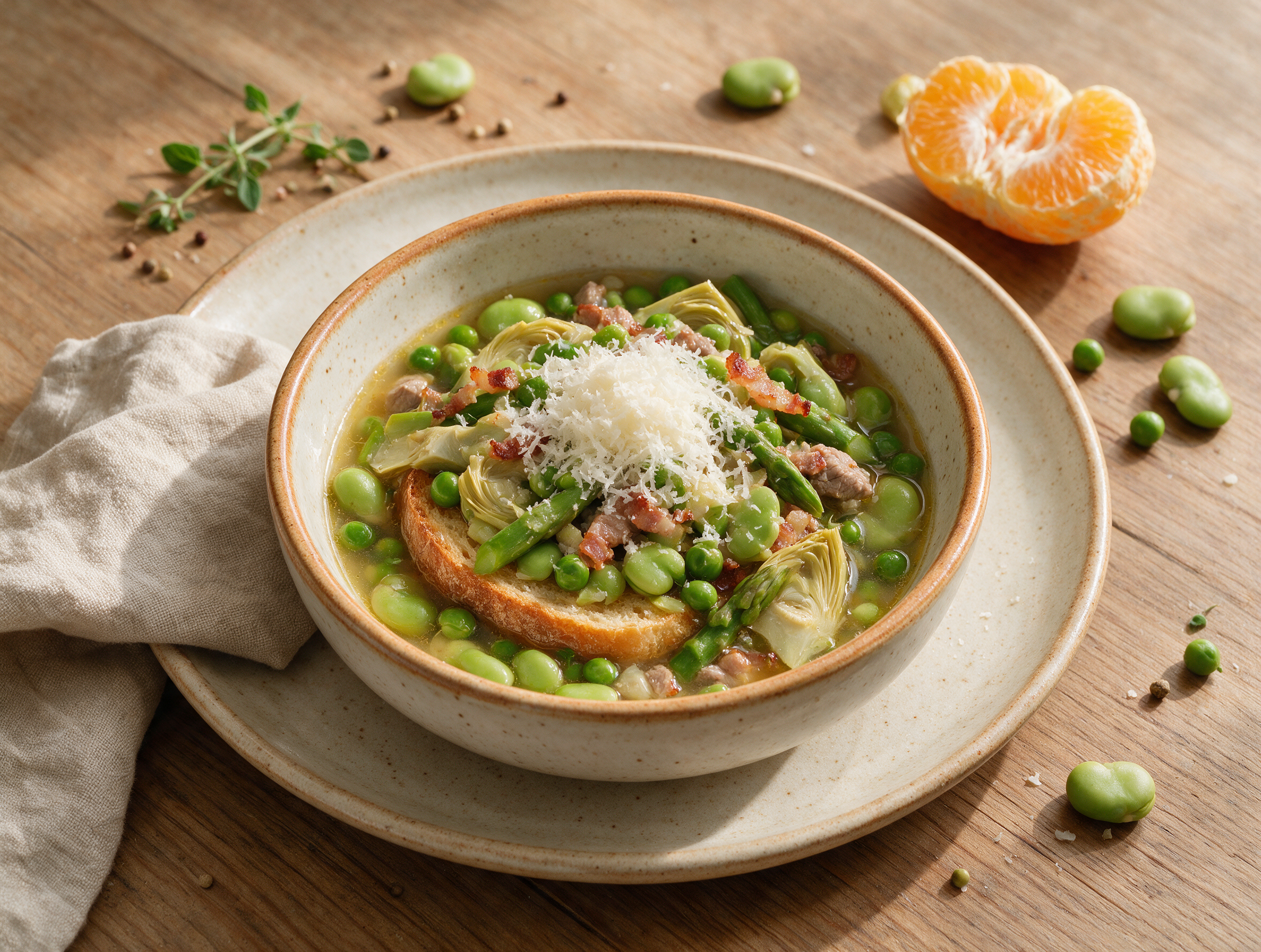
Garmugia lucchese is a spring vegetable soup from Lucca, Tuscany, built on fava beans, peas, artichokes, and asparagus, simmered with a little ground veal and pancetta for depth. It’s a broth, not a stew, so the vegetables stay separate and keep their color instead of melting into a puree.
The soup shows up in Lucca kitchens for a short window in April and May, when all four vegetables overlap in season. Outside that window, frozen fava beans and peas work fine, though fresh gives you a brighter, sweeter result.
The part cooks get wrong is timing. Simmer the vegetables too long and the fava beans turn gray and the artichokes go soft and grainy. Twelve to 15 minutes at a gentle simmer is the window, no more.
Serve it hot, ladled over a slice of toasted bread in each bowl, with grated parmesan on top and a drizzle of good olive oil.
Why You’ll Love This Recipe
- Celebrates spring vegetables without drowning them in broth
- Ready in about an hour with straightforward stovetop steps
- Keeps well in the fridge, tastes even better the next day
- Light enough for lunch, hearty enough with the bread and parmesan
Ingredient Notes
- olive oil: Use a fruity extra virgin olive oil since it’s the base fat for the soffritto and carries a lot of the flavor.
- pancetta: Diced pancetta adds salt and fat to start the pot. Guanciale works too if you have it on hand.
- ground veal: The traditional choice in Lucca. Lean ground beef substitutes fine if veal isn’t available.
- spring onions: Use the white and light green parts for a mild, sweet base. Regular onion works in a pinch but tastes sharper.
- fresh fava beans: Blanch and peel the tough outer skins before adding. Frozen shelled fava beans work when fresh ones are out of season.
- fresh peas: Sweeter than frozen, but frozen peas are a fine year-round swap with no blanching needed.
- baby artichokes: Trim the tough outer leaves and slice thin. Drop the slices into lemon water right after cutting so they don’t brown.
- asparagus: Trim the woody bottom inch before cutting into pieces, or it stays fibrous even after simmering.
- light broth: Chicken or vegetable broth keeps the vegetables as the main flavor instead of competing with a heavy stock.
- parsley: Stir in at the end for a fresh, grassy finish that fades if it cooks too long.
- crusty bread: Day-old bread toasts best and holds its shape under the hot broth instead of turning to mush.
- parmesan: Grate it right before serving for the best flavor and melt.
Garmugia Lucchese: Tuscan Spring Vegetable Soup
Ingredients
Method
- Shell the fava beans and peas. Blanch the fava beans in boiling water for 1 minute, drain, and slip off the tough outer skins once cool enough to handle.
- Trim the baby artichokes down to the tender pale leaves, slice thin, and drop the slices into a bowl of lemon water to stop browning.
- Trim the woody ends off the asparagus and cut the stalks into 2 cm pieces.
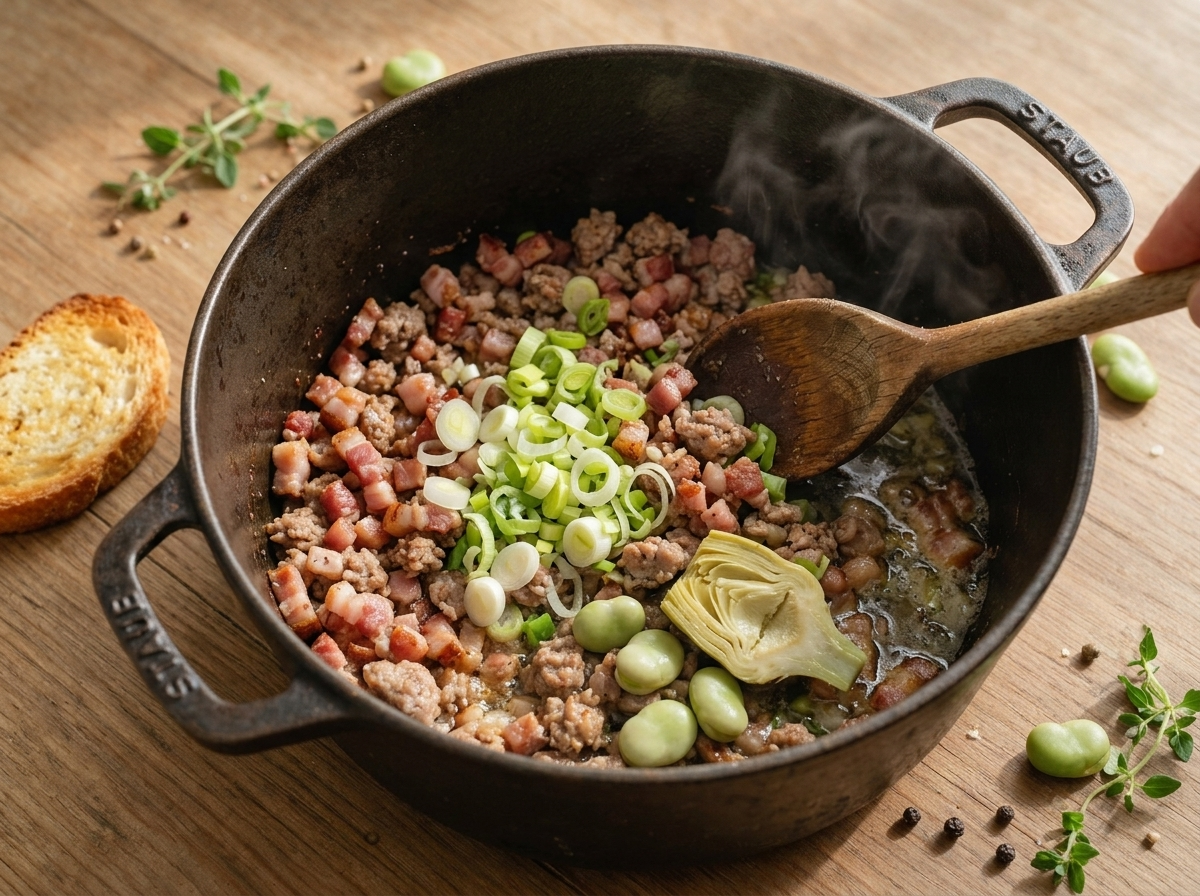
- Heat the olive oil in a 24 cm / 9.5-inch Dutch oven over medium heat. Add the pancetta and cook for 4 minutes, stirring, until the fat renders and the edges crisp slightly.
- Add the ground veal, breaking it up with a wooden spoon. Cook for 5 minutes until no longer pink.
- Stir in the spring onions and cook for 3 minutes until softened but not browned.
- Drain the artichoke slices and add them to the pot. Cook for 3 to 4 minutes, stirring occasionally.
- Pour in the broth, raise the heat, and bring to a gentle simmer.
- Add the asparagus, fava beans, and peas. Simmer for 12 to 15 minutes until the vegetables are fork-tender but still hold their shape.
- Season with salt and pepper, then stir in the chopped parsley off the heat.
- Toast the bread slices. Place one slice in each bowl, ladle the hot soup over it, and top with grated parmesan.
Notes
- Peel the fava beans after blanching if the skins feel tough or taste bitter.
- Don't skip acidulating the artichokes, they discolor fast once cut.
- Use a light broth, chicken or vegetable, so the vegetables stay the main flavor.
- Add peas and fava beans last so they don't overcook past tender.
Tips for Success
- Blanch and peel the fava beans if the skins taste bitter or feel leathery once cooked.
- Cut the artichokes thin and drop them into lemon water immediately to stop browning while you prep everything else.
- Brown the pancetta slowly to render the fat fully before adding the veal, don’t rush this step.
- Simmer the vegetables just 12 to 15 minutes so they stay tender but keep their color and shape.
- Toast the bread separately and ladle hot soup over it right before serving so it doesn’t turn soggy.
Variations
- Swap ground veal for lean ground beef, or leave out the meat and use vegetable broth for a vegetarian version.
- Add a handful of shelled fresh cannellini beans in early summer once fava beans get harder to find.
- Finish with a drizzle of good olive oil and pecorino shavings instead of parmesan for a sharper, saltier edge.
Storage and Reheating
Garmugia lucchese keeps in an airtight container in the fridge for 3 to 4 days, and the flavor actually rounds out overnight as the broth absorbs more from the vegetables.
Reheat gently on the stovetop over low-medium heat for about 5 minutes, stirring occasionally, and add a splash of broth or water if it’s thickened. Don’t let it boil hard, or the fava beans and artichokes turn mushy.
The soup base freezes well for up to 2 months without the bread or parmesan. Thaw overnight in the fridge and reheat gently, then add fresh toasted bread and parmesan once it’s hot.
Serving Suggestions
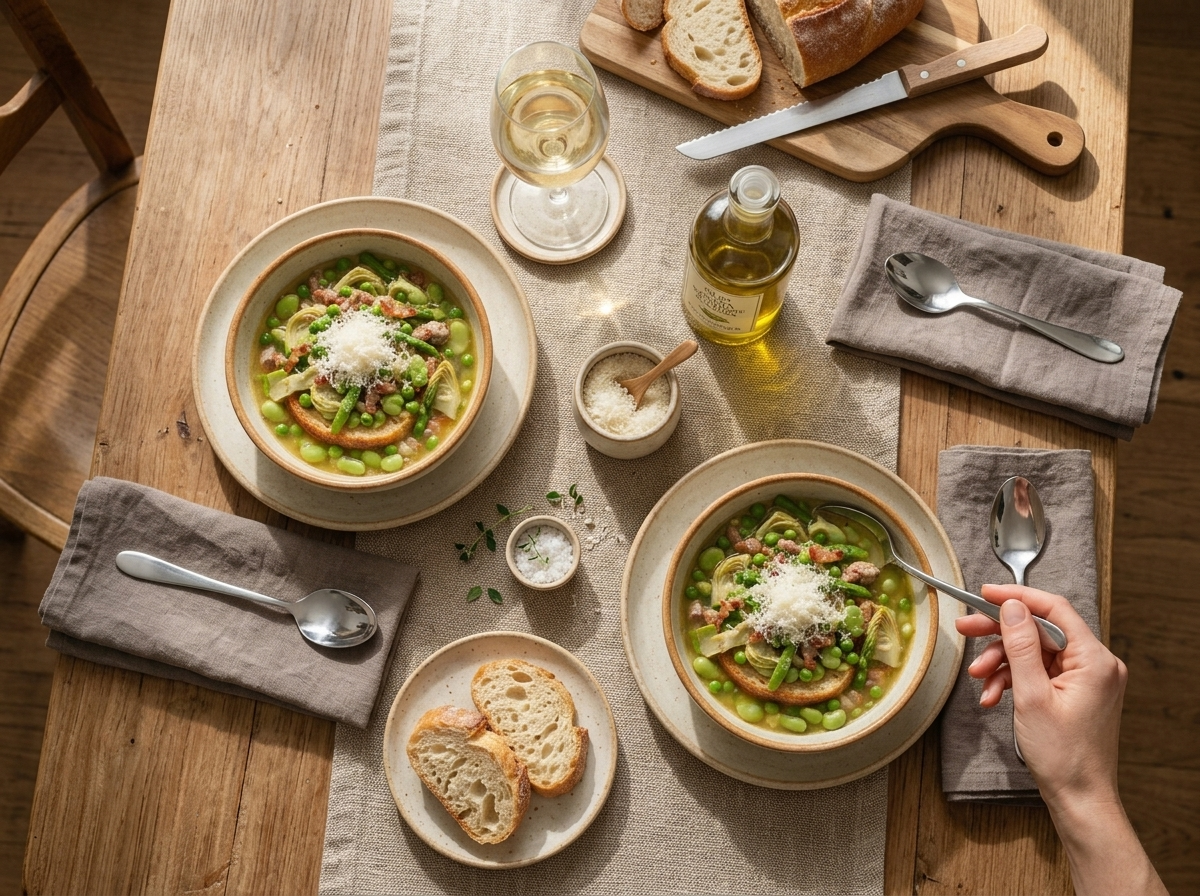
Ladle garmugia lucchese over a slice of toasted bread in each bowl, then top with grated parmesan and a drizzle of olive oil.
Pair it with a crisp Vermentino or a light Trebbiano, since the soup’s vegetable flavors need something clean rather than heavy. A simple green salad with lemon dressing rounds out the meal without competing.
Serve it as a light lunch on its own, or as a starter before a simple roast chicken when you want a full spring dinner.
FAQ
How do I know when the vegetables in garmugia lucchese are done?
The vegetables are done when they’re fork-tender but still hold their shape, usually after 12 to 15 minutes of simmering. Fava beans turn a bright pale green and asparagus loses its raw crunch. Pull the pot off the heat as soon as an artichoke slice yields easily, since a longer simmer turns everything gray and soft.
Can I use frozen fava beans and peas instead of fresh in garmugia lucchese?
Yes, frozen fava beans and peas work fine when fresh ones are out of season. Skip the blanching and peeling step since frozen fava beans are usually already skinned, and add both straight from frozen in the last 8 minutes of simmering. The texture is a touch softer than fresh, but the flavor holds up.
Can I make garmugia lucchese ahead and reheat it the next day?
Yes, garmugia lucchese keeps well and the flavor actually rounds out overnight. Store it in an airtight container in the fridge for 3 to 4 days and reheat gently on the stovetop over low-medium heat for about 5 minutes, adding a splash of broth if it’s thickened. Stir in fresh parsley after reheating, not before.
What goes well with garmugia lucchese besides toasted bread?
A dry white wine like Vermentino or a light Tuscan Trebbiano works well alongside garmugia lucchese, since the soup’s vegetable flavors need something crisp rather than heavy. A simple green salad with lemon dressing rounds out the meal. Skip anything too rich, the soup’s whole point is its lightness.
Is garmugia lucchese gluten-free?
The soup itself is gluten-free since it’s built from vegetables, veal, pancetta, and broth with no flour or pasta added. The only gluten comes from the toasted bread served underneath it, so swap in gluten-free bread or skip the bread and top with extra parmesan instead.
What’s the difference between garmugia lucchese and minestrone?
Garmugia lucchese is a specific spring soup from Lucca built around fava beans, peas, artichokes, and asparagus with veal and pancetta, while minestrone is a broader year-round vegetable soup that often includes beans, pasta, and whatever vegetables are on hand. Garmugia is lighter, more seasonal, and served over toasted bread rather than with pasta stirred in.