
Jump to Recipe
Cannoli get their reputation from the shell. A filling is easy to mix, but a shell that shatters cleanly and stays crisp for hours takes a dough that’s leaner than you’d expect, fried hot and fast.
The classic Sicilian version uses sheep’s-milk ricotta, drained overnight so the filling holds its shape without being piped full of air. Cow’s-milk ricotta works if you drain it well, but the result is slightly less rich.
Candied orange peel, a pinch of cinnamon, and sometimes a drop of vanilla are the only aromatics you need — a restraint you also find in Sicilian pantry cooking more broadly. Chocolate chips folded into the filling are a modern addition, not traditional, but widely loved.
I always fry a test shell first to check oil temperature and dough thickness. It’s the one step most recipes skip, and it saves the whole batch.
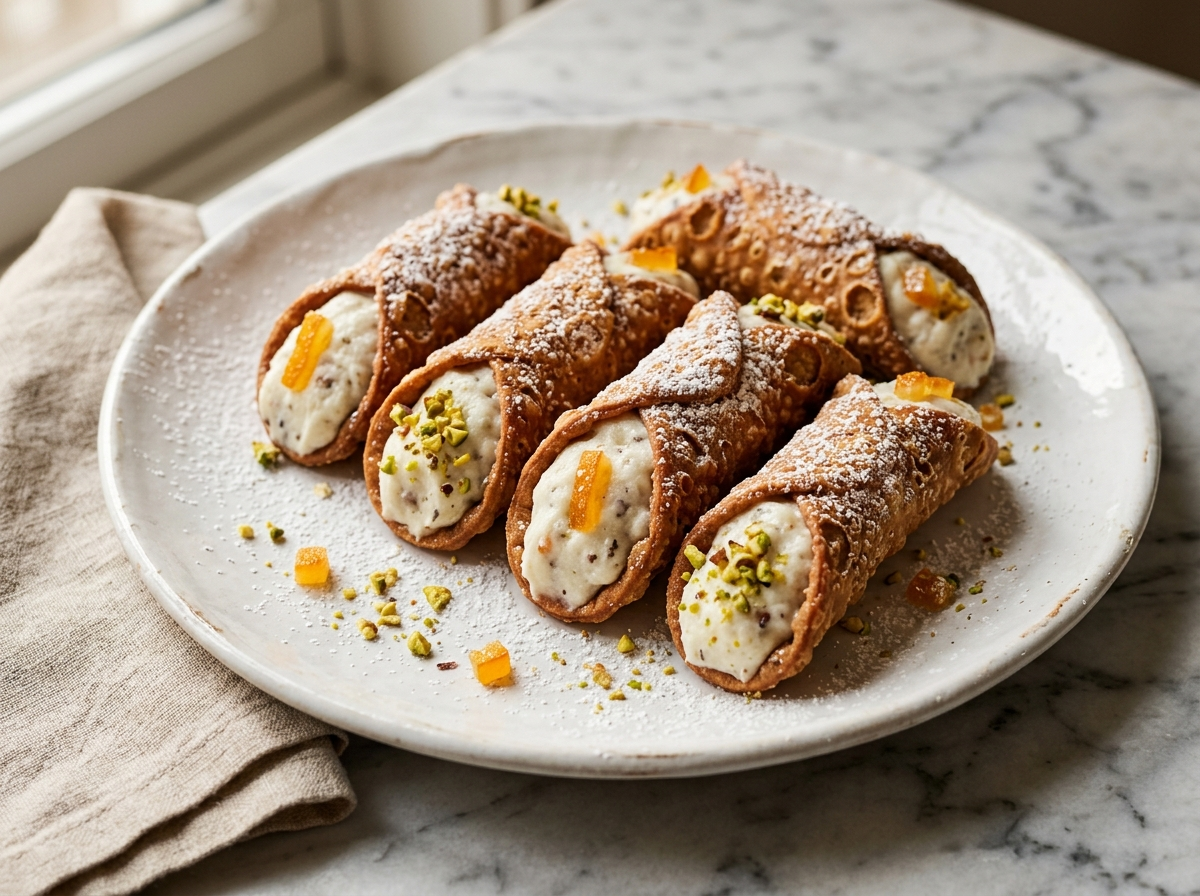
Why You’ll Love This Recipe
- Shells fry in under 2 minutes each, no oven needed
- Filling can be made a day ahead and refrigerated
- Dough uses pantry staples – no specialty flour required
- Crisp shells hold up for several hours after filling
Ingredient Notes
- Tipo 00 flour: Fine-milled 00 flour gives a tender, blister-free shell. Plain all-purpose flour works as a substitute but may produce a slightly chewier texture.
- Lard: Traditional Sicilian dough uses lard for flakiness and color. Unsalted butter or vegetable shortening can replace it gram for gram, though the shell will be slightly paler.
- Marsala wine: Dry Marsala gives the dough its characteristic color and faint nuttiness. A dry sherry or even white wine vinegar diluted with water (1:3) works in a pinch.
- Sheep’s-milk ricotta: Denser and richer than cow’s-milk ricotta, it needs less draining time. If using cow’s-milk ricotta, drain it in a fine-mesh sieve lined with cheesecloth for at least 4 hours.
- Candied orange peel: Good-quality candied peel is moist and fragrant, not hard or overly sweet. You can make your own or substitute finely chopped dried apricots for a different but pleasant result.
- Frying oil: Sunflower oil or lard are the Sicilian standard. Lard gives a slightly richer flavor and crispier shell; sunflower oil keeps it neutral and vegetarian-friendly.
Cannoli Siciliani Classici
Ingredients
Method
- Combine the flour, sugar, cocoa (if using), cinnamon, and salt in a large bowl. Rub in the cold lard or butter with your fingertips until the mixture resembles coarse breadcrumbs.
- Add the egg and white wine vinegar, then pour in the Marsala a little at a time, mixing with a fork until the dough just comes together. It should feel firm, not sticky - add more Marsala one tablespoon at a time if it's too dry.
- Turn the dough onto a lightly floured surface and knead for 5 minutes until smooth and slightly elastic. Wrap tightly in plastic wrap and rest at room temperature for 30 minutes.
- If the ricotta feels wet, line a fine-mesh sieve with cheesecloth, add the ricotta, and let it drain over a bowl in the fridge for at least 4 hours or overnight.
- Beat the drained ricotta with the sifted powdered sugar, cinnamon, and vanilla extract until smooth and creamy. Fold in the chopped candied orange peel.
- Taste and adjust sugar if needed. Transfer to a piping bag fitted with a wide round tip and refrigerate until ready to use.
- Divide the rested dough into 3 portions. Work with one portion at a time, keeping the rest covered. Roll out on a lightly floured surface to 2 mm thickness - thin enough to almost see your hand through it.
- Cut circles approximately 10-11 cm in diameter using a round cutter or a glass. Re-roll scraps once.
- Wrap each dough circle around a lightly greased metal cannoli tube, overlapping the edges by about 1 cm. Brush the overlap with egg white and press firmly to seal.
- Pour sunflower oil or lard into a deep heavy saucepan to a depth of at least 8 cm. Heat to 180 C (355 F), using a thermometer to check.
- Fry one test shell first: it should take about 1 minute 30 seconds to turn deep golden brown and develop small blisters. Adjust oil temperature if needed.
- Fry the remaining shells in batches of 2-3, turning with tongs, until deep amber and blistered, about 1.5 to 2 minutes per batch. Do not crowd the pan.
- Lift out with tongs and drain on a wire rack over paper towels. While still warm, grip each tube with a folded kitchen towel and slide the shell off carefully. Let shells cool completely on the rack.
- No more than 30 minutes before serving, pipe the ricotta filling into each shell from both ends, meeting in the middle.
- Press a small piece of candied orange peel or a candied cherry into the filling at each open end.
- Dust generously with powdered sugar and serve immediately at room temperature.
Notes
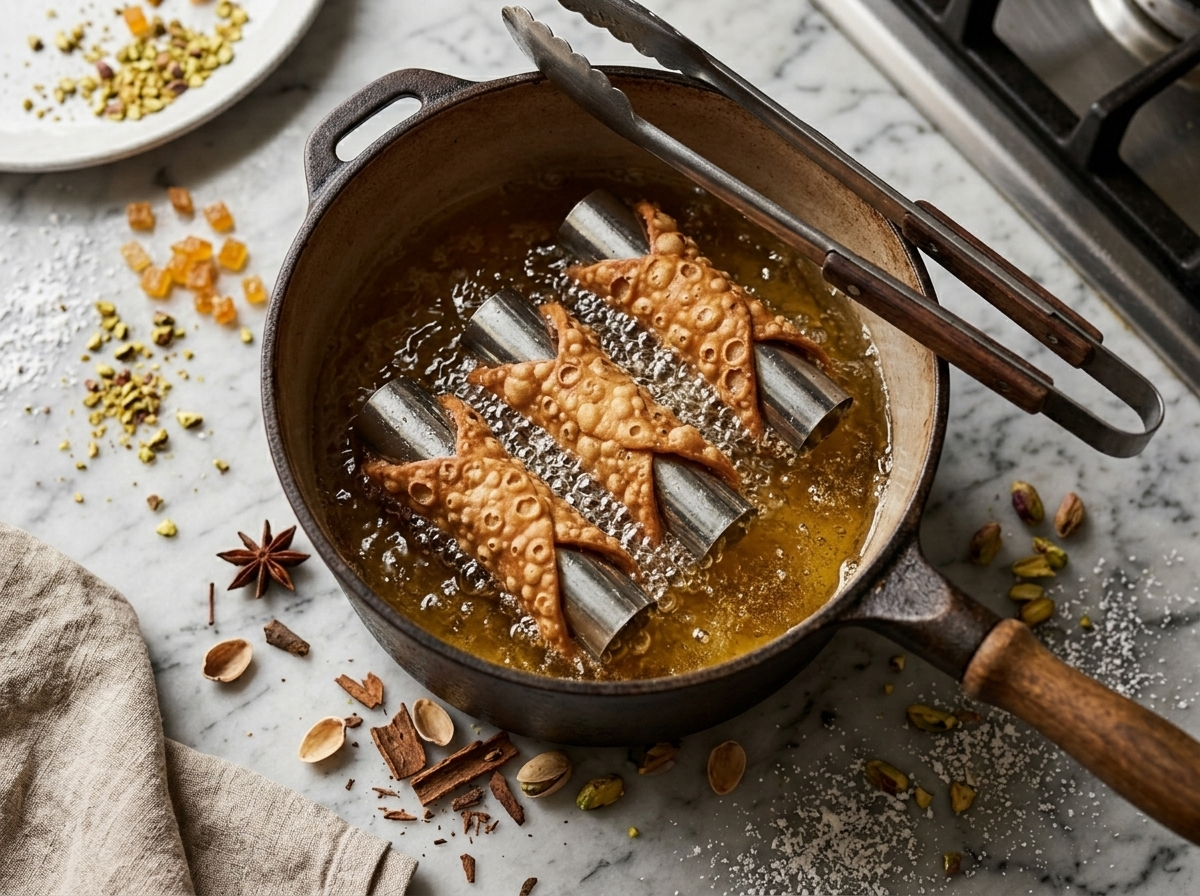
Tips for Success
- Fry one test shell first at 180 C to check oil temperature before committing the full batch.
- Roll the dough to 2 mm thickness – any thicker and the shell won’t blister and crisp properly.
- Seal the overlapping dough edge with a dab of egg white so shells don’t unroll in the oil.
- Drain ricotta overnight in the fridge if using cow’s-milk; excess moisture makes the filling runny.
- Fill cannoli no more than 30 minutes before serving so the shells stay brittle.
Variations
- Fold 60 g mini dark chocolate chips into the ricotta filling for the Palermo street-food version.
- Add 1 tsp ground pistachios to the filling and press crushed pistachios onto each open end.
- Use a cocoa-enriched dough by replacing 20 g flour with 20 g unsweetened cocoa powder for darker shells.
Storage and Reheating
Store unfilled shells in an airtight tin at room temperature for up to 5 days. Any humidity will soften them, so avoid refrigerating the shells on their own.
The ricotta filling keeps in the fridge, covered, for up to 2 days. Give it a stir before piping to recombine any liquid.
Do not store filled cannoli. Once piped, the moisture from the filling migrates into the shell within an hour. Fill to order.
Serving Suggestions
Serve cannoli at room temperature, dusted with powdered sugar right before they go to the table. A small piece of candied cherry or a sliver of candied orange on each open end is the traditional finish.
In Sicily, cannoli appear at the end of a meal alongside espresso — much as a classic Neapolitan rum-soaked cake closes a southern Italian dinner — not with dessert wine. A short, bitter espresso cuts through the ricotta’s richness cleanly.
For a spread, arrange unfilled shells on a board with the ricotta filling in a piping bag so guests fill their own. It keeps the shells crisp longer and makes for a more interactive presentation.
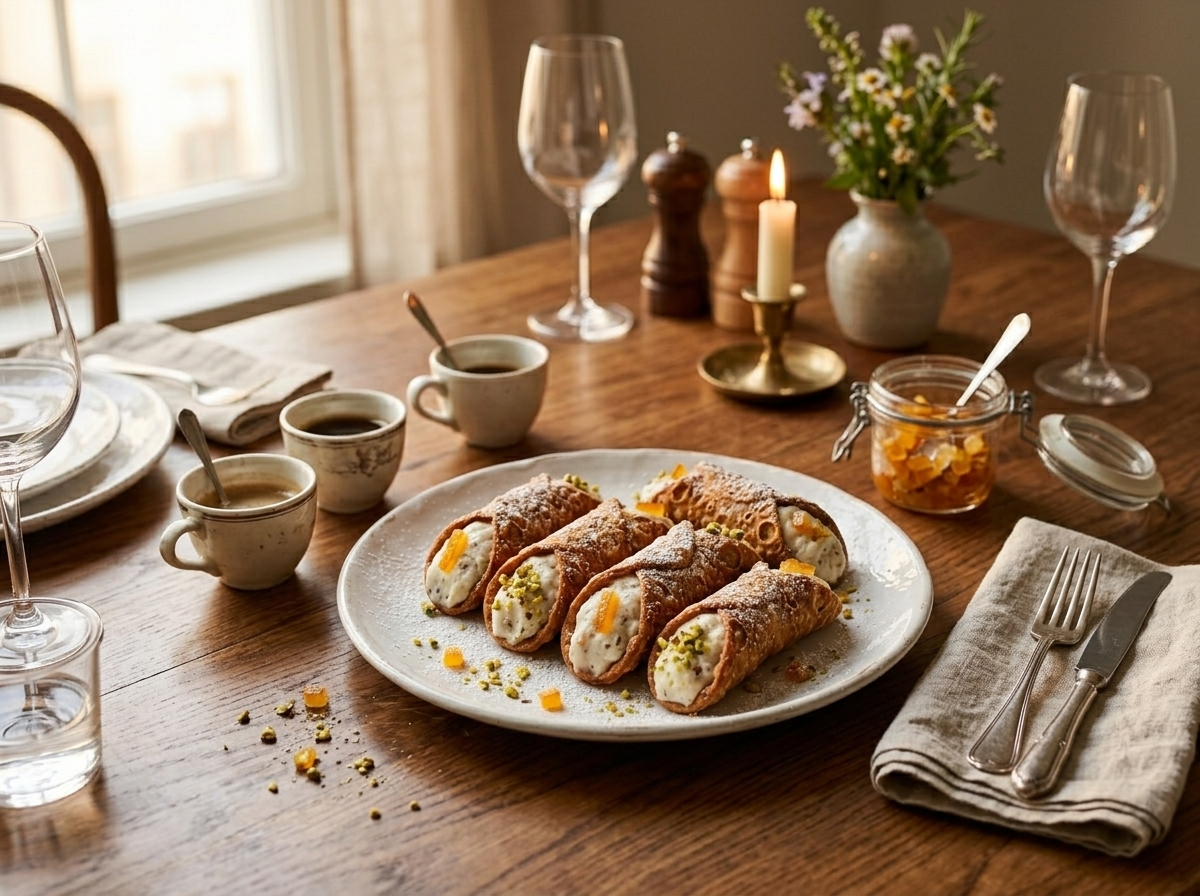
FAQ
Why are my cannoli shells soft instead of crunchy after frying?
The most common reason is oil that wasn’t hot enough – aim for 180 C (355 F) and use a thermometer. Dough rolled too thick (above 2 mm) also prevents the shell from crisping fully before the outside browns.
Can I use cow’s-milk ricotta instead of sheep’s-milk ricotta for the filling?
Yes, but drain it thoroughly in a cheesecloth-lined sieve for at least 4 hours, or overnight. Cow’s-milk ricotta has more water, which makes the filling loose and causes shells to go soft faster.
Can I make the cannoli dough ahead and freeze it?
The dough freezes well, wrapped tightly in plastic, for up to 1 month. Thaw overnight in the fridge and let it come to room temperature for 20 minutes before rolling.
What pairs well with cannoli siciliani at the end of a Sicilian dinner?
A short espresso or a bitter Italian aperitivo served before the meal is the classic frame — at the close, a short espresso offsets the sweet ricotta cleanly. Avoid pairing with sweet dessert wines, which make the whole thing cloying.
Are cannoli siciliani gluten-free?
Traditional cannoli shells are made with wheat flour, so no, they are not gluten-free. You can experiment with a 1:1 gluten-free flour blend, but the shell texture and blister pattern will differ.
What is the difference between Sicilian cannoli and the American-Italian version?
Sicilian cannoli use sheep’s-milk ricotta, candied orange peel, and a dry Marsala dough, kept fairly simple. The American-Italian version often adds chocolate chips, vanilla extract, and sometimes cream cheese to the filling, producing a sweeter, denser result.