
Jump to Recipe
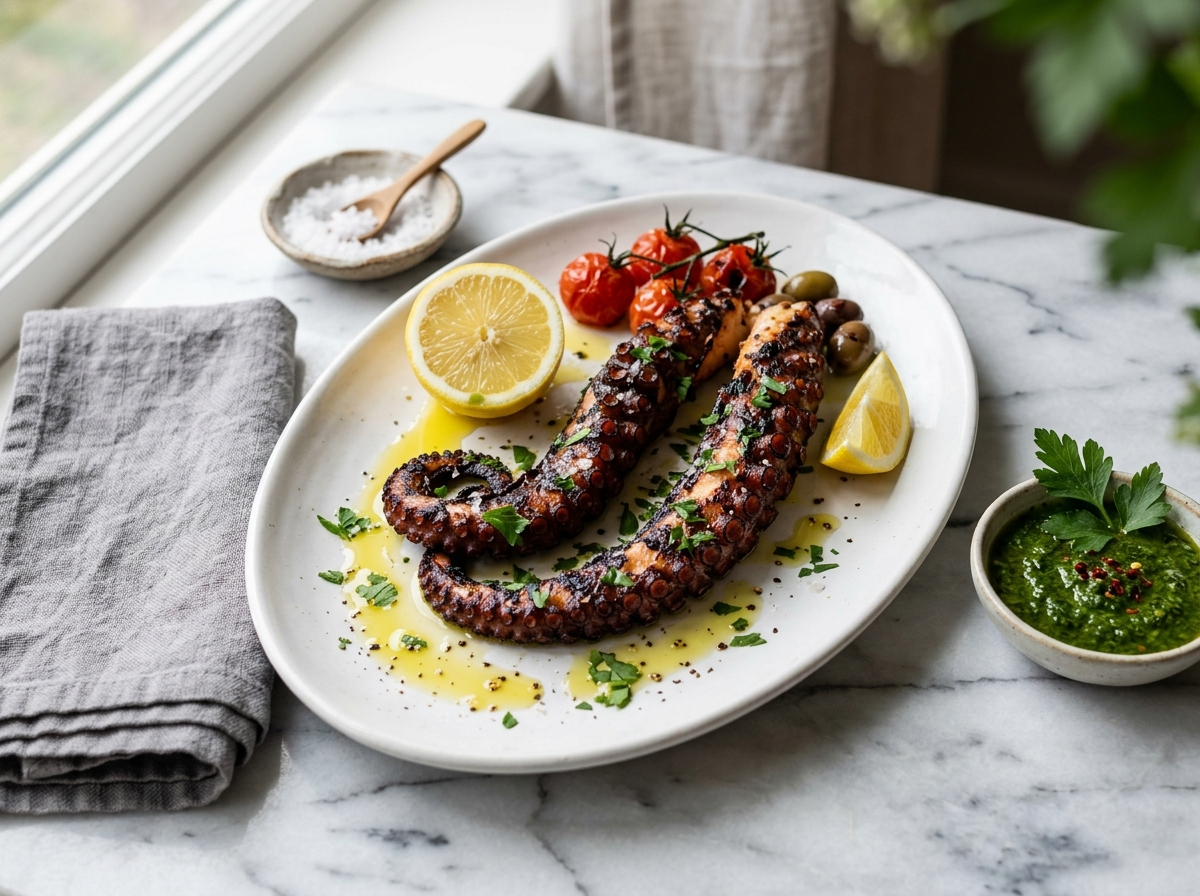
Polpo alla griglia is a fixture on coastal Italian menus from Sicily to the Amalfi Coast, but it’s completely achievable at home once you understand the two-stage process.
The octopus gets a patient simmer first. That step relaxes the proteins and breaks down the connective tissue so the flesh is soft before it ever sees the grill. Skip it and you’ll get something chewy and tough no matter how long you cook it.
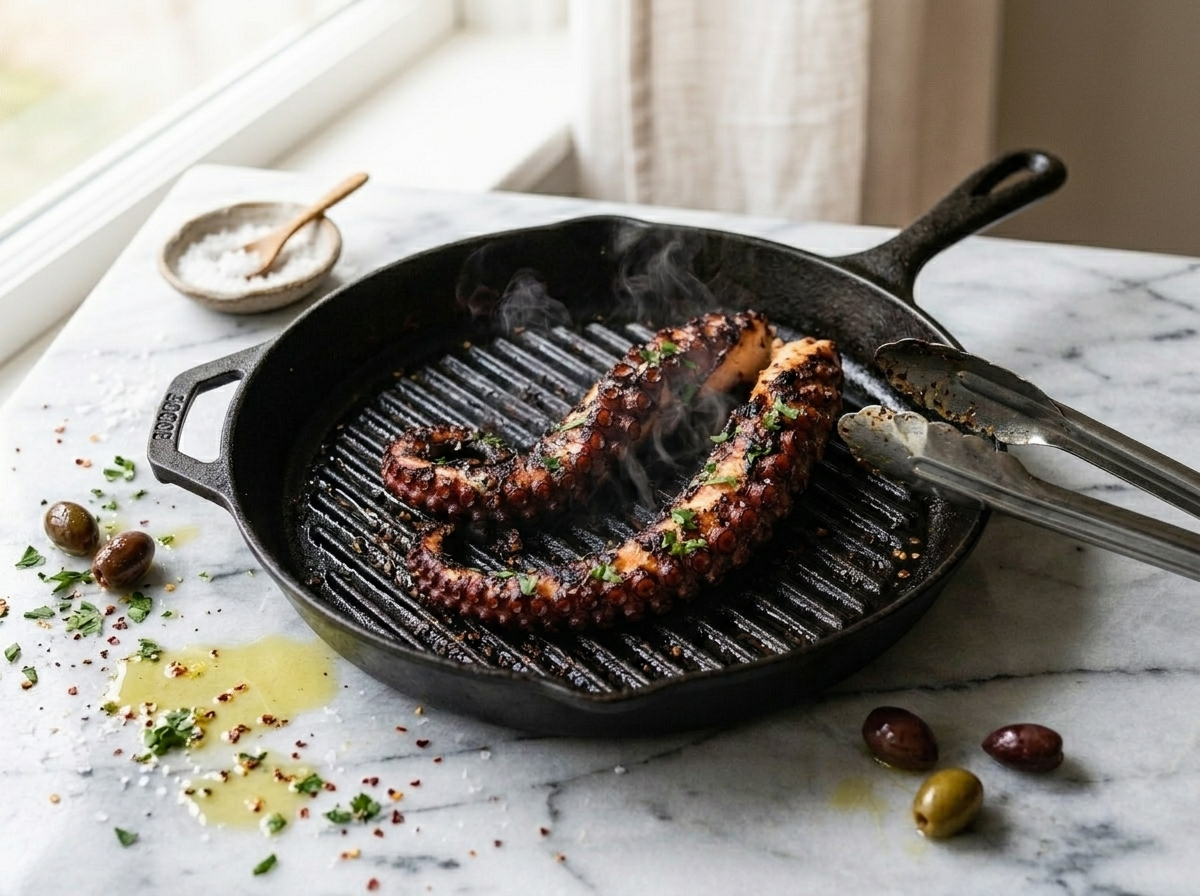
The grill does one job: color. High heat in two to three minutes per side gives you that slight char, a crisp edge, and a faint smokiness that defines the dish.
A simple finish of olive oil, lemon, and flat-leaf parsley is all it needs. Good olive oil and fresh lemon are not optional here – they pull everything together.
Why You’ll Love This Recipe
- Simmer-first method makes rubbery octopus nearly impossible
- Only a few ingredients needed, olive oil and lemon do the work
- Octopus can be pre-boiled a day ahead, grill takes minutes
- Impressive restaurant-style plating with straightforward technique
Ingredient Notes
- Whole octopus (cleaned): Ask your fishmonger for a cleaned octopus with the beak and ink sac already removed. Frozen octopus actually works well here – the freeze-thaw cycle helps tenderize the flesh, sometimes better than fresh.
- White wine (for the simmer water): Half a glass added to the simmering water adds a clean, faintly briny note to the octopus. You can skip it and add a splash of white wine vinegar instead.
- Bay leaves: Two or three bay leaves in the simmering pot add a subtle herbal background. Dried work fine here.
- Extra virgin olive oil: Use a good-quality olive oil for the finishing drizzle – it’s doing real flavor work at this stage, not just coating. A Sicilian or Puglian oil with a peppery finish suits this dish well.
- Lemon: You need both the zest and the juice. Zest goes into the finishing oil, juice goes on just before serving. A Meyer lemon is milder if you find regular lemon too sharp.
- Flat-leaf parsley: Flat-leaf parsley only – curly parsley has a coarser flavor that doesn’t complement seafood the same way. Chop it fine and add it raw right at the end.
- Garlic: One clove, grated into the finishing oil, adds just enough sharpness. If you want a milder flavor, steep a crushed clove in the warm oil for five minutes, then remove it before dressing the octopus.
- Red chili flakes (optional): A pinch of Calabrian chili or standard red pepper flakes adds a gentle heat that works well against the lemon. Skip it if you prefer a cleaner flavor.
Polpo alla Griglia (Italian Grilled Octopus)
Ingredients
Method
- Fill a large stockpot with cold water and add the white wine, bay leaves, peppercorns, crushed garlic, and coarse salt. Bring to a gentle simmer over medium-high heat.
- Hold the octopus by the head and dip the tentacles into the simmering water three times, each time for about five seconds, before fully submerging it. This helps the tentacles curl neatly.
- Lower the octopus fully into the water, reduce heat to a gentle simmer (small bubbles, not a rolling boil), cover with a lid, and cook for 45 to 60 minutes.
- Test doneness by inserting a metal skewer into the thickest tentacle - it should slide in with no resistance. If there is any pull, continue cooking for another 10 minutes and test again.
- Turn off the heat and let the octopus cool in its liquid for at least 20 minutes. This keeps it moist. You can do this step up to 24 hours ahead and refrigerate the octopus in its liquid.
- Lift the octopus from the liquid and place it on a cutting board. Using kitchen scissors or a sharp knife, separate the tentacles from the head. Cut the head in half.
- Pat all pieces completely dry with paper towels. Any surface moisture will create steam on the grill instead of char.
- Brush lightly with 1 tbsp olive oil and season with a pinch of salt and pepper.
- Heat your outdoor grill or cast iron grill pan to the highest possible heat. The grates should be very hot - you should not be able to hold your hand near them for more than two seconds.
- In a small bowl, combine 3 tbsp extra virgin olive oil, the grated garlic, lemon zest, half the parsley, and a pinch of chili flakes if using. Stir and set aside.
- Place the tentacles and head pieces onto the hot grill. Do not move them for 2 to 3 minutes until distinct grill marks form and the edges look slightly crisp.
- Flip once using tongs and grill for another 2 minutes on the second side until charred in spots.
- Transfer to a cutting board and rest for 3 minutes. Then cut the tentacles into pieces or leave whole depending on how you want to serve them.
- Spoon the finishing oil over the hot octopus, squeeze fresh lemon juice over the top, scatter the remaining parsley, and finish with flaky sea salt. Serve immediately.
Notes
Tips for Success
- Score the thickest part of the head with a knife before grilling so it cooks evenly alongside the tentacles.
- Pat the octopus completely dry with paper towels before it goes on the grill – moisture prevents charring.
- Use the highest heat your grill can produce; a lukewarm grill will steam the octopus instead of charring it.
- Rest the grilled octopus for three minutes before cutting so the juices redistribute and the flesh stays moist.
- Rub the grill grates with a cut potato before cooking to reduce sticking without adding oil that burns.
Variations
- Dress with a Sicilian-style salsa verde: capers, anchovies, parsley, and red wine vinegar instead of plain lemon oil.
- Slice grilled tentacles over a warm white bean and celery salad dressed with olive oil and sage.
- Add smoked paprika and sherry vinegar to the finishing oil for a Spanish-influenced take on the dish.
Storage and Reheating
The simmered octopus keeps in the fridge for up to two days, submerged in its own cooking liquid in a sealed container. This actually improves the texture as it rests.
Once grilled, leftover octopus is best stored dry, wrapped tightly, and eaten within one day. The char softens quickly in the fridge.
To reheat, place the tentacles back on a hot grill pan for 90 seconds per side, or in a dry cast iron skillet over high heat. Avoid the microwave – it makes the flesh rubbery.
Serving Suggestions
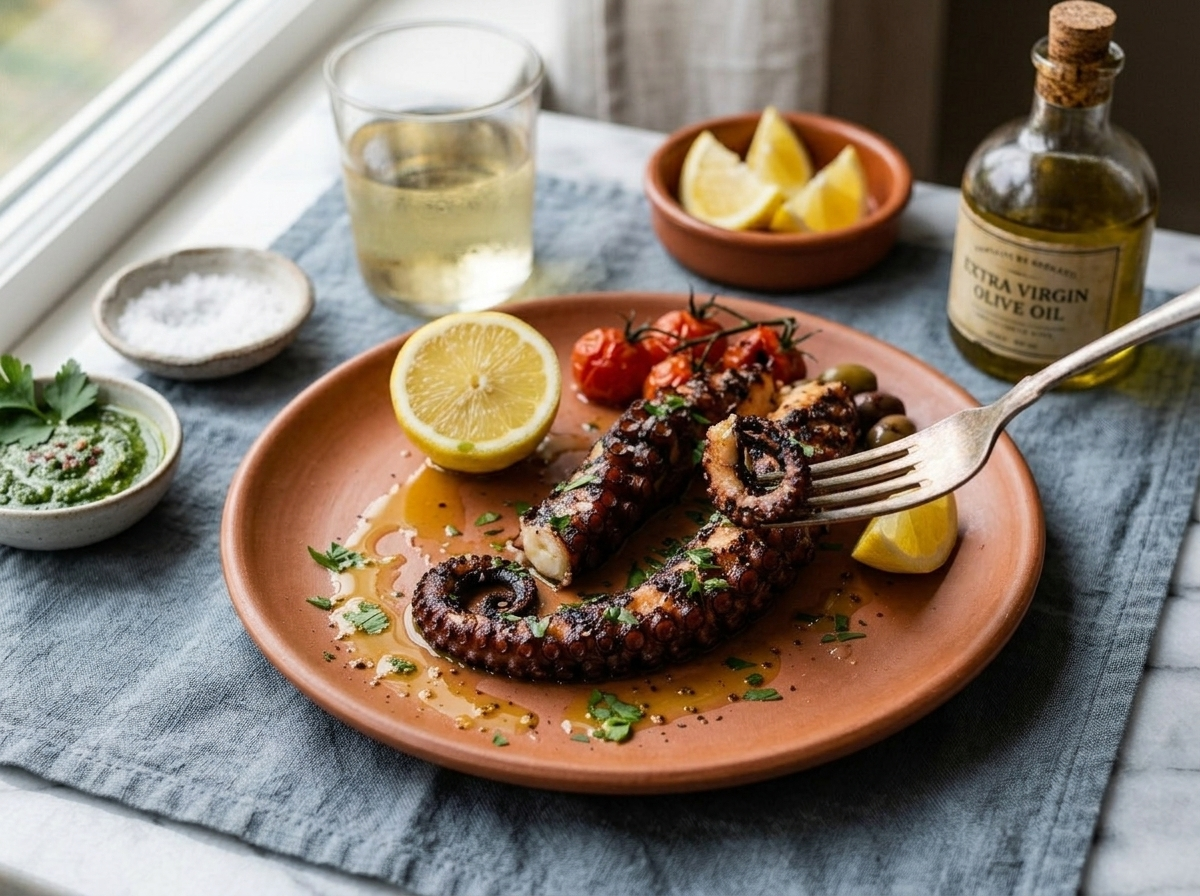
Polpo alla griglia is most often served as a starter (antipasto) in Italy, plated simply with lemon wedges and grilled bread rubbed with olive oil. A few dressed rocket leaves underneath add color and a slightly bitter counterpoint.
For a fuller plate, serve it over a smooth white bean puree or alongside roasted potatoes with rosemary, or start the meal with a classic Italian seafood salad to keep the coastal theme. Both absorb the cooking juices and finishing oil well.
A chilled glass of Vermentino, Falanghina, or any crisp, mineral-forward white wine makes a natural pairing. A dry Sicilian rosato works equally well.
FAQ
Why is my grilled octopus rubbery even after cooking it for a long time on the grill?
Octopus needs to be fully tenderized by simmering before it hits the grill. Grilling alone, no matter how long, won’t break down the connective tissue the way slow, moist heat does. Simmer it first until a skewer slides in with no resistance, then grill briefly for color.
Can I use frozen octopus instead of fresh for polpo alla griglia?
Frozen octopus is a solid choice and sometimes preferable to fresh. The freeze-thaw cycle breaks down muscle fibers in a way that actually speeds up tenderizing during the simmer. Thaw it fully overnight in the fridge before cooking.
How do I know when the simmered octopus is ready to come out of the pot?
Insert a metal skewer or thin knife into the thickest part of a tentacle – it should slide in with almost no resistance, like soft butter. The skin should look slightly loosened and purplish-pink, not tight. This usually takes 45 to 60 minutes depending on size.
Can I simmer the octopus the day before and grill it the next day?
This is one of the best make-ahead moves for this dish. Keep the cooked octopus in its own strained liquid in the fridge overnight – it stays moist and picks up extra flavor. Pull it out 20 minutes before grilling so it comes up to room temperature.
Is polpo alla griglia gluten-free?
The base recipe is naturally gluten-free. Just make sure any bread served alongside is handled separately if you’re cooking for someone with celiac disease, and check that your wine and any condiments carry no hidden gluten.
What is the difference between polpo alla griglia and polpo alla luciana?
Polpo alla griglia is grilled after a simmer, finishing dry with char and a lemon-herb dressing. Polpo alla luciana is a Neapolitan stewed octopus cooked entirely in a covered pot with tomatoes, capers, olives, and olive oil — the same bold pantry flavors found in pasta alla puttanesca — with no grill involved. The textures and flavor profiles are quite different.