
Jump to Recipe
Linguine allo scoglio literally means “linguine of the reef,” and the name tells you exactly what goes in: whatever shellfish and seafood the sea (or your fishmonger) offers that day. The classic version from the Campania and Lazio coasts typically combines clams, mussels, shrimp, and squid in a white wine broth with a little crushed tomato, using the same bold southern flavors that define Campanian pasta with San Marzano tomatoes.
The dish lives or dies on two things: seafood quality and not overcooking. Rubbery squid and gummy shrimp happen when the heat stays too high for too long. I add the squid early since it needs a few minutes, then finish the shrimp and shellfish right at the end.
The pasta finishes cooking directly in the sauce, which pulls everything together. You’re looking for linguine with enough bite left to absorb the broth without going soft.
This is a weeknight-possible dish once you have the technique down, but it also holds up as a dinner-party primo when you want something that looks more involved than it is.
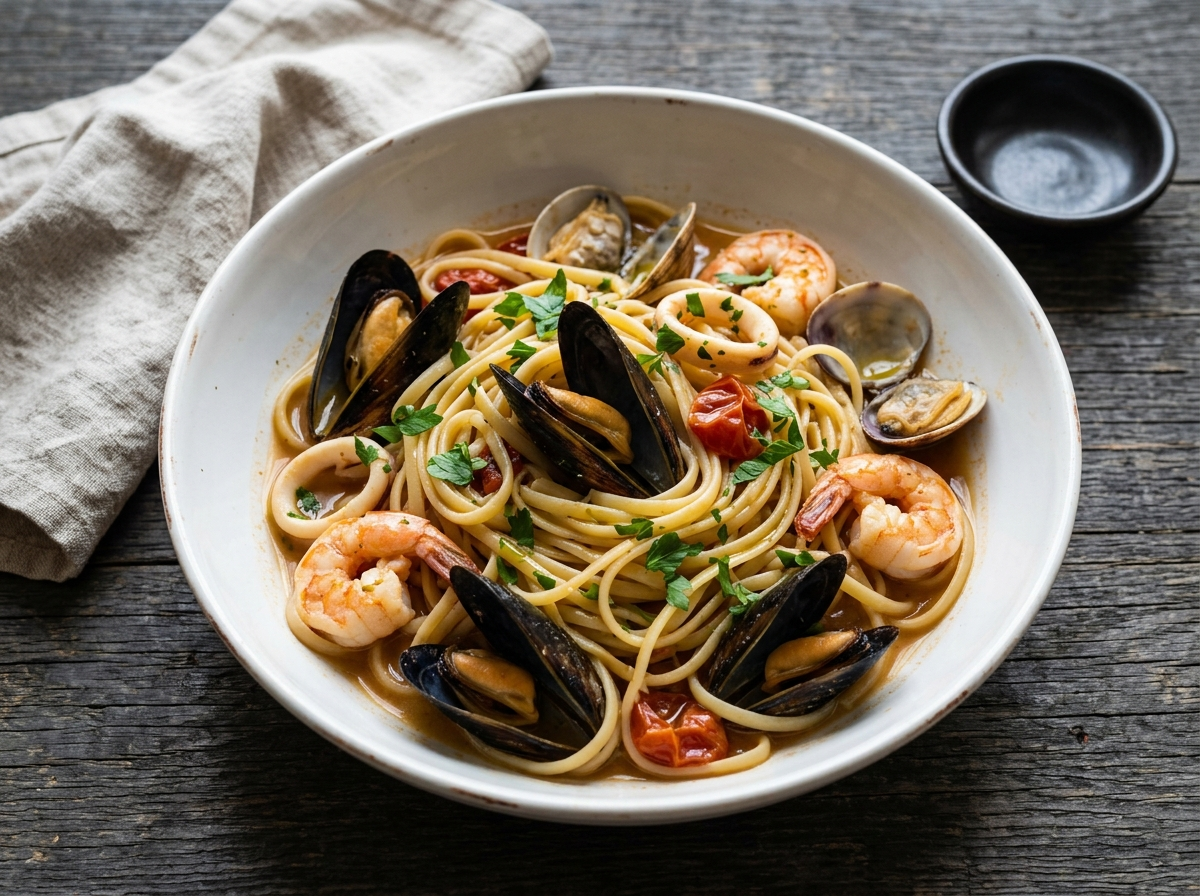
Why You’ll Love This Recipe
- Brothy, briny sauce builds in under 15 minutes
- Four types of seafood cooked at the right moment each
- Pasta finishes in the pan, absorbing all the flavor
- Elegant enough for guests, manageable on a weeknight
Ingredient Notes
- Clams (vongole veraci): Manila or littleneck clams work well. Soak them in cold salted water for 30 minutes before cooking to purge any sand.
- Mussels: Buy them debearded and cleaned if possible. Discard any that stay open before cooking or stay closed after.
- Shrimp: Medium shrimp (16/20 count) peeled and deveined. You can leave the tails on for presentation or remove them for easier eating.
- Squid (calamari): Ask your fishmonger to clean them. Cut the tubes into rings about 1 cm thick; leave the tentacles whole. Frozen cleaned squid works fine here.
- Dry white wine: Use something you’d drink – a Pinot Grigio or Vermentino. Avoid anything labeled ‘cooking wine’ as it adds salt and dulls the broth.
- Cherry tomatoes: Halved fresh cherry tomatoes add brightness without making the sauce heavy. Canned datterini tomatoes work in winter when fresh ones are watery.
- Linguine: Bronze-die linguine holds the sauce better. Spaghetti is a fair substitute if that’s what you have.
- Flat-leaf parsley: Add it off the heat right before serving. It should stay vivid green, not wilted.
Linguine allo Scoglio (Italian Seafood Pasta)
Ingredients
Method
- Drain and rinse the soaked clams. Scrub the mussels and pull off any remaining beards. Pat the squid rings and shrimp dry with paper towels.
- Bring a large pasta pot of water to a boil over high heat. Add 1 tbsp salt.
- Heat 4 tbsp olive oil in a large deep skillet over medium-high heat. Add the sliced garlic and chili flakes if using, and cook for 60 seconds until pale gold and fragrant - don't let it brown.
- Add the squid rings and tentacles. Cook, stirring, for 2-3 minutes until the squid turns opaque. Season lightly with salt.
- Pour in the white wine and let it bubble for 1 minute until the alcohol smell fades.
- Add the cherry tomatoes and stir. Cook over medium heat for 3-4 minutes until the tomatoes start to collapse and release their juice.
- Add the clams and mussels to the pan in a single layer as much as possible. Pour in 60 ml of pasta cooking water, cover with a lid, and cook over high heat for 4-5 minutes until all the shells open. Discard any that stay closed.
- Add the shrimp. Stir gently, cover again, and cook for 2-3 minutes until the shrimp turn pink and curl slightly. Do not overcook.
- Drop the linguine into the boiling water and cook for 2 minutes less than the package directions. Reserve 200 ml of pasta cooking water before draining.
- Drain the linguine and transfer it directly into the seafood pan. Pour in 80-100 ml of the reserved pasta water.
- Toss everything together over medium heat for 2-3 minutes, adding more pasta water a splash at a time, until the linguine is al dente and the broth lightly coats the strands.
- Remove from heat. Add the chopped parsley, a drizzle of raw olive oil, and a twist of black pepper. Taste and adjust salt. Serve immediately in warm shallow bowls.
Notes
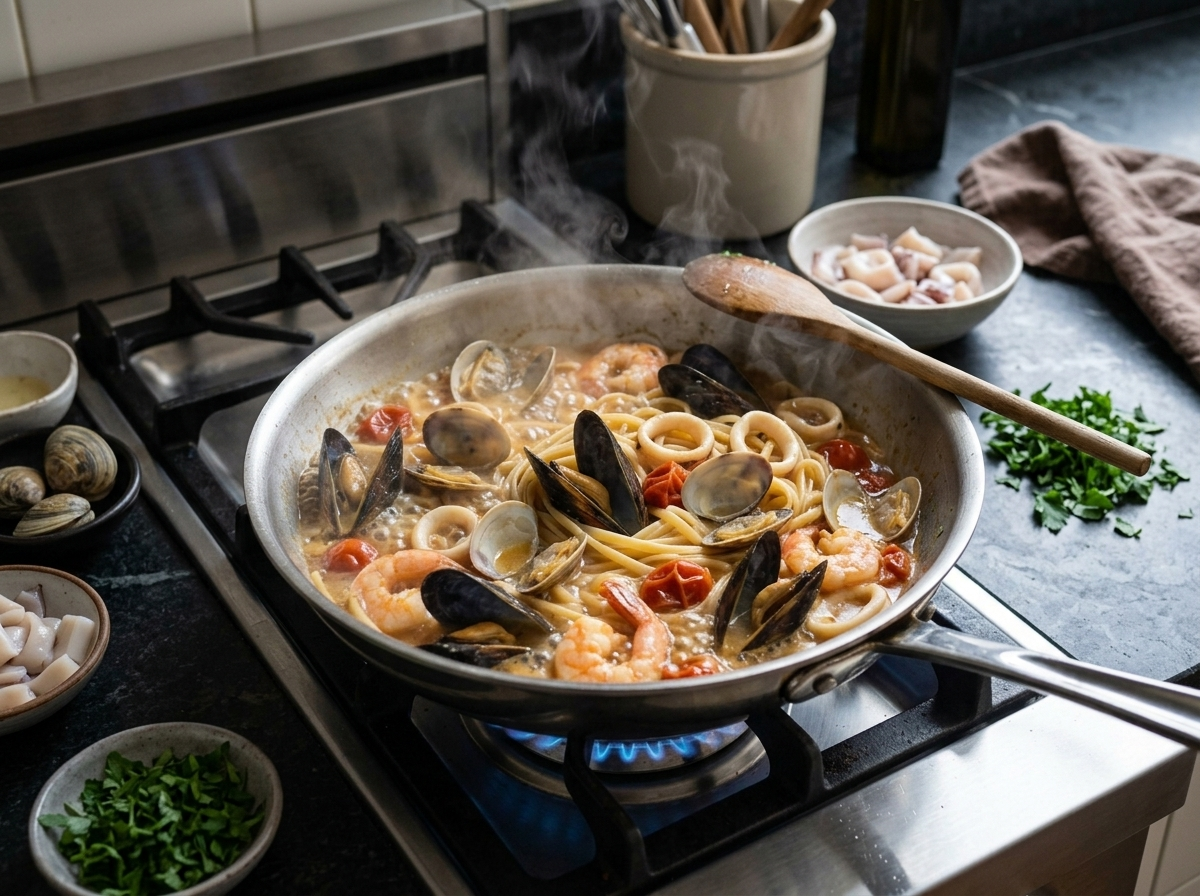
Tips for Success
- Soak clams in cold salted water for at least 30 minutes to purge grit before cooking.
- Cook squid first in the hot oil for 2-3 minutes before adding wine, so it softens rather than turning rubbery.
- Reserve 120 ml of pasta cooking water to loosen the sauce when you toss the linguine in.
- Add shrimp and shellfish only in the final 4-5 minutes so they stay tender and don’t overcook.
- Finish the pasta in the pan over medium heat, tossing constantly so the starchy water emulsifies the broth into a light coating.
Variations
- Add a pinch of dried chili flakes with the garlic for a version closer to the Neapolitan ‘scoglio arrabbiato’.
- Use all clams and mussels only – no shrimp or squid – for a simpler vongole-style broth with the same technique.
- Swap linguine for spaghetti alle chitarra for a slightly thicker strand that grips the briny broth well.
Storage and Reheating
Linguine allo scoglio is best eaten immediately. The pasta continues to absorb liquid as it sits, and the shellfish texture declines quickly after cooking.
If you have leftovers, store them in an airtight container in the fridge for up to 1 day. Reheat gently in a wide pan over low heat with a splash of water or white wine, covered, for 2-3 minutes. Don’t microwave it – the shrimp turn tough.
Freezing is not recommended. Shellfish and squid become chewy and lose their texture entirely once frozen after cooking.
Serving Suggestions
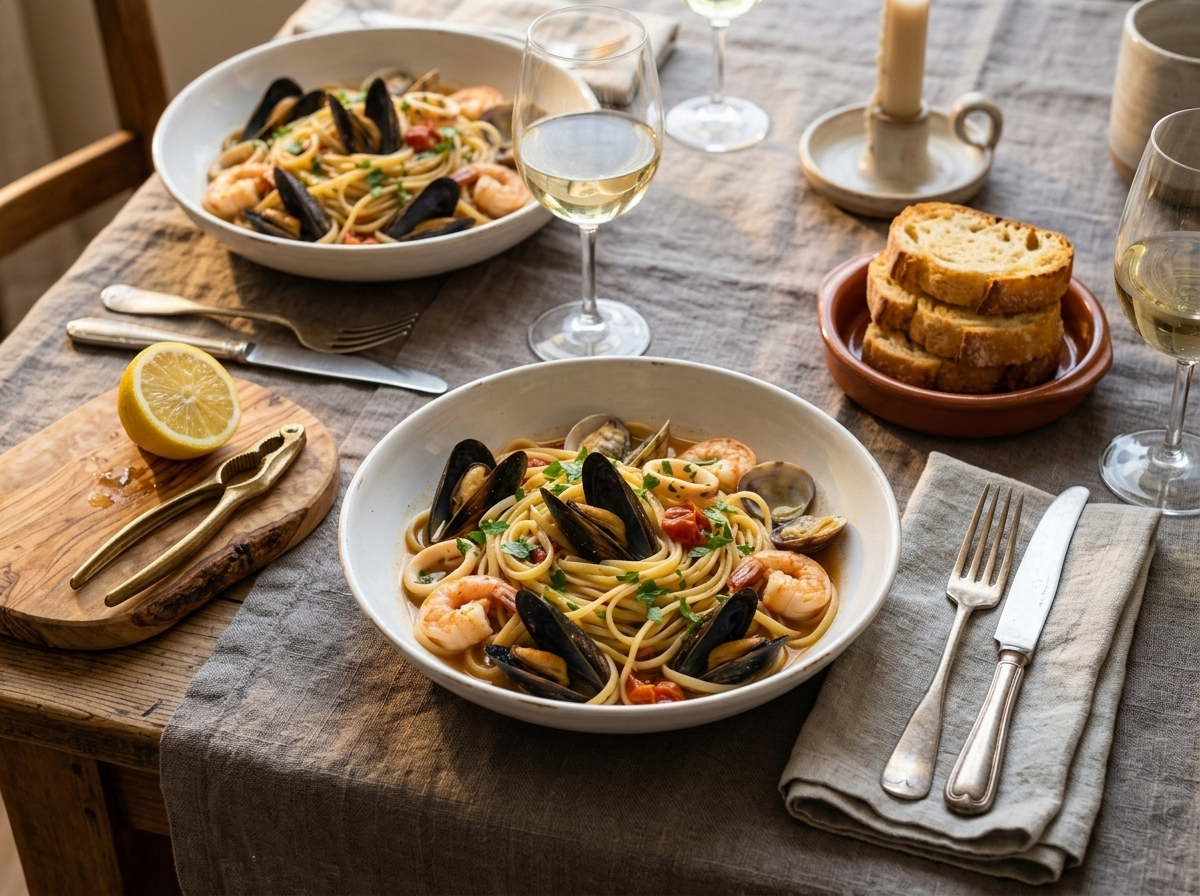
Serve the pasta in warm shallow bowls with a pile of opened shells on top. A drizzle of raw extra-virgin olive oil right before the table adds a fresh finish.
Good bread on the side is practical: a crusty ciabatta or a plain sourdough slice for mopping the broth at the bottom of the bowl. Avoid flavored breads that compete with the seafood.
A cold, high-acid white wine pairs naturally with the briny broth, much as it does alongside Italian seafood salad with clams and mussels. Vermentino from Sardinia, Falanghina from Campania, or a straightforward Verdicchio are all solid choices. Sparkling water with lemon works if you’re skipping alcohol.
FAQ
Why are my clams and mussels still closed after cooking the linguine allo scoglio?
Shellfish that don’t open after 4-5 minutes of steaming in the covered pan should be discarded – they were likely dead before cooking. Make sure your pan is hot enough and the lid fits well so steam builds quickly.
Can I use frozen seafood mix instead of fresh for this recipe?
Yes, a good-quality frozen seafood mix works as a practical substitute, but thaw it completely and pat it dry before cooking or the excess water will thin the broth. Fresh shellfish still give a deeper flavor because their juices release into the sauce.
How do I know when the squid rings in linguine allo scoglio are cooked through but still tender?
Squid turns from translucent to opaque white in about 2-3 minutes over medium-high heat. If you cook it longer than 4 minutes at this stage it starts to tighten – pull it back and it will finish gently when the pasta goes in.
What’s the difference between linguine allo scoglio and spaghetti alle vongole?
Classic clam preparations like spaghetti alle vongole use only clams and typically no tomato in the bianco version. Linguine allo scoglio is a broader mixed-seafood dish with mussels, shrimp, and squid alongside clams, and usually includes a little tomato in the broth.
Is linguine allo scoglio gluten-free?
Not as written, since standard linguine contains wheat. You can substitute a good-quality gluten-free linguine or spaghetti made from rice or corn flour, though the pasta-water starch will be lower so the sauce binds slightly less.
What should I serve alongside linguine allo scoglio without overpowering the seafood?
Keep sides neutral – a plain arugula salad dressed only with lemon juice and olive oil, or a few slices of grilled bread rubbed with garlic. Avoid strong flavors like capers, anchovies, or aged cheese at the table, which compete with the briny broth.