
Jump to Recipe
Cozze gratinate are a classic Italian antipasto from the southern coastline, especially popular in Naples, Puglia, and along the Adriatic. You’ll find them at every seaside trattoria, usually brought out before the pasta with a glass of cold white wine.
The technique is simple: half-shell mussels, a press of garlicky breadcrumb mixture, a drizzle of olive oil, then into a hot oven for 10 minutes. What comes out is a topping that’s crisp on top, slightly moist underneath where it meets the mussel liquor.
The breadcrumb mixture does most of the work here. Stale bread ground to coarse crumbs holds better than fine store-bought breadcrumbs, which tend to go soggy. Parsley, garlic, lemon zest, and a splash of white wine are the standard seasoning. Some cooks add a little Pecorino or Parmigiano, which rounds out the salt without competing with the sea flavor.
This is a good recipe for a dinner party starter because you can prep the mussels and the breadcrumb topping an hour ahead, then bake them just before serving.
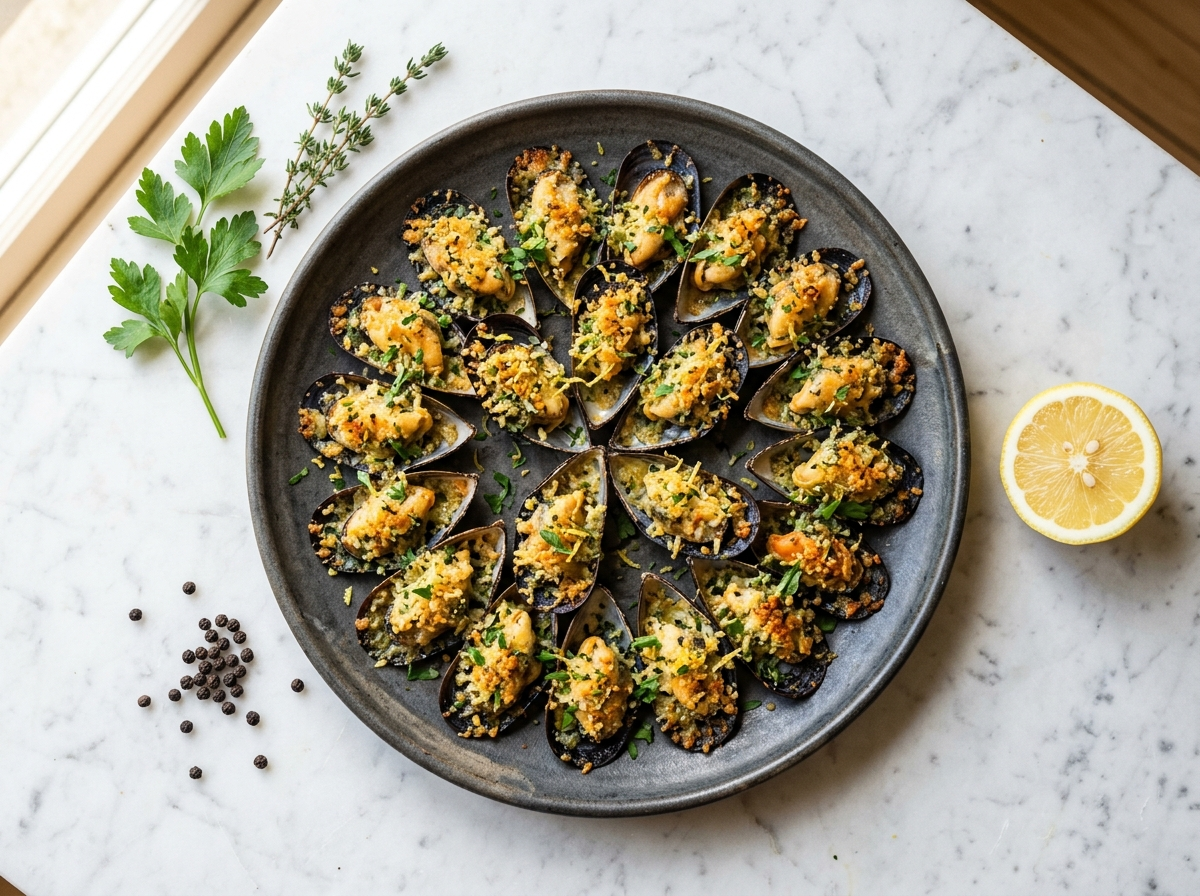
Why You’ll Love This Recipe
- Crisp golden breadcrumb crust on every mussel
- Ready in 40 minutes including mussel prep
- Make-ahead friendly for stress-free entertaining
- Uses pantry staples alongside fresh mussels
Ingredient Notes
- Fresh mussels: Buy live mussels the day you plan to cook them. Discard any that stay open after a firm tap on the counter – they’re dead.
- Stale bread / breadcrumbs: Coarse breadcrumbs from day-old ciabatta or sourdough give a better crust than fine packaged ones. Blitz a slice or two in a food processor until coarse and uneven.
- Garlic: Two cloves is the standard for this quantity of mussels. Grate or very finely mince it so it distributes evenly through the crumbs.
- Flat-leaf parsley: Fresh parsley is worth using here. Dried parsley loses its color and turns dusty under oven heat.
- Dry white wine: A couple of tablespoons in the topping add moisture and a faint acidity. Use any dry white you’d drink – Vermentino, Pinot Grigio, or a dry Trebbiano.
- Extra-virgin olive oil: Use a good-quality olive oil with some fruitiness. It binds the crumbs and carries flavor directly onto the mussel. Mild butter can replace half the oil if you prefer a richer finish.
- Pecorino Romano (optional): A tablespoon or two of finely grated Pecorino Romano is a Neapolitan addition. It’s optional, but it deepens the savory note in the crust without overwhelming the sea flavor.
- Lemon: Zest goes into the crumb mixture. Keep wedges for serving – a squeeze at the table brightens the whole dish.
Cozze Gratinate (Baked Mussels with Herb Breadcrumb Crust)
Ingredients
Method
- Scrub the mussels under cold running water and remove any beards. Tap open mussels firmly on the counter and discard any that don't close.
- Place a large pot over high heat. Add the smashed garlic clove and 60 ml of white wine. When the wine starts to steam, add the mussels and cover with a tight lid.
- Cook for 2 to 3 minutes, shaking the pot once, until the mussels just open. Remove from heat immediately - do not overcook. Discard any mussels that remain shut.
- Lift each mussel from the pot and discard the empty top shell, leaving the mussel sitting in the bottom half-shell. Set aside on a tray to cool slightly.
- Heat the oven to 220 C / 425 F with the grill element on if your oven has a combined setting, or plan to switch to grill for the final 2 minutes.
- In a bowl, combine the breadcrumbs, grated garlic, chopped parsley, lemon zest, white wine, and olive oil. Add Pecorino Romano if using. Mix with a fork until the crumbs are evenly coated and just hold together when pressed. Season with a pinch of salt and black pepper.
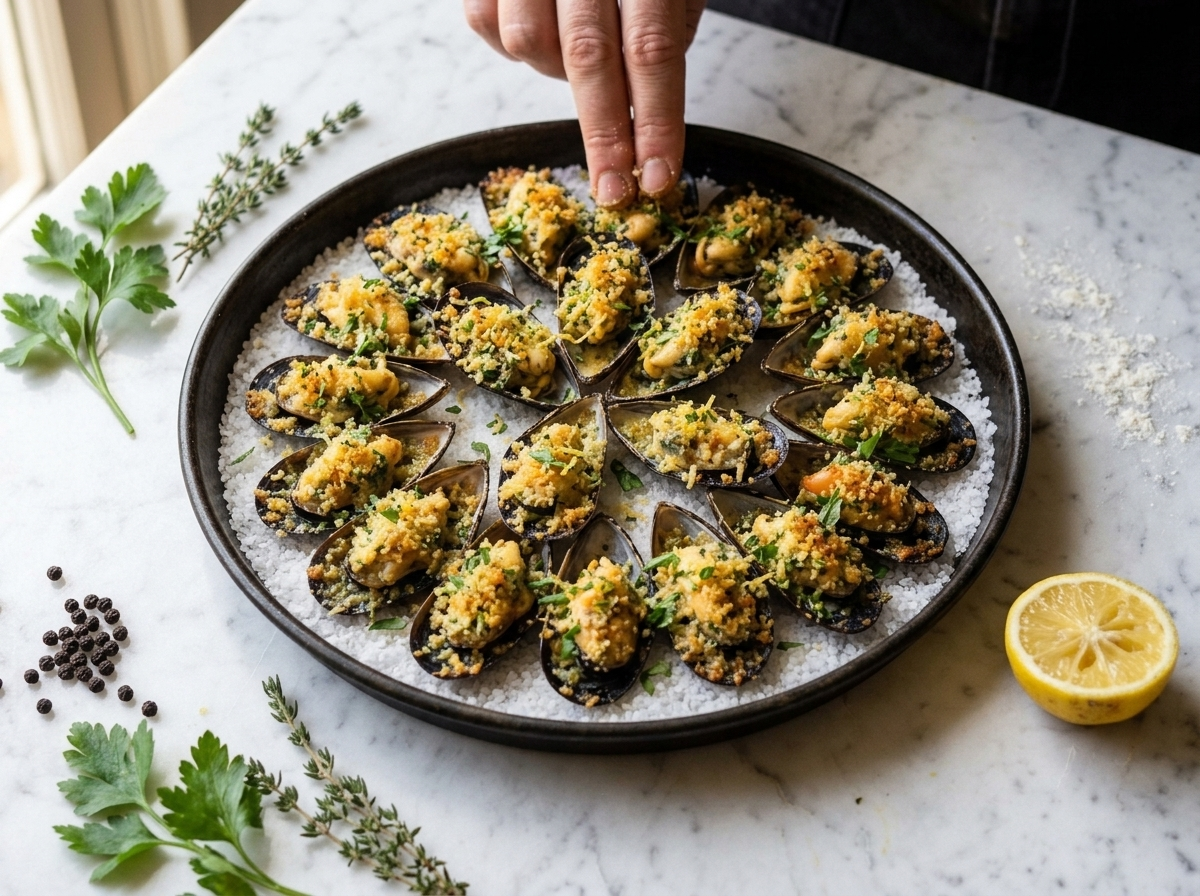
- Spread the coarse sea salt in an even layer across a rimmed sheet pan. Nestle the half-shell mussels into the salt so they sit level and don't tip.
- Press a heaped teaspoon of the breadcrumb mixture firmly onto each mussel, covering it in an even layer. Drizzle a few drops of olive oil over the top of each.
- Bake on the top rack of the oven for 8 to 10 minutes, until the topping is golden at the edges. Switch to grill / broil for the final 2 minutes to blister the crust to an even amber color.
- Remove from the oven and serve immediately on the tray or transfer to a flat board. Put lemon wedges alongside.
Notes
Tips for Success
- Steam mussels only until they just open – 2 to 3 minutes max – so they stay plump after baking.
- Use coarse, not fine, breadcrumbs: they stay textured under the grill rather than clumping into a paste.
- Press the breadcrumb topping firmly onto each mussel half so it doesn’t slide off during baking.
- Arrange the mussels in a single tight layer on a bed of coarse salt to keep them level in the oven.
- Switch to the grill setting for the final 2 minutes to blister the crust to an even amber color.
Variations
- Add a pinch of dried chili flakes and a small amount of ‘nduja to the breadcrumb mix for a Calabrian heat.
- Swap parsley for a mix of fresh thyme and oregano for a more herb-forward, southern Italian profile.
- Stir 1 tablespoon of finely grated Parmigiano into the crumbs for a slightly nuttier, richer golden crust.
Storage and Reheating
Cozze gratinate are best eaten straight from the oven. The breadcrumb crust softens as the mussels cool and does not fully recover.
If you have leftovers, keep them in an airtight container in the fridge for up to 1 day. Reheat in a hot oven at 220 C / 425 F for 5 minutes, uncovered, to crisp the topping back up. A microwave will make the crumbs soggy – skip it.
The raw breadcrumb topping can be mixed and stored in the fridge, covered, for up to 8 hours before assembly. Do not top the mussels until just before baking.
Serving Suggestions
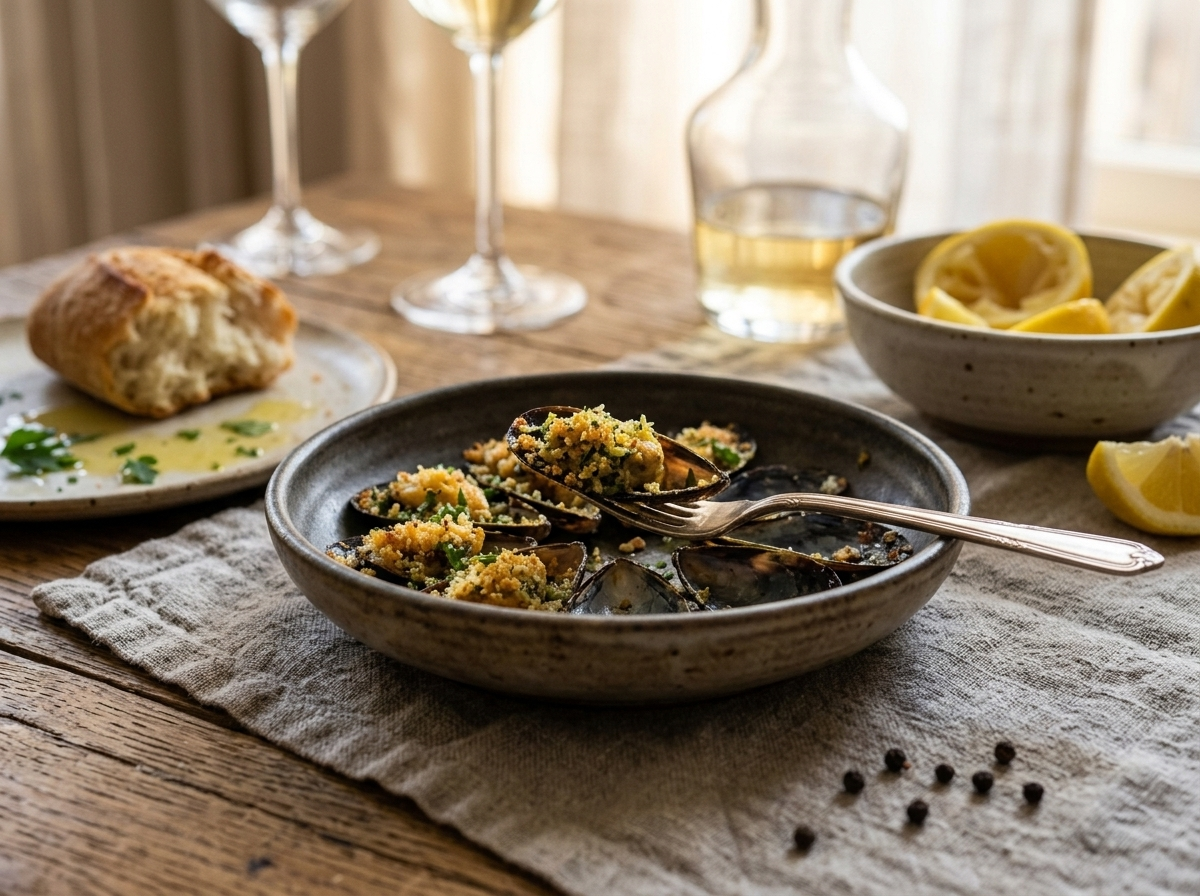
Serve cozze gratinate directly from the baking tray or a flat wooden board, with lemon wedges alongside. Crusty bread is the standard companion – you’ll want something to catch the juices that pool in the shells.
As a starter, 4 to 6 mussels per person works well before a fish-based main. Pair with a cold, mineral white wine: Vermentino di Sardegna, Greco di Tufo, or a Sicilian Grillo all cut nicely through the richness of the olive oil crust.
For a casual spread, cozze gratinate sit well next to other antipasti di mare like marinated anchovies, grilled calamari, or clams with white wine. Keep the table simple – good olive oil, bread, and a cold bottle are all you need.
FAQ
Why is the breadcrumb topping on my cozze gratinate soggy instead of crispy?
Soggy crumbs usually mean either the breadcrumbs were too fine, or the mussels released a lot of liquid during baking. Use coarse, day-old bread crumbs and make sure the mussels are well-drained after the initial steaming. A 2-minute grill blast at the end solves most texture problems.
Can I use frozen mussels instead of fresh ones for this recipe?
You can use frozen half-shell mussels, which are already cooked and opened. Skip the initial steaming step entirely and go straight to topping and baking. The texture will be slightly firmer than fresh, but the result is still good.
How far ahead can I prep the mussels before baking them for a dinner party?
You can steam and half-shell the mussels up to 2 hours in advance and keep them covered in the fridge. Mix and refrigerate the breadcrumb topping separately. Top the shells and slide them into the oven just before your guests sit down.
What white wine pairs best with cozze gratinate?
A dry, mineral southern Italian white works best – Vermentino, Greco di Tufo, or Falanghina all complement the briny mussel flavor without competing with the herbed crust. Avoid oaked whites, which tend to overpower the dish.
Are cozze gratinate gluten-free?
No, the classic recipe uses wheat-based breadcrumbs. You can make a gluten-free version by using gluten-free bread or certified gluten-free dried breadcrumbs in the topping – the texture is slightly different but works.
What is the difference between cozze gratinate and cozze au gratin?
They are the same dish – cozze gratinate is the Italian name, while ‘au gratin’ is the French-origin term that found its way into Italian restaurant menus. Both describe mussels topped with breadcrumbs and baked until golden. The Italian version typically uses olive oil rather than butter and leans on parsley and garlic rather than cream or cheese.