
Jump to Recipe
The Negroni is one of Italy’s most copied aperitivo cocktails, and it asks almost nothing of you: three ingredients, equal parts, stirred cold.
The origin is Florence, sometime around 1919. Count Camillo Negroni reportedly asked a bartender to strengthen his Americano by swapping soda water for gin. The ratio stayed equal, the drink stayed bitter, and bars worldwide have been making it the same way ever since.
What makes or breaks it is technique. Stirring, not shaking, keeps the drink clear and properly chilled without diluting it too fast. A mixing glass and a good bar spoon matter more than an expensive gin.
Use a gin with enough botanical backbone to hold its own against Campari’s bitterness. A London Dry style works consistently. The sweet vermouth should be fresh – an open bottle left in a cupboard for months will flatten the whole drink.
Why You’ll Love This Recipe
- Three ingredients, no bartending experience required
- Ready in under five minutes, start to finish
- Scales easily for a pitcher when guests arrive
- Bitter, herbal, and citrus notes stay in balance
Ingredient Notes
- Gin: A London Dry gin such as Tanqueray or Beefeater holds up to Campari’s bitterness without disappearing. Avoid heavily floral or cucumber-forward gins here – they get lost.
- Campari: Campari is non-negotiable for a classico. It provides the signature red color and bitter orange-herb backbone that defines this drink.
- Sweet vermouth: Carpano Antica Formula or Punt e Mes are the Italian benchmarks. Martini Rosso works fine on a budget. Refrigerate the bottle after opening and use within four to six weeks.
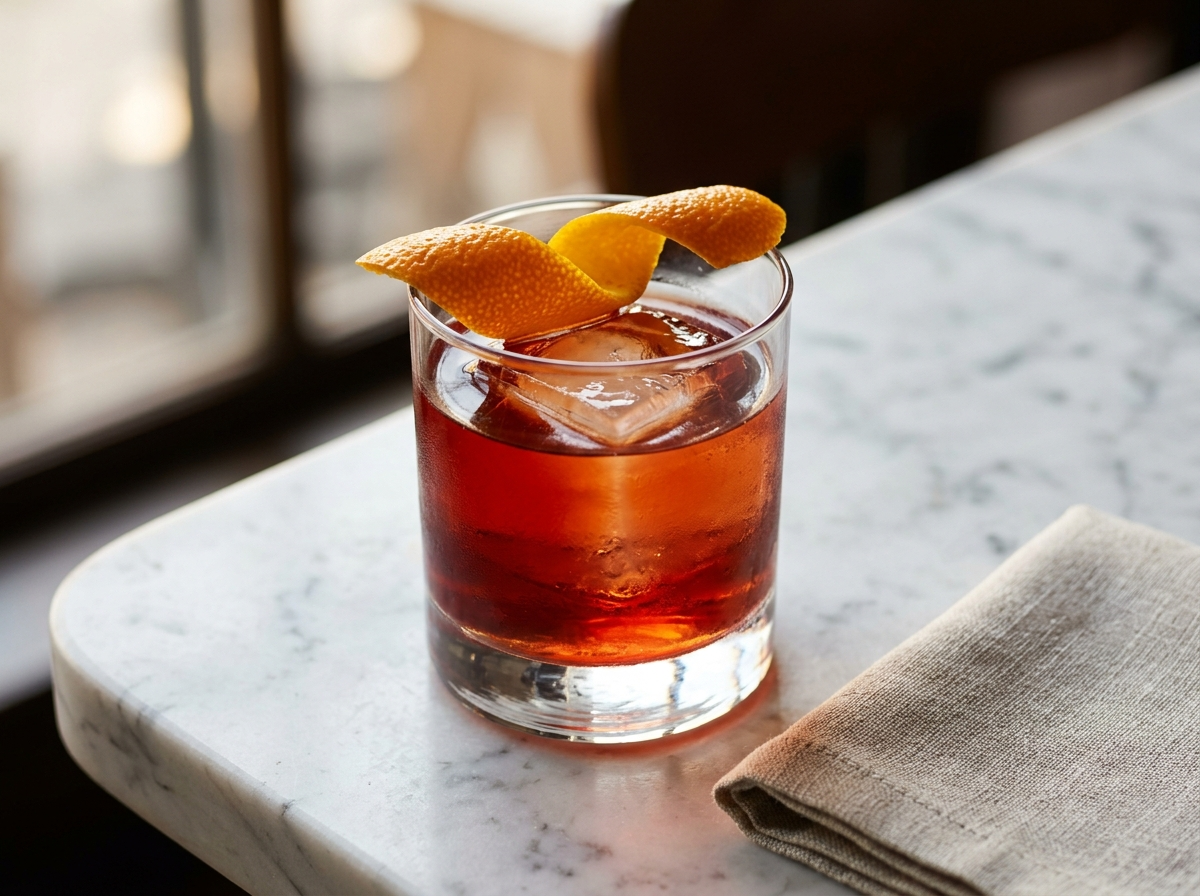
- Orange peel: Use a wide strip of navel or blood orange peel. You’re expressing the oils over the glass, not squeezing juice in – hold the peel skin-side down and press sharply over the drink.
- Ice: A single large ice cube melts slower and dilutes less once the drink is served. For stirring in the mixing glass, use plenty of standard cubes to chill the liquid quickly.
Negroni Classico: The Original Three-Ingredient Italian Aperitivo
Ingredients
Method
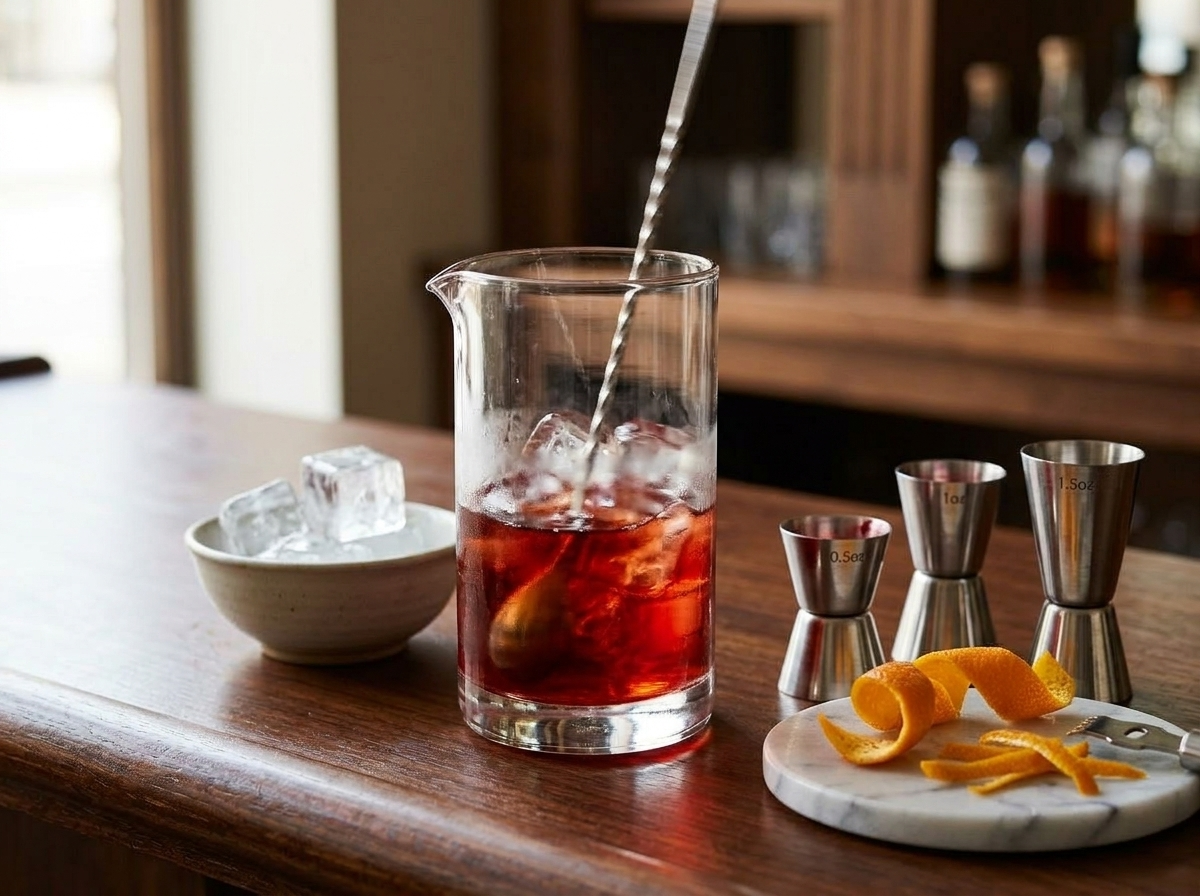
- Fill your mixing glass two-thirds full with standard ice cubes.
- Measure 30 ml gin, 30 ml Campari, and 30 ml sweet vermouth using a jigger and pour all three into the mixing glass.
- Insert a bar spoon and stir in smooth, continuous circles for 30 seconds, until the outside of the mixing glass feels cold and slightly frosty.
- Place one large ice cube in a rocks glass.
- Strain the cocktail through a julep or Hawthorne strainer into the rocks glass over the large ice cube.
- Cut a wide strip of orange peel about 5 cm long. Hold it skin-side down over the glass and press sharply to express the oils onto the surface of the drink.
- Run the peel around the rim of the glass, then drop it in or balance it on the ice cube. Serve immediately.
Notes
Tips for Success
- Stir for a full 30 seconds over ice to chill the drink properly without over-diluting.
- Chill your rocks glass in the freezer for 10 minutes before pouring – a cold glass keeps the drink colder longer.
- Use a julep strainer or Hawthorne strainer to catch ice chips when pouring from the mixing glass.
- Express the orange peel by holding it skin-side down and snapping it sharply over the glass, then run the peel around the rim before dropping it in.
- Refrigerate open vermouth and replace any bottle older than six weeks – stale vermouth is the most common reason a Negroni tastes flat.
Variations
- Negroni Sbagliato: swap gin for dry Prosecco, added last, for a lighter and slightly effervescent version.
- Mezcal Negroni: replace gin with a smoky joven mezcal for a charred, earthy twist on the original ratio.
- Boulevardier: replace gin with a rye or bourbon whiskey for a warmer, caramel-edged version popular in the US.
Storage and Reheating
A Negroni classico is made to order, but you can batch it for a party. Combine equal parts gin, Campari, and sweet vermouth in a clean glass bottle or jar, seal tightly, and refrigerate for up to two weeks. The alcohol preserves the mixture well.
To serve from a batched bottle, pour 90 ml (3 oz total, 30 ml per ingredient) directly over a large ice cube in a rocks glass. No stirring in a mixing glass needed – it’s already combined. Add the orange peel to finish.
Do not freeze the batch. The vermouth’s aromatics degrade at freezer temperatures and the drink will taste flat when thawed.
Serving Suggestions
A Negroni classico is an aperitivo drink, meaning it’s served before the meal, not during or after. Pair it with small savory bites: thin slices of prosciutto, green olives or crispy stuffed olive ascolane, or small crostini with gorgonzola. The bitterness opens the appetite rather than dulling it.
In Italy, aperitivo hour runs roughly 6 to 8 PM. Serve the drink alongside a spread of olives, salted nuts, and thin-sliced cured meats set out on a board. Keep portions small – the goal is to drink slowly before sitting down to dinner.
If you want a lower-alcohol option alongside it, a simple sparkling water with a lemon wheel sits well on the same table without competing with the Negroni’s profile.

FAQ
Why does my Negroni taste too bitter or too sweet?
The balance is off if one ingredient is measured incorrectly. Stick to a strict 1:1:1 ratio by volume and use a jigger every time. A low-quality or expired sweet vermouth can also make the drink taste harsh rather than balanced.
Can I use dry vermouth instead of sweet vermouth in a Negroni classico?
A dry vermouth will make the drink sharper and more austere – technically a different cocktail sometimes called a Dry Negroni. For the classico, sweet red vermouth is the correct call. Carpano Antica or Martini Rosso are both reliable.
Can I batch a Negroni classico in advance for a dinner party?
Yes, and it works well. Mix the three ingredients in equal parts in a sealed bottle and refrigerate for up to two weeks. Pour 90 ml directly over ice per glass when ready to serve and add a fresh orange peel each time.
What food pairs well with a Negroni classico at an aperitivo spread?
Salt cuts the bitterness and lets the drink’s herbal notes show. Green olives, prosciutto, crispy calamari fritti, or salted almonds all work. Avoid sweet bites – they make the Campari taste sharper than it should.
Is a Negroni classico gluten-free?
All three standard ingredients – gin, Campari, and sweet vermouth – are distilled or fermented from sources that are considered gluten-free in their final form. Most celiac organizations consider distilled spirits safe, but check individual brand labels if you have a severe sensitivity.
What is the difference between a Negroni classico and an Americano?
An Americano uses the same Campari and sweet vermouth base but tops with soda water instead of gin. It’s lighter, lower in alcohol, and slightly longer in the glass. The Negroni replaced the soda with gin, making it a much stronger, spirit-forward drink.