Jump to Recipe
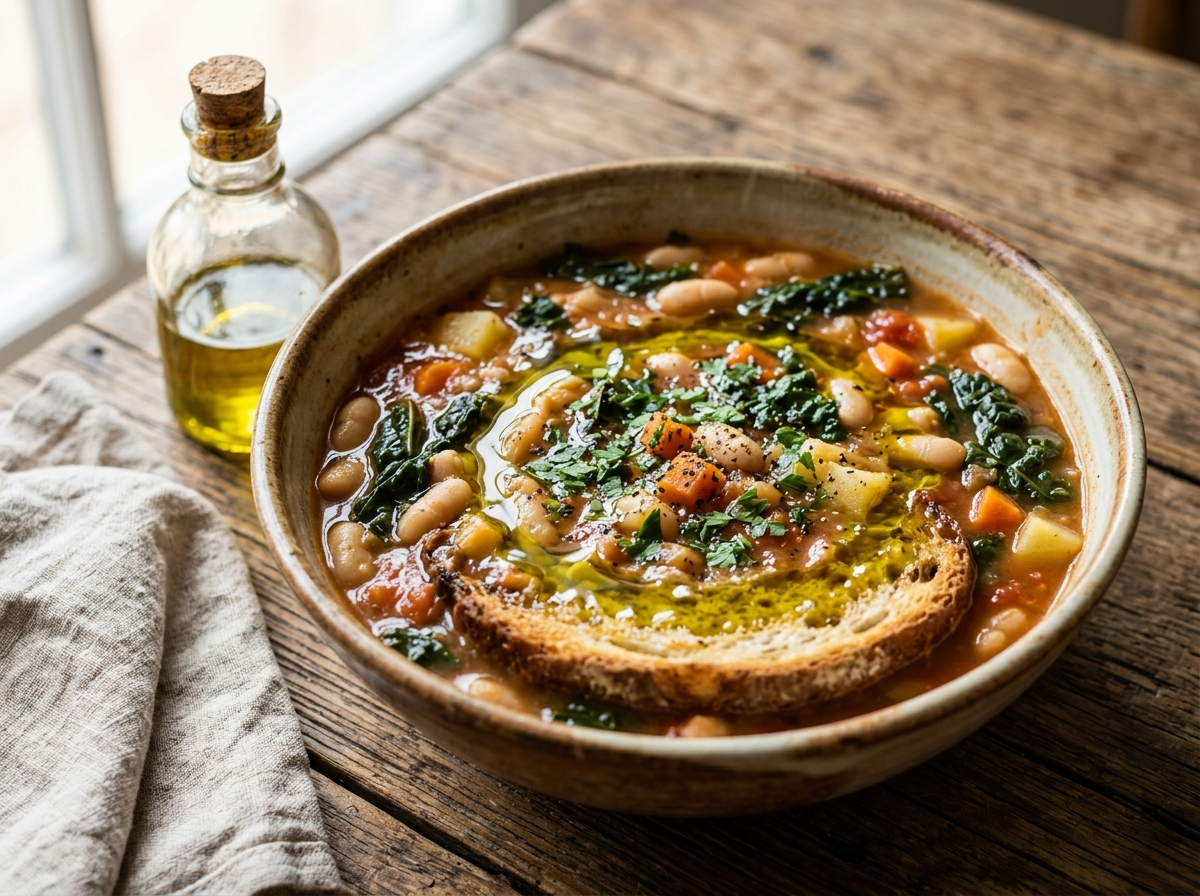
Zuppa frantoiana toscana is a thick Tuscan vegetable and bean soup built from whatever’s ready in the garden come late fall, finished with a heavy pour of new-harvest extra virgin olive oil straight from the frantoio, the olive press.
The name comes from that press. Tuscan farmers used to bring their olives in for pressing in November and eat this soup while they waited, ladling it over stale bread and dousing it with oil so fresh it still tasted grassy and sharp.
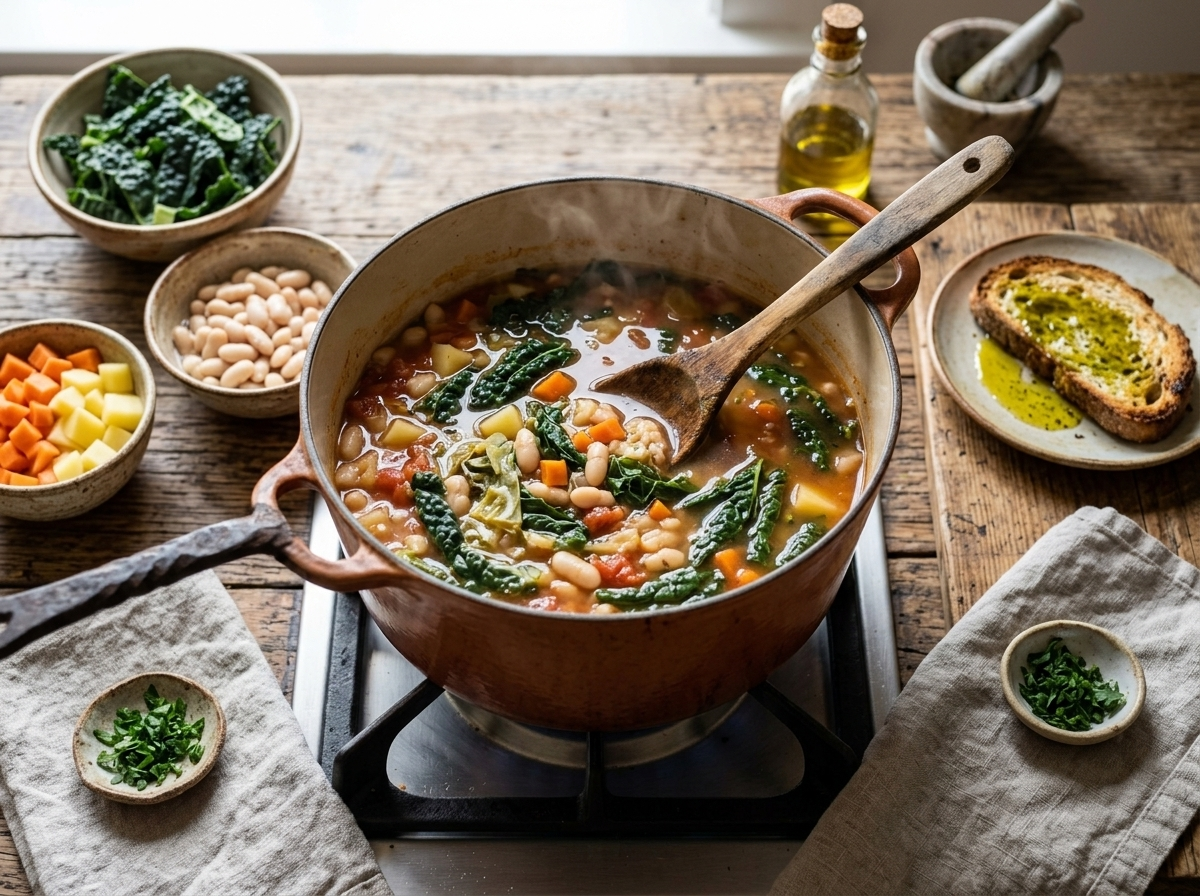
The base is a soffritto of onion, celery, carrot and leek, built up with potato, cavolo nero, savoy cabbage and cannellini beans in a slow-reducing broth. Nothing gets blended smooth. You want spoonfuls of vegetable and bean sitting in a broth that’s thickened on its own from starch.
The one thing that trips people up is boiling it too hard. Keep it at a bare simmer once the vegetables go in, or the potato breaks apart and clouds the whole pot.
Why You’ll Love This Recipe
- Uses one pot and pantry vegetables you likely already have
- Tastes better the next day once the flavors settle
- Naturally thickens without cream or flour
- Stretches a handful of ingredients into six full bowls
Ingredient Notes
- Cannellini beans: Canned beans keep this weeknight-friendly. Dried beans (250 g, soaked overnight and simmered until tender) give a creamier texture if you have the extra hour.
- Cavolo nero: Also called Tuscan kale or lacinato kale. Regular curly kale works but needs an extra 5 minutes to soften.
- Savoy cabbage: Adds sweetness and body. Green cabbage is a fine stand-in if savoy isn’t at the market.
- Parmesan rind: Optional but worth saving from your cheese wedge. It deepens the broth without making the soup cheesy. Skip it for a dairy-free pot.
- Stale Tuscan bread: Unsalted country bread, a few days old, holds up in the broth. Fresh bread turns to mush almost instantly.
- New-harvest olive oil: Use the freshest, most peppery extra virgin oil you can find for the finishing drizzle. It’s the difference between a good soup and the real thing.
Zuppa Frantoiana Toscana: Tuscan Olive Harvest Soup
Ingredients
Method
- Heat 30 ml olive oil in a large Dutch oven over medium heat.
- Add the onion, celery, carrot and leek. Cook 8 to 10 minutes, stirring often, until soft and translucent but not browned.
- Stir in the garlic and cook 1 minute until fragrant.
- Add the tomato paste and cook 2 minutes, stirring, until it darkens slightly.
- Add the potatoes, cabbage, cavolo nero, zucchini, parmesan rind and rosemary sprig. Pour in the vegetable stock and bring to a boil.
- Reduce heat to a bare simmer, cover partially, and cook 35 to 40 minutes until the vegetables are tender. Keep the heat low, a hard boil breaks down the potato and clouds the broth.
- Stir in the cannellini beans. Mash a spoonful against the side of the pot to thicken the broth, then simmer 10 more minutes.
- Remove the rosemary sprig and parmesan rind. Season with salt and pepper to taste.
- Place a slice of toasted bread in each bowl and ladle the hot soup over it.
- Let sit 2 to 3 minutes so the bread softens slightly without falling apart.
- Drizzle generously with new-harvest olive oil and serve immediately.
Notes
- Save a parmesan rind from your last cheese wedge specifically for this soup.
- Use the most peppery new-harvest olive oil you own for the finishing drizzle.
- Keep the simmer gentle once vegetables go in, not a rolling boil.
- Mash some beans into the broth midway for natural thickening.
- Toast bread until dry and firm so it holds up under the broth.
Tips for Success
- Cut all vegetables to a similar 1 cm dice so everything cooks through at the same rate.
- Cook the soffritto slowly over medium-low heat for a full 8 to 10 minutes until it turns soft, not browned.
- Mash a spoonful of cooked beans against the pot side to thicken the broth without adding cream or flour.
- Toast the bread until dry and firm, not golden brown, so it soaks up broth without falling apart instantly.
- Rest the soup off heat for 5 minutes before serving so the flavors settle and the broth isn’t scalding hot.
Variations
- Add a rind of pecorino instead of parmesan for a sharper, more rustic finish typical of Tuscan farmhouse kitchens.
- Stir in diced pancetta with the soffritto for a meatier version some Tuscan families make in winter.
- Skip the bread entirely and top each bowl with a poached egg for a heartier, protein-forward variation.
Storage and Reheating
Zuppa frantoiana toscana keeps for 4 days in the fridge in an airtight container. Leave the bread out until you’re ready to serve, since it turns mushy if it sits soaked in the broth overnight.
Freeze the soup without bread for up to 3 months in a freezer-safe container. Thaw overnight in the fridge, then reheat gently on the stovetop over medium-low heat, stirring occasionally, until hot through.
The broth thickens as it sits, so add a splash of water or stock when reheating to loosen it back to a spoonable consistency. Finish with fresh olive oil after reheating, not before, since heat dulls its flavor.
Serving Suggestions
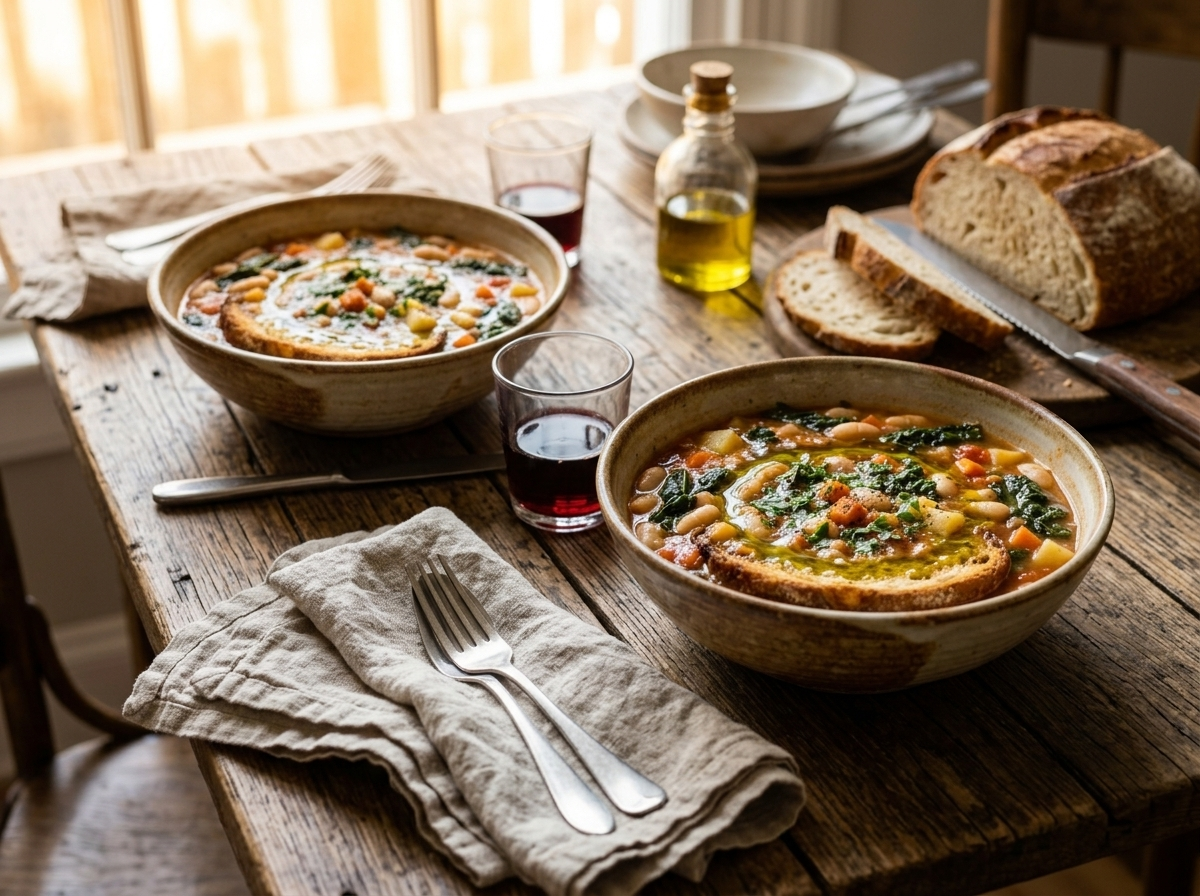
Ladle zuppa frantoiana toscana over a slice of toasted, unsalted country bread and let it soften for a couple of minutes before eating. A generous drizzle of fresh olive oil and a crack of black pepper right before serving makes the difference here.
Pair it with a simple green salad dressed in lemon and olive oil, or a small plate of cured salumi if you want something heartier alongside.
For drinks, a young Chianti or a light Tuscan white like Vermentino both work well against the earthy vegetables and beans.
FAQ
Why is my zuppa frantoiana toscana watery instead of thick?
It usually means the beans weren’t mashed into the broth. Scoop out a spoonful of cooked cannellini beans partway through simmering, mash them against the side of the pot, and stir them back in. The starch thickens the broth naturally without needing cream or flour, and a hard boil that breaks down the potato too fast can also leave the broth thin and cloudy instead of body-rich.
Can I use kale instead of cavolo nero in zuppa frantoiana toscana?
Yes, curly kale works as a substitute for cavolo nero, though it’s slightly tougher and needs about 5 extra minutes of simmering to soften. Strip the stems the same way you would with cavolo nero. The flavor stays close, just a touch more peppery.
Can I make zuppa frantoiana toscana ahead and freeze it?
Yes, the soup freezes well for up to 3 months as long as you leave the bread out. Cool it fully before freezing, thaw overnight in the fridge, and reheat gently on the stovetop, adding a splash of water since the broth thickens once chilled. Add fresh bread and oil only after reheating.
What goes well with zuppa frantoiana toscana besides bread?
A simple lemon-dressed green salad or a small plate of cured salumi both pair well alongside the soup. For drinks, a young Chianti or a light Vermentino complements the earthy vegetables and beans without competing with the olive oil finish.
Is zuppa frantoiana toscana gluten free?
Not as traditionally served, since it’s ladled over bread, but the soup itself is gluten free if you skip that step or swap in a gluten-free bread. Check that your vegetable stock and tomato paste are labeled gluten free as well, since some brands add wheat-based thickeners.
What’s the difference between zuppa frantoiana and ribollita?
Ribollita is literally reboiled, made by simmering leftover zuppa frantoiana or a similar vegetable soup a second time with stale bread mixed directly into the pot until it breaks down. Zuppa frantoiana is served fresh, with bread on the bottom of the bowl rather than cooked into the soup itself.