
Jump to Recipe
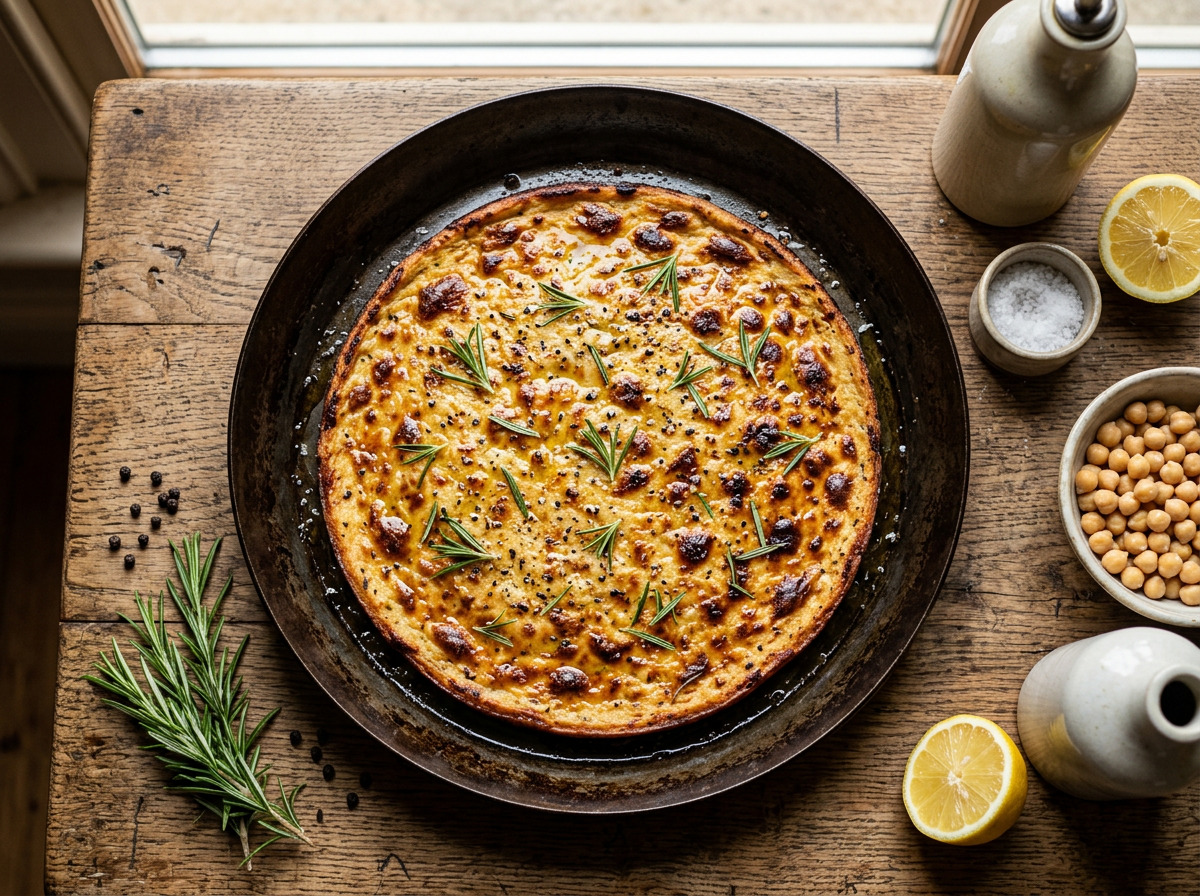
Farinata di ceci ligure is a thin Ligurian chickpea flour flatbread baked hot and fast until the top blisters gold and the center sets custardy under a crisp crust.
It comes from Genoa and the coastal towns nearby, where street vendors still sell wedges of it wrapped in paper alongside other Ligurian flatbreads like panigacci, dusted with black pepper.
The batter is chickpea flour, water, and olive oil, whisked and left to rest for at least 4 hours so the flour hydrates fully and the foam on top can be skimmed off. Skip the rest and you get a gritty, uneven bake.
I bake mine at 250C / 480F in a well-oiled steel pan until the edges pull away and dark spots show on top, about 20 to 25 minutes.
No wheat flour, no eggs, no dairy, just five ingredients and a hot oven.
Why You’ll Love This Recipe
- Naturally gluten-free with just five pantry ingredients
- Only 20 minutes of hands-on work total
- Crisp edges and a custardy center in every slice
- Keeps for days and reheats fast in a hot oven
Ingredient Notes
- Chickpea flour: Use fine Italian farina di ceci if you can find it. Coarser chickpea flour works but needs a longer rest to fully hydrate.
- Water: Lukewarm tap water is fine. Aim for roughly 1 part flour to 3 parts water by volume for a pourable, crepe-thin batter.
- Extra virgin olive oil: Use a fruity oil in both the batter and the pan. It’s what gives farinata its crisp edge and color.
- Fine sea salt: Dissolves cleanly into the batter. Add a pinch of flaky salt after baking if you want extra crunch on top.
- Fresh rosemary (optional): A few leaves pressed into the batter before baking add a resinous note used in some Ligurian versions.
- Black pepper: Freshly cracked and added right after baking, this is the classic Genoese finish, not stirred into the batter.
Crispy Farinata di Ceci Ligure (Chickpea Flatbread)
Ingredients
Method
- Whisk chickpea flour into the lukewarm water a little at a time in a large bowl, until no lumps remain.
- Whisk in 60 ml olive oil and the salt until smooth.
- Cover loosely and rest at room temperature for at least 4 hours, or overnight in the fridge, until a layer of foam forms on top.
- Skim the foam off with a spoon just before baking.
- Heat the oven to 250 C / 480 F with the empty pan inside for at least 10 minutes.
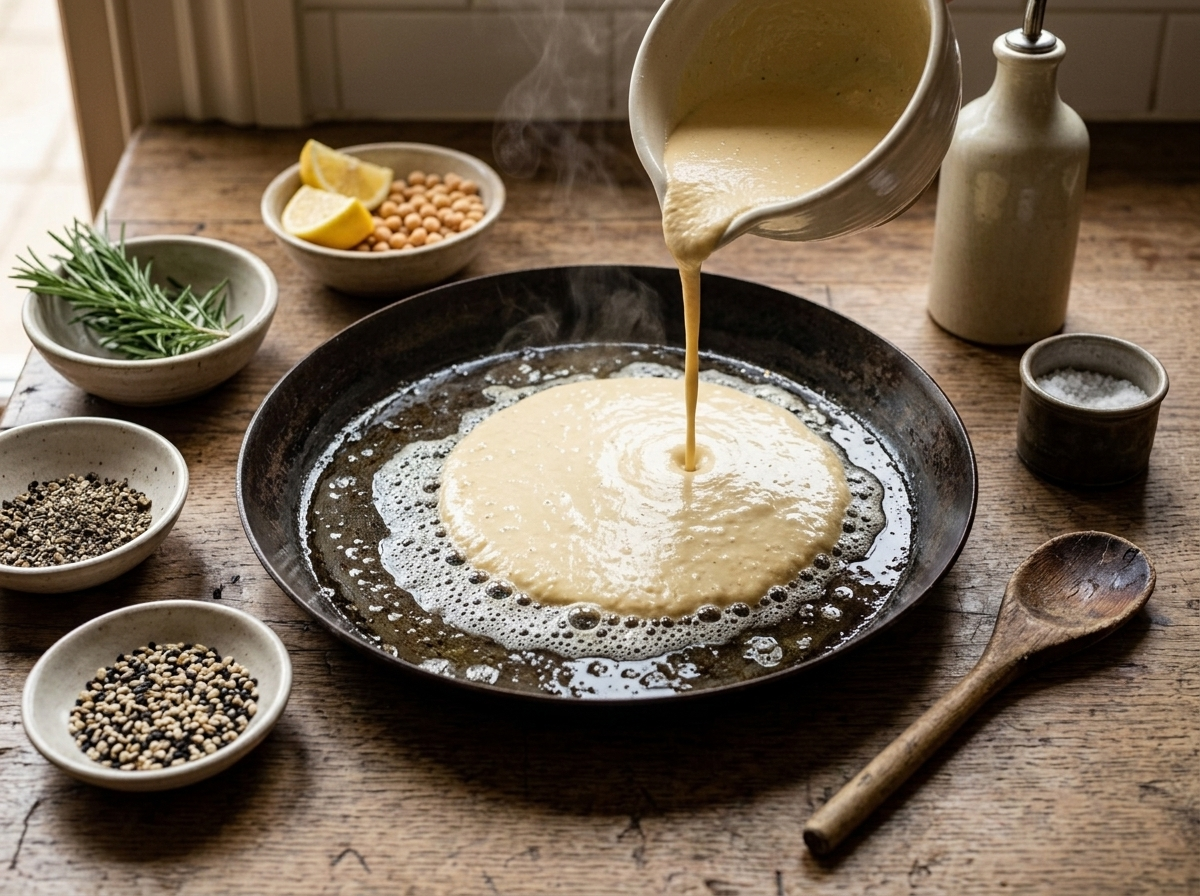
- Carefully remove the hot pan, pour in the 30 ml olive oil, and swirl to coat the surface.
- Pour the batter into the hot oiled pan to a depth of 0.8 to 1 cm, and scatter rosemary over the top if using.
- Bake for 20 to 25 minutes, until the top is golden with a few dark blistered spots and the edges pull away from the pan sides.
- If the top isn't blistered enough, broil for 2 to 3 minutes, watching closely so it doesn't burn.
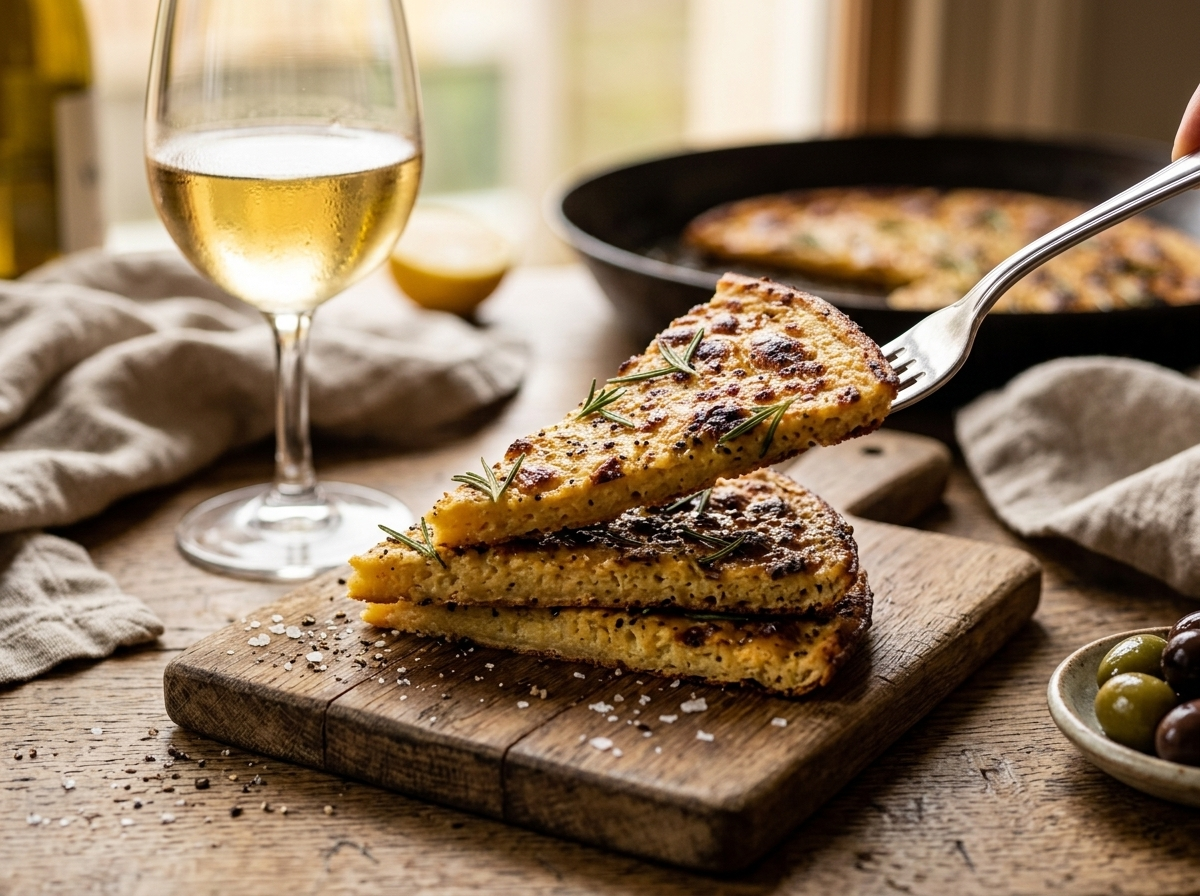
- Slide the farinata onto a board, cut into wedges, and finish with black pepper. Serve hot.
Notes
- Rest batter at least 4 hours; overnight in the fridge gives smoother texture.
- Use a well-seasoned steel or copper pan, not nonstick, for a crisp bottom.
- Preheat the oiled pan in the oven before pouring in the batter.
- Skim the foam off the batter's surface right before baking.
Tips for Success
- Skim the foam off the rested batter before baking, or it turns into gritty specks on top of the farinata.
- Preheat the oiled pan in the oven for 10 minutes before pouring batter, so the bottom starts crisping instantly.
- Rest the batter at room temperature for at least 4 hours, or overnight in the fridge for a smoother texture.
- Pour the batter no thicker than 1 cm in the pan, or the center stays wet after the edges brown.
- Finish under the broiler for 2 to 3 minutes if the top isn’t blistered enough after the main bake.
Variations
- Scatter thinly sliced white onion over the batter before baking for a sweeter, softer version common inland.
- Press extra rosemary leaves and a splash more oil into the batter for a version closer to Tuscan cecina.
- Top baked farinata with soft stracchino or crumbled gorgonzola right out of the oven, a modern bar-snack riff.
Storage and Reheating
Farinata di ceci ligure keeps well at room temperature for a few hours, covered loosely so the crust doesn’t turn soft.
For longer storage, wrap cooled wedges and refrigerate for up to 3 days.
Reheat in a 200C / 390F oven for 6 to 8 minutes directly on the rack or a hot pan, until the edges crisp back up. Skip the microwave, it turns the crust rubbery and the center gummy.
Serving Suggestions
Farinata di ceci ligure is street food in Genoa, served plain in paper cones with black pepper and nothing else.
At home I cut it into wedges and serve it with a glass of dry Vermentino, or alongside a green salad and sliced tomatoes for a light lunch.
Leftover wedges make a good stand-in for bread next to a bowl of minestrone or a plate of cured meats and olives.
FAQ
Why is my farinata di ceci gummy in the middle instead of set?
A gummy center usually means the batter was poured too thick or the oven wasn’t hot enough before baking. Bake at 250C/480F with the pan preheated, and keep the layer around 0.8 to 1 cm so the heat sets the center while the top blisters. A weak oven or a cold pan is the most common cause.
Can I use besan instead of Italian farina di ceci?
Yes, besan works since both are ground from chickpeas, though besan is milled finer and can clump faster in water. Whisk it into the water gradually and strain out any lumps before resting the batter. The rest and bake times stay the same either way.
Can I make farinata di ceci batter the night before?
Yes, and it actually helps the texture. Cover it and refrigerate for up to 16 hours, since the flour hydrates further and the flavor turns slightly nuttier. Bring the batter back to room temperature and skim the foam again before pouring it into the hot pan.
What wine goes with farinata di ceci ligure?
A dry Ligurian white like Vermentino or Pigato is the classic match, the same pour that turns up alongside dishes like sauté di vongole, since the acidity cuts through the olive oil. An unoaked Sauvignon Blanc or simple Vernaccia works if you can’t find either. Skip heavy reds, they overpower the flatbread’s mild, nutty flavor.
Is farinata di ceci gluten free?
Yes, farinata is naturally gluten-free since it’s made only from chickpea flour, water, olive oil, and salt, with no wheat flour in the batter. Just double check any toppings, like sliced bread served alongside, if you’re feeding someone with celiac disease.
What’s the difference between farinata and socca?
Farinata di ceci ligure and socca use the same base batter of chickpea flour, water, and olive oil, but socca comes from Nice and is traditionally scraped into rough, torn pieces instead of cut into wedges. Farinata also tends to bake slightly thicker with a more custardy center.