
Jump to Recipe
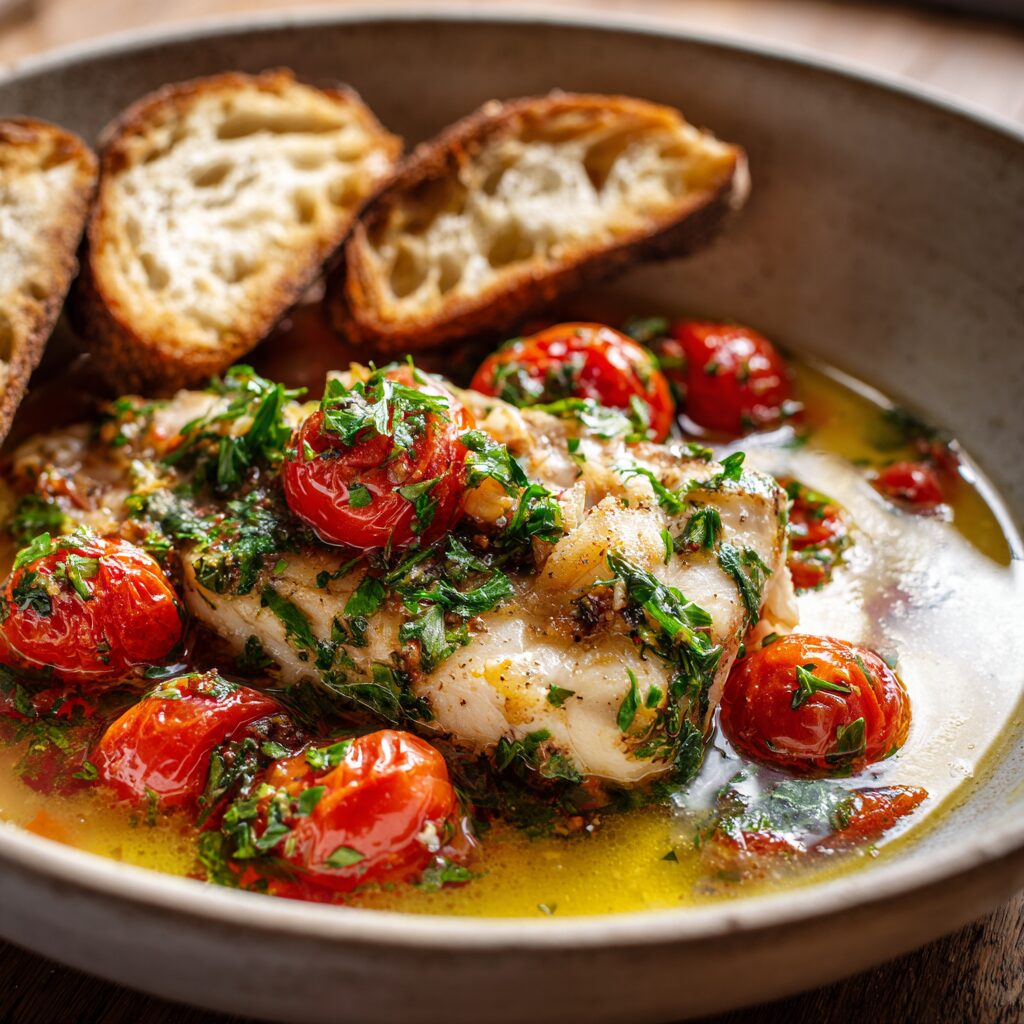
I still remember the steam rising from my nonna’s pan the first time she taught me this pesce all’acqua pazza simple recipe — a bright, tomato and white wine bath that smells like sunlit evenings on the coast.
This italian poached fish method, nicknamed “crazy water,” cooks fillets in a gentle swirl of tomatoes and olive oil so the flesh stays tender and just set. I reach for firm fish that hold together, slice sturdy bread for soaking up the sauce, and finish with a scatter of parsley and a final splash of white wine.
It’s a fast, weeknight-friendly fish dish that looks restaurant-fancy but comes together in minutes. I’ll guide you through smart swaps and timing cues so you get confident results without fuss.
Key Takeaways
- Acqua pazza uses a tomato-white wine bath to gently poach fish.
- Choose firm fillets so they hold shape while cooking.
- Finish with good olive oil and fresh parsley for brightness.
- Serve with sturdy bread to mop up the saucy base.
- Quick to make — perfect for weeknight meals in minutes.
Why this pesce all’acqua pazza simple recipe works
A quick sear and a covered skillet are the small moves that turn a fragile fillet into a tender, restaurant-worthy meal. I use this split technique so the fish keeps its shape while staying silky inside.
Half-seared, half-steamed for tender white fish
I start by searing fillets briefly to set the surface, then slide them into a shallow pan of simmering sauce and cover. The trapped steam finishes the cook gently, giving poached fish a delicate, flaky texture without overcooking.
Tomato, dry white wine, garlic, and olive oil build depth
The broth forms as cherry tomatoes release juice and meet a splash of dry white wine, olive oil, onion, and garlic. A touch of red pepper adds warmth while a little water and careful salt and pepper balance the sauce so nothing tastes flat.
Weeknight-fast, yet special enough for guests
Once the sauce bubbles, you’ll cook minutes, rarely more than a handful, making this italian poached technique a reliable fish dish for busy evenings. No fancy gear—just a good skillet and moderate heat—and you get that true fish crazy water finish.
- Quick sear protects fragile flesh.
- Sauce + cover = even, gentle cooking.
- Bright wine and tomato lift the flavors in minutes.
Ingredients you’ll need for acqua pazza magic
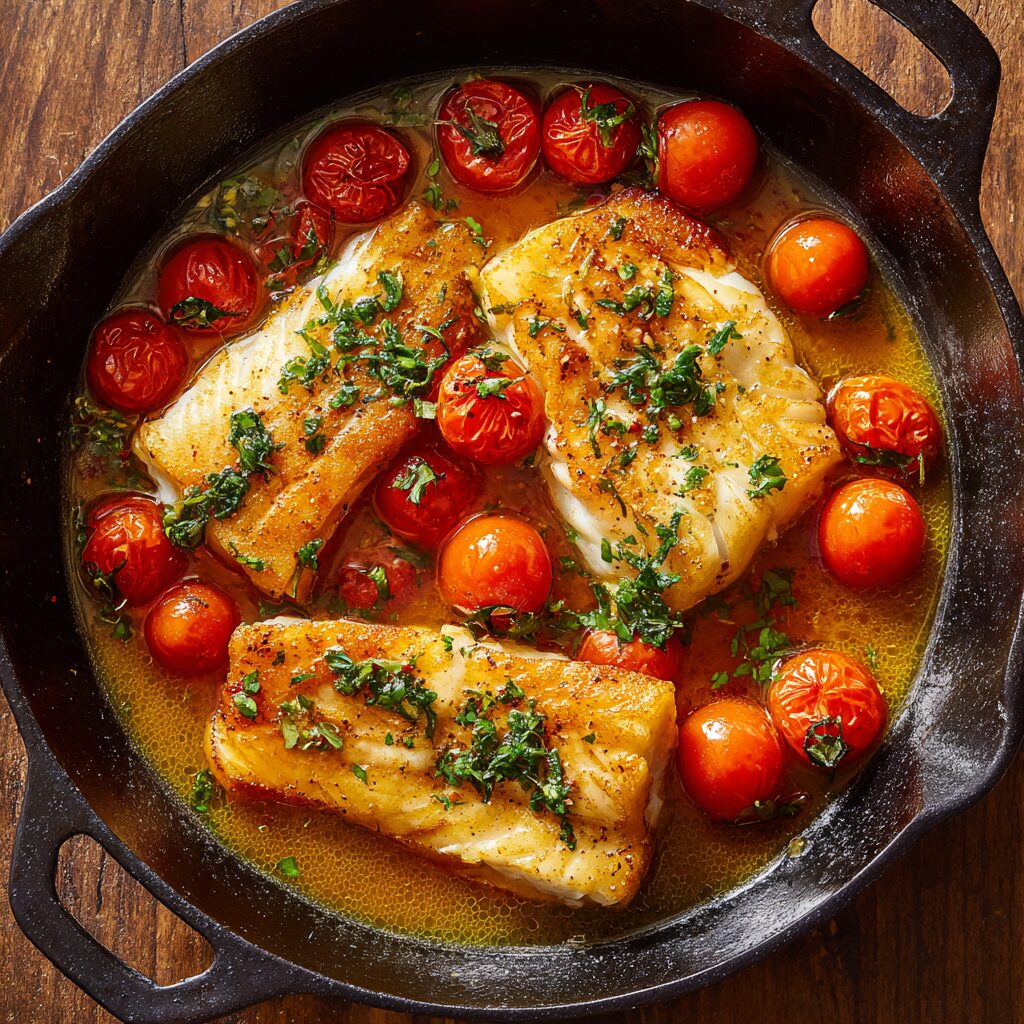
Start by shopping smart: the fish you buy sets the tone for the whole dish. I favor firm white fish like cod, halibut, snapper, tilapia, pollock, or barramundi. Skin-on pieces hold together best; avoid very thin fillets, oily fish, or steaks that dry out.
Core proteins and prep
Buy even-thickness white fish fillets for steady cooking. If I only find small whole fish, I score the skin so heat penetrates and the flesh cooks evenly.
Aromatics, liquids, and herbs
Gather onion, garlic cloves, a pinch of red pepper, and olive oil. Use dry white wine for brightness; swap low-sodium chicken or fish stock if you skip alcohol. Cherry tomatoes burst into sauce, and I finish with parsley or basil. Capers are optional for a briny pop.
Bread and seasoning
Choose ciabatta or sourdough and slice on the diagonal so crostini stay crisp under saucy topping. Measure salt and pepper carefully—about a teaspoon salt for the whole pan is a good starting point—and taste as you go.
| Fish | Texture | Cook notes |
|---|---|---|
| Cod / Halibut | Firm, flaky | Great for even cooking; holds shape well |
| Snapper / Tilapia | Delicate yet steady | Cooks fast; watch minutes closely |
| Whole small fish | Skin-on, shaped | Score skin for even heat penetration |
| Capers / Herbs | Finishing elements | Add at end for brightness and brine |
pesce all’acqua pazza simple recipe: step-by-step in minutes
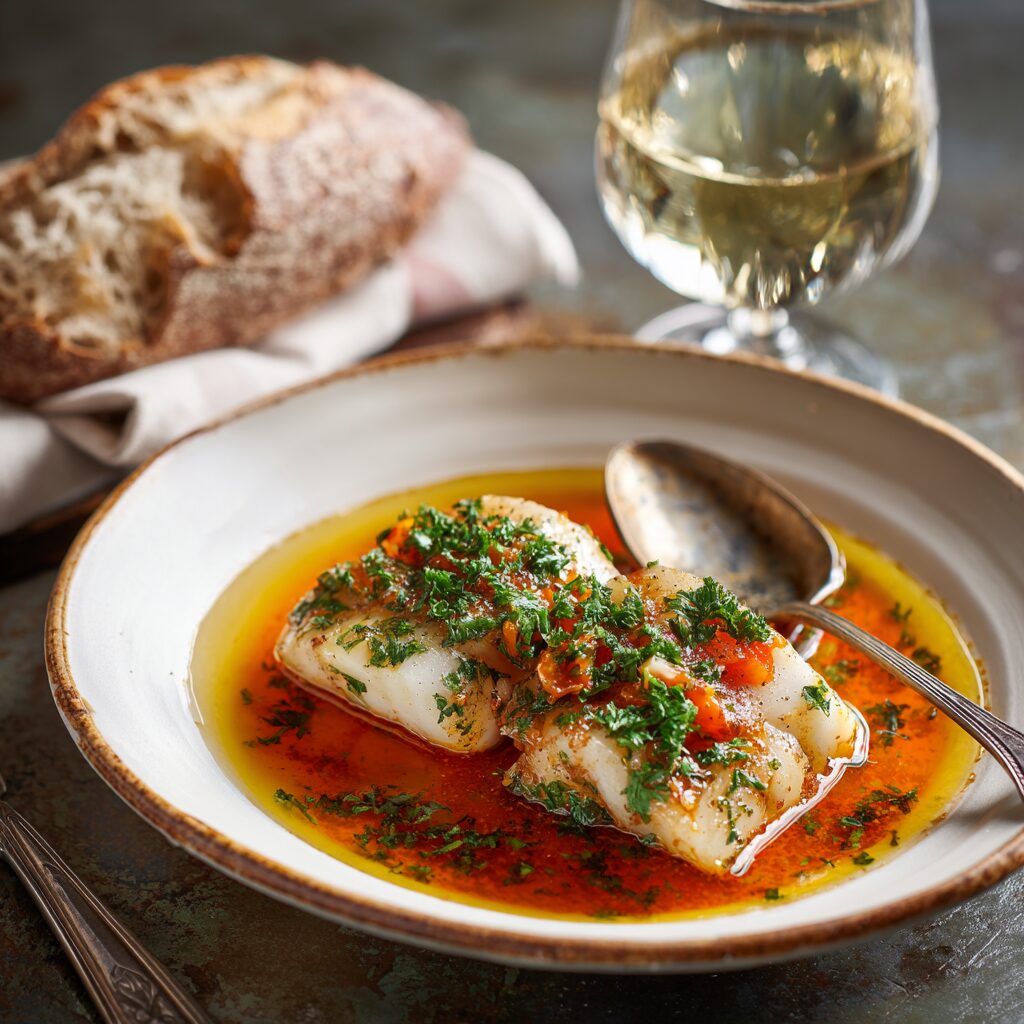
Start with a very hot cast-iron skillet so the fish forms a light crust in under a minute. I pat each fillet dry, then season with salt and pepper so the surface sets quickly when it hits the oil.
Season and sear to set the surface
Heat the skillet over high with a splash of olive oil. Add fillets and sear about 1 minute until they release easily. Transfer them cooked-side up to a plate.
Soften onion and garlic
Lower heat to medium. Add sliced onion, garlic cloves, and a pinch of red-pepper flakes. Cook about 5 minutes until the onion turns translucent and the garlic just begins to color.
Deglaze, add cherry tomatoes, and simmer
Pour in a splash of dry white wine to lift the fond. Add cherry tomatoes and cover for 5 minutes so the fruit bursts and makes a saucy base.
Balance liquid and poach gently
Uncover, then stir in 1/2 cup water and 1 teaspoon salt. Simmer 5 minutes, tasting and adjusting. Nestle the fillets into the sauce, cooked-side up.
Finish: herbs and olive oil
Cover and poach 3–4 minutes until the flesh is just opaque and flakes with a light touch. Scatter parsley or torn basil and drizzle extra virgin olive oil before serving.
- Pat dry, season, and sear: ~1 minute.
- Soften aromatics: ~5 minutes.
- Add tomatoes and wine; cover: ~5 minutes.
- Add water and 1 teaspoon salt; simmer: ~5 minutes.
- Poach fillets covered: 3–4 minutes. Finish with herbs and oil.
| Step | Timing | Key cue |
|---|---|---|
| Sear fillets | 1 minute | Releases from pan; light crust |
| Soften onion & garlic | 5 minutes | Onion translucent; garlic pale brown |
| Burst tomatoes & simmer | 5 minutes | Tomatoes collapse; sauce forms |
| Poach fish | 3–4 minutes | Flesh opaque and flakes easily |
Smart swaps and dietary tweaks
I learned early to match fillets by size so everything finishes at the same moment—no dried-out edges, just flaky flesh. Pick firm white fish like halibut, cod, snapper, or tilapia for steady results. Avoid swordfish, tuna, bonito, oily fish, and very thin fillets that overcook fast.
If you skip wine, swap in low-sodium chicken or fish stock instead of dry white wine. Taste before you add more salt—the stock can concentrate, so I reduce salt and then season at the end.
Turn the heat and the spice
Adjust red pepper to suit your table. I crank it for a lively kick or leave it out for children or sensitive eaters. Small changes to heat mean the dish still finishes in minutes.
Gluten-free and serving ideas
Rather than serve crusty bread, spoon the tomatoes and broth over polenta, roasted potatoes, or garlicky white beans. Whole fish works here too—score the skin and watch the cheeks and collar closely.
- I match fillets by thickness so cooking is even.
- Swap dry white for light stock and shave the salt down.
- More red pepper equals more heat; less keeps it gentle.
- For gluten-free, use polenta or beans instead of serve crusty bread.
| Swap | Use | Why |
|---|---|---|
| Dry white wine | Low-sodium chicken or fish stock | Keeps brightness without alcohol; lower salt first |
| Bread | Polenta or roasted potatoes | Gluten-free, soaks up the saucy tomatoes well |
| Thin fillets | Thicker white fish fillets | Prevents overcooking; cooks evenly in minutes |
Pro tips from test-kitchen experience
Good cookware matters. I reach for a heavy skillet so the pan holds steady heat and the sauce simmers evenly. That avoids hot spots and helps the fish relax into gentle bubbles.
A simmer, not a boil, keeps textures tender. A rolling boil tightens proteins and shrinks the broth too fast. If the sauce tightens, I add a splash of water and let it come back to a soft simmer for a minute.
Watch doneness at the thickest point. When the flesh turns opaque and flakes easily, I cut the flame and let carryover finish the poached fish. For mixed-size fillets I start smaller pieces a minute later or lift them out sooner so every piece finishes right.
- I taste the broth before plating—one pinch of salt or a crack of pepper often ties everything together.
- Keep aromatics gentle: onion and garlic should smell sweet, not bitter; pull the pan off heat if they darken.
- To keep crostini crisp, pick sturdy bread, slice on the diagonal, brush with oil, and rub with garlic before toasting.
How to serve, store, and reheat
I lay a bed of warm cherry tomatoes in a shallow bowl, nestle the fish on top, and ladle the broth so it puddles around the edges. I shower the dish with torn parsley and a light drizzle of oil. Pass extra herbs at the table so everyone can finish to taste.
Plating and serving
For best texture, serve crusty bread on the side and bring it when the sauce is poured. The contrast of crisp bread and warm broth makes the meal convivial. If you like, rub toasted slices with a cut cherry tomato before they meet the broth.
Storing and reheating
Keep fish and sauce in separate containers in the fridge. Reheat gently: steam or microwave for a couple of minutes so the flesh doesn’t tighten. If the sauce has thickened, stir in a spoon of water and warm until it simmers. Taste and add a pinch of teaspoon salt if needed.
| Action | When | Key cue |
|---|---|---|
| Plate | At serving | Tomatoes warm, broth pooling |
| Garnish | Just before serving | Fresh parsley and splash of oil |
| Store | Within 2 hours | Containers separate: fish / broth |
| Reheat | Cook minutes as needed | Steam or short microwave bursts; loosen with water |
Conclusion
With just a pan, dry white, and tomatoes you can make a homey, elegant fish dish tonight. This version of acqua pazza shows how wine, tomato, and herbs create a silky bath that gently cooks fillets.
I lean on olive oil, onion, and garlic to bloom flavor, then finish with a generous scatter of parsley so the bowl smells bright. A splash of white wine and a careful balance of water, salt pepper, and a few cloves are all you need.
Whether you love italian poached comfort or try italian poached fish for the first time, the fish crazy water spirit is forgiving. Try it, make it yours, and keep this classic among your favorite recipes.
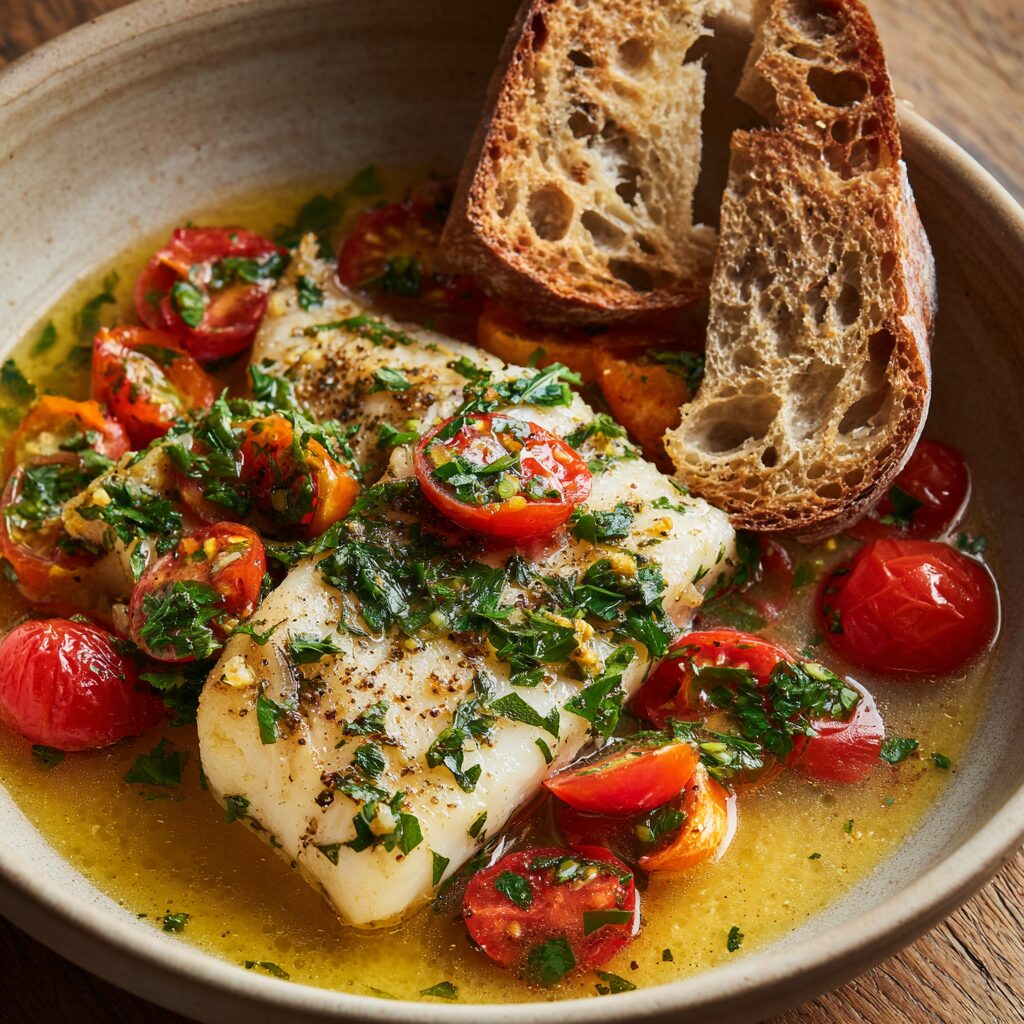
Pesce all’Acqua Pazza (Italian Poached Fish in “Crazy Water”)
Ingredients
Method
- Pat fish fillets dry with paper towels. Season both sides lightly with salt and pepper.
- Heat 1–2 tablespoons of olive oil in a large skillet over high heat. Add the fillets and sear about 1 minute per side until lightly golden and they release easily. Transfer to a plate, cooked side up.
- Reduce heat to medium. Add sliced onion, garlic, and red pepper flakes. Sauté for about 5 minutes, until the onion is soft and translucent.
- Pour in the white wine to deglaze the pan, scraping up any browned bits. Add the cherry tomatoes, cover, and cook for 5 minutes until the tomatoes burst and release their juices.
- Uncover the pan, pour in ½ cup water, and add about 1 teaspoon of salt. Let it simmer for another 5 minutes to create a light broth. Taste and adjust salt or pepper.
- Nestle the fillets into the simmering sauce, cooked side up. Cover the pan and cook gently for 3–4 minutes, until the fish is opaque and flakes easily with a fork.
- Sprinkle chopped parsley or basil, drizzle with extra virgin olive oil, and, if you like, add capers or olives for extra flavor.
- Serve immediately with toasted crusty bread or crostini to soak up the broth.
Notes
- Use firm white fish so it stays whole and tender. Avoid very thin or oily fish.
- Keep the simmer gentle—don’t let the sauce boil or the fish will tighten.
- You can skip the wine by using light stock plus a squeeze of lemon for acidity.
- For gluten-free, serve over polenta, roasted potatoes, or white beans instead of bread.
- Always taste the broth before serving—small seasoning tweaks make a big difference.