
Jump to Recipe
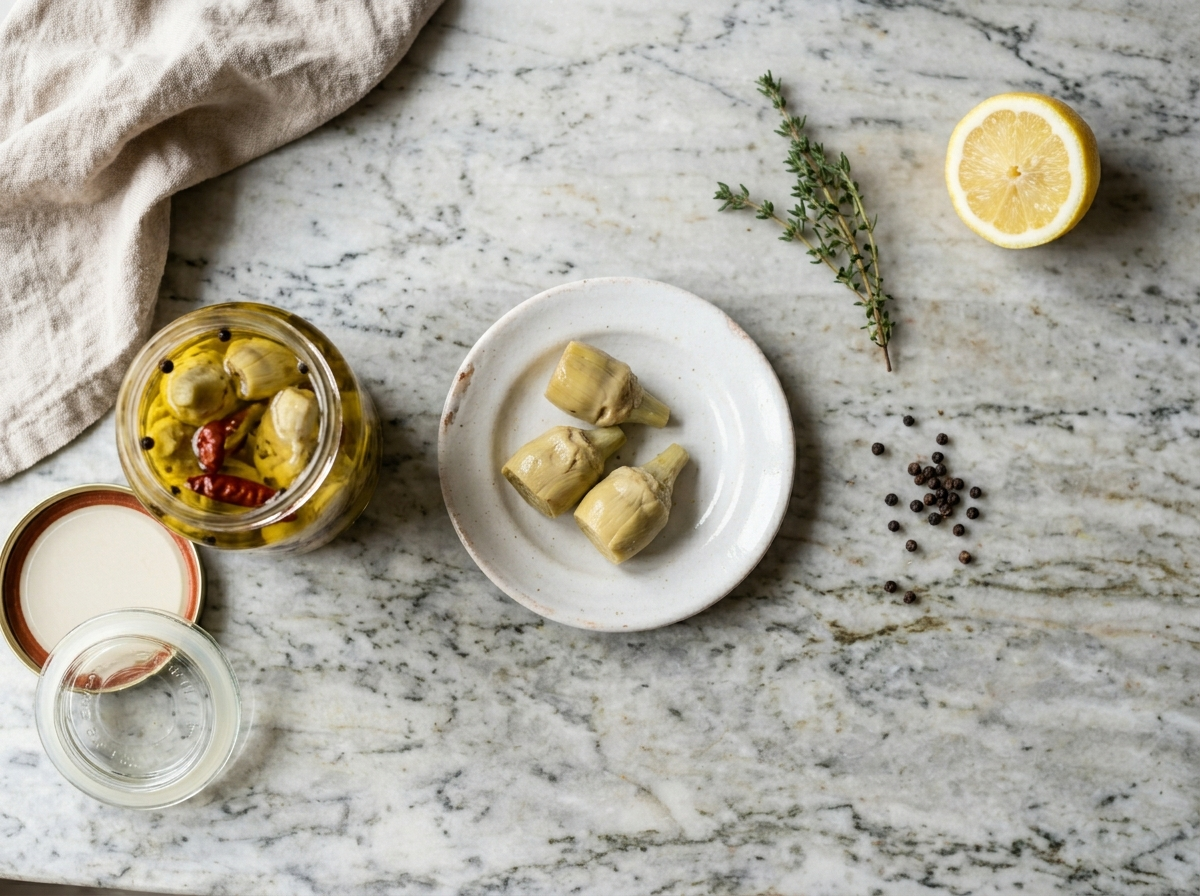
Carciofini sott’olio are one of those Italian pantry staples that look labor-intensive but follow a clear, repeatable process. You trim, blanch in acidulated water, dry thoroughly, then pack the artichokes into jars with olive oil, garlic, peppercorns, and whatever herbs you like.
The vinegar bath does two jobs at once: it acidifies the artichokes so they stay safe in oil, and it gives them that clean, slightly sharp undertone you recognize from good Italian delis.
Drying is the step most home cooks skip or rush. Any surface moisture left on the artichokes will turn your oil cloudy and shorten the shelf life, so give them a full night on a clean kitchen towel if you can.
Use the smallest artichokes you can find, ideally no bigger than a large walnut with the stem still on. The inner leaves and heart stay tender after the vinegar soak; larger ones turn fibrous.
Why You’ll Love This Recipe
- Keeps in the pantry for up to 3 months, no fridge needed
- Only 6 core ingredients, all easy to source
- Vinegar bath handles food safety without complicated canning
- Works as antipasto, pizza topping, or pasta mix-in
Ingredient Notes
- Baby artichokes: Choose artichokes no bigger than a large egg; the inner choke is soft enough to eat whole at this size. If you can only find medium artichokes, remove the inner fuzzy choke with a small spoon before blanching.
- White wine vinegar: Standard 6% acidity white wine vinegar is the right choice here. Apple cider vinegar works as a substitute but adds a fruity note that shifts the flavor slightly.
- Extra-virgin olive oil: Use a mild, not too grassy, olive oil so it doesn’t compete with the artichokes. You don’t need premium single-estate oil here; a good everyday bottle is fine.
- Garlic: Fresh garlic cloves, lightly crushed and peeled. Avoid pre-minced garlic in oil, as it can introduce bacteria into the jar.
- Dried chili flakes: Calabrian dried chili gives a slow heat that suits the artichoke’s earthiness. Leave it out entirely if you want a neutral-flavored conserva.
- Black peppercorns: Whole peppercorns only; ground pepper goes bitter after weeks in oil. A few sprigs of dried oregano or a bay leaf are classic additions.
Carciofini Sott’Olio (Baby Artichokes Preserved in Olive Oil)
Ingredients
Method
- Fill a large bowl with cold water and squeeze in the juice of 1 lemon. Drop in the lemon halves too.
- Working one artichoke at a time, snap off the dark outer leaves until you reach the pale yellow-green inner leaves. Cut the top third of the artichoke off with a sharp knife and trim the stem to about 2 cm, peeling the outer layer of the stem with a paring knife.
- Rub the cut surfaces immediately with the halved lemon, then drop the trimmed artichoke into the lemon water. Repeat for all artichokes.
- Combine the water, white wine vinegar, and sea salt in a large saucepan and bring to a boil over high heat.
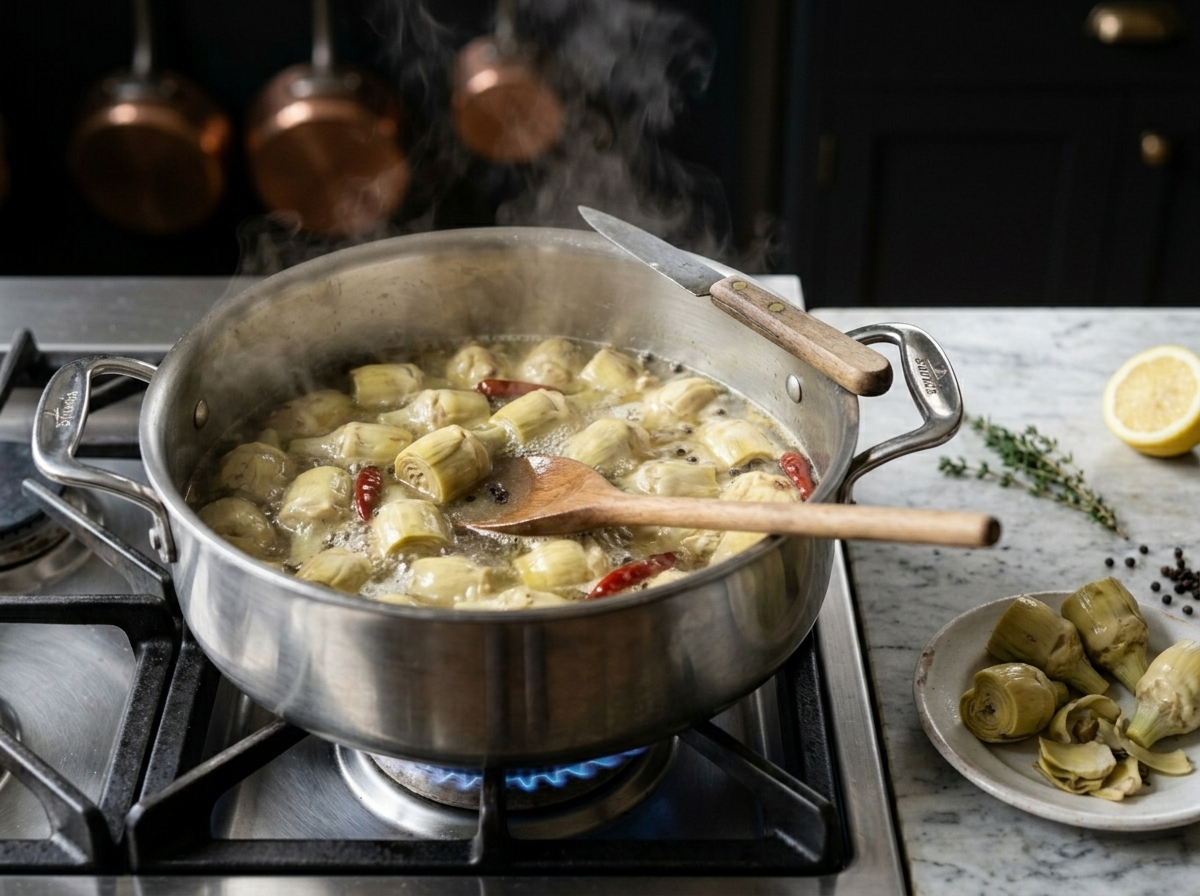
- Drain the artichokes from the lemon water and add them to the boiling vinegar liquid. Return to a boil, then reduce to a steady simmer.
- Cook for 8 to 10 minutes, until the base of the largest artichoke yields to a paring knife with light resistance. They should feel just tender, not soft or falling apart.
- Drain into a colander and shake off excess liquid.
- Spread the drained artichokes in a single layer on a clean kitchen towel or wire rack. Pat the tops dry with another towel.
- Leave uncovered at room temperature for at least 8 hours, or overnight. The surface must be completely dry before packing. Any moisture left will cloud the oil and reduce shelf life.
- Sterilize your glass jars by boiling them in water for 10 minutes or running them through a hot dishwasher cycle. Let them air-dry completely.
- Place a bay leaf, 1 crushed garlic clove, a few peppercorns, a pinch of chili flakes, and a pinch of oregano at the bottom of each jar.
- Add a tight layer of artichokes, pressing them down gently. Add another layer of garlic, herbs, and spices. Continue layering until the jar is filled to about 1.5 cm from the top.
- Pour olive oil over slowly, pressing the artichokes down as you go to release any air pockets. Tap the jar firmly on the counter several times and run a chopstick around the inner edge to free any remaining bubbles.
- Top up with oil so every artichoke is fully submerged with at least 0.5 cm of oil above the top layer. Seal the lids tightly.
- Store the sealed jars in a cool, dark place for at least 3 days before opening. This allows the oil to absorb the garlic and herb flavors and the artichokes to settle into the oil properly.
Notes
Tips for Success
- Rub each trimmed artichoke immediately with lemon to stop browning before the vinegar bath.
- Blanch in equal parts water and white wine vinegar; the artichoke should feel just tender at the base when pierced with a knife.
- Spread artichokes on a clean kitchen towel and leave uncovered for at least 8 hours; surface moisture is the main cause of cloudy oil.
- Pack jars tightly in layers, pressing down so there are no air pockets, then top up with oil to fully submerge every piece.
- Tap the filled jar on the counter several times and run a chopstick around the inside edge to release trapped air bubbles before sealing.
Variations
- Add a strip of lemon zest and a sprig of fresh thyme to each jar for a Ligurian-style version.
- Use red wine vinegar instead of white for a deeper, slightly tannic flavor that pairs well with cured meats.
- Pack with a pinch of fennel seeds and dried mint for a Sicilian-style artichoke conserva.
Storage and Reheating
Once sealed, store jars in a cool, dark spot for up to 3 months. The artichokes need at least 3 days in the oil before eating so the flavors can settle.
After opening, keep the jar in the fridge and always make sure the remaining artichokes are fully submerged in oil. Use within 2 weeks of opening.
If the oil solidifies in the fridge, just set the jar on the counter for 20 minutes before serving. That’s normal with good olive oil in cold temperatures.
Serving Suggestions
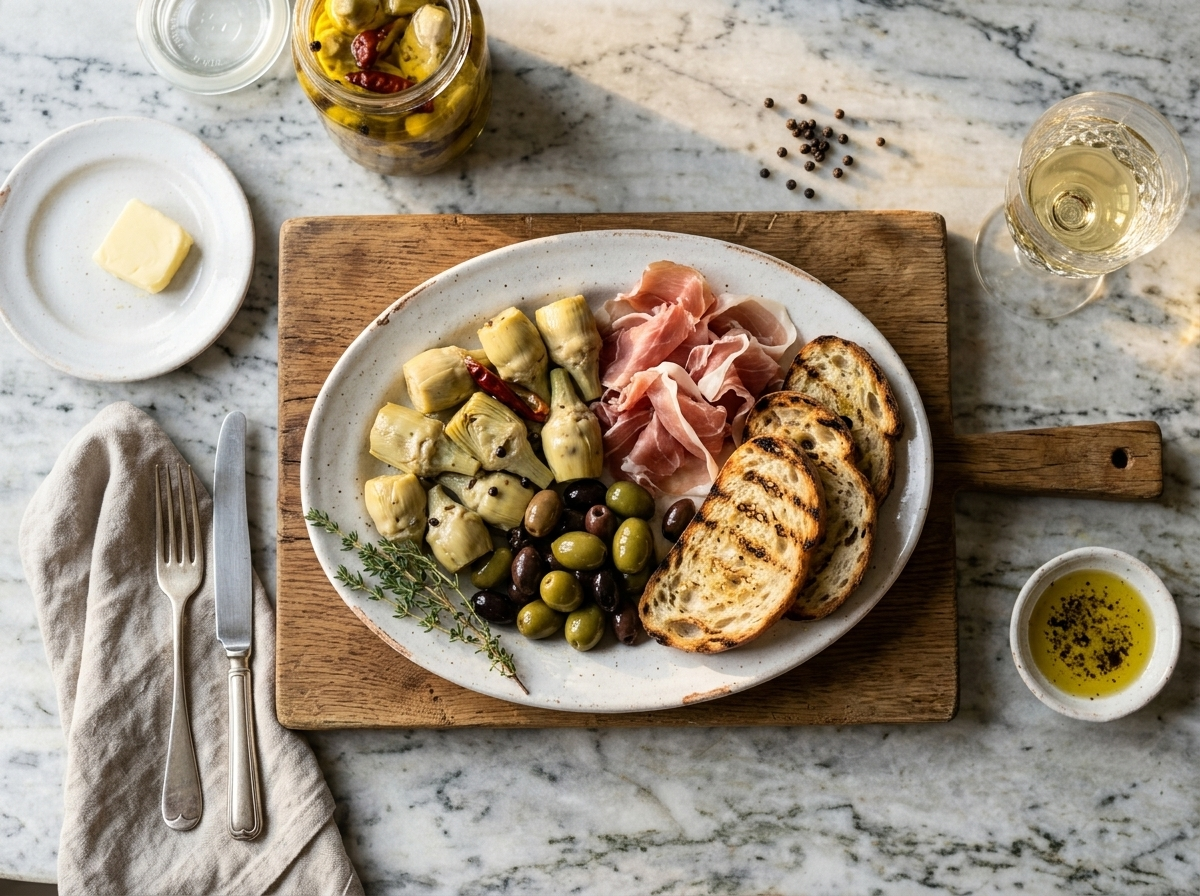
Carciofini sott’olio belong on an antipasto board alongside good salumi, olives, and a sharp aged cheese like pecorino or grana padano. A few slices of grilled bread rubbed with garlic turn them into a fast starter.
They work just as well chopped roughly and stirred through pasta at the last minute with a spoonful of the oil from the jar, a handful of capers, and some dried chili, much like the pantry logic behind an anchovy-olive-caper sauce. The oil itself is flavored and counts as part of the dressing.
For a quick pizza, scatter whole carciofini over a white base with fior di latte and a few anchovies, using the same approach as a Neapolitan-style pizza baked at high heat. They hold their texture through the oven heat better than fresh artichokes.
FAQ
Why did my carciofini sott’olio turn dark after a few days in the jar?
Darkening usually means some air is still trapped around the artichokes or they weren’t fully submerged in oil. Press them down and top up with more olive oil until every piece is covered. The color may deepen slightly over time even in perfect jars, but that’s oxidation at the surface, not spoilage.
Can I use regular white distilled vinegar instead of white wine vinegar for the blanching liquid?
You can, but it leaves a sharper, harsher aftertaste on the artichoke. White wine vinegar has a softer acidity that suits the preserved flavor better. Apple cider vinegar at 5% acidity is a closer substitute if white wine vinegar isn’t available.
How do I know when the baby artichokes are properly blanched and ready to dry?
Pierce the base of the largest artichoke with a paring knife; it should slide in with light resistance, not fall apart. The outer leaves will look slightly duller in color and the artichoke will feel heavier than raw. If it’s still firm at the core, give it 2 more minutes.
Is carciofini sott’olio safe to make at home without pressure canning?
Yes, because the vinegar blanch acidifies the artichokes before they go into the oil. This drops the pH below the level where botulism toxin can develop, which is why the vinegar step is non-negotiable and shouldn’t be shortened. Do not skip or reduce the vinegar in the blanching liquid.
What’s the difference between carciofini sott’olio and carciofini sott’aceto?
Sott’aceto means preserved directly in vinegar, which gives a sharp, pickle-like result similar to commercial giardiniera. Sott’olio uses the vinegar only as a preparatory step to acidify and firm the artichoke, then finishes in olive oil for a softer, richer flavor. The two are used differently at the table.
Are homemade carciofini sott’olio vegan and gluten-free?
Yes to both, provided you use only the standard ingredients: artichokes, vinegar, olive oil, garlic, herbs, and spices. There are no animal products or gluten-containing ingredients in a traditional recipe.