Jump to Recipe
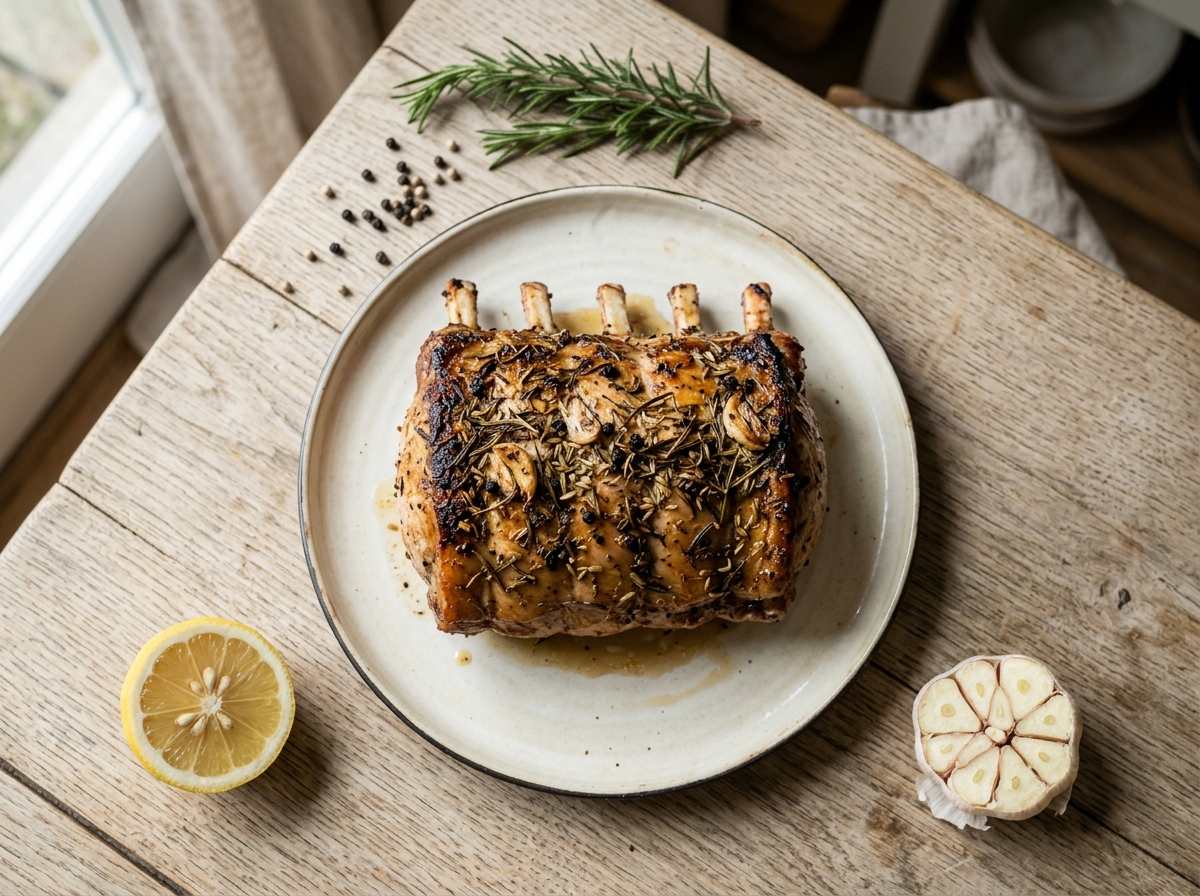
Arista is Tuscany’s answer to Sunday roast pork. The name traces back to a 15th-century church council in Florence, where Greek clergy reportedly cried ‘aristos’ (the best) after tasting it. Whether the story is true or not, the recipe has barely changed since.
The technique is straightforward: you score the meat, push a paste of rosemary, garlic, and fennel seeds deep into the cuts, then roast it hot at first and finish at a lower temperature. No sauce, no braise. The juices collect in the pan and become the only condiment you need.
The result is a pork loin with a deeply savory herb crust and a pale, moist interior. Sliced thin the next day, it eats just as well cold as it does hot from the oven.
Why You’ll Love This Recipe
- Just five core ingredients deliver deep, layered herb flavor
- Works hot for dinner or cold for next-day sandwiches
- Minimal active prep – the oven does the hard work
- Scales easily from four to eight servings
Ingredient Notes
- Bone-in pork loin (arista): Look for a center-cut bone-in loin, around 1.5 kg. The bone protects the meat from drying out and adds flavor to the pan juices. Boneless loin works but roasts faster, so start checking the internal temp 15 minutes earlier.
- Fresh rosemary: Use fresh needles only – dried rosemary turns bitter inside the slits. Strip the needles from two large sprigs.
- Fennel seeds: Lightly crush them in a mortar before mixing into the rub so they release their oils. If you don’t have fennel seeds, a pinch of ground anise or caraway works, but fennel is the classic Tuscan choice.
- Garlic: Four to five large cloves is not too much here. Slice half the cloves thin to stuff into the meat; mince the rest into the paste.
- Extra-virgin olive oil: Use a Tuscan or central-Italian oil if you have one – the grassier, slightly peppery profile matches the rosemary well. Any good quality olive oil is fine.
- Dry white wine: Poured into the pan halfway through roasting to build the pan juices and prevent scorching. Vermentino or Vernaccia are classic Tuscan choices; any dry white works. Chicken broth is a non-alcoholic substitute.
Arista di Maiale al Forno (Tuscan Roast Pork Loin)
Ingredients
Method
- Remove the pork loin from the fridge 30 minutes before cooking. Pat it completely dry with paper towels - a dry surface browns, a wet one steams.
- Make the herb paste: combine the minced garlic, rosemary needles, crushed fennel seeds, 2 tbsp olive oil, 1 tsp salt, and 0.5 tsp black pepper in a small bowl. Mash with a fork until roughly combined.
- Using a sharp paring or boning knife, cut deep slits (at least 2 cm) all over the meat - between the bones, across the top, along the sides. Aim for 12 to 15 cuts total.
- Push one thin garlic slice and a small pinch of herb paste into each slit. Spread the remaining paste over the entire surface of the roast.
- Rub the outside of the roast with the remaining 3 tbsp olive oil and season with the remaining 0.5 tsp salt and 0.5 tsp pepper.
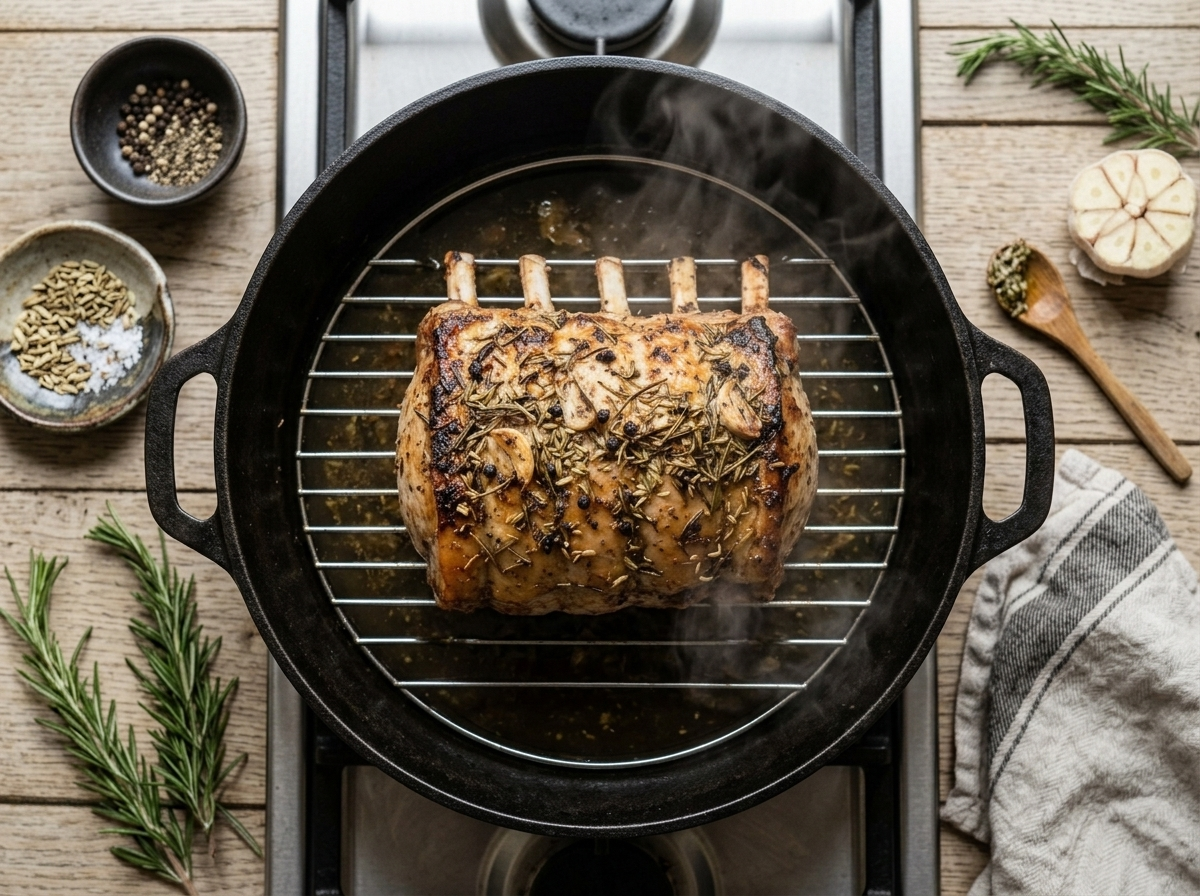
- Heat the oven to 220 C / 430 F (fan-assisted 200 C / 390 F). Place the pork loin bone-side down on a rack set inside a roasting pan.
- Roast at 220 C for 20 minutes until the surface is deep golden-brown and fragrant. This high-heat phase sets the crust.
- Reduce the oven temperature to 180 C / 355 F. Pour the white wine into the bottom of the roasting pan (not over the meat).
- Continue roasting for 55 to 70 minutes, basting with the pan juices every 25 minutes. Add the 100 ml water or broth if the pan looks dry.
- Check the internal temperature with an instant-read thermometer inserted into the thickest part away from the bone. Pull the roast at 63 C / 145 F.
- Tent loosely with foil and rest for 15 minutes before carving. The internal temp will rise to around 66 C / 151 F during resting.
- While the pork rests, place the roasting pan over medium heat on the stovetop. Scrape up any browned bits with a wooden spoon.
- If the liquid has reduced to a glaze, add a splash of water or broth and stir. Strain through a fine-mesh sieve into a small jug.
- Taste and adjust salt. Serve the juices alongside the sliced pork - no further reduction or thickening needed.
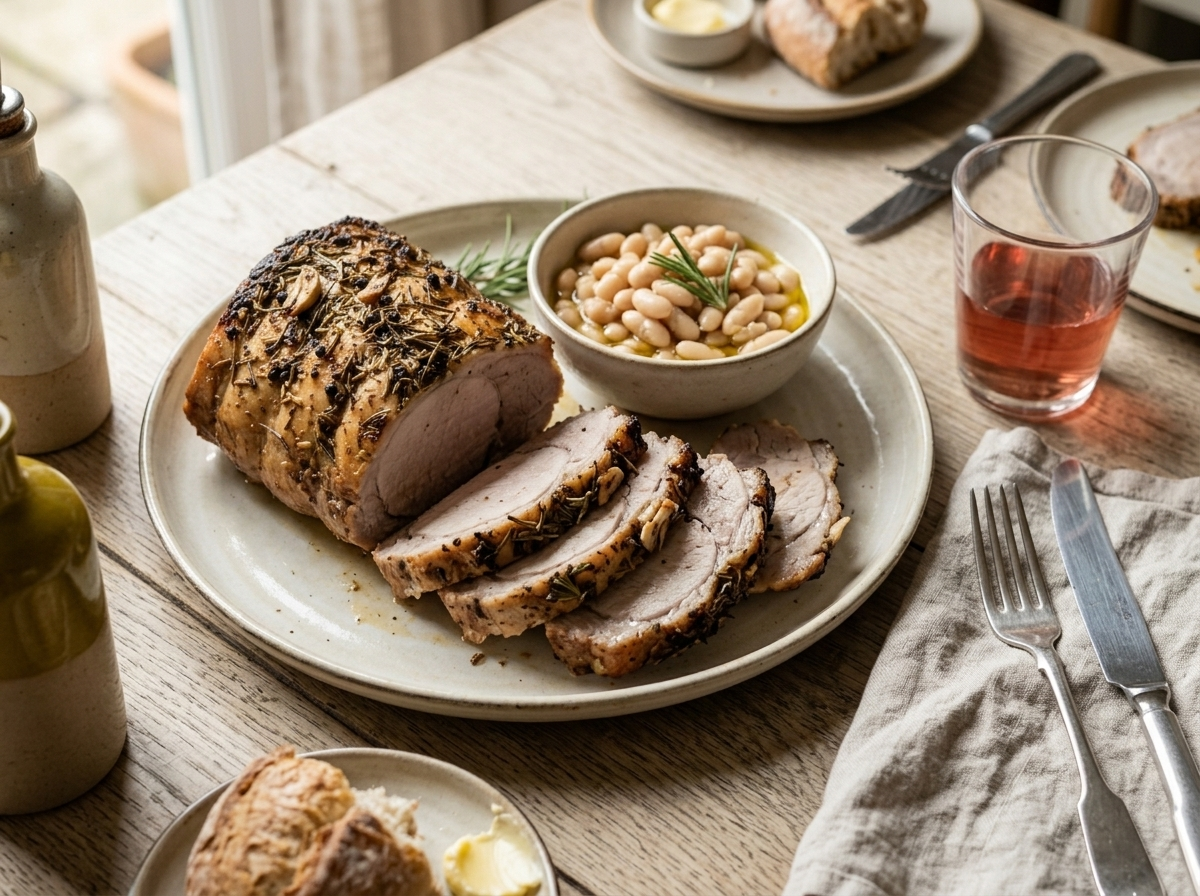
- Slice between the bones first to separate each chop-section, then slice the boneless meat thinly (about 1 cm) against the grain.
- Arrange on a warm platter, spoon over a little of the pan juice, and bring the rest to the table in the jug.
Notes
Tips for Success
- Score the meat at least 2 cm deep so the herb paste penetrates the roast, not just the surface.
- Pat the pork completely dry before applying the rub – moisture on the skin prevents browning.
- Pull the roast from the oven at 63 C / 145 F internal temp and rest it 15 minutes before slicing.
- Roast on a rack inside the pan so air circulates under the meat and the bottom doesn’t steam.
- Deglaze the roasting pan with the white wine and scrape up the fond – that liquid, strained, is your sauce.
Variations
- Porchetta-style: add lemon zest, chili flakes, and sage to the herb rub before stuffing.
- Aglio e rosmarino only: skip fennel seeds for a simpler, cleaner flavor profile.
- Milk-braised finish: add 200 ml whole milk to the pan in the last 30 minutes for a creamier pan sauce.
Storage and Reheating
Store leftover arista tightly wrapped or in a sealed container in the fridge for up to 4 days. Cold slices at room temperature for about 20 minutes before serving – they’re genuinely good without reheating.
To reheat, lay slices in a baking dish, add a splash of the reserved pan juices or chicken broth, cover tightly with foil, and warm at 160 C / 320 F for 12 to 15 minutes. Avoid the microwave – it toughens pork loin noticeably.
For freezing, slice before freezing so you can thaw only what you need. Wrap portions in parchment, then in foil, and freeze for up to 2 months. Thaw overnight in the fridge.
Serving Suggestions
In Tuscany, arista comes to the table with white cannellini beans dressed in olive oil and sage, or with roasted potatoes cooked in the same pan for the last 40 minutes of roasting.
For a lighter pairing, serve thin slices over a bitter green salad – radicchio or endive with a squeeze of lemon cuts through the richness of the pork. A glass of Morellino di Scansano or any medium-bodied Sangiovese fits well.
Leftover arista sliced thin on schiacciata (Tuscan flatbread) with a smear of good mustard is one of the better cold pork sandwiches you’ll make.
FAQ
Why is my arista di maiale dry after roasting?
The most common cause is overcooking past 70 C / 158 F internal temperature. Pull it at 63 C / 145 F and rest it under foil for 15 minutes – carryover heat brings it to a safe, still-moist finish.
Can I use pork tenderloin instead of pork loin for this recipe?
You can, but tenderloin is much thinner and cooks in under 25 minutes, so the herb crust won’t develop the same depth. Pork loin – bone-in if possible – is the right cut for this recipe.
Can I prep arista the night before and roast it the next day?
Yes, and it actually improves the flavor. Apply the herb paste, wrap the scored loin tightly in plastic wrap, and refrigerate overnight. Bring it to room temperature for 30 minutes before it goes in the oven.
What does arista di maiale taste like compared to porchetta?
Arista is a cleaner, less fatty roast – it uses loin rather than whole belly, so the herb flavor is more pronounced and the texture is leaner. Porchetta is rolled, layered with fat, and more intensely seasoned with chili and abundant fennel.
Is arista di maiale gluten-free?
Yes, the classic recipe contains only pork, olive oil, garlic, rosemary, fennel seeds, salt, pepper, and white wine – no gluten-containing ingredients. Just check your wine label if you’re highly sensitive, as some are fined with wheat.
How do I know when the herb crust on arista is properly done?
The surface should be deep golden-brown and fragrant, not pale or soft, after the initial high-heat phase at 220 C / 430 F. If it looks blond after 20 minutes, raise the temperature by 10 degrees and give it another 5 minutes before reducing the heat.