Ingredients
Method
Prep the pork
- Remove the pork loin from the fridge 30 minutes before cooking. Pat it completely dry with paper towels - a dry surface browns, a wet one steams.
- Make the herb paste: combine the minced garlic, rosemary needles, crushed fennel seeds, 2 tbsp olive oil, 1 tsp salt, and 0.5 tsp black pepper in a small bowl. Mash with a fork until roughly combined.
- Using a sharp paring or boning knife, cut deep slits (at least 2 cm) all over the meat - between the bones, across the top, along the sides. Aim for 12 to 15 cuts total.
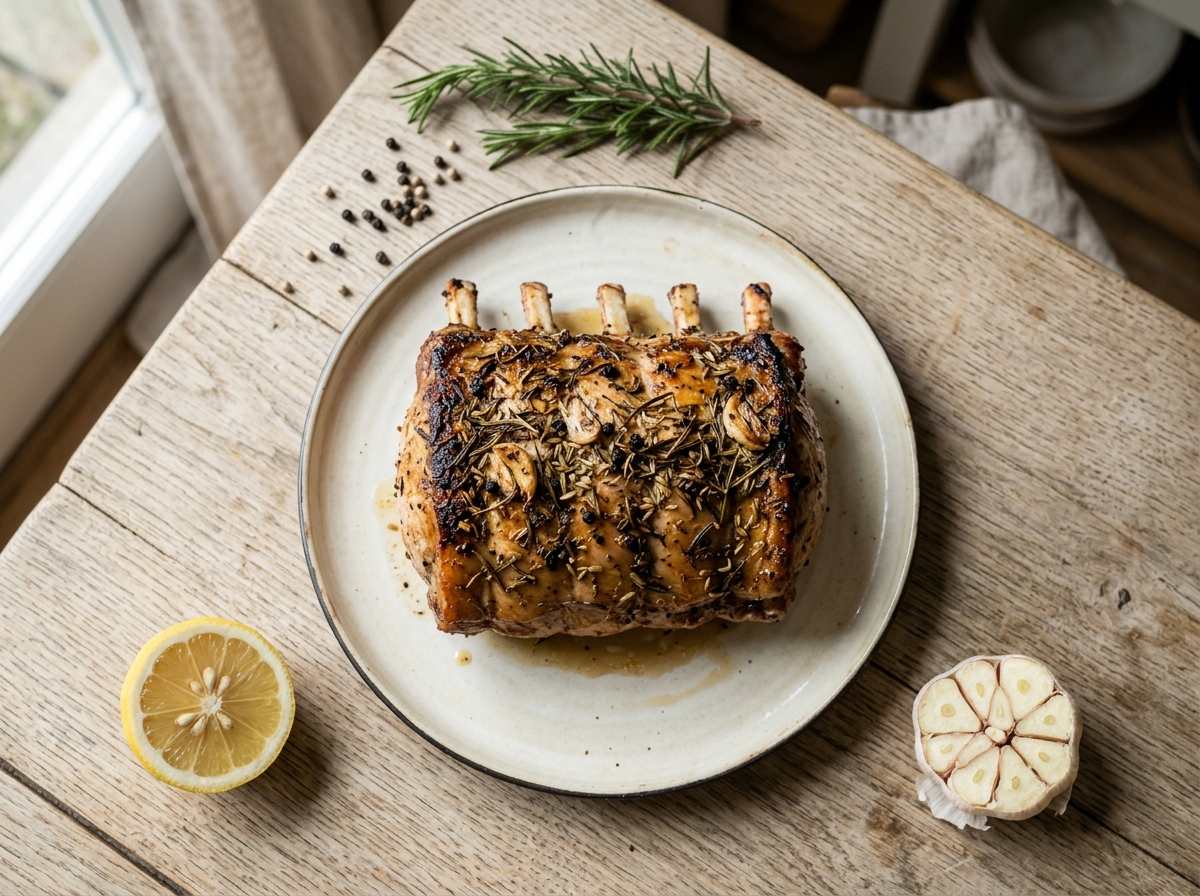
- Push one thin garlic slice and a small pinch of herb paste into each slit. Spread the remaining paste over the entire surface of the roast.
- Rub the outside of the roast with the remaining 3 tbsp olive oil and season with the remaining 0.5 tsp salt and 0.5 tsp pepper.
Roast
- Heat the oven to 220 C / 430 F (fan-assisted 200 C / 390 F). Place the pork loin bone-side down on a rack set inside a roasting pan.
- Roast at 220 C for 20 minutes until the surface is deep golden-brown and fragrant. This high-heat phase sets the crust.
- Reduce the oven temperature to 180 C / 355 F. Pour the white wine into the bottom of the roasting pan (not over the meat).
- Continue roasting for 55 to 70 minutes, basting with the pan juices every 25 minutes. Add the 100 ml water or broth if the pan looks dry.
- Check the internal temperature with an instant-read thermometer inserted into the thickest part away from the bone. Pull the roast at 63 C / 145 F.
- Tent loosely with foil and rest for 15 minutes before carving. The internal temp will rise to around 66 C / 151 F during resting.
Make the pan sauce
- While the pork rests, place the roasting pan over medium heat on the stovetop. Scrape up any browned bits with a wooden spoon.
- If the liquid has reduced to a glaze, add a splash of water or broth and stir. Strain through a fine-mesh sieve into a small jug.
- Taste and adjust salt. Serve the juices alongside the sliced pork - no further reduction or thickening needed.
Carve and serve
- Slice between the bones first to separate each chop-section, then slice the boneless meat thinly (about 1 cm) against the grain.
- Arrange on a warm platter, spoon over a little of the pan juice, and bring the rest to the table in the jug.
Notes
If you have time, apply the herb paste the night before and refrigerate uncovered - the surface dries out slightly, which gives you a better crust the next day.