
Jump to Recipe
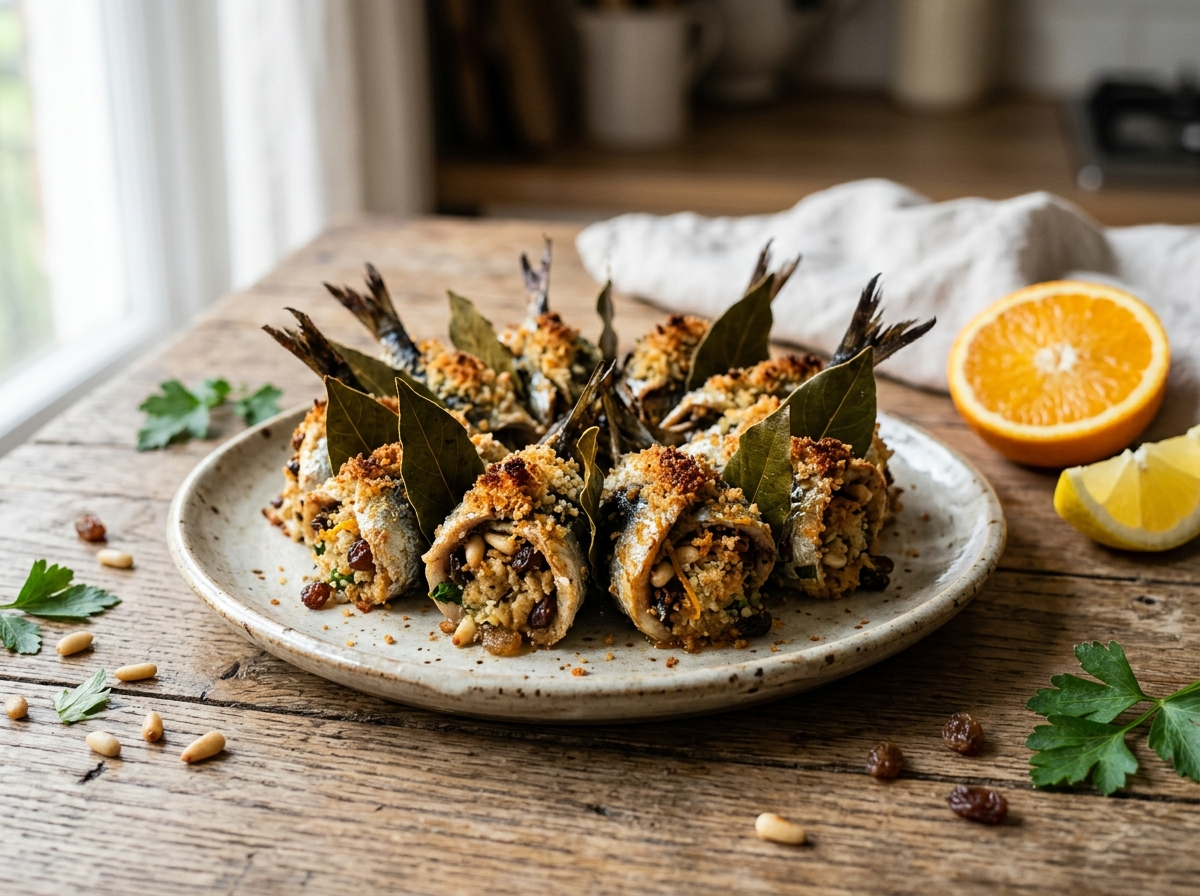
Sarde a beccafico is a Palermo street-food classic that got refined into home cooking somewhere along the way. The name comes from the beccafico bird, which was considered a delicacy in Sicily – peasants mimicked its plump silhouette by stuffing sardines and rolling them up.
The filling is built on toasted breadcrumbs, pine nuts, raisins, parsley, and a sharp hit of orange or lemon zest. That sweet-savory combination is a signature of Sicilian cooking, rooted in Arab culinary influence that arrived on the island centuries ago.
You need fresh sardines here. Frozen won’t give you the same clean flavor or the flexibility to butterfly them easily. Ask your fishmonger to scale and gut them if you’d prefer not to do it yourself.
The dish bakes quickly – around 15 to 20 minutes – and holds well at room temperature, which is why it works as an antipasto, a light main, or part of a spread.
Why You’ll Love This Recipe
- Authentic Sicilian flavor from a short, affordable ingredient list
- Cooks in under 20 minutes once the fish are prepped
- Sweet-savory breadcrumb filling contrasts the rich sardine
- Serves equally well warm, at room temp, or chilled next day
Ingredient Notes
- Fresh sardines: You need whole fresh sardines scaled, gutted, and butterflied flat – about 100 to 120 g each. Frozen sardines tend to fall apart when you try to butterfly them, so fresh is non-negotiable here.
- Breadcrumbs (mollica di pane): Use day-old white bread pulsed into coarse crumbs, not packaged fine breadcrumbs. The coarser texture toasts better and gives the stuffing some bite.
- Pine nuts: Standard pine nuts work well. If your budget is tight, roughly chopped blanched almonds are a common Sicilian substitute that keeps the crunch.
- Raisins (or sultanas): Sultaninas or regular raisins both work. Soak them in warm water for 5 minutes first so they stay plump and don’t dry out in the oven.
- Orange and lemon: You need both the juice and the zest. The orange adds sweetness that balances the anchovies; the lemon provides brightness. Fresh citrus only – bottled juice is too flat.
- Anchovy fillets: Oil-packed anchovy fillets are mixed into the stuffing for depth. If you’re cooking for someone who avoids anchovies, omit them and add a small pinch of extra salt – the filling will still work.
- Bay leaves: Fresh bay leaves placed between each rolled sardine are traditional and add a subtle herbal note. Dried bay leaves are a fine substitute.
- Extra virgin olive oil: Used to dress the stuffing and drizzle over the dish before baking. A mid-range Sicilian or southern Italian olive oil suits the flavor profile best.
Sarde a Beccafico: Sicilian Stuffed Sardines
Ingredients
Method
- Heat the oven to 200 C / 390 F. Lightly oil a shallow ceramic baking dish large enough to hold all the sardine rolls standing snugly upright.
- Heat a dry skillet over medium heat. Add the breadcrumbs and toast, stirring often, for 3 to 4 minutes until pale gold and fragrant. Tip into a mixing bowl.
- Add the pine nuts, drained raisins, chopped anchovy fillets, parsley, orange zest, lemon zest, and 2 tbsp olive oil to the crumbs. Stir until combined - the mixture should hold together loosely when pressed. Taste and add a small pinch of salt if needed.
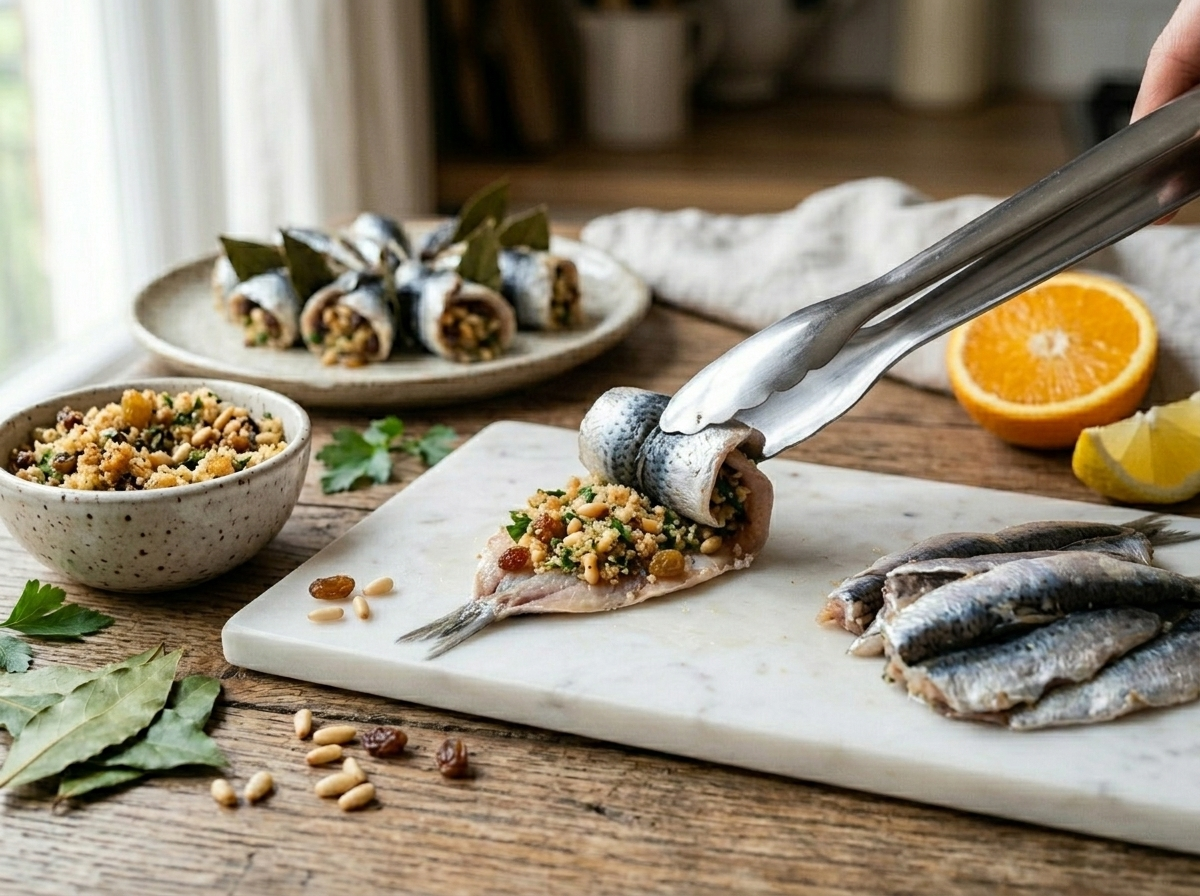
- Place a gutted sardine skin-side down on a cutting board. Press firmly along the backbone with your thumb to flatten. Slide a finger under the backbone at the head end and lift it away cleanly, removing the spine from head to tail. The fish should lie open in one flat piece.
- Repeat with all remaining sardines. Season each butterflied sardine lightly with salt and pepper.
- Place 1 heaped teaspoon of stuffing at the head end of each butterflied sardine, on the flesh side. Press the stuffing down gently so it stays in place.
- Roll each sardine from the head end toward the tail so the tail fin sticks upright. Place each roll in the oiled baking dish, tail-up, and push them together so they're snug.
- Tuck a bay leaf between each roll. Drizzle the orange juice and remaining 3 tbsp olive oil evenly over the top.
- Bake at 200 C / 390 F for 15 to 18 minutes, until the breadcrumb tips are golden and the fish is cooked through - the flesh should turn opaque when you press the side of a roll gently.
- Rest 5 minutes before serving. Serve warm or at room temperature with a wedge of lemon on the side.
Notes
Tips for Success
- Toast the breadcrumbs in a dry skillet over medium heat until pale gold before mixing the stuffing – raw crumbs taste flat inside the fish.
- Butterfly each sardine by opening it skin-side down and pressing firmly along the backbone, then lift the spine out cleanly from tail to head.
- Roll each sardine from the head end toward the tail so the tail fin sticks up – this is the classic beccafico shape that holds the filling in.
- Pack the rolls snugly in the baking dish with a bay leaf between each one – tight packing stops them unrolling during baking.
- Drizzle with fresh orange juice just before the dish goes into the oven, not before – it keeps the crumbs from going soggy while you work.
Variations
- Palermo-style: add a pinch of cinnamon and sugar to the stuffing for a more pronounced sweet note.
- Messina-style: skip the raisins and pine nuts, use just parsley, lemon, and a little garlic for a cleaner, more savory filling.
- Baked with tomato: scatter halved cherry tomatoes around the dish before baking for a light sauce that forms in the pan.
Storage and Reheating
Cooked sarde a beccafico keep in an airtight container in the fridge for up to 2 days. They actually taste good cold or at room temperature the next day, which makes them practical for meal prep or a packed lunch.
To reheat, place them in a 160 C / 320 F oven for 8 to 10 minutes, loosely covered with foil. Microwaving works in a pinch but softens the breadcrumb crust.
I don’t recommend freezing after baking – the sardine flesh goes watery on thawing. The stuffing alone can be made ahead and frozen for up to a month.
Serving Suggestions
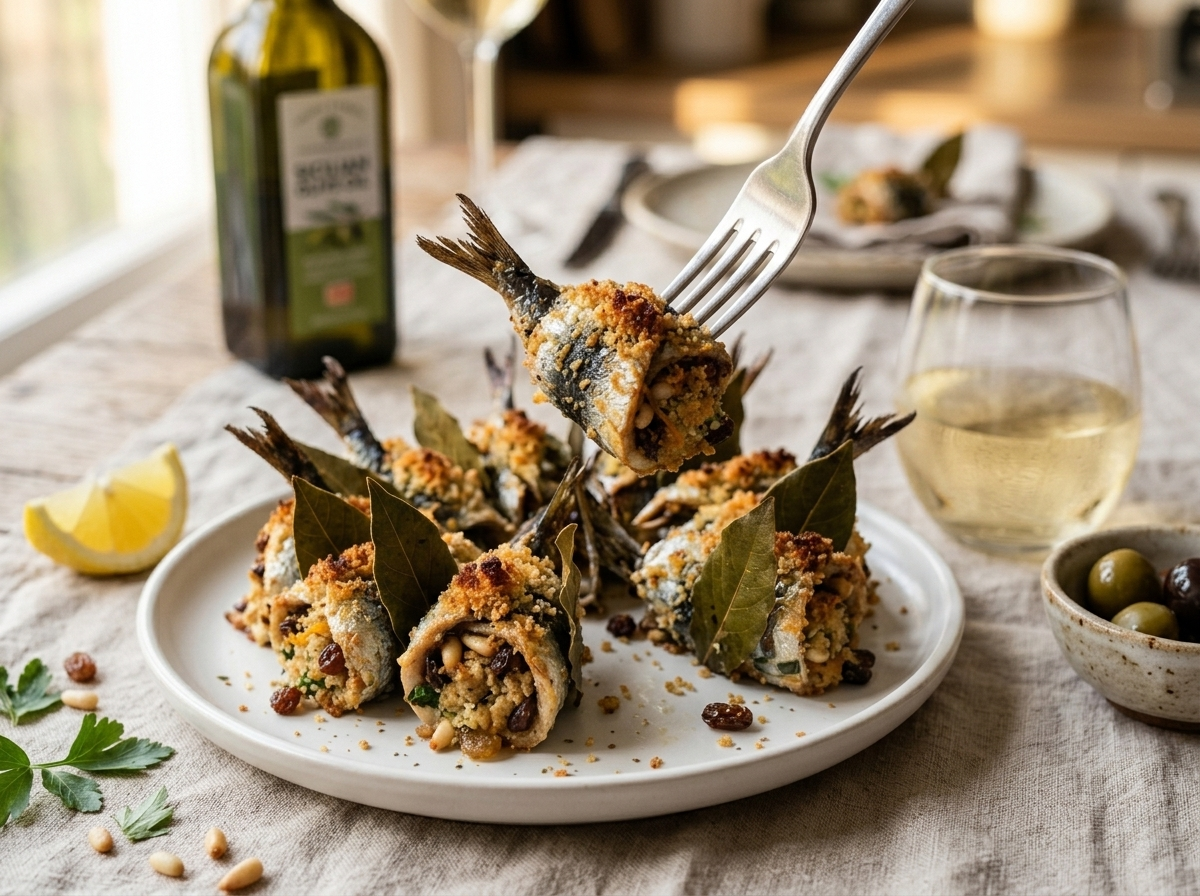
In Palermo, sarde a beccafico are served at room temperature as an antipasto alongside olives, caponata, and a glass of chilled Grillo or Catarratto, much like the spread you’d build around an Italian seafood salad. That’s still the best way to eat them.
For a light main course, serve 4 to 5 rolled sardines per person with a simple bitter-leaf salad dressed with lemon and olive oil – the bitterness cuts through the sweet filling well.
A wedge of crusty bread on the side is useful for catching the citrus-olive oil juices that pool in the baking dish. Don’t let those go to waste.
FAQ
Why does my sarde a beccafico filling fall out during baking?
The rolls are coming loose because they’re not packed tightly enough in the dish. Arrange them snugly upright with a bay leaf between each one so they hold each other in place – a dish that’s too large is the most common cause.
Can I use mackerel instead of sardines for this recipe?
Small mackerel can work, but the flesh is oilier and thicker so the cooking time goes up by about 5 minutes. The flavor is stronger, which can overpower the delicate sweet-savory stuffing – sardines are better here if you can find them.
How far ahead can I stuff the sardines before baking?
You can roll and stuff them up to 4 hours in advance and keep them covered in the fridge. Don’t add the orange juice drizzle until right before they go into the oven or the breadcrumbs turn soggy.
What is the difference between Palermo-style and Messina-style sarde a beccafico?
The Palermo version uses raisins, pine nuts, and sometimes a touch of cinnamon in the stuffing – a sweet-savory profile rooted in Arab culinary influence. The Messina version is leaner, using just parsley, lemon, and garlic, and the rolls are sometimes laid flat rather than standing upright.
Is sarde a beccafico gluten-free?
Not in the traditional form, since the stuffing is built on breadcrumbs made from wheat bread. You can make a gluten-free version by using day-old gluten-free white bread – the texture and flavor stay close to the original.
What wine pairs well with sarde a beccafico?
A chilled Sicilian white like Grillo or Catarratto is the natural match – the citrus and mineral notes in the wine echo the orange and lemon in the dish. If you want a red, a light Frappato served slightly cool works without overwhelming the fish.