
Jump to Recipe
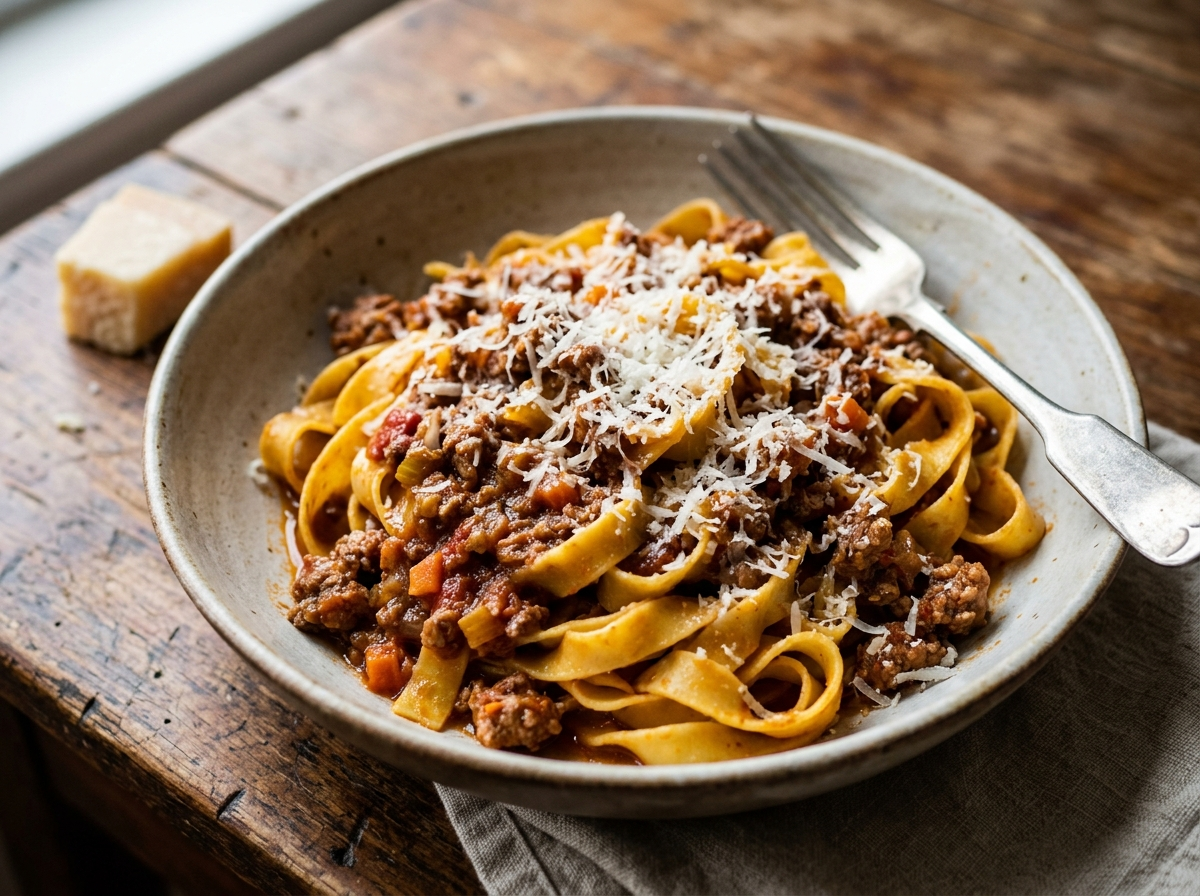
Tagliatelle al ragù bolognese is one of those dishes that rewards patience more than skill. The technique is straightforward. The time is not negotiable.
The Accademia Italiana della Cucina registered the official recipe in 1982, specifying beef, pancetta, onion, carrot, celery, tomato paste, white wine, and whole milk — the same ragù bolognese that also anchors lasagne verdi alla bolognese. No cream. No garlic. No herbs beyond a bay leaf. I follow that framework closely and the result is a ragù with clean, layered flavor rather than a heavy, tomato-forward sauce.
The pasta matters as much as the meat. Egg tagliatelle, cut to about 8 mm wide, has enough surface area and texture to carry a thick ragù without slipping through. Fresh is best, dried egg tagliatelle works well too.
Plan for at least two hours of gentle simmering. Most of that time is hands-off.
Why You’ll Love This Recipe
- Freezes well in portions for fast weeknight meals
- Uses pantry staples: wine, milk, canned tomato, dried pasta
- Classic Emilian technique with no fussy equipment needed
- Flavor improves overnight, making it ideal to prep ahead
Ingredient Notes
- Ground beef (coarse): Use 80/20 ground beef for fat content, which keeps the ragù moist. Finer ground beef turns grainy after a long simmer.
- Ground pork: Pork adds sweetness and fat that beef alone can’t provide. Italian sausage meat with the casing removed is a good substitute.
- Pancetta: Pancetta gives a subtle cured-pork base note to the soffritto. Unsmoked bacon works as a substitute, though it tastes slightly different.
- Dry white wine: White wine keeps the sauce pale and clean-tasting. Red wine is used in some regional versions but shifts the flavor noticeably toward the richer, darker side.
- Whole milk: Milk tenderizes the meat and cuts acidity from the tomato. Add it in two stages and let each addition absorb before adding the next.
- Tomato paste: Two tablespoons is enough. Bolognese is a meat sauce with a touch of tomato, not a tomato sauce with meat. Do not use passata or crushed tomatoes in the same quantity.
- Egg tagliatelle: Fresh egg tagliatelle from the fridge section is the traditional choice. Dried egg tagliatelle works fine. Avoid standard dried spaghetti, the sauce slides off.
- Parmigiano-Reggiano: Grate it yourself at the table. Pre-grated Parmesan loses moisture and sharpness, and it doesn’t melt into the pasta the same way.
Tagliatelle al Ragù Bolognese
Ingredients
Method
- Melt the butter with the olive oil in a heavy-bottomed Dutch oven over low heat.
- Add the pancetta and cook for 3 minutes, stirring occasionally, until the fat is translucent but not crispy.
- Add the onion, carrot, and celery. Cook over low heat for 10 to 12 minutes, stirring every couple of minutes, until the vegetables are very soft and pale. They should not color.
- Raise the heat to medium-high. Add the ground beef and pork to the pot.
- Break up the meat with a wooden spoon and cook for 8 to 10 minutes, stirring regularly, until no pink remains and the meat has developed a light brown color and smells nutty.
- Pour in the white wine. Stir and scrape up any bits from the bottom of the pot. Let the wine bubble for 4 to 5 minutes until it has evaporated completely and you can no longer smell alcohol.
- Stir in the tomato paste. Cook for 2 minutes, stirring constantly, until the paste darkens slightly and coats the meat.
- Pour in 75 ml of the whole milk. Stir well and cook for 3 to 4 minutes until fully absorbed.
- Add the remaining 75 ml of milk. Stir and let it absorb again, about 3 minutes.
- Pour in the warm beef stock, add the bay leaf, and stir to combine. Bring to a gentle simmer.
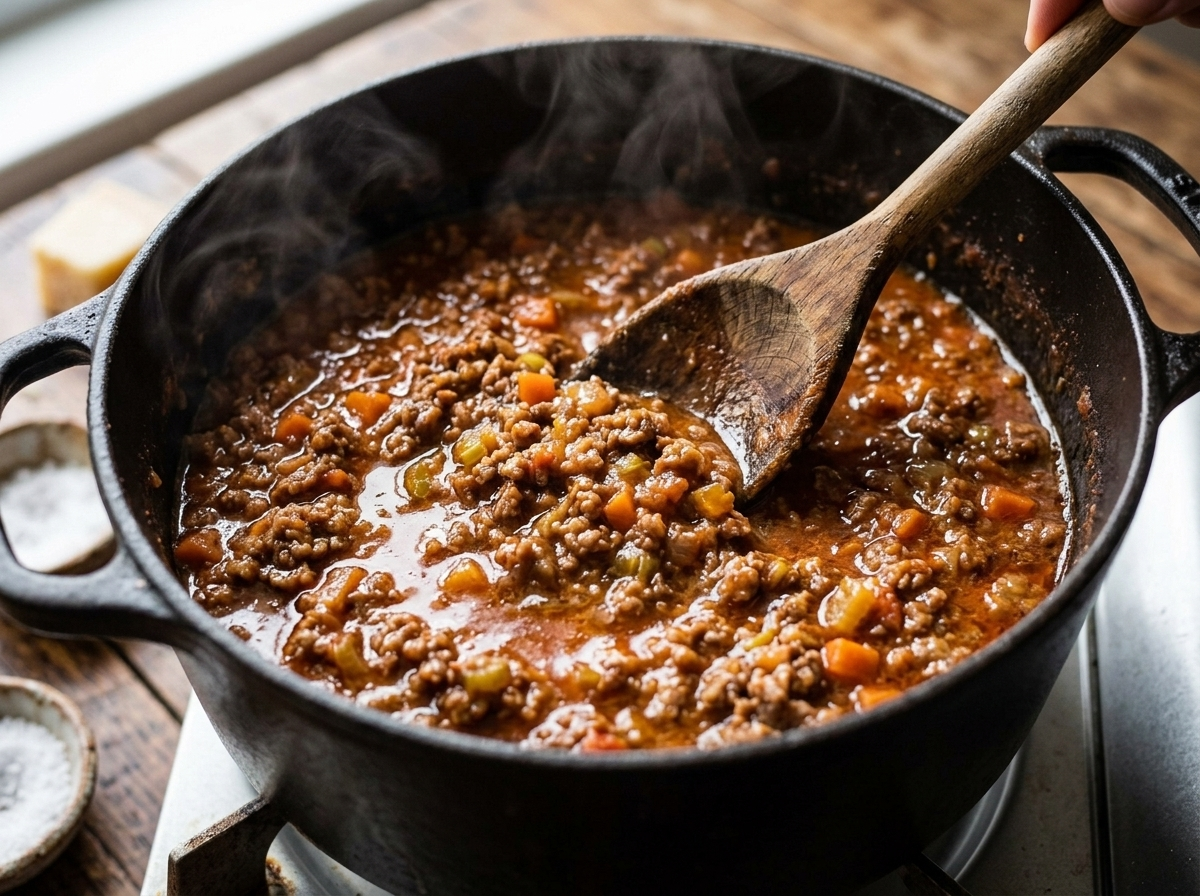
- Reduce the heat to the lowest setting. The ragù should show just an occasional lazy bubble. Simmer uncovered for 2 hours, stirring every 20 to 25 minutes. Add a splash of water or stock if the sauce looks dry before the 2 hours are up.
- After 2 hours, the fat should have visibly separated on the surface and the sauce will be thick and a deep reddish-brown. Remove the bay leaf. Taste and adjust salt and pepper.
- Bring a large pot of water to a rolling boil. Add the coarse salt.
- Cook the tagliatelle according to the packet instructions, or 2 to 3 minutes for fresh pasta, until al dente. Reserve 120 ml of pasta cooking water before draining.
- Drain the tagliatelle and add directly to the pot of ragù over low heat. Add 3 to 4 tablespoons of the reserved pasta water.
- Toss for 1 to 2 minutes until the pasta is well coated and the sauce clings to each strand.
- Divide into warmed bowls. Finish with a generous amount of freshly grated Parmigiano-Reggiano and serve immediately.
Notes
Tips for Success
- Cook the soffritto on low heat for at least 10 minutes until the vegetables are completely soft and pale, not browned.
- Brown the meat in two batches if your pan is smaller than 28 cm to avoid steaming instead of searing.
- Add the milk in two stages, each time letting it fully absorb before pouring in the next addition.
- Keep the simmer very low, just an occasional bubble, for the full 2 hours so the fat rises and the sauce does not reduce too fast.
- Reserve 120 ml of pasta cooking water and add a splash when tossing tagliatelle with the ragù to bind the sauce to the noodles.
Variations
- Swap half the beef for chicken livers, finely chopped, for a traditional older Bolognese variation with a deeper, earthier note.
- Use pappardelle instead of tagliatelle for a wider, more rustic presentation that still holds the ragù well.
- Add 50 ml of heavy cream in the final 10 minutes for a richer, slightly ivory-colored sauce, common in some Bolognese home kitchens.
Storage and Reheating
Store leftover ragù separately from the pasta in an airtight container in the fridge for up to 4 days. The sauce thickens as it cools, which is normal.
To freeze, portion the ragù into 200 g blocks and freeze for up to 3 months. Thaw overnight in the fridge, not on the counter.
Reheat the ragù gently in a wide pan over low heat with a splash of water or beef stock to loosen it. Cook fresh tagliatelle while the sauce heats and toss together just before serving.
Serving Suggestions
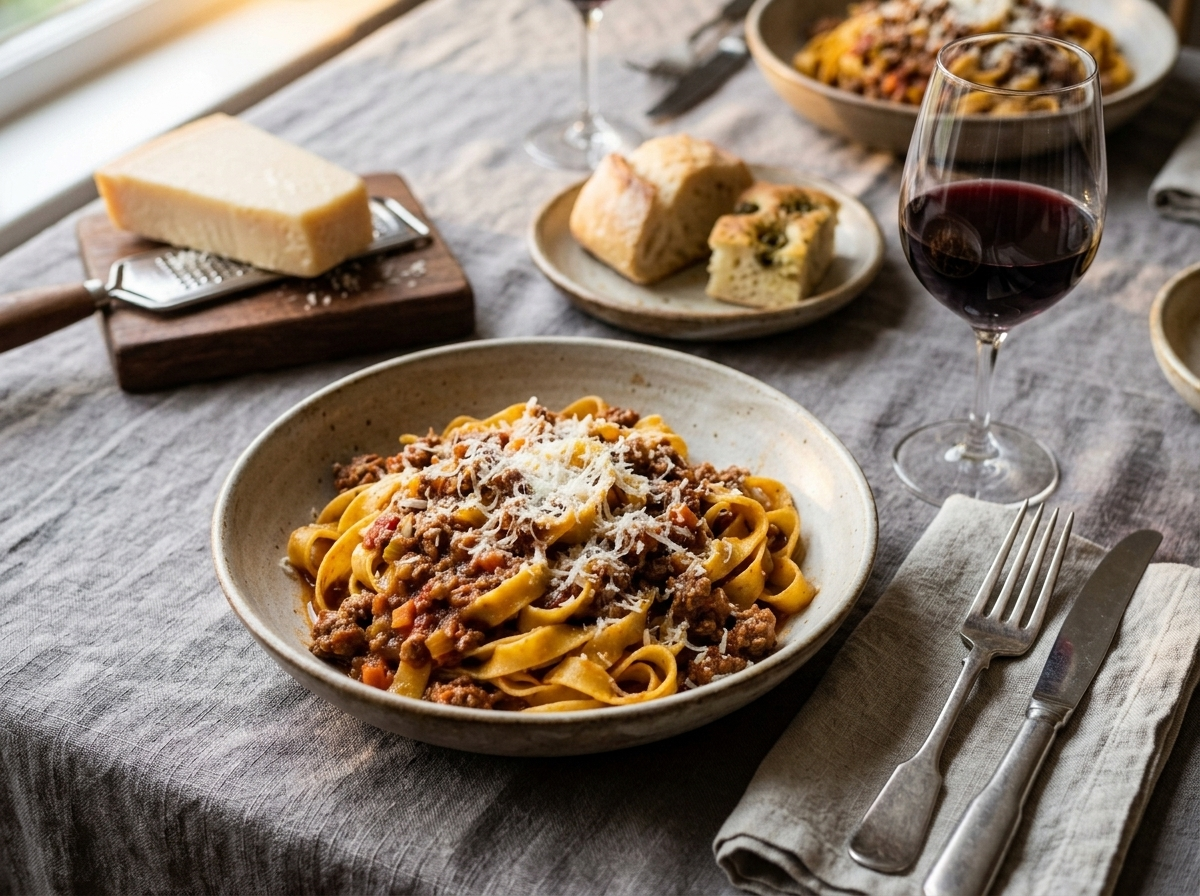
Serve tagliatelle al ragù in warmed shallow bowls. Spoon the pasta in and finish with a generous amount of freshly grated Parmigiano-Reggiano. A drizzle of olive oil is optional but adds a clean finish.
A simple green salad dressed with lemon and olive oil balances the richness of the ragù without competing with it. Avoid anything heavily dressed or acidic alongside the pasta itself.
A glass of Sangiovese, such as a Chianti Classico or Morellino di Scansano, is the natural pairing, and the same wine sits equally well alongside pan-seared veal cutlets if you want to extend the meal into a second course. The tannins cut through the fat in the meat cleanly. For a non-alcoholic option, sparkling water with a wedge of lemon works well.
FAQ
Why does my bolognese taste acidic even after a long simmer?
The tomato paste or wine hasn’t cooked out long enough. Make sure the paste fries in the fat for 2 minutes before you add any liquid, and let the wine reduce fully before adding milk. The milk stage is specifically there to neutralize remaining acidity.
Can I use dried tagliatelle instead of fresh egg tagliatelle for this ragù?
Yes, dried egg tagliatelle works well and is easier to find outside Italy. Look for a brand made with egg in the ingredient list, not plain semolina and water, since the egg content gives the pasta the grip it needs to hold the ragù.
How do I know when the bolognese ragù is done simmering?
The fat will visibly separate and pool on the surface, and the sauce will have reduced to a thick, almost dry consistency that barely falls off a spoon. The color shifts from pink-brown to a deep, reddish-brown, and the meat will smell nutty rather than raw.
Can I make the ragù bolognese the day before and reheat it for guests?
The ragù actually improves after a night in the fridge because the fat solidifies and the flavors knit together. Reheat it slowly in a pan with a splash of water, then cook the tagliatelle fresh right before serving.
Is tagliatelle al ragù bolognese gluten-free?
No, traditional tagliatelle is made from wheat flour and eggs, so it contains gluten. Gluten-free tagliatelle made from rice or corn flour exists in specialist shops and works with this ragù, though the texture is softer and less resilient.
What is the difference between bolognese and a regular meat sauce?
Bolognese is defined by its restraint: small amounts of tomato, milk added during cooking, and a slow simmer that keeps the meat tender rather than tough — a philosophy shared by the slow-cooked beef and onion ragù of Naples, which uses no tomato at all. A generic meat sauce typically has far more tomato, no milk stage, and a shorter cook time, giving it a sharper, more tomato-forward flavor.