Ingredients
Method
Make the soffritto
- Melt the butter with the olive oil in a heavy-bottomed Dutch oven over low heat.
- Add the pancetta and cook for 3 minutes, stirring occasionally, until the fat is translucent but not crispy.
- Add the onion, carrot, and celery. Cook over low heat for 10 to 12 minutes, stirring every couple of minutes, until the vegetables are very soft and pale. They should not color.
Brown the meat
- Raise the heat to medium-high. Add the ground beef and pork to the pot.
- Break up the meat with a wooden spoon and cook for 8 to 10 minutes, stirring regularly, until no pink remains and the meat has developed a light brown color and smells nutty.
- Pour in the white wine. Stir and scrape up any bits from the bottom of the pot. Let the wine bubble for 4 to 5 minutes until it has evaporated completely and you can no longer smell alcohol.
Build and simmer the ragù
- Stir in the tomato paste. Cook for 2 minutes, stirring constantly, until the paste darkens slightly and coats the meat.
- Pour in 75 ml of the whole milk. Stir well and cook for 3 to 4 minutes until fully absorbed.
- Add the remaining 75 ml of milk. Stir and let it absorb again, about 3 minutes.
- Pour in the warm beef stock, add the bay leaf, and stir to combine. Bring to a gentle simmer.
- Reduce the heat to the lowest setting. The ragù should show just an occasional lazy bubble. Simmer uncovered for 2 hours, stirring every 20 to 25 minutes. Add a splash of water or stock if the sauce looks dry before the 2 hours are up.
- After 2 hours, the fat should have visibly separated on the surface and the sauce will be thick and a deep reddish-brown. Remove the bay leaf. Taste and adjust salt and pepper.
Cook the tagliatelle and serve
- Bring a large pot of water to a rolling boil. Add the coarse salt.
- Cook the tagliatelle according to the packet instructions, or 2 to 3 minutes for fresh pasta, until al dente. Reserve 120 ml of pasta cooking water before draining.
- Drain the tagliatelle and add directly to the pot of ragù over low heat. Add 3 to 4 tablespoons of the reserved pasta water.
- Toss for 1 to 2 minutes until the pasta is well coated and the sauce clings to each strand.
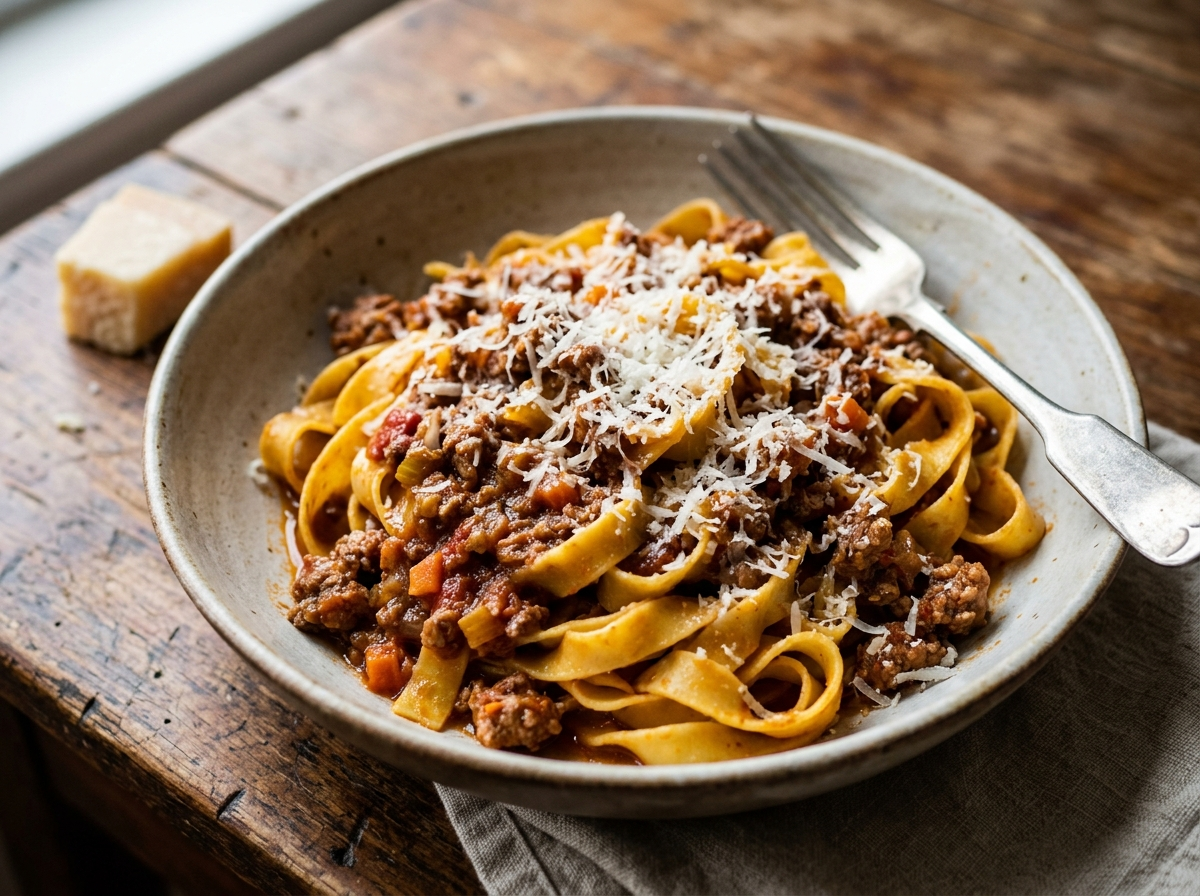
- Divide into warmed bowls. Finish with a generous amount of freshly grated Parmigiano-Reggiano and serve immediately.
Notes
The ragù is better made the day before serving - refrigerating overnight lets the fat solidify on top (skim it off or stir it back in) and the flavors knit together noticeably. Cook fresh tagliatelle just before serving.