
Jump to Recipe
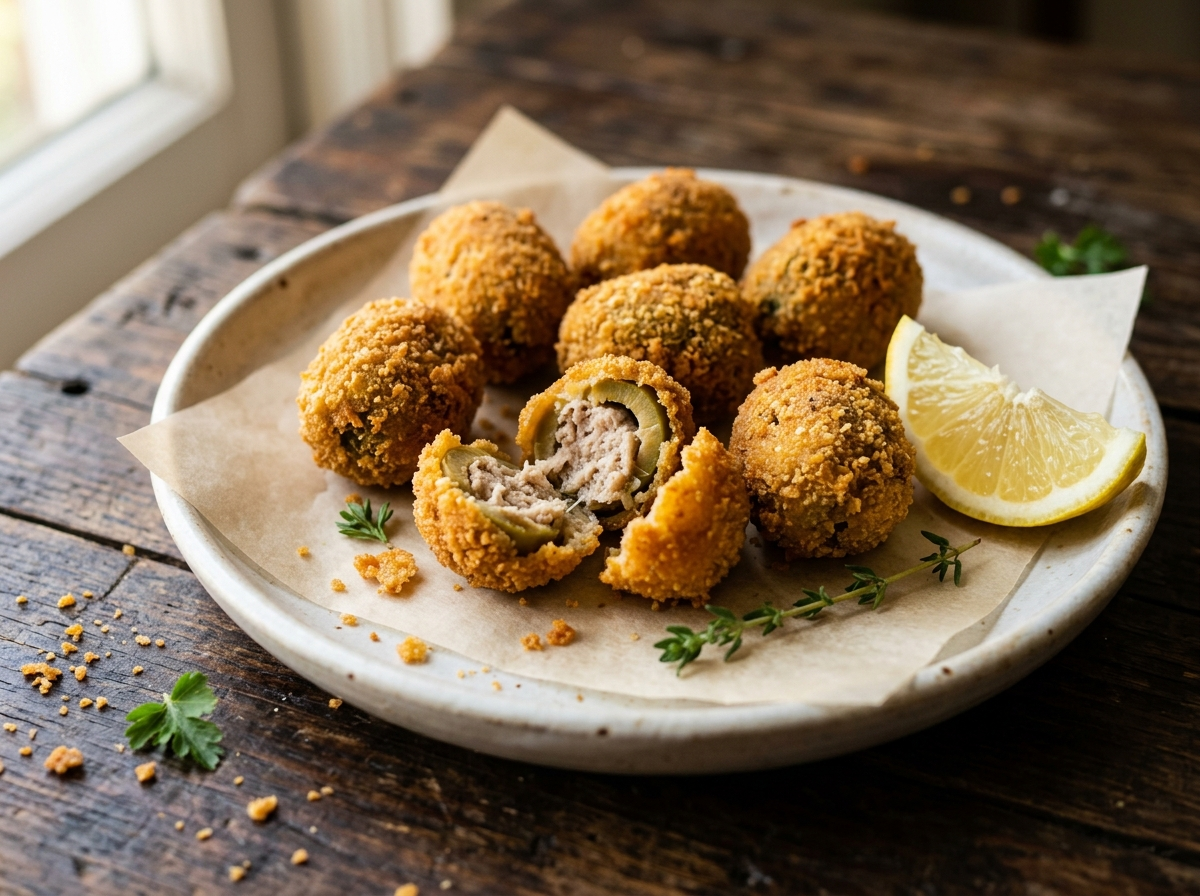
Olive all’ascolana come from Ascoli Piceno in Le Marche, a town so proud of them it has IGP protection on the name. They’re sold at every friggitoria in the region, hot from the oil in paper cones alongside cremini fritti and squascia.
The filling is a fine-ground mix of pork, beef, and chicken, cooked with a soffritto, moistened with white wine, then bound with egg, Parmigiano, and a pinch of nutmeg. It’s a classic secondi-leftovers-turned-street-food idea, and it works just as the Abruzzo tradition of pork and veal shows across the border.
The olive you use matters more than most people think. You need a large, fleshy, mild-cured green olive with a pit you can remove cleanly. Ascolana Tenera are the traditional choice. Outside Italy, large Cerignola olives are the closest available substitute.
This recipe makes about 30 to 35 olives, enough for a proper antipasto spread or a frittura mista alongside other fried bites like Italian mixed fried fish.
Why You’ll Love This Recipe
- Audibly crispy shell with a juicy, well-seasoned filling inside
- Make-ahead friendly: stuff and bread the day before frying
- Uses large, affordable green olives available in most delis
- Freezes raw so you can fry straight from frozen
Ingredient Notes
- Green olives: Ascolana Tenera are the traditional choice, large and mild-cured. Outside Italy, large Cerignola or Castelvetrano olives work well. Avoid small olives, you won’t fit enough filling inside.
- Pork mince: Pork brings fat and moisture to the filling. Use a roughly 50/30/20 split of pork, beef, and chicken, or substitute all pork if that’s what you have.
- Chicken breast or thigh: Chicken keeps the filling light and pale. Thigh gives slightly more flavor than breast. A small amount of mortadella or chicken liver is used in some Ascoli recipes for extra depth.
- Dry white wine: Used to deglaze the meat and add a clean acidity to the filling. A Verdicchio or Trebbiano fits the region. Any dry white you’d drink works fine.
- Parmigiano Reggiano: Grated Parmigiano binds the filling and adds savory depth. Grana Padano works as a budget substitute.
- Breadcrumbs: Use fine dry breadcrumbs for both the filling and the coating. Panko gives a rougher crust, so stick with fine crumbs for the authentic texture.
- Nutmeg: A small pinch of freshly grated nutmeg is traditional in the meat filling. Don’t skip it, it’s a quiet background note that ties the filling together.
- Frying oil: Sunflower or peanut oil are standard choices, both with a high smoke point. Olive oil is used in some traditional frittorie but adds cost. Aim for a frying temperature of 175 C / 345 F.
Olive all’Ascolana: Fried Stuffed Olives from Le Marche
Ingredients
Method
- Heat 1 tbsp olive oil in a medium skillet over medium heat. Add the onion, celery, and carrot and cook for 5 to 6 minutes, stirring occasionally, until softened and pale golden.
- Add the pork, beef, and chicken to the pan. Cook over medium-high heat, breaking up the meat with a wooden spoon, until no pink remains, about 5 minutes.
- Pour in the white wine and cook until it has mostly evaporated, about 2 minutes. Season with salt and pepper.
- Transfer the cooked meat mixture to a food processor and pulse until finely ground but not a paste, about 10 short pulses.
- Tip the ground meat into a bowl. Mix in the Parmigiano, 30 g breadcrumbs, 1 egg, nutmeg, and lemon zest if using. Stir until the filling holds together when pressed.
- Cover the bowl and refrigerate for at least 1 hour until the filling is firm and cold.
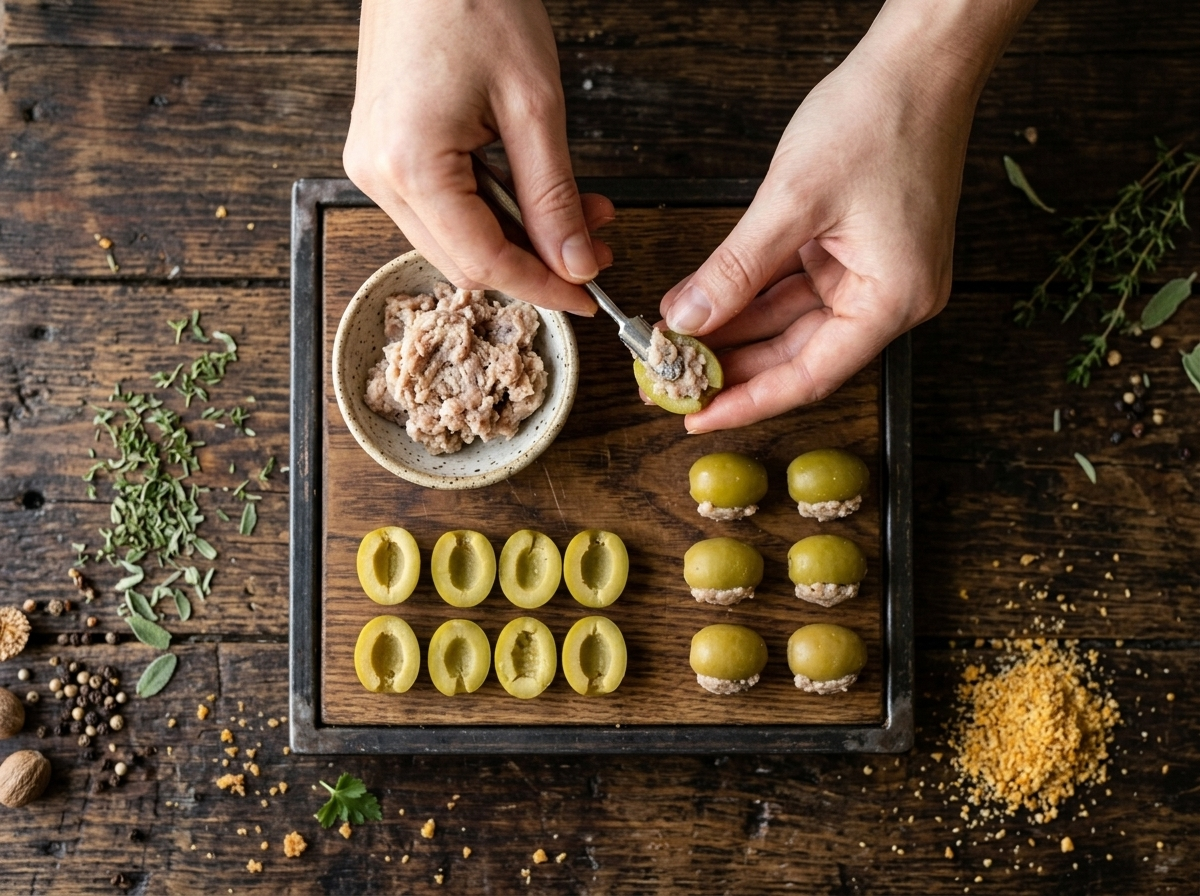
- Using a small paring knife, cut a spiral around each olive following the natural curve of the fruit, all the way down to the pit. Twist gently to separate the flesh from the pit in one piece.
- Take a small amount of chilled filling, about the size of the pit, and press it firmly into the cavity of each olive. Reshape the olive in your palm, pressing the spiral back together so it holds a clean oval shape.
- Set the stuffed olives on a tray lined with parchment paper.
- Set up a breading station: one shallow bowl with flour, one with 2 beaten eggs, and one with 120 g breadcrumbs.
- Roll each stuffed olive in flour, shaking off the excess. Dip in beaten egg, letting excess drip off. Roll in breadcrumbs, pressing gently to coat fully.
- Dip the breaded olive back in the egg wash, then roll in breadcrumbs a second time. This double coat is what keeps the filling sealed and gives the thick, crispy crust.
- Place breaded olives back on the tray in a single layer. Refrigerate for 15 minutes while you heat the oil, or freeze at this stage for later use.
- Pour 800 ml oil into a deep saucepan and heat over medium-high heat to 175 C / 345 F. Use a thermometer to confirm the temperature before frying.
- Carefully lower 6 to 8 olives into the hot oil using a slotted spoon. Fry for 3 to 4 minutes, turning once or twice, until deep golden brown all over.
- Remove with a slotted spoon and drain on a plate lined with paper towels. Let the oil return to 175 C before frying the next batch.
- Serve immediately with lemon wedges.
Notes
Tips for Success
- Chill the cooked filling completely before stuffing, a warm filling tears the olive flesh and slips out during breading.
- Use a small melon baller or the back of a teaspoon to widen the cavity after pitting, giving you more room for filling.
- Press the filling firmly into the olive cavity and reshape the olive in your palm before breading so it holds a clean oval.
- Double-bread each olive: flour, egg wash, breadcrumbs, then egg wash and breadcrumbs again, for a shell that won’t crack in the oil.
- Fry in small batches of 6 to 8 olives so the oil temperature stays above 170 C / 340 F throughout; crowding the pan makes them greasy.
Variations
- Vegetarian version: substitute the meat filling with a mixture of ricotta, mozzarella, spinach, and Parmigiano.
- Liver-enriched filling: add 30 g chicken liver to the meat mix for a richer, more traditional Ascoli friggitoria flavor.
- Spicy version: mix a pinch of ground chili into the filling and use Calabrese-cured olives in place of the mild green ones.
Storage and Reheating
Uncooked breaded olives keep in a single layer on a tray, covered, in the fridge for up to 24 hours. Fry them straight from cold, they don’t need to come to room temperature.
For longer storage, freeze the breaded olives on a tray until solid, then transfer to a freezer bag. They keep well for up to 2 months. Fry directly from frozen at 170 C / 340 F for about 5 to 6 minutes, a minute or two longer than fresh.
Already fried olives lose their crunch within 30 minutes. Reheat in an air fryer at 180 C / 355 F for 4 minutes to bring back some crispness, but frying fresh gives far better results.
Serving Suggestions
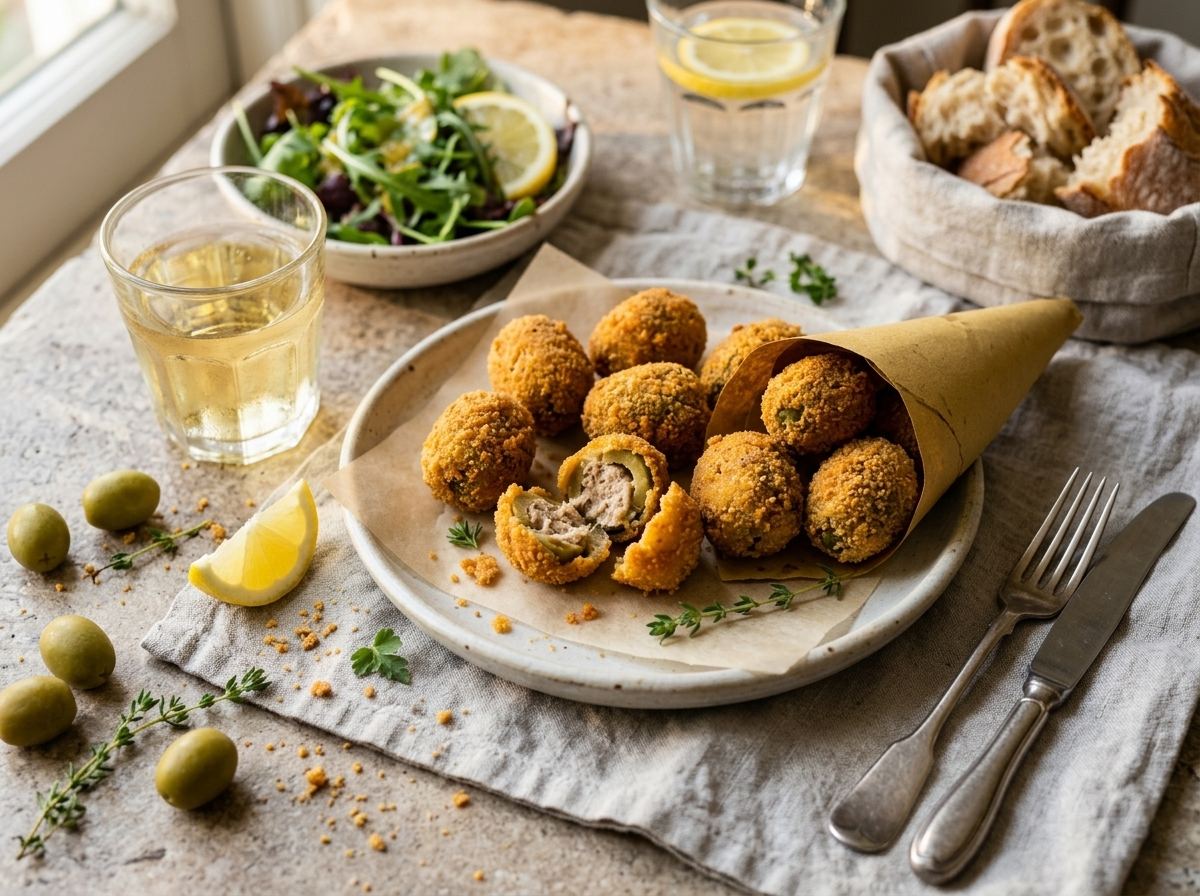
Olive all’ascolana are traditionally part of a frittura mista ascolana alongside cremini fritti (crumbed fried custard squares) and fried zucchini or artichoke. Serve them in a paper cone or a small bowl lined with parchment, hot from the oil.
For an aperitivo spread, set them out with a glass of local Verdicchio dei Castelli di Jesi, a sparkling Prosecco, or a cold Peroni alongside a classic three-ingredient Negroni. They pair well with other finger foods like supplì or arancini on a broader antipasto table.
A small bowl of lemon wedges on the side is classic. The squeeze of acid cuts through the richness of the fried crust and brightens the whole bite.
FAQ
Why do my olive all’ascolana burst open in the oil?
This usually means the breading wasn’t sealed properly or the oil was too hot. Make sure to double-bread each olive and press the crumbs firmly. Keep frying oil between 170 C and 175 C, any hotter and the coating sets too fast and cracks.
Can I use black olives instead of green Ascolana olives for this recipe?
You can, but the texture is different. Black olives are softer and harder to pit without tearing. Green olives, especially large varieties like Cerignola, hold their shape better and have a milder flavor that doesn’t fight the meat filling.
Can I freeze olive all’ascolana before frying them?
Yes, and it works well. Bread them, freeze flat on a tray until solid, then bag them. Fry directly from frozen at 170 C for 5 to 6 minutes. The crust won’t suffer from freezing.
What is the difference between olive all’ascolana and regular stuffed olives?
Olive all’ascolana are a specific IGP product from Ascoli Piceno made with Ascolana Tenera olives and a cooked three-meat filling. Generic stuffed olives are often filled with cheese, anchovies, or peppers and usually not breaded or fried.
How do I know when the oil is the right temperature for frying the olives?
Drop a pinch of breadcrumbs into the oil. If they sizzle steadily and float to the surface within a second or two, you’re at the right temperature. An instant-read or candy thermometer is more reliable for consistency, target 170 C to 175 C.
Is there a gluten-free way to make olive all’ascolana?
Swap the plain flour for rice flour and use gluten-free fine breadcrumbs for the coating. The texture is slightly different but still crispy. Check that your olives are not marinated in a brine containing malt vinegar or other gluten sources.