Jump to Recipe
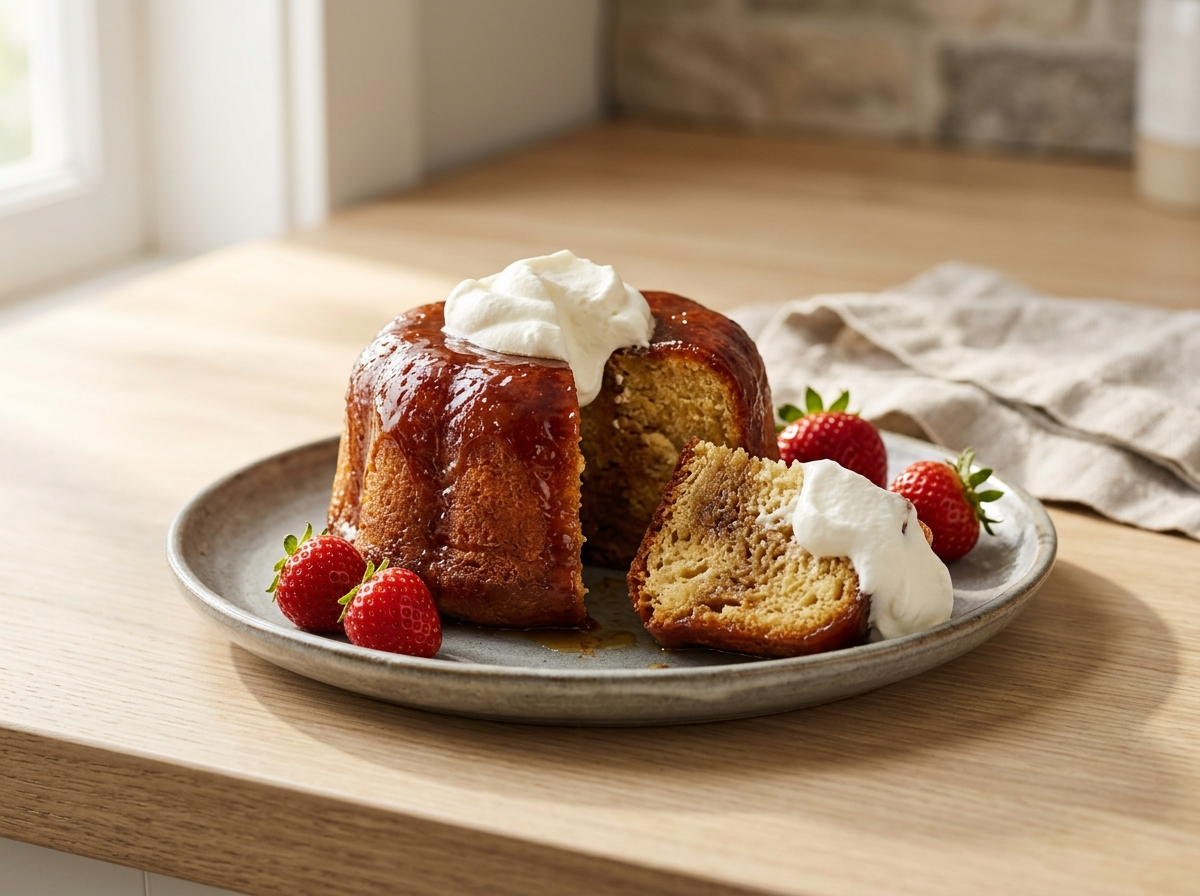
Babà al rum is one of those Neapolitan pastry shop classics that looks intimidating but follows a logical sequence. The dough is enriched with eggs and butter, baked until deeply golden, then plunged into a warm rum syrup until it swells and glistens.
The texture is the whole point. A well-made babà holds its shape, bounces back when pressed, and releases a few drops of syrup when you bite in. It should not be mushy or fall apart.
The recipe takes time – mostly inactive – but the actual hands-on work is straightforward. You can bake the cakes a day ahead and soak them the next morning, which makes this a practical make-ahead dessert for a dinner party.
I use dark rum here. It gives a rounder, more caramel-forward flavor than white rum and holds up better against the sweetness of the syrup.
Why You’ll Love This Recipe
- Deep rum flavor that soaks all the way through the crumb
- Bake ahead and soak the next day – genuinely practical
- Springy, light crumb from a proper enriched yeast dough
- Individual portions look impressive with minimal plating effort
Ingredient Notes
- 00 flour: Finely milled 00 flour gives the babà its characteristic soft, tender crumb. All-purpose flour works as a substitute but produces a slightly denser texture.
- fresh yeast: Fresh yeast gives the most active rise for this enriched dough. If using dried active yeast, use 3.5 g (about 1 tsp) and activate it in the warm milk first.
- unsalted butter: Butter is worked into the dough in small pieces after the initial gluten develops – this is non-negotiable for the right structure. Make sure it’s at room temperature.
- dark rum: Dark rum – Havana Club 7, Zacapa, or a Jamaican style – gives the syrup depth. White rum is sharper and less complex here, though it works in a pinch.
- apricot jam: Warmed and sieved apricot jam gives the classic glossy glaze. Peach jam is a close substitute if apricot is hard to find.
- whole milk: Used to activate the yeast and loosen the dough slightly. Do not substitute with plant-based milk – the fat content affects dough enrichment.
Babà al Rum: The Classic Neapolitan Rum-Soaked Yeast Cake
Ingredients
Method
- Crumble the fresh yeast into the lukewarm milk and stir until dissolved. Let it sit for 5 minutes until slightly foamy.
- Place the flour, sugar, and salt in the bowl of a stand mixer fitted with the dough hook. Mix briefly on low to combine.
- Add the yeast mixture and beaten eggs to the flour. Mix on medium speed for 8-10 minutes until the dough is smooth, elastic, and pulls cleanly away from the sides of the bowl.
- With the mixer running on medium-low, add the room-temperature butter one or two cubes at a time. Wait until each addition is fully incorporated before adding more. This takes about 8-10 minutes total. The finished dough will be soft, slightly sticky, and glossy.
- Cover the bowl with plastic wrap and leave to rise at room temperature for 1 hour, or until doubled in size.
- Grease 12 individual babà molds (7 cm diameter) with softened butter. Lightly flour them and tap out the excess.
- Lightly flour your hands and divide the dough into 12 equal pieces, about 45 g each. Shape each piece into a smooth ball and place one in each mold, smooth side up. The dough should fill each mold about halfway.
- Cover the molds loosely with a clean kitchen towel and leave to proof at room temperature for 45-60 minutes, until the dough domes above the rim of each mold and looks puffy.
- Heat the oven to 200 C / 390 F, conventional setting.
- Place the molds on a baking sheet. Bake for 20-25 minutes until the babà are deep golden brown on top and pulling slightly away from the sides of the molds. A skewer inserted into the center should come out clean.
- Turn the babà out onto a wire rack immediately. Let them cool completely, at least 1 hour, before soaking.
- Combine the water, sugar, and orange peel strips in a medium saucepan over medium heat. Stir until the sugar dissolves, then bring to a gentle simmer for 3 minutes.
- Remove from the heat. Add the rum and vanilla extract. Stir to combine. Discard the orange peel. Let the syrup cool to around 60-65 C / 140-150 F before soaking - warm but not boiling.
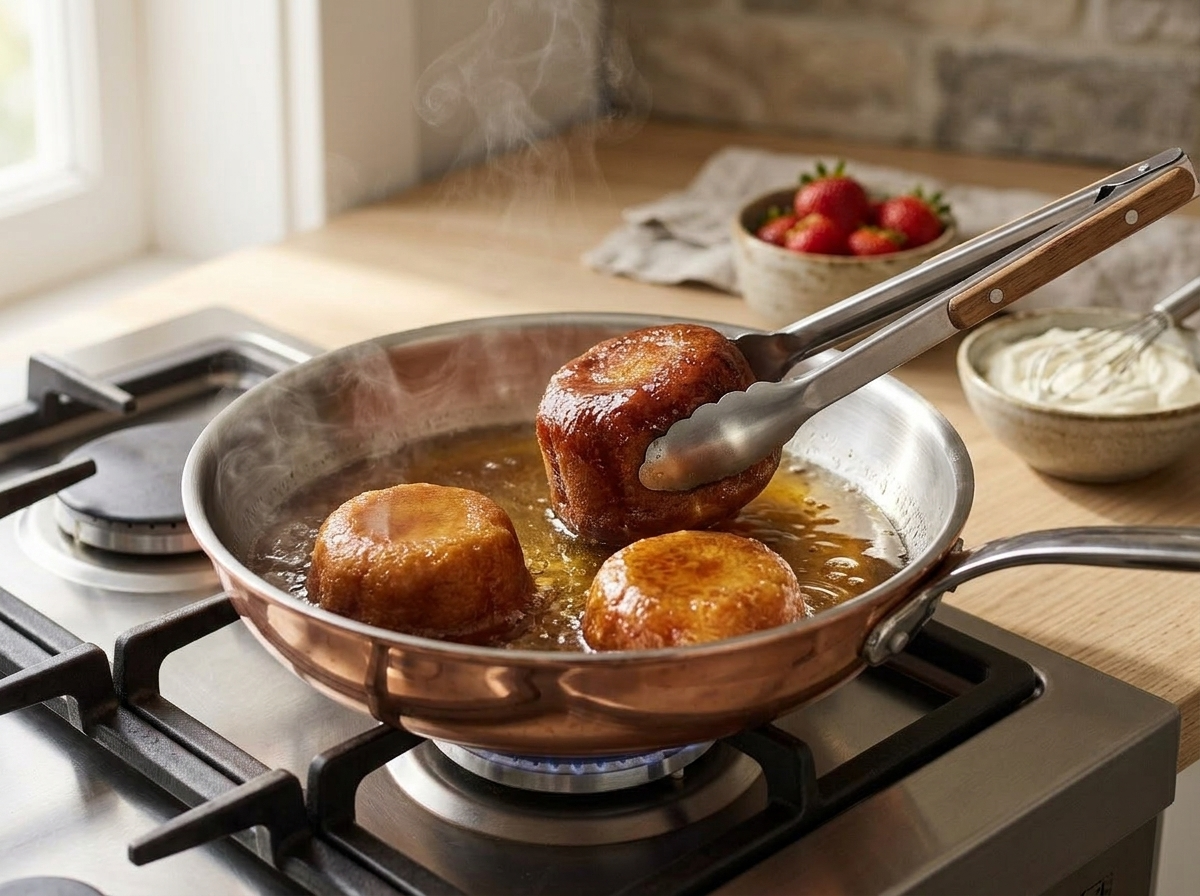
- Place 2-3 cooled babà at a time into the warm syrup. Press them gently and turn each one twice so all sides absorb the liquid. The babà should feel noticeably heavier and bounce back slowly when pressed. Soak each babà for about 2-3 minutes.
- Transfer soaked babà to a rimmed tray or dish to catch excess syrup. Repeat with the remaining cakes.
- Warm the apricot jam and water together in a small saucepan over low heat, stirring until combined. Pass through a fine-mesh sieve to remove any lumps.
- Brush each soaked babà with the warm apricot glaze while still slightly warm. Set aside on a rack to let the glaze set, about 15 minutes.
- Refrigerate the glazed babà for at least 1 hour before serving.
- Whip the cold cream with the icing sugar until it holds soft peaks. Remove babà from the fridge 20 minutes before serving.
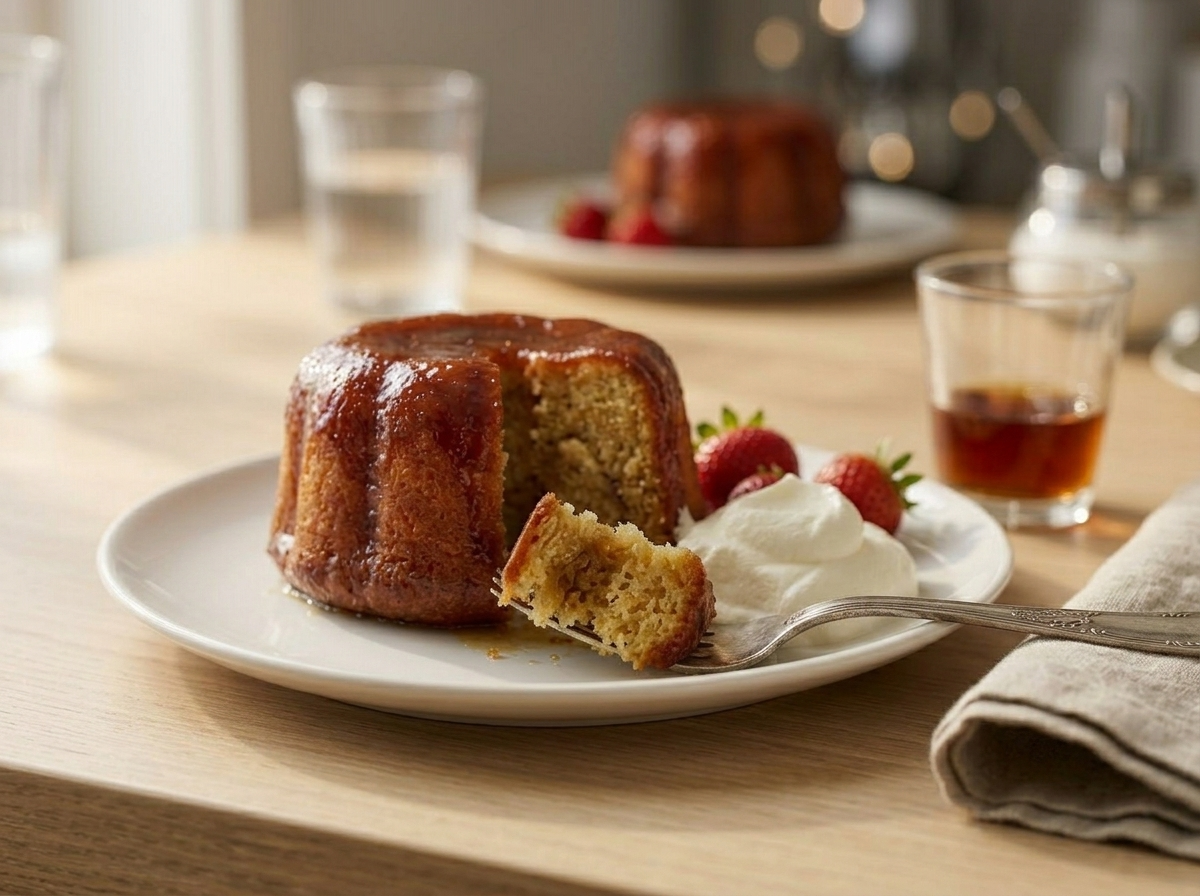
- Plate each babà with a generous spoonful of whipped cream alongside. Add fresh strawberries or figs if you like.
Notes
Tips for Success
- Work butter into the dough in 4-5 small additions, waiting until each piece is fully absorbed before adding the next.
- Fill each mold only halfway – the dough will double and push above the rim during proofing and baking.
- Soak the baked babà while the syrup is still warm, around 60-65 C / 140-150 F, not boiling hot, so the cake absorbs evenly.
- Press each babà gently into the syrup and turn it twice to soak all sides – the cake should feel heavy and spring back slowly.
- Brush the apricot glaze while the babà are still slightly warm so it sets to a clean, non-sticky finish.
Variations
- Limoncello babà: replace half the rum in the syrup with Amalfi limoncello and add lemon zest.
- Rum babà with pastry cream: fill the center cavity with vanilla crema pasticcera instead of whipped cream.
- Single large babà: bake in a 22 cm bundt or savarin mold and increase baking time to 30-35 minutes.
Storage and Reheating
Unsoaked baked babà keep well at room temperature, wrapped tightly, for up to 2 days. You can also freeze them at this stage – wrap individually and freeze for up to 1 month, then thaw at room temperature before soaking.
Once soaked and glazed, babà should be refrigerated and eaten within 2 days. Store them in a single layer in a covered container so the glaze doesn’t stick.
To serve chilled babà at their best, take them out of the fridge 20-30 minutes before serving. Cold mutes the rum flavor; room temperature brings it forward.
Serving Suggestions
In Naples, babà are served simply: one or two on a plate, a spoonful of cold whipped cream alongside, sometimes a few wild strawberries or sliced fresh figs in season.
For a more composed dessert, set a babà on a pool of vanilla crema pasticcera and top with a rosette of whipped cream. A small scoop of fior di latte gelato next to a warm babà works particularly well in summer.
For a dinner party, arrange individual babà on a long serving platter, glazed and glistening, with a bowl of lightly sweetened whipped cream on the side. Guests help themselves and it requires no last-minute work from you.
FAQ
Why is my babà al rum dry and not absorbing the syrup?
The syrup needs to be warm – around 60-65 C / 140-150 F – when you soak the babà. Cold syrup won’t penetrate the crumb. Also make sure the cake is fully baked and cooled before soaking, as a warm cake can break apart in the liquid.
Can I use white rum instead of dark rum in the soaking syrup?
You can, but the flavor profile changes noticeably. White rum is sharper and more alcohol-forward, while dark rum adds a caramel depth that balances the sugar in the syrup. I’d stick with dark rum if you can.
Can I freeze babà al rum after soaking?
Freezing soaked babà is not recommended – the syrup causes the crumb to turn mushy when thawed. Freeze the unsoaked baked cakes instead, then soak fresh when needed.
How do I know when the babà dough has proofed enough in the molds?
The dough should dome visibly above the rim of each mold and look puffy and smooth. It typically takes 45-60 minutes at room temperature, but it depends on how active your yeast is and how warm your kitchen is.
What is the difference between babà al rum and savarin?
Both are enriched yeast cakes soaked in syrup, but savarin is baked in a ring mold and traditionally soaked in kirsch or a lighter syrup, then filled with cream and fruit in the center. Babà al rum is soaked in a dark rum syrup and served individually or as small mushroom-shaped cakes – it’s the Neapolitan version with a more pronounced rum flavor.
Is babà al rum suitable for children?
No, not as written – the soaking syrup contains a significant amount of dark rum and the alcohol does not fully cook off. You can make a non-alcoholic version by replacing the rum with a mix of orange juice and a few drops of rum extract for flavor.