
Jump to Recipe
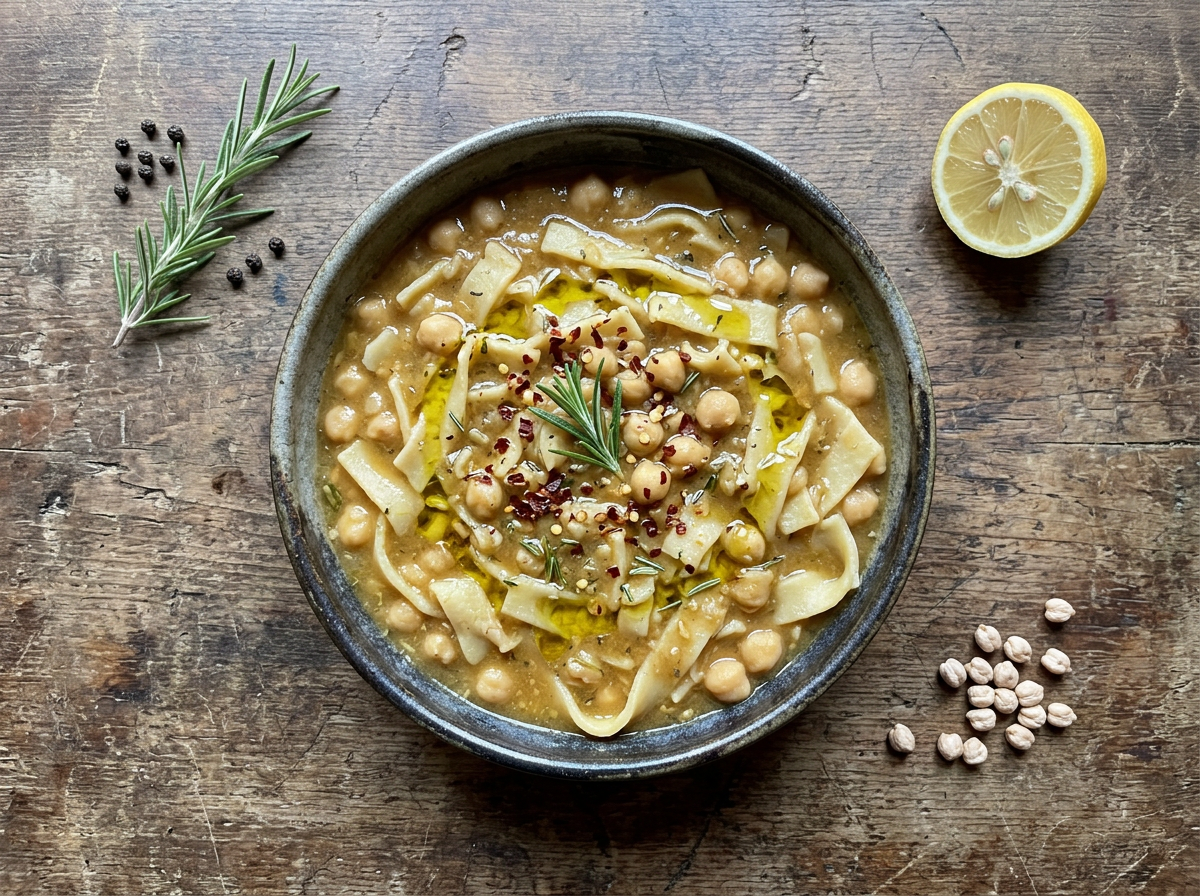
Lagane e ceci is a Basilicata pasta dish made from wide, flat ribbons of flour-and-water pasta, similar in shape to the noodles in tagliatelle al ragù bolognese, cooked directly in a chickpea broth flavored with garlic, rosemary, and chili. There’s no egg in the dough and no cream in the pot, the texture comes entirely from starchy pasta water meeting mashed chickpeas.
This is peasant cooking done right. Chickpeas simmer low and slow until half of them break down into the broth, then the fresh lagane finishes cooking right there, releasing enough starch to turn thin broth into something you eat with a spoon.
I soak the chickpeas the night before, which sounds like a hurdle but is really just five minutes of work before bed. Canned chickpeas work in a pinch and I’ve listed how to adjust for them below.
The payoff is a bowl that costs almost nothing and tastes like it took longer than it did. One pot, one pan for the soffritto, and dinner’s done.
Why You’ll Love This Recipe
- One pot cooks the pasta and the sauce together
- Dried chickpeas cost pennies and feed the whole table
- No eggs, cream, or cheese required in the dough or sauce
- Tastes better the next day, so leftovers are a bonus
Ingredient Notes
- Semola rimacinata (durum flour): Gives the lagane a firmer bite than 00 flour. All-purpose flour works but the ribbons turn out slightly softer.
- Dried chickpeas: Soak 12 hours in cold water for a creamier texture than canned. If you’re short on time, use 2 (400g) cans, drained, and cut the simmer to 15 minutes.
- Rosemary: Use a whole sprig so you can fish it out later, chopped rosemary leaves left in the broth turn bitter and woody.
- Anchovy fillet (optional): One mashed fillet in the soffritto adds savory depth without tasting fishy. Skip it for a fully vegan version.
- Chili flakes: Peperoncino is traditional in Basilicata cooking. Start with a pinch, you can always add more at the table.
Lagane e Ceci: Basilicata’s Pasta and Chickpea Stew
Ingredients
Method
- Mound the flour on a board, make a well in the center, and pour in the water and salt. Mix with a fork, then knead by hand 8-10 minutes until the dough is smooth and elastic.
- Wrap the dough in plastic and rest at room temperature for 30 minutes.
- Roll the dough into a thin sheet, about 2mm thick, and cut into ribbons roughly 1.5 cm wide and 12-15 cm long. Dust with extra semola and set aside on a tray.
- Drain the soaked chickpeas and add to a large pot with the water, bay leaf, and one smashed garlic clove. Bring to a boil, then simmer uncovered 60-75 minutes until the chickpeas are creamy-tender, skimming any foam.
- Meanwhile, heat the olive oil in a small skillet over medium heat. Add the sliced garlic, rosemary sprig, chili flakes, and anchovy if using, and cook 2 minutes until fragrant but not browned.
- Scoop about 1 cup of cooked chickpeas into a bowl, mash roughly with a fork, and stir back into the pot to thicken the broth.
- Stir the garlic-rosemary oil into the chickpea pot and season with salt and pepper. Keep at a gentle simmer.
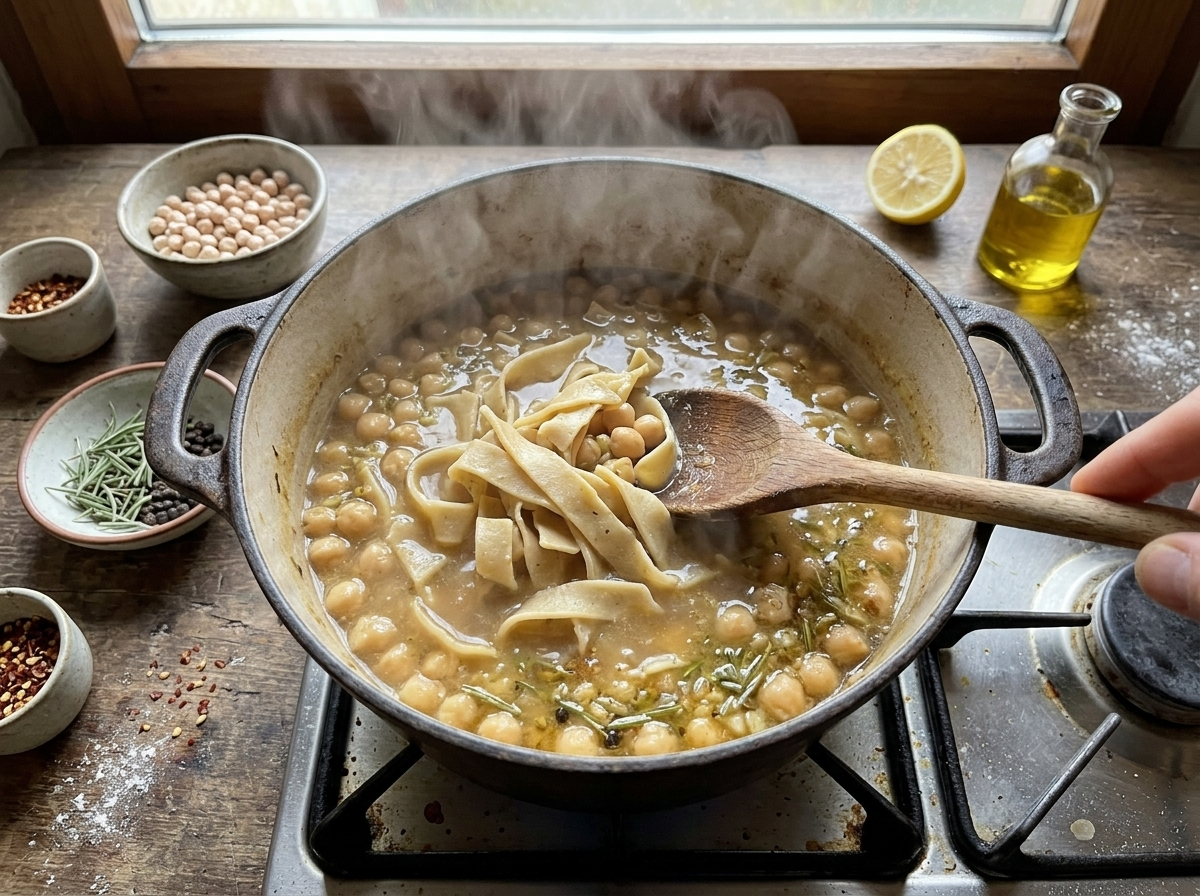
- Add the fresh lagane directly into the simmering chickpea pot, adding extra hot water if the broth looks too thick to cover the pasta.
- Cook 3-4 minutes, stirring gently, until the pasta is al dente and the stew has thickened to a spoonable consistency.
- Remove the rosemary sprig and garlic pieces. Taste and adjust salt, then ladle into bowls and finish with a drizzle of olive oil and extra chili flakes.
Notes
- Soak dried chickpeas 12 hours ahead, this soaking time isn't included in the recipe's total time.
- Roll pasta dough to about 2mm thickness for authentic lagane texture.
- Reserve extra hot water near the stove in case the broth reduces too fast during the pasta stage.
- Mash roughly a third of the cooked chickpeas to build a naturally thick sauce.
Tips for Success
- Mash a cup of cooked chickpeas back into the pot to thicken the broth without pureeing the whole batch.
- Roll the dough thin, about 2mm, since lagane are meant to be flat and wide, not thick like pappardelle.
- Save extra hot water from the chickpea pot in case the broth reduces too fast while the pasta cooks.
- Cook the lagane straight in the broth rather than boiling separately, the starch is what builds the sauce.
- Smash the garlic clove used for simmering chickpeas so it melts into the broth instead of staying whole.
Variations
- Add a spoonful of tomato paste to the soffritto for a rosier broth, common in some Basilicata villages.
- Swap chickpeas for borlotti beans for a similar dish called lagane e fagioli, using the same technique.
- Finish with grated pecorino for a saltier, richer bowl, though the traditional version stays dairy-free.
Storage and Reheating
Lagane e ceci keeps well in the fridge for up to 3 days in an airtight container. The starch keeps thickening as it sits, so leftovers turn almost stew-like by day two.
Reheat gently on the stovetop over low heat, adding a splash of water or broth to loosen it back up since the pasta absorbs liquid overnight. A microwave works too, in 1-minute bursts, stirring between each.
I don’t recommend freezing this one. The lagane goes soft and grainy once thawed, and the texture never fully recovers.
Serving Suggestions
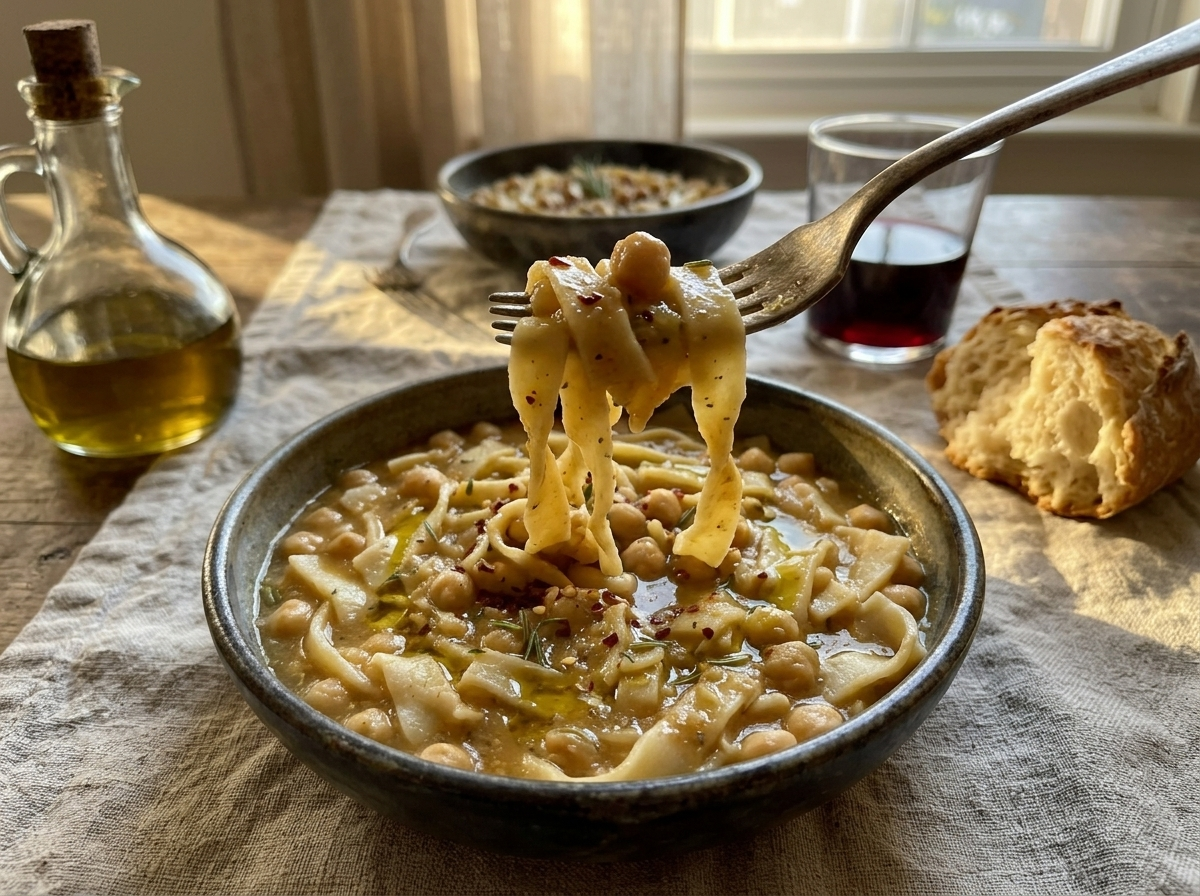
Serve lagane e ceci in shallow bowls with a generous drizzle of good olive oil on top, added right before eating, not during cooking. A crusty piece of bread on the side is standard in Basilicata for scarpetta, wiping up the last of the broth.
A simple green salad with lemon and olive oil balances the richness of the stew. If you want a bit more protein on the table, grilled sausage or a fried egg on top turns this into a heartier plate.
Pour a light red wine, something like an Aglianico from the same region, since the earthy chickpeas hold up well against it.
FAQ
Why is my lagane e ceci too watery instead of thick?
The broth needs mashed chickpeas and pasta starch to thicken properly, so if it’s thin you likely didn’t mash any chickpeas back in or you added too much water. Scoop a cup of cooked chickpeas, mash with a fork, and stir it back into the pot. Simmering a few more minutes uncovered also helps it reduce.
Can I use canned chickpeas instead of dried for this recipe?
Yes, two 400g cans of drained chickpeas work fine and save the overnight soak. Simmer them in about 1 liter of water with the bay leaf and garlic for just 15 minutes instead of 60 to 75, since they’re already tender. The broth will be slightly less creamy, so mash a bit more to compensate.
Can I freeze leftover lagane e ceci?
Freezing isn’t recommended because the fresh pasta turns soft and grainy after thawing. It’s fine in the fridge for up to 3 days in a sealed container. If you want a freezer-friendly version, freeze just the cooked chickpea broth before adding the pasta, then cook fresh lagane in it when you’re ready.
What goes well with lagane e ceci besides bread?
A simple lemony green salad cuts through the richness of the chickpea broth well. Grilled sausage or a fried egg on top adds protein if you want a heartier dinner. A light red wine like Aglianico, grown in the same region as this dish, pairs naturally with the earthy chickpeas.
Is lagane e ceci vegan and gluten free?
Lagane e ceci is naturally vegan as long as you skip the optional anchovy fillet in the soffritto. It is not gluten free since the pasta is made from wheat flour, but you can substitute a gluten-free pasta blend, keeping in mind the texture and cook time will differ from fresh lagane.
What’s the difference between lagane e ceci and pasta e ceci?
Lagane e ceci uses hand-cut, wide flour-and-water ribbons unique to Basilicata and Puglia, much like the hand-torn laganelle in sagne e fagioli, while pasta e ceci is a broader Southern Italian category that often uses short dried pasta like ditalini. Both simmer pasta directly in chickpea broth, but lagane gives a chewier, more rustic bite than smooth dried shapes.