
Jump to Recipe
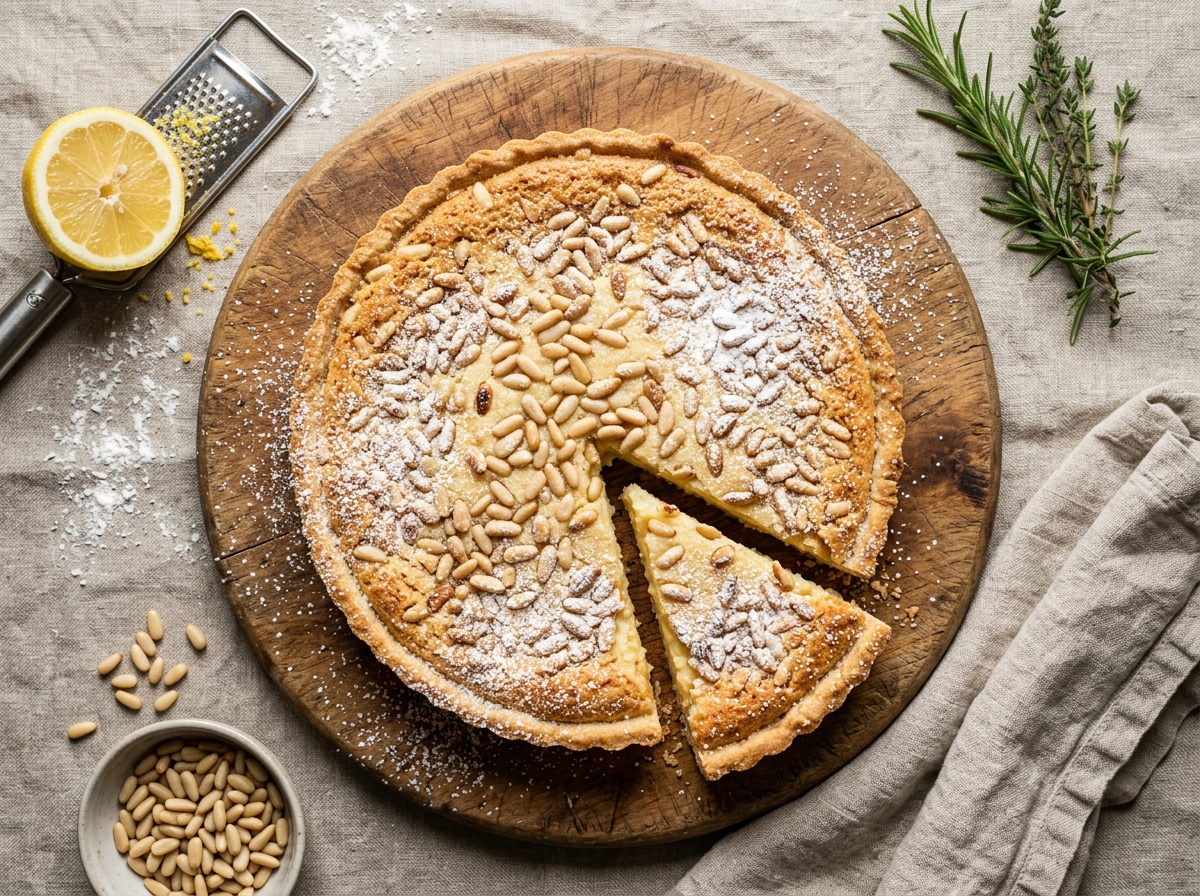
Torta della Nonna is a Tuscan tart built from three simple parts: a shortcrust pastry called pasta frolla, a thick lemon custard, and a scattering of toasted pine nuts on top. Grandmother’s cake, in translation, and the name fits since it’s the kind of dessert that shows up at Sunday lunch rather than a bakery window.
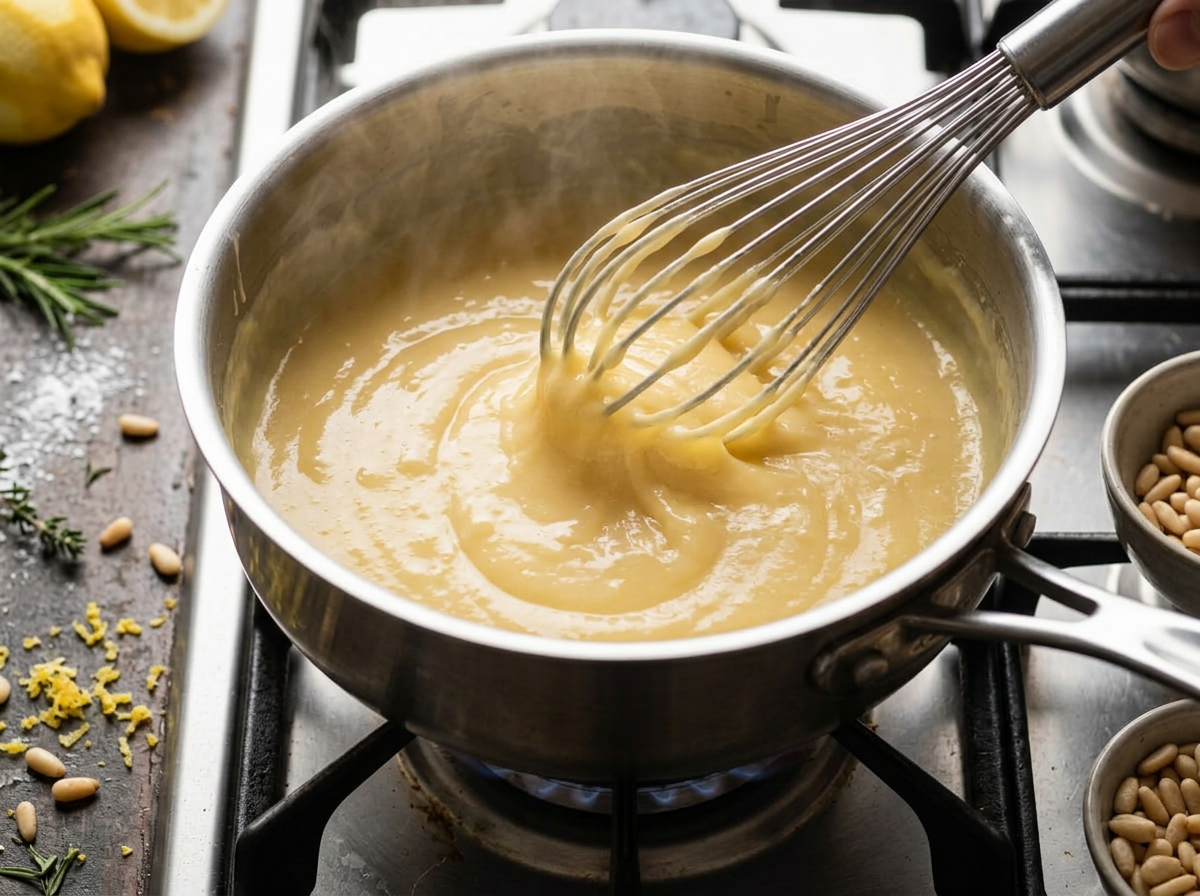
The custard is the part people get wrong. If you pull it off the heat too early, it stays loose and soaks straight into the bottom crust while baking, leaving you with a soggy base under a barely-set filling. Cook it until it actually coats the back of a spoon, then let it cool before it goes anywhere near the pastry.
I make the dough in a food processor to keep the butter cold, but a bowl and your fingers work fine if you move quickly. The whole tart bakes in one 9-inch pan and slices into 8 wedges, no springform needed.
Why You’ll Love This Recipe
- One tart, three textures: crisp crust, silky custard, toasted nuts
- Bakes ahead and tastes better the next day
- Uses pantry staples, no specialty equipment required
- Lemon custard keeps it lighter than most cream-filled tarts
Ingredient Notes
- Butter: Keep it cold and cubed straight from the fridge. Warm butter makes the dough greasy instead of short and sandy.
- Egg yolks: Extra yolks in both the dough and custard give the tart its pale color and richer bite. Save the whites for meringue or an omelet.
- Lemon zest: Use only the yellow part, no white pith, or the custard turns bitter. Orange zest works as a substitute if you want a softer flavor.
- Cornstarch: Thickens the custard without the raw-flour taste you sometimes get from all-purpose. Swap 1:1 for potato starch if that’s what you have.
- Pine nuts: Toast them lightly before scattering so they don’t turn bitter in the oven. Sliced almonds are a fair budget swap.
- Powdered sugar: Dust only after the tart has fully cooled, or it melts into the custard instead of sitting on top.
Torta della Nonna with Pine Nuts and Lemon Custard
Ingredients
Method
- Rub cold cubed butter into flour, sugar, and salt with your fingers or a food processor until it looks like coarse sand.
- Add egg yolks, whole egg, and lemon zest. Mix just until the dough comes together, without overworking it.
- Shape into a disk, wrap in plastic, and chill for 30 minutes.
- Heat milk with lemon zest in a saucepan until steaming, not boiling.
- Whisk egg yolks and sugar until pale, then whisk in cornstarch until smooth.
- Slowly pour hot milk into the yolk mixture, whisking constantly, then return everything to the saucepan.
- Cook over medium heat, stirring constantly, for 4 to 5 minutes until the custard thickens and coats the back of a spoon.
- Stir in vanilla, transfer to a bowl, and press plastic wrap directly onto the surface. Cool completely, about 30 minutes.
- Heat the oven to 180 C / 350 F.
- Roll two-thirds of the dough and line a 9-inch tart pan, pressing it into the edges. Prick the base with a fork.
- Spread the cooled custard evenly over the base.
- Roll the remaining dough and lay it over the custard, or cut into strips for a lattice. Trim and seal the edges.
- Scatter pine nuts evenly over the top.
- Bake for 35 to 40 minutes until the crust is golden and the custard is set with only a slight jiggle in the center.
- Cool completely, at least 2 hours, then dust with powdered sugar before slicing.
Notes
- Rest the dough a full 30 minutes before rolling or it shrinks in the pan.
- Cool the custard completely before assembling to avoid a soggy bottom crust.
- Toast pine nuts 2 to 3 minutes before scattering so they don't scorch in the oven.
- Let the baked tart cool at least 2 hours before slicing for clean cuts.
Tips for Success
- Chill the dough for a full 30 minutes so it rolls without tearing or shrinking in the oven.
- Cook the custard until it visibly thickens and coats a spoon, about 4 to 5 minutes over medium heat.
- Press plastic wrap directly onto the warm custard to stop a skin from forming as it cools.
- Prick the bottom crust with a fork before adding custard to prevent it from puffing up unevenly.
- Let the tart cool completely, at least 2 hours, before slicing so the custard sets firm.
Variations
- Swap the lemon zest for orange zest and add a splash of Grand Marnier to the cooled custard.
- Use almond flour for a third of the dough’s flour to give the crust a nuttier, sandier crumb.
- Top with sliced almonds instead of pine nuts if you want a milder, less resinous flavor.
Storage and Reheating
Torta della Nonna keeps well at room temperature for a few hours, but refrigerate it if holding longer since the custard is egg-based. Cover loosely and store in the fridge for up to 4 days.
Bring slices back to room temperature for about 20 minutes before serving so the custard softens and the crust isn’t cold and stiff. This tart doesn’t need reheating, and the oven will only dry out the pastry.
I don’t recommend freezing it. The custard separates slightly on thawing and turns grainy instead of smooth.
Serving Suggestions
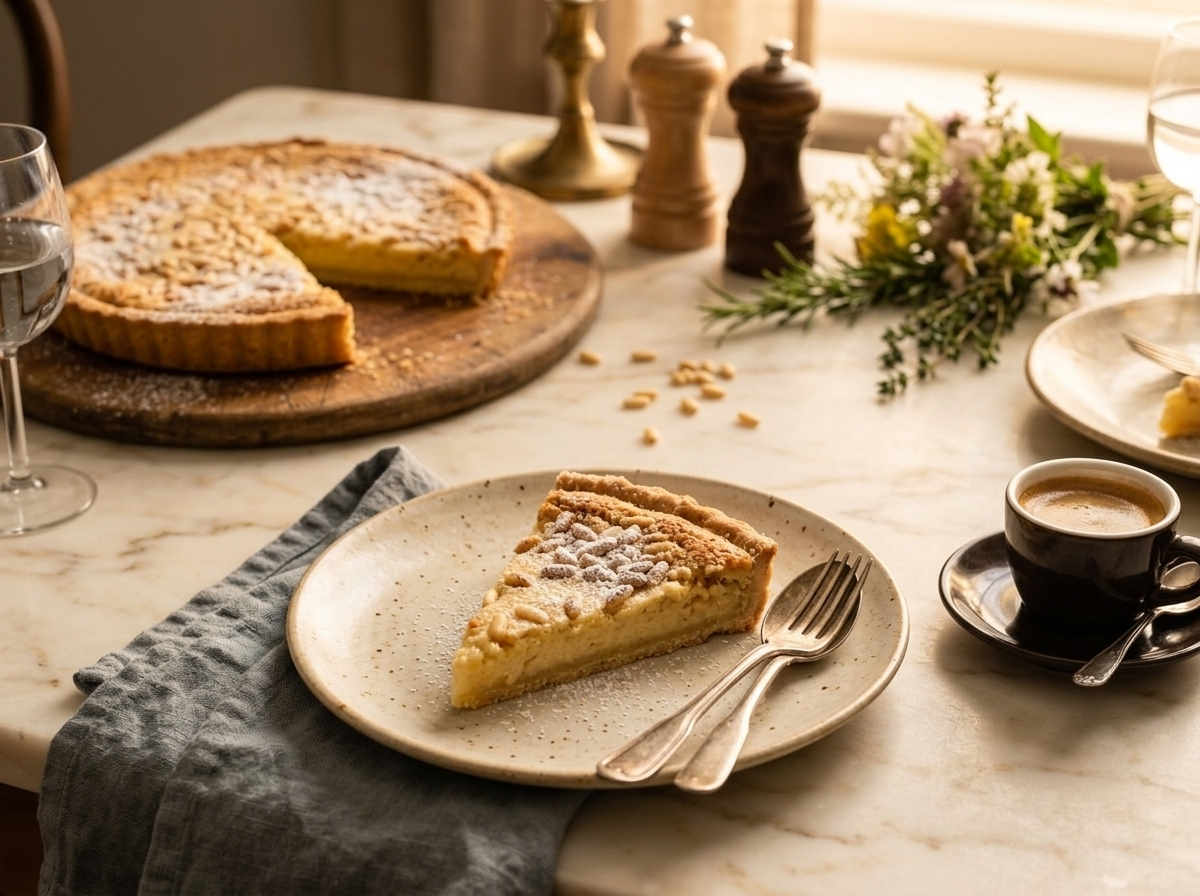
Serve Torta della Nonna at room temperature, dusted with powdered sugar right before it hits the table. A short espresso alongside cuts the sweetness and matches how it’s usually served in Tuscan bakeries.
For dessert after a heavier meal, pair a slice with a small glass of Vin Santo, the traditional Tuscan dessert wine, or a scoop of plain gelato if you want it colder.
Leftover slices work fine for breakfast with coffee, since the custard is closer to pastry cream than to a rich cheesecake filling, much like the classic Torta Paradiso butter cake.
FAQ
Why is my Torta della Nonna custard runny in the middle after baking?
The custard likely wasn’t cooked long enough on the stovetop before it went into the crust. It needs to visibly thicken and coat the back of a spoon, about 4 to 5 minutes over medium heat, before you let it cool and fill the tart. If it’s still loose going in, baking alone won’t fix it.
Can I use almonds instead of pine nuts on Torta della Nonna?
Yes, sliced almonds work well and cost less than the pine nuts used in Sarde a Beccafico’s stuffing. Scatter them over the top the same way, and toast them lightly first so they color evenly instead of burning in the last few minutes of baking. The flavor turns milder but the texture stays similar.
How far ahead can I make Torta della Nonna?
Torta della Nonna actually tastes better a day after baking, once the custard has fully set and the flavors settle. Bake it up to 2 days ahead, keep it covered in the fridge, and bring slices to room temperature before serving. It holds for up to 4 days total.
What goes well with Torta della Nonna for dessert?
A small glass of Vin Santo or a plain espresso is the classic pairing, since both cut through the tart’s sweetness. Gelato works too if you want it served cold. Avoid pairing it with anything citrus-heavy since the custard already carries a strong lemon note.
Is Torta della Nonna gluten free?
Not as written, since the pasta frolla crust uses regular wheat flour. You can swap in a 1:1 gluten-free flour blend for the dough, though the texture turns slightly more crumbly. The custard itself is naturally gluten free once thickened with cornstarch instead of flour.
What’s the difference between Torta della Nonna and crostata di ricotta?
Torta della Nonna is built on a lemon pastry cream custard, while crostata di ricotta uses a sweetened ricotta filling instead. Both share a similar pasta frolla base and pine nut or almond topping, but the custard version has a smoother, silkier bite than the grainier ricotta filling, quite different from the fudgy Torta Tenerina chocolate cake.