Jump to Recipe
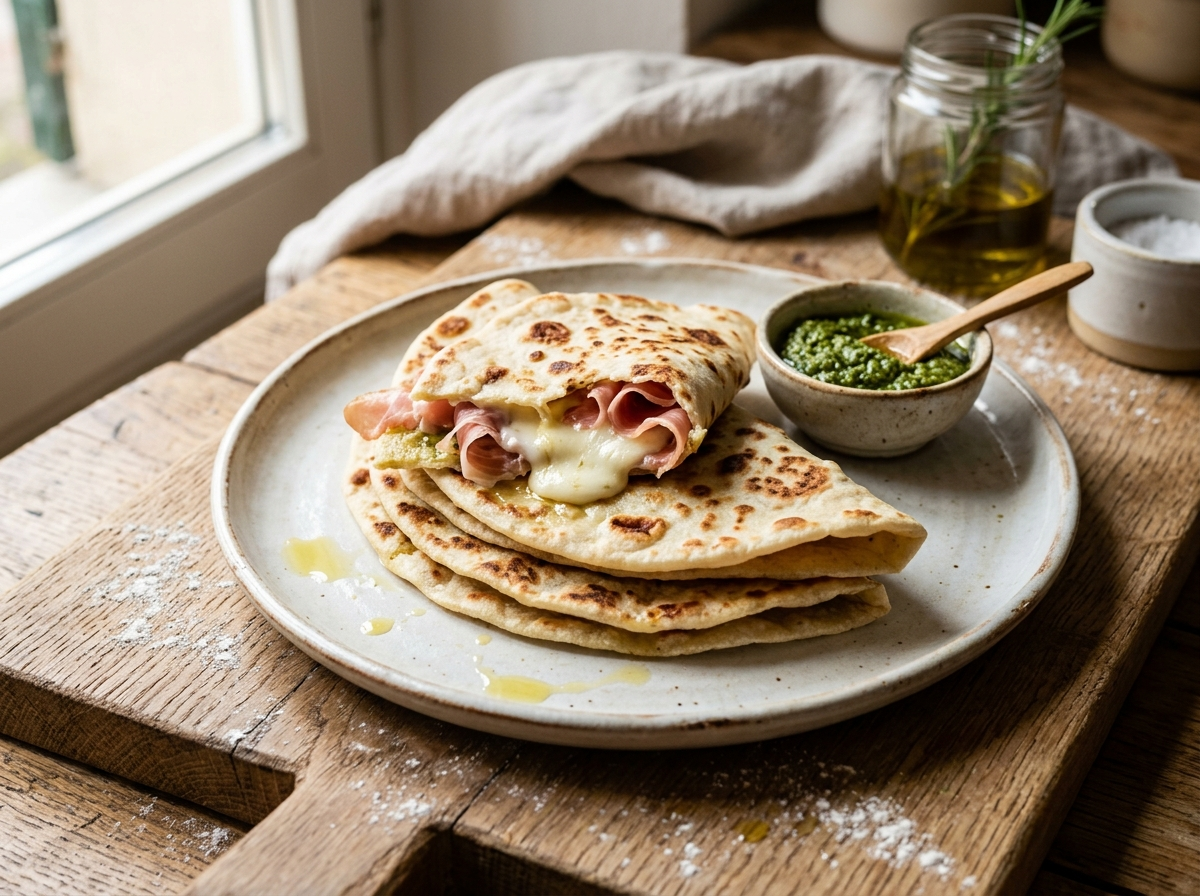
Panigacci is a thin, unleavened flatbread from the Liguria-Tuscany border, traditionally cooked between hot terracotta discs called testi and served folded around soft cheese or cured meat.
The batter is closer to crepe batter than bread dough, just flour, water, a little milk, and salt, whisked smooth and rested so the flour hydrates fully before it hits the pan.
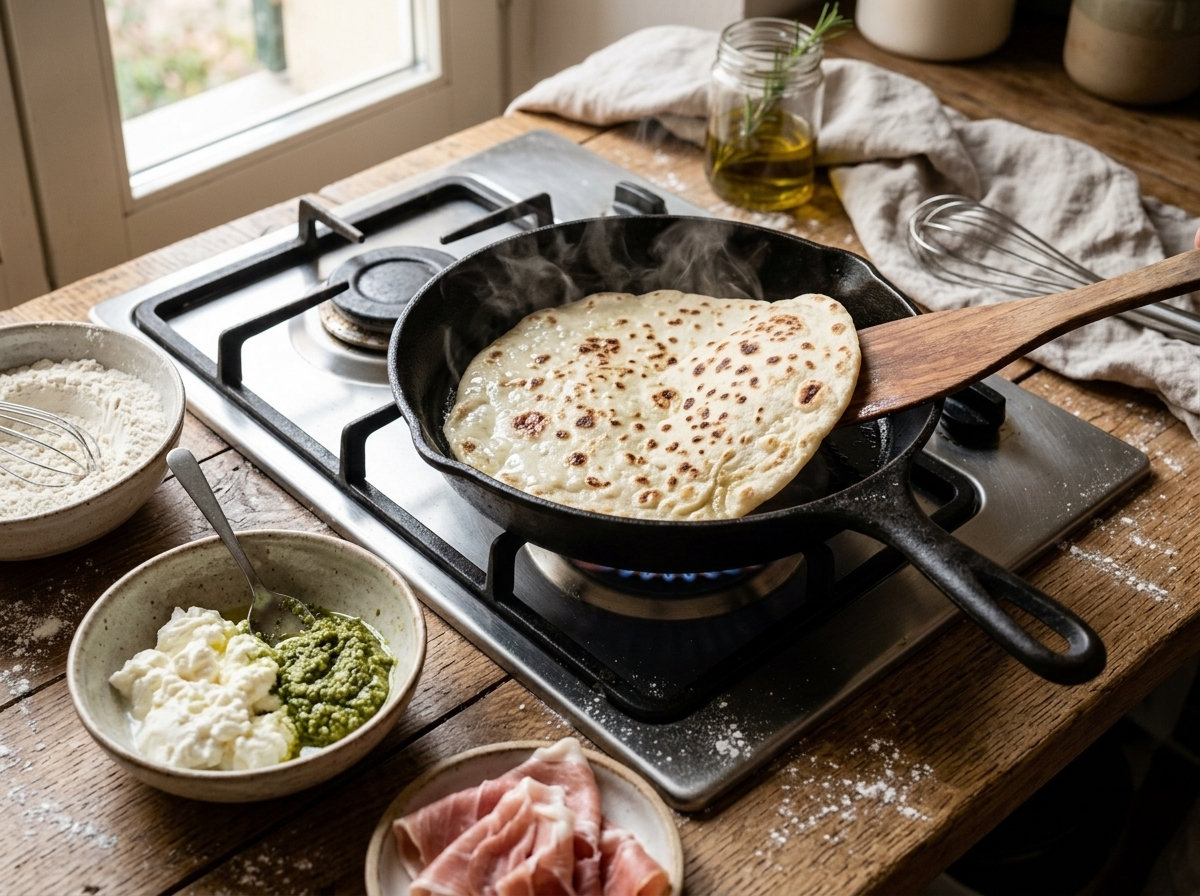
At home, a well-seasoned cast iron skillet stands in for the testi. You lose a bit of the smoky char but keep the same soft, slightly chewy texture and the puffed edges that make panigacci fun to tear apart.
Filled hot with stracchino, thin prosciutto, or a spoon of pesto, they fold up like a small taco and disappear fast. Plain with olive oil and salt, they’re closer to how you’d eat them in a village trattoria near La Spezia.
Why You’ll Love This Recipe
- Four pantry ingredients, no yeast, no special equipment required
- Ready in about an hour from batter to plate
- Naturally dairy-free batter, you choose the filling
- Tastes like a rustic Ligurian trattoria, made in your kitchen
Ingredient Notes
- 00 flour: Italian 00 flour gives the classic silky texture. All-purpose flour works as a close substitute if that’s what you have.
- Water: Plain water keeps the batter light. Use filtered water if your tap water has a strong mineral taste.
- Whole milk: A little milk softens the crumb and adds color. Swap in extra water for a dairy-free batter.
- Fine sea salt: Salt seasons the dough itself, since panigacci are often eaten plain in Liguria with just oil.
- Olive oil: A light coating between rounds keeps the pan release clean without frying the flatbread.
- Stracchino or crescenza cheese: This soft, spreadable cheese melts almost instantly against the warm dough. Fresh mozzarella or a soft goat cheese both work as substitutes.
- Prosciutto crudo: Thin slices add salt and chew against the mild dough. Coppa or bresaola work just as well.
- Basil pesto: Store-bought pesto genovese is fine here. Make sure it’s loose enough to spread without tearing the warm dough.
Panigacci: Soft Ligurian Flatbreads with Stracchino
Ingredients
Method
- Whisk flour and salt together in a large bowl.
- Add water and milk gradually, whisking until the batter is smooth and thin, close to heavy cream in thickness.
- Cover and let the batter rest at room temperature for 30 minutes. Skip this and the panigacci turn gummy in the center even after they look browned outside.
- Heat a cast iron skillet or crepe pan over medium-high heat until a drop of water sizzles and evaporates within a second.
- Wipe the pan with a paper towel dipped in olive oil, just enough to coat the surface.
- Pour a scant 1/4 cup of batter into the pan and tilt quickly to spread it into a thin round about 10 cm across.
- Cook for 60 to 90 seconds until bubbles form and the edges lift and turn golden.
- Flip and cook the second side for 45 to 60 seconds until lightly spotted brown.
- Stack cooked rounds inside a folded kitchen towel to keep them warm and soft. Regrease the pan lightly every 3 to 4 rounds and repeat with the remaining batter.
- While the panigacci are still warm, spread each round with stracchino, add a slice of prosciutto or a spoon of pesto.
- Fold each round in half or into quarters and serve immediately.
Notes
- Traditional panigacci cook between hot terracotta discs called testi, not a skillet
- Batter should pour like heavy cream, not pancake batter
- Regrease the pan lightly every 3 to 4 rounds to prevent sticking
- Serve immediately, panigacci turn leathery once they cool completely
Tips for Success
- Rest the batter for a full 30 minutes at room temperature so the flour fully hydrates before cooking.
- Heat the pan until a drop of water sizzles and evaporates in under a second before pouring the first round.
- Pour a scant quarter cup of batter and tilt the pan immediately so the round stays thin and cooks evenly.
- Stack cooked panigacci inside a folded kitchen towel to trap steam and keep them soft while you finish the batch.
- Fill panigacci while still hot so the stracchino melts against the warm dough instead of sitting cold on top.
Variations
- Swap stracchino for fresh ricotta mixed with lemon zest and cracked pepper for a lighter, tangier filling.
- Add a handful of chopped rosemary or thyme to the batter for an herbal note that pairs well with cured meats.
- Skip the filling and serve panigacci plain with a drizzle of good olive oil and flaky salt, Ligurian farmhouse style.
Storage and Reheating
Panigacci keep for 2 days stacked in an airtight container in the fridge, with a sheet of parchment between layers so they don’t stick together.
Reheat them in a dry skillet over medium heat for 20 to 30 seconds per side, just until pliable and warm again. Skip the microwave, it turns the dough rubbery instead of soft.
Don’t fill leftovers with cheese before storing. Keep the plain flatbreads and cheese separate, then warm the bread first and add the filling right before serving so it melts properly.
Serving Suggestions
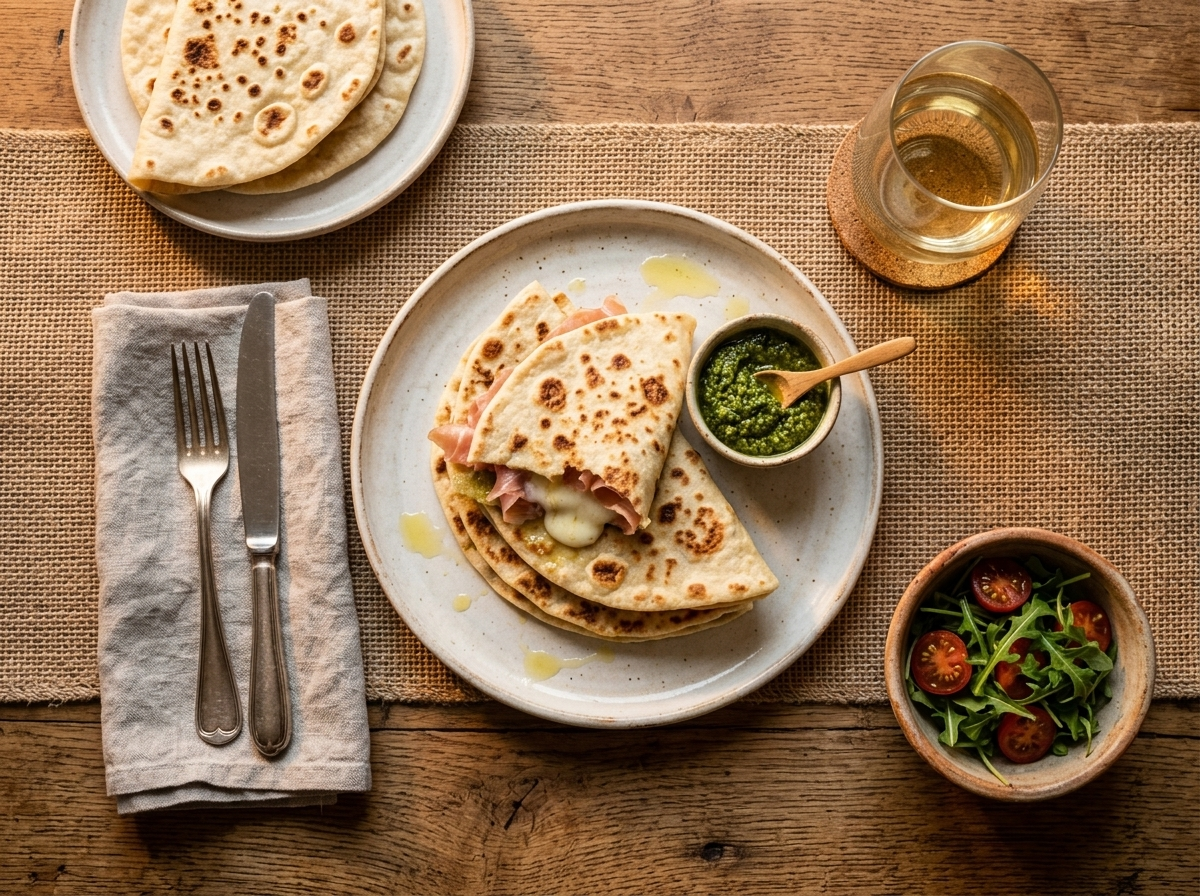
Serve panigacci hot off the pan, folded around a spoonful of stracchino and a slice of prosciutto crudo, the way they’re served in trattorias near La Spezia.
Set out small bowls of pesto genovese, soft goat cheese, and thinly sliced coppa so everyone builds their own. A simple green salad with lemon on the side cuts through the richness of the cheese.
For drinks, a chilled glass of Vermentino or a dry Ligurian white works well. Plain panigacci with just olive oil and salt also make a good side to a bowl of minestrone.
FAQ
Why are my panigacci tough instead of tender?
Tough panigacci usually mean the batter didn’t rest long enough or got overworked with too much whisking. Give the batter a full 30 minutes so the flour hydrates and the gluten relaxes, and cook each round for no more than 90 seconds per side. Overcooking dries them out and makes them chewy instead of soft.
Can I use all-purpose flour instead of 00 flour for panigacci?
Yes, all-purpose flour works fine if you can’t find 00 flour. The batter turns slightly less silky since 00 flour is milled finer, but the difference is minor once cooked. Use the same 300g measurement and add a tablespoon or two more water if the batter feels too thick.
Can I make panigacci ahead and reheat them later?
Yes, panigacci reheat well for up to 2 days if stored stacked in an airtight container in the fridge. Warm them in a dry skillet over medium heat for 20 to 30 seconds per side, just until pliable again. Avoid the microwave, it turns them rubbery instead of soft.
What goes well with panigacci besides stracchino cheese?
Cured meats like prosciutto crudo, coppa, or soft salami all pair well, along with a spoonful of basil pesto or soft goat cheese. In Liguria they’re also served plain with just olive oil and a pinch of salt. A glass of dry white wine like Vermentino rounds out the meal.
Are panigacci gluten free?
No, traditional panigacci are made with wheat flour, so they aren’t gluten free as written. You can swap in a 1:1 gluten free flour blend, though the batter needs slightly less liquid and the texture turns a bit denser. Check cheese and cured meat labels too if serving someone with celiac disease.
What’s the difference between panigacci and testaroli?
Panigacci are thin rounds cooked directly between hot terracotta discs and served folded with cheese, while testaroli are thicker, cooked in a single flat pan, then cut into diamonds and boiled briefly before tossing with pesto. Both come from the Liguria-Tuscany border, the same region behind dishes like Ligurian stamped pasta with mushroom sauce, and share the same simple flour-water-salt batter.