
Jump to Recipe
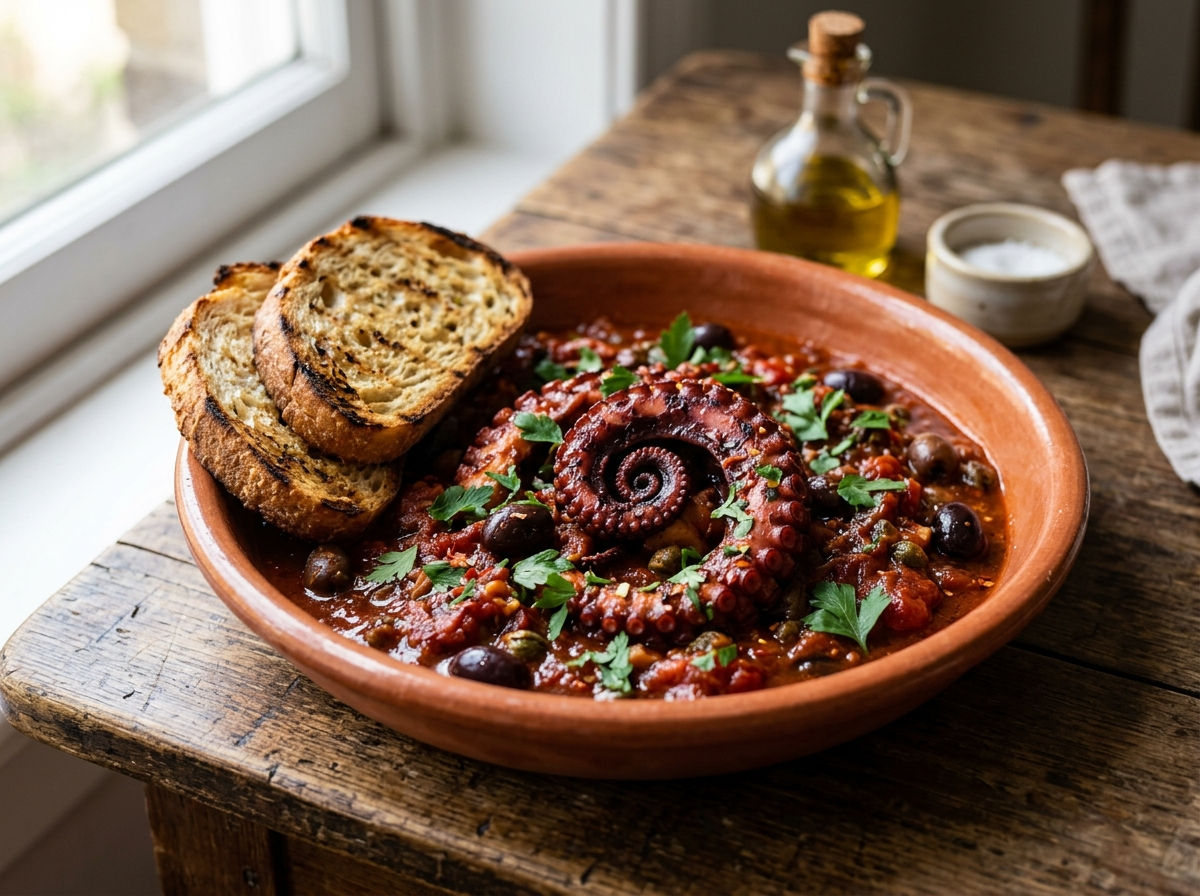
Polpo alla Luciana comes from the Borgo Marinari fishermen’s quarter of Naples, where fishermen braised octopus directly in terracotta pots with whatever the pantry held: tomatoes, olives, capers, chili, and olive oil.
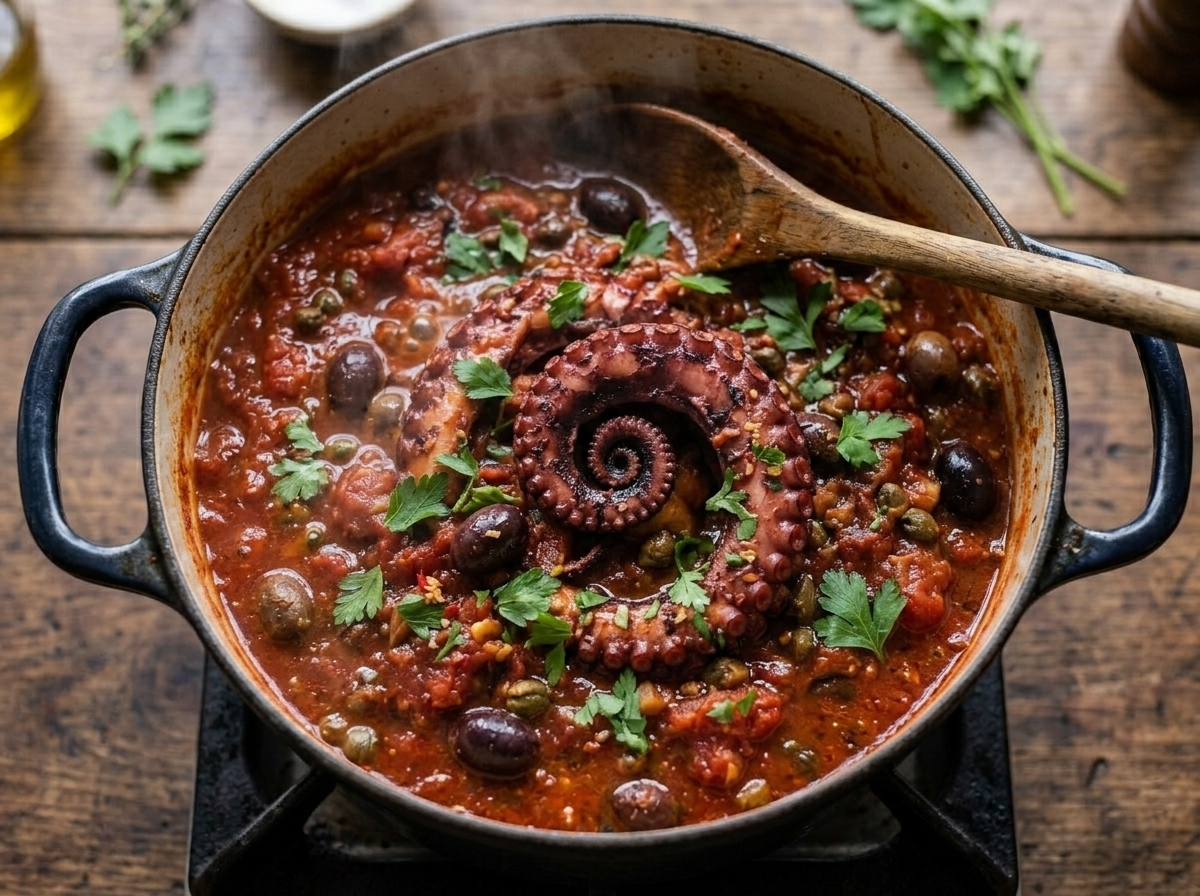
The technique is counterintuitive. You don’t boil the octopus first. You add it raw to a cold pot with a lid clamped tight, and the steam trapped inside does the work. The octopus releases its own liquid, which combines with the tomatoes to form a concentrated sauce.
What you get after about an hour and a half is something that could not come from a pressure cooker or a quick sauté. The tentacles turn tender without going rubbery, and the sauce clings to them with a clean, oceanic depth.
It’s a weeknight-friendly braise once you understand the method, though it does reward patience. Serve it with grilled bread or over a little pasta alongside a classic Italian seafood salad, and it holds its own as a proper main course.
Why You’ll Love This Recipe
- One pot, minimal prep, and almost no hands-on time
- Braising liquid becomes a ready-made, intensely savory sauce
- Freezes well – batch-cook once, eat twice
- Authentic Neapolitan flavors from a short, honest ingredient list
Ingredient Notes
- Octopus: A single whole octopus around 1 to 1.2 kg works best here. Frozen octopus is often more tender than fresh because freezing breaks down the muscle fibers – thaw overnight in the fridge before cooking.
- Canned whole peeled tomatoes: San Marzano-style tomatoes give a less acidic, sweeter base. Crush them by hand before adding so they break down evenly during the braise.
- Black olives (Gaeta): Gaeta olives are the traditional choice – soft, briny, and not too sharp. Kalamata olives work as a substitute, though they add a slightly more assertive flavor.
- Salted capers: Rinse salted capers under cold water for a minute before using. Capers in brine are a fine swap but skip the extra rinsing step.
- Extra virgin olive oil: Use a fruity, medium-intensity oil here. It forms the cooking base and finishes the sauce, so it’s worth using one you’d eat on bread.
- Fresh flat-leaf parsley: Add parsley only at the end, off the heat. Cooking it through dulls the color and the fresh, clean note it brings to the finished dish.
- Dried chili flakes: One small dried peperoncino or a pinch of chili flakes gives background heat without making the dish spicy. Omit if cooking for children or chili-averse guests.
Polpo alla Luciana (Neapolitan Braised Octopus)
Ingredients
Method
- Rinse the octopus under cold water and pat it dry. Leave it whole for now - you'll cut it after cooking.
- Warm the olive oil in a heavy Dutch oven or terracotta pot over medium heat. Add the crushed garlic and peperoncino and cook for about 2 minutes, until the garlic turns pale gold and fragrant. Don't let it brown.
- If using white wine, add it to the pot and let it bubble for 1 minute to cook off the alcohol.
- Add the crushed tomatoes, pitted olives, and rinsed capers. Stir once to combine.
- Add the whole octopus to the pot. Turn it once to coat in the sauce. Clamp the lid on tight.
- Reduce the heat to low. Braise for 60 to 90 minutes without lifting the lid. The octopus will release its own liquid and cook in the resulting steam. Do not add water.
- After 60 minutes, test doneness by pressing a thin skewer into the thickest part of the mantle. It should slide in with no resistance. If it's still firm, continue braising for up to 30 more minutes.
- Remove the octopus from the pot and let it rest on a board for 5 minutes. Cut the tentacles into 3 to 4 cm pieces and cut the mantle into thick strips.
- If the sauce looks thin, return the pot to medium heat uncovered and simmer for 5 to 8 minutes until it thickens slightly.
- Return the cut octopus to the pot, stir through, and taste for salt and pepper. Add the fresh parsley off the heat and serve immediately.
Notes
Tips for Success
- Start with a cold pot and a tight-fitting lid – the steam trapped inside is what tenderizes the octopus without water.
- Cut the octopus into 3 to 4 cm pieces only after it has cooked and cooled slightly, so the tentacles hold their shape.
- Check tenderness at 60 minutes by piercing the thickest part of the mantle with a skewer – it should slide in with no resistance.
- If the sauce looks thin at the end, remove the lid and simmer uncovered for 5 to 8 minutes to concentrate it.
- Do not add salt until you taste the finished dish – olives, capers, and the octopus itself contribute significant brine.
Variations
- Add 200 g of halved cherry tomatoes in the last 10 minutes for a fresher, brighter sauce.
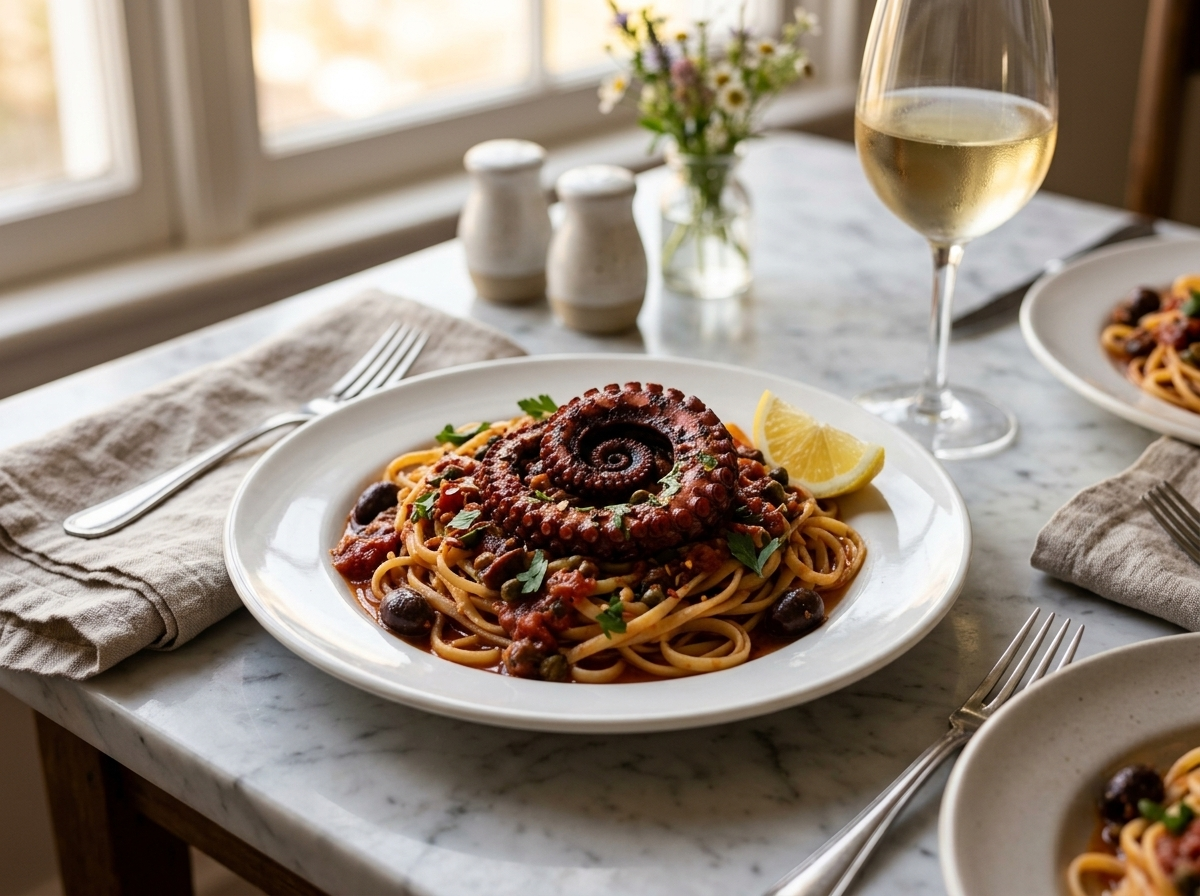
- Serve over 320 g of spaghetti or linguine tossed directly in the braising liquid for a full primo.
- Stir in a handful of chopped pitted green olives alongside the Gaeta olives for a more complex brine note.
Storage and Reheating
Store cooled octopus and sauce in an airtight container in the fridge for up to 3 days. The flavor deepens overnight as the olives and capers continue to season the braising liquid.
To reheat, warm gently in a covered saucepan over low heat with a splash of water to loosen the sauce. Avoid boiling – it will tighten the octopus and make the texture rubbery.
Polpo alla Luciana freezes well for up to 2 months. Freeze in the sauce to protect the octopus from drying out. Defrost overnight in the fridge before reheating.
Serving Suggestions
The most traditional way to serve this is with thick slices of grilled country bread rubbed with garlic to soak up the sauce. A few wedges of lemon on the side cut through the richness.
For a more substantial meal, toss the braised octopus and all its sauce through spaghetti or linguine. Use the pasta cooking water to loosen the sauce if needed, and finish with a drizzle of raw olive oil.
A crisp white wine from Campania – Falanghina or Greco di Tufo – sits naturally alongside the briny, tomato-forward sauce. Chilled dry vermouth is a simpler option if you don’t have either.
FAQ
Why is my polpo alla Luciana tough and rubbery?
The most common cause is lifting the lid during the braise, which lets the steam escape and drops the cooking temperature. Keep the lid on tight and give it the full 60 to 90 minutes without checking. If it’s still tough at 60 minutes, just keep cooking – octopus goes through a rubbery phase before it turns tender.
Can I use frozen octopus instead of fresh for this recipe?
Frozen octopus actually works better in most cases. The freeze-thaw cycle breaks down the muscle fibers, giving you a more consistently tender result without any pre-beating or extra tenderizing steps. Thaw it completely in the fridge overnight before braising.
How do I know when the octopus is done braising?
Pierce the thickest part of the body (the mantle) with a thin skewer or the tip of a sharp knife. It should slide in with no resistance, the way it would through soft butter. The tentacles should also bend easily when you press them with tongs.
Can I make polpo alla Luciana a day ahead for a dinner party?
It’s one of the best dishes to make ahead – the sauce thickens and the brine from the olives and capers seasons everything more deeply after a night in the fridge. Reheat gently in a covered pan over low heat and add the fresh parsley just before serving.
What is the difference between polpo alla Luciana and polpo in umido?
Polpo alla Luciana is specifically Neapolitan and always includes black olives, capers, and peperoncino braised without added water – the steam-only method is the defining detail. Polpo in umido is a broader Italian category of stewed seafood braised in tomato that varies by region and does not always include olives or the sealed-pot technique.
Is polpo alla Luciana gluten-free?
The recipe as written contains no gluten – octopus, tomatoes, olives, capers, and olive oil are all naturally gluten-free. If you serve it over pasta, switch to a certified gluten-free pasta to keep the whole dish gluten-free.