
Jump to Recipe
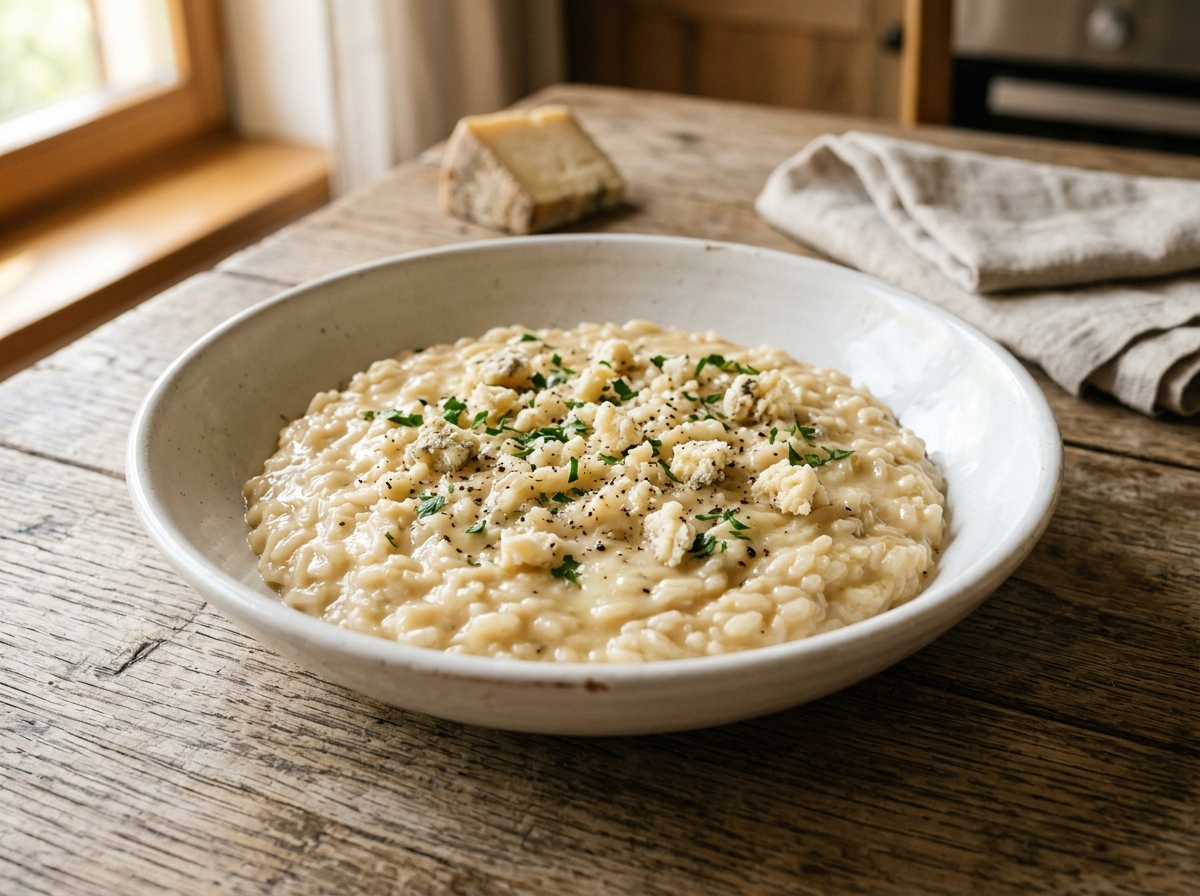
Risotto al Castelmagno is one of those Piedmontese dishes that proves a short ingredient list can produce something deeply complex. The cheese, made in the valleys around Cuneo, has a crumbly texture and a flavor that sits somewhere between aged Parmesan and a mild blue – peppery, grassy, and faintly sharp.
The rice is the vehicle. Carnaroli is the best choice here because its higher starch content holds the creamy consistency through the mantecatura step without turning gluey.
This is a weeknight-possible dish if you keep warm stock on the back burner and give the pot your attention for about 20 minutes. The technique is straightforward – the cheese rewards you generously for the effort.
Why You’ll Love This Recipe
- Castelmagno’s sharp, earthy flavor does most of the seasoning work
- Carnaroli rice gives a creamy texture without a heavy sauce
- Only seven ingredients, all straightforward to source or substitute
- Ready in 40 minutes with no oven, no special equipment
Ingredient Notes
- Castelmagno DOP cheese: A semi-hard, crumbly cow’s-milk cheese from the Cuneo province of Piedmont. If unavailable, a 50/50 mix of aged Pecorino and a mild Gorgonzola comes close to the sharp, slightly funky flavor profile.
- Carnaroli rice: The high-amylose starch in Carnaroli releases slowly, which keeps the risotto loose without going pasty. Vialone Nano is a solid backup; Arborio works but goes creamy faster, so watch the timing.
- Dry white wine: A light Piedmontese white like Gavi or Arneis is ideal. Any dry, unoaked white works; skip it if needed and add an extra 60 ml of stock instead.
- Unsalted butter: Used in two stages: soffritto and mantecatura. Cold butter added off the heat at the end is what creates the glossy, emulsified finish.
- Homemade or good-quality chicken stock: The stock is your main liquid and flavor base, so quality matters here. Vegetable stock works well and keeps the dish vegetarian; use a lightly salted version and adjust salt at the end.
- White onion: Finely diced and cooked low and slow until soft and translucent, not browned. Yellow onion or one large shallot are fine substitutes.
Risotto al Castelmagno
Ingredients
Method
- Heat 30 g of butter in a heavy-bottomed 3-quart saucepan over low heat. Add the diced onion and cook, stirring occasionally, for 8 to 10 minutes until completely soft and translucent but not colored.
- Add the Carnaroli rice to the pan and raise the heat to medium. Stir constantly for 60 to 90 seconds until the grains look slightly translucent at the edges and smell faintly nutty.
- Pour in the white wine all at once. Stir until the liquid is fully absorbed and the sharp alcohol smell has cooked off, about 2 minutes.
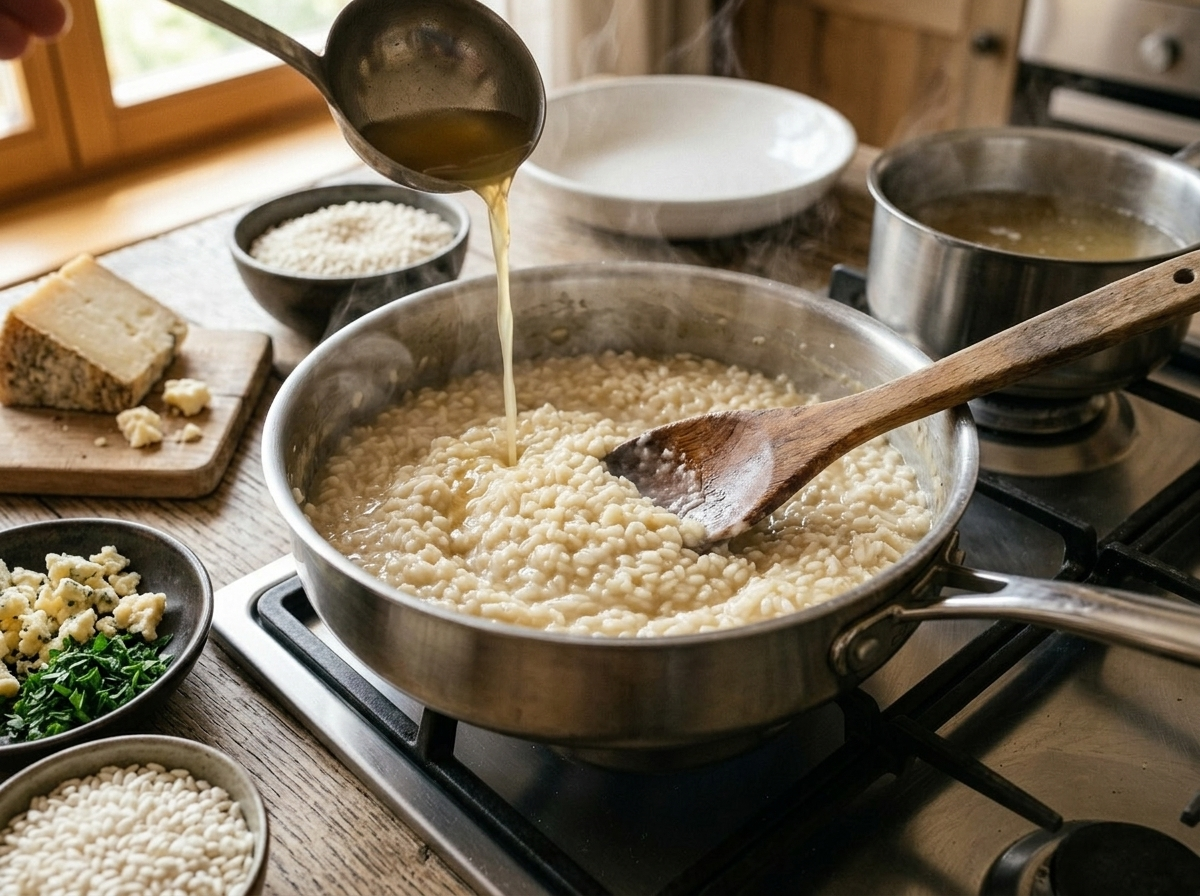
- Add one ladle (about 80 ml) of warm stock to the rice. Stir steadily until nearly all the liquid is absorbed before adding the next ladle. Continue this process, ladle by ladle, over medium heat.
- After about 16 to 18 minutes total cooking time, taste a grain of rice. It should be cooked through with just a slight firmness at the very center - al dente. The consistency of the risotto should look slightly soupy at this stage; it will tighten during mantecatura.
- Add one final small ladle of stock if needed to keep the mixture loose, then remove the pan from the heat.
- Add the cold butter and grated Castelmagno to the pot off the heat. Stir vigorously in a circular motion for 90 seconds until the cheese and butter have fully melted into the rice and the surface looks glossy and cohesive.
- Taste and adjust salt. Cover the pot and rest for 2 minutes. The risotto should flow slowly when you tilt the pan - not sit in a mound and not run like soup.
- Spoon into warm shallow bowls. Finish with a little extra grated Castelmagno and a few turns of black pepper if you like. Serve immediately.
Notes
Tips for Success
- Keep stock at a gentle simmer in a separate saucepan so each ladle added to the rice stays hot and doesn’t drop the cooking temperature.
- Toast the rice in the dry soffritto for 60 to 90 seconds until the grains look slightly translucent at the edges before adding wine.
- Add stock one ladle at a time, stirring after each addition until the liquid is almost fully absorbed before adding the next.
- Remove the pot from the heat before adding cold butter and Castelmagno, then stir vigorously for 90 seconds to emulsify into a glossy finish.
- Let the finished risotto rest covered for 2 minutes before plating so it loosens to a flowing, not stiff, consistency on the plate.
Variations
- Add 80 g of diced speck or guanciale with the soffritto for a smoky, salty contrast to the Castelmagno.
- Stir in 40 g of toasted crushed walnuts at the mantecatura stage for a nutty texture common in Cuneo-style versions.
- Finish with a drizzle of local Piedmontese honey and a few fresh thyme leaves to play against the cheese’s sharpness.
Storage and Reheating
Store leftover risotto in an airtight container in the refrigerator for up to 2 days. It will firm up considerably as it cools.
To reheat, place in a small saucepan over low heat with 2 to 3 tablespoons of warm stock or water per serving. Stir constantly until it returns to a loose, flowing consistency. Do not microwave without added liquid or the texture turns gluey.
Risotto al Castelmagno does not freeze well. The starch structure breaks down on thawing and the cheese separates, leaving a grainy, watery result.
Serving Suggestions
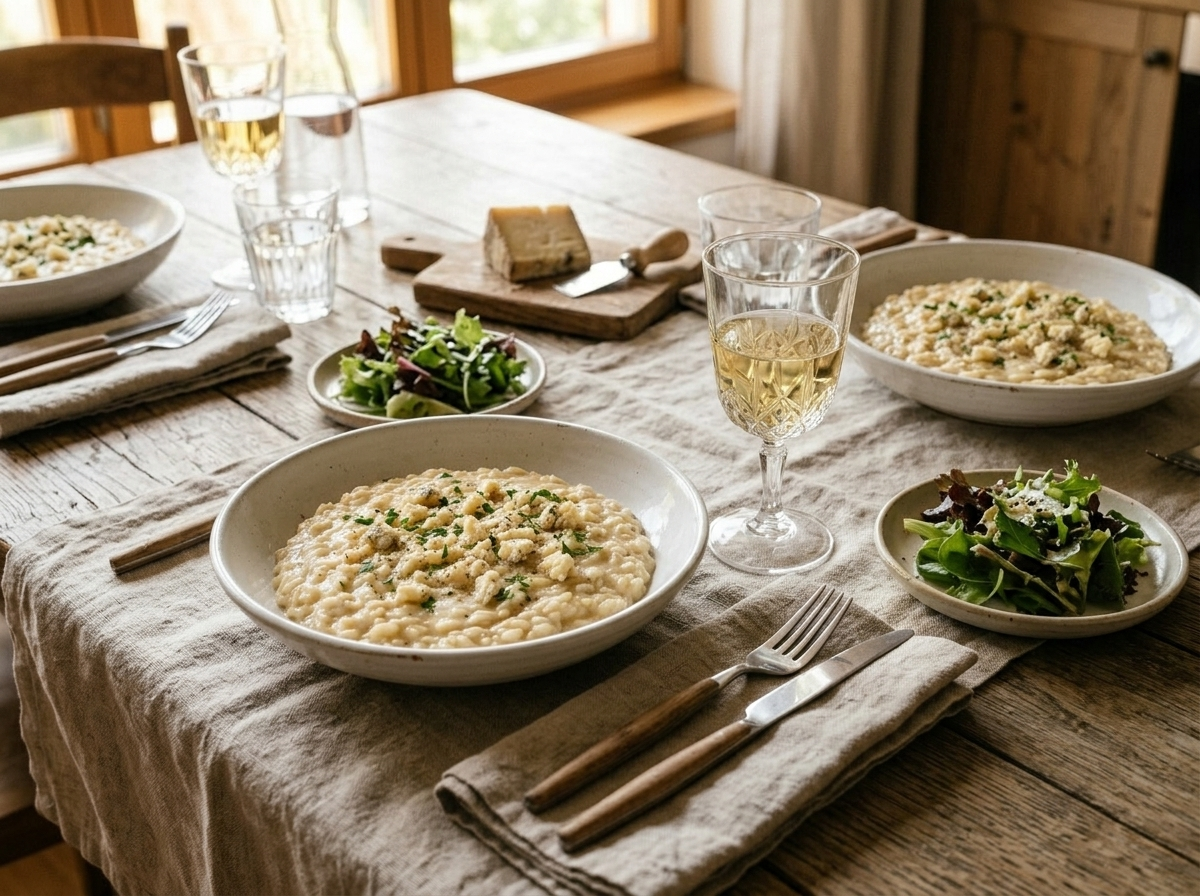
Serve in warm, shallow bowls as a primo – the first plate before a meat course. A portion of 250 to 280 g per person is right for this role. The risotto should spread slowly when the bowl is tilted, not sit in a mound.
A glass of Roero Arneis or a young Barbera d’Asti from Piedmont cuts through the richness of the cheese cleanly. If you’re pairing with a second course, keep it simple: thin veal cutlets in lemon butter or braised rabbit works well.
For a full Piedmontese dinner, follow this risotto with a vitello tonnato or a tajarin with butter and sage, much like the regional logic behind Piedmontese gnocchi with Fontina and cream as a companion course. The Castelmagno flavor is assertive, so the courses before and after should stay relatively neutral.
FAQ
Why is my Risotto al Castelmagno grainy instead of silky?
Grainy texture usually means the cheese was added while the pot was still on high heat, causing the proteins to seize rather than melt smoothly. Take the pan fully off the heat before adding Castelmagno and cold butter, then stir vigorously to emulsify.
Can I use Gorgonzola instead of Castelmagno in this risotto?
Gorgonzola alone makes the flavor much more intensely blue and creamy, which shifts the dish significantly. A better substitute is half aged Pecorino and half mild Gorgonzola Dolce, which mimics Castelmagno’s sharp-but-not-blue profile more closely.
Can I make the soffritto base ahead and finish the risotto to order?
Yes. Cook the onion and toast the rice, then spread it on a tray and refrigerate for up to 4 hours. When ready to serve, return it to the pot over medium heat and start adding warm stock from the beginning. The final texture will be nearly identical.
What type of wine pairs best with Risotto al Castelmagno?
A dry, unoaked Piedmontese white like Gavi di Gavi or Roero Arneis is the natural match – the acidity cuts the richness of the cheese without competing with it. A young Barbera d’Alba also works if you prefer red.
Is Risotto al Castelmagno vegetarian?
The rice and cheese base is vegetarian, but Castelmagno DOP is made with traditional animal rennet, which some strict vegetarians avoid. Use vegetable stock instead of chicken stock and check your cheese source if that matters to you.
What is the difference between Castelmagno and Grana Padano in a risotto?
Grana Padano is a hard, mild, nutty cheese used primarily for seasoning and binding – it dissolves cleanly but adds little assertive flavor. Castelmagno is semi-hard, crumbly, and distinctly sharp with earthy, grassy notes that become the central flavor of the dish rather than a background finish.