
Jump to Recipe
Stracotto means ‘overcooked’ in Italian, and that’s exactly the point. You take a tough, collagen-rich cut and braise it in red wine for two to three hours until the fibers surrender completely and the meat slices or pulls apart with almost no resistance.
This is Northern Italian farmhouse cooking at its most practical. Chuck roast or beef brisket, a bottle of Barbera or Dolcetto, a soffritto of onion, carrot, and celery, and patience. No fancy technique, no last-minute fuss.
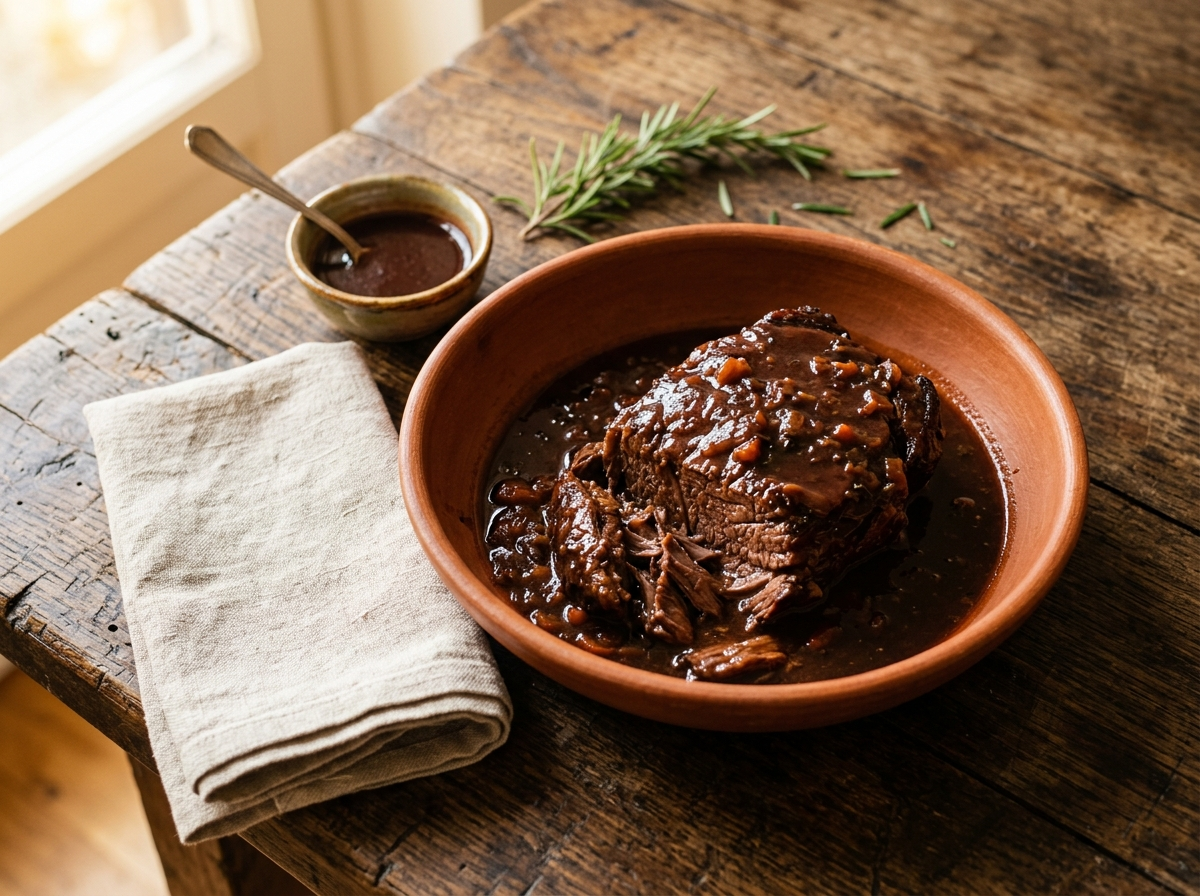
The sauce is the dish. As the beef braises, the wine reduces and mingles with the meat juices and vegetables until you get something thick, dark, and deeply flavored. You don’t need a separate gravy.
It reheats better than it tastes fresh, which makes it a strong choice for a weekend cook-ahead. Make it Saturday, eat it Sunday or Monday. The flavor deepens noticeably overnight.
Why You’ll Love This Recipe
- The braising liquid becomes a ready-made, glossy sauce
- Better flavor on day two – ideal for make-ahead cooking
- One Dutch oven, minimal active effort after searing
- Cheap, tough cuts turn genuinely tender after slow braising
Ingredient Notes
- Chuck roast (manzo da brasato): Chuck is the classic choice because its high collagen content melts into gelatin during the long braise, giving the sauce body. Brisket or beef shin work just as well. Avoid lean cuts like topside – they dry out.
- Red wine: Use a dry, medium-bodied Italian red you’d actually drink – Barbera d’Asti, Dolcetto, or Montepulciano d’Abruzzo all work well. Avoid anything labeled ‘cooking wine’. A light Pinot Noir also works if that’s what you have open.
- Soffritto (onion, carrot, celery): Cut the vegetables roughly – they cook down fully and get strained out or blended into the sauce. No need for a fine dice here.
- Tomato paste: A tablespoon of tomato paste gives the sauce color and a faint acidity that balances the wine. Canned crushed tomatoes (2-3 tablespoons) work as a substitute.
- Beef stock: Low-sodium store-bought stock is fine. It adds depth and ensures the braising liquid doesn’t reduce to pure wine tannins. Use good homemade stock if you have it and the sauce will be noticeably richer.
- Fresh rosemary and bay leaves: Both are traditional and hold up well through the long cook time. Dried rosemary works at a pinch – use half the amount. Dried bay leaves are fine.
Stracotto di Manzo al Vino Rosso (Italian Red Wine Braised Beef)
Ingredients
Method
- Pat the beef pieces completely dry with paper towels. Season all sides with salt and black pepper.
- Heat the olive oil in a Dutch oven over medium-high heat until it shimmers. Add the beef pieces without crowding - work in batches if needed.
- Sear each piece for 3 to 4 minutes per side until deeply browned on all surfaces. Transfer to a plate and set aside.
- Reduce the heat to medium. Add the onion, carrot, and celery to the same pot and cook for 6 to 8 minutes, stirring occasionally, until the vegetables soften and pick up a light golden color.
- Add the garlic and cook for 1 minute until fragrant. Stir in the tomato paste and cook for 2 minutes until it darkens slightly.
- Pour in the red wine and increase the heat to medium-high. Scrape the bottom of the pot with a wooden spoon to release all the browned bits. Let the wine bubble for 3 to 4 minutes to cook off the sharpest alcohol.
- Add the beef stock, rosemary, bay leaves, and peppercorns. Return the seared beef to the pot. The liquid should reach about halfway up the sides of the beef - add more stock if needed.
- Bring to a gentle simmer, then cover with the lid slightly ajar. Reduce the heat to low.
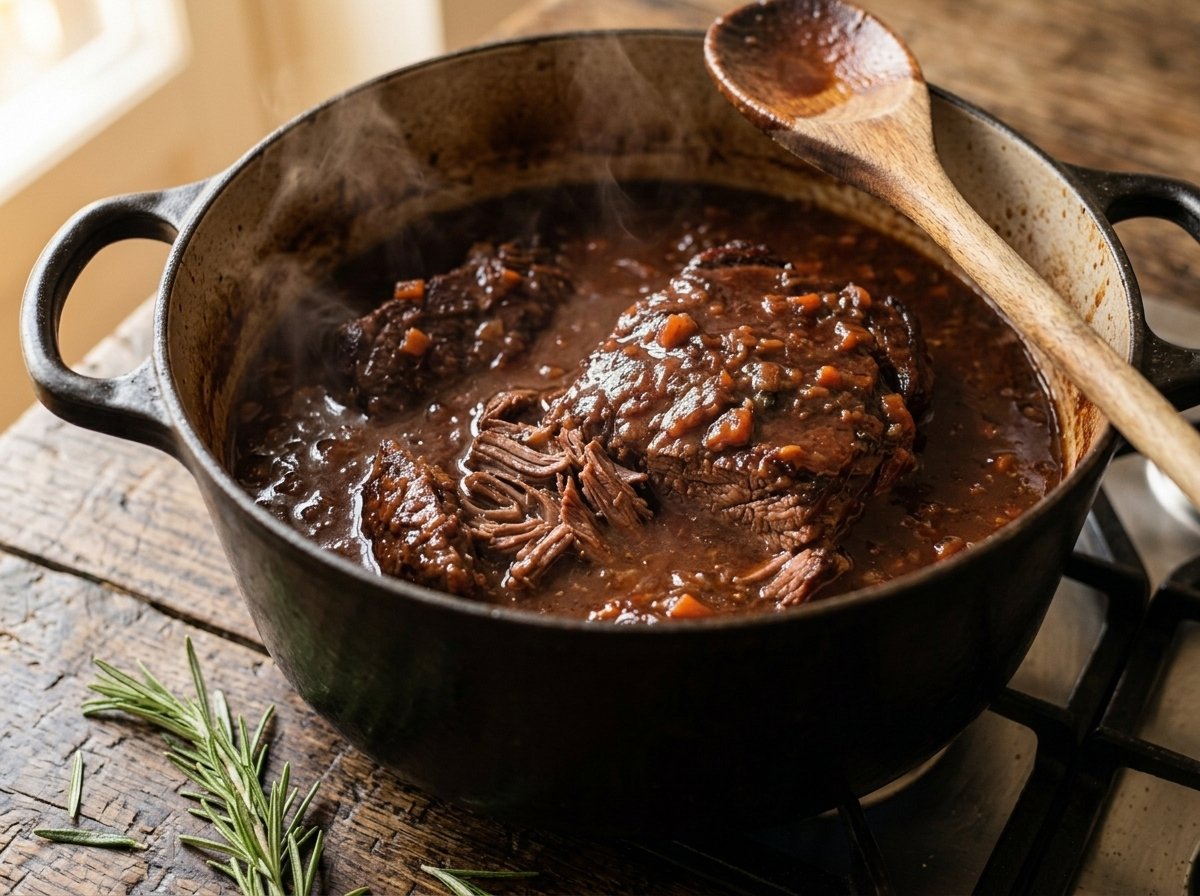
- If braising on the stovetop, maintain a very gentle simmer - occasional bubbles only - for 2 hours 30 minutes to 3 hours. Flip the beef once at the halfway point.
- Alternatively, transfer the covered pot to an oven preheated to 160 C / 320 F and braise for the same time.
- The beef is ready when a skewer slides in with no resistance and the meat pulls apart easily along its grain. If not, continue braising and check every 20 minutes.
- Remove the beef from the pot and let it rest on a board, tented loosely with foil, for 20 minutes.
- Discard the rosemary sprigs and bay leaves. Either strain the braising liquid through a fine-mesh sieve and press the vegetables through, or blend the vegetables directly into the liquid with an immersion blender for a thicker, more rustic sauce.
- If the sauce is too thin, simmer it uncovered over medium heat for 10 to 15 minutes until it coats the back of a spoon. Taste and adjust salt.
- Slice the beef against the grain or pull it into large chunks. Serve with the sauce spooned over the top.
Notes
Tips for Success
- Pat the beef completely dry before searing to get a deep brown crust, not a gray steam.
- Sear over medium-high heat in batches if your pot is small – crowding drops the temperature and you’ll lose the crust.
- Deglaze with the wine and scrape every browned bit from the pot bottom before adding the stock – those bits are flavor.
- Keep the braise at a bare simmer: occasional bubbles, not a rolling boil, or the meat fibers will tighten and dry out.
- If the sauce is too thin after removing the beef, simmer it uncovered on the stovetop for 10 to 15 minutes until it coats a spoon.
Variations
- Add 150 g sliced porcini mushrooms with the soffritto for an earthier, more autumnal sauce.
- Stir in the grated zest of one orange with the wine for a Veneto-style citrus note.
- Use beef cheeks instead of chuck for an even silkier texture – reduce braise time by about 30 minutes.
Storage and Reheating
Store leftover stracotto, sliced or whole, submerged in its braising sauce in an airtight container in the refrigerator. It keeps well for 4 days. The fat will solidify on top when cold – skim it off before reheating if you want a cleaner sauce.
To reheat, place the beef and sauce in a covered pot over low heat for 15 to 20 minutes, turning the meat once. Add a splash of stock or water if the sauce has thickened too much in the fridge. Do not microwave the whole piece – it dries out unevenly.
Stracotto freezes well for up to 3 months. Freeze the beef in portions with enough sauce to cover. Thaw overnight in the refrigerator, then reheat gently on the stovetop.
Serving Suggestions
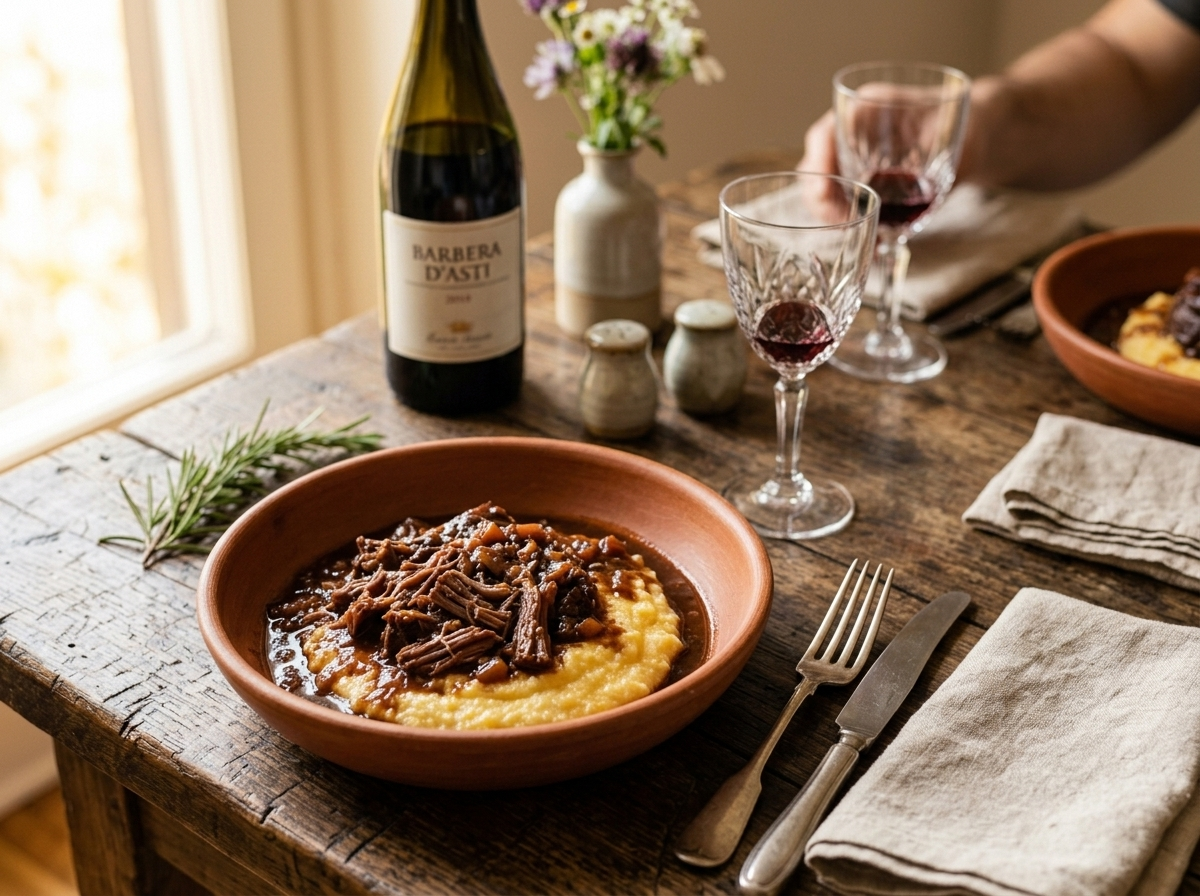
The most traditional pairing is soft polenta – the kind you cook slowly with butter and Parmigiano until it’s thick and spoonable, and it pairs just as naturally with pillowy Piedmontese gnocchi if you want something different. The sauce soaks into the polenta and the two are genuinely made for each other.
Mashed potatoes work equally well and are faster on a weeknight. Alternatively, serve stracotto over fresh or dried pappardelle or tagliatelle, cutting the meat into rough chunks and tossing it through the pasta with the sauce, much like the approach used in slow-cooked ragù bolognese.
A simple bitter green on the side – braised cavolo nero, sauteed radicchio, or a plain arugula salad with lemon – cuts through the richness of the braise and rounds the plate.
FAQ
Why is my stracotto di manzo tough even after 3 hours of braising?
The most common cause is too high a heat – a braise that boils rather than simmers tightens the muscle fibers instead of breaking them down. Check that your pot is at a bare simmer (a bubble every few seconds), and give it another 30 to 45 minutes. A lid that’s slightly ajar also helps regulate temperature.
Can I use white wine instead of red wine in stracotto?
You can, but the result is a different dish – lighter in color and flavor, closer to a Lombard-style brasato in bianco. Red wine gives stracotto its characteristic deep, tannic sauce. If you use white, add an extra tablespoon of tomato paste to compensate for the lost depth.
Can I make stracotto di manzo in a slow cooker?
Yes, but still sear the beef and soffritto on the stovetop first – skipping this step makes the final sauce flat. Transfer everything to the slow cooker and cook on Low for 8 hours or High for 5 hours. Reduce the braising liquid on the stovetop after removing the beef if you want a thicker sauce.
How do I know when the stracotto is properly done?
A skewer or knife should slide into the thickest part of the beef with almost no resistance. The meat should pull apart along its grain when pressed with a fork. If it still pushes back, it needs more time – check again every 20 minutes.
What is the difference between stracotto and brasato al Barolo?
Both are Italian red wine pot roasts, but brasato al Barolo is specific to Piedmont and traditionally uses Barolo wine with an overnight wine-and-herb marinade before cooking, sharing the same slow, deeply savory spirit as slow-cooked beef and onion ragù. Stracotto is a broader term used across Northern Italy and doesn’t require marinating or a specific wine.
Is stracotto di manzo gluten-free?
The base recipe is naturally gluten-free – beef, wine, vegetables, and stock contain no gluten. Check your beef stock label if using store-bought, as some brands add wheat-based thickeners. Serve over polenta or mashed potatoes to keep the whole meal gluten-free.