
Jump to Recipe
Crema pasticcera is Italian pastry cream, a custard made from egg yolks, whole milk, sugar and cornstarch, cooked on the stove until it thickens and turns glossy. It’s the base filling for bignè, sfogliatelle, crostata and layered cakes across Italy.
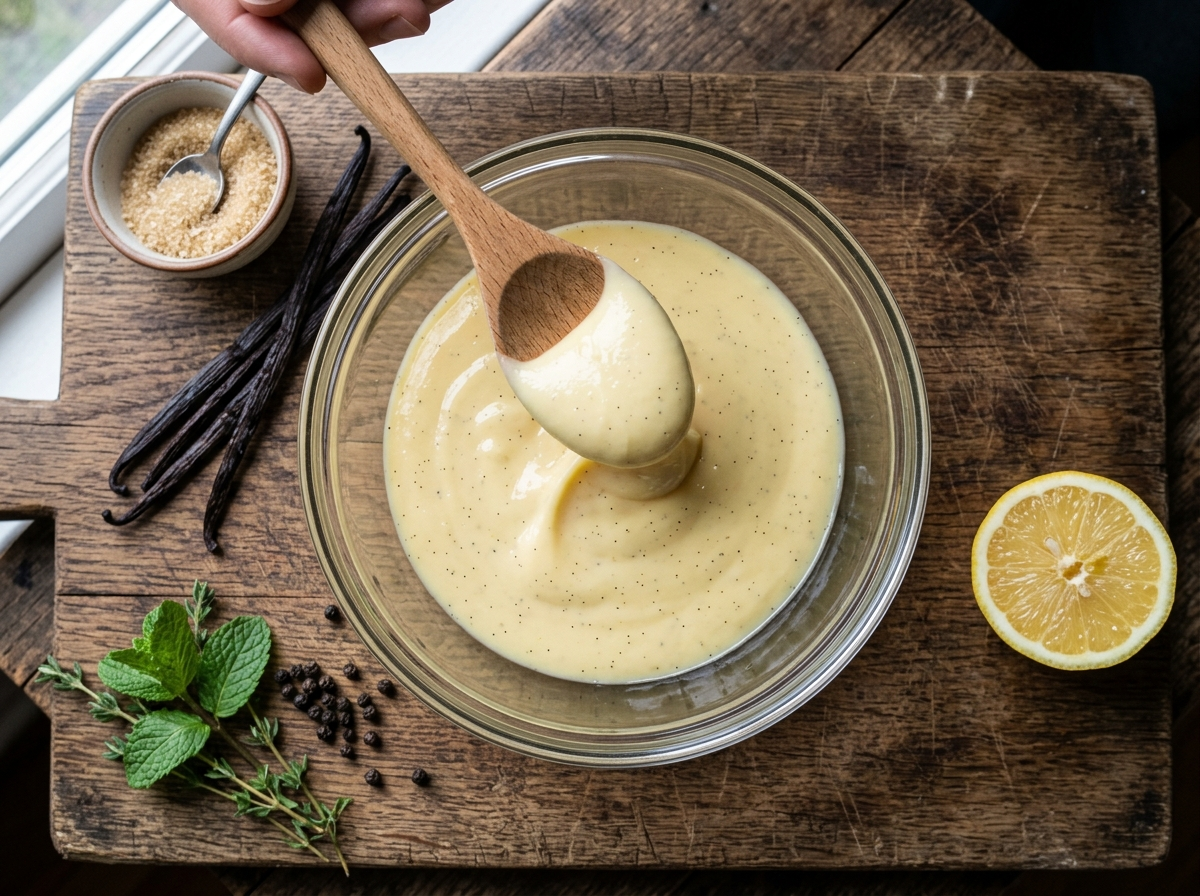
The texture, not the vanilla, is what separates a good batch from a mediocre one. You want it thick enough to hold a ribbon on the back of a spoon but still pourable while warm.
I learned the hard way that rushing the heat scrambles the yolks before the starch gets a chance to thicken things. Low heat and constant whisking fix that every time.
This batch makes about 500 g, enough to fill a dozen bignè or one 9-inch crostata. It keeps in the fridge for 3 days, covered tight against a skin.
Why You’ll Love This Recipe
- Ready in under 30 minutes of active cooking
- Fills bignè, crostata, layer cakes and trifles
- Holds its shape once chilled for at least 2 hours
- Only 6 ingredients, most already in your pantry
Ingredient Notes
- Egg yolks: Use 4 large yolks at room temperature. Whole eggs work but give a paler, less rich custard.
- Whole milk: Whole milk gives the richest set. Low-fat milk works but the cream turns noticeably thinner.
- Cornstarch: Cornstarch (maizena) gives a glossy, clean set. Swap half for 00 flour if you want the older Italian style, slightly less shiny.
- Vanilla bean: A split, scraped pod gives visible flecks and real flavor. One teaspoon of vanilla extract, added off heat, is a fair substitute.
- Lemon zest: One strip steeped with the milk adds brightness without tasting citrusy. Skip it if you’re using this cream for chocolate desserts.
Crema Pasticcera: Silky, Vanilla-Flecked Pastry Cream
Ingredients
Method
- Pour milk into a heavy-bottomed saucepan. Add the split vanilla bean, its scraped seeds and the lemon zest strip. Heat over medium until steaming and small bubbles form at the edges, about 4 minutes. Remove from heat.
- In a bowl, whisk egg yolks with sugar and salt until pale and slightly thickened, about 2 minutes. Whisk in the cornstarch until fully smooth with no dry lumps.
- Fish out the vanilla bean from the milk. Slowly pour a third of the hot milk into the yolk mixture, whisking constantly to temper it without scrambling.
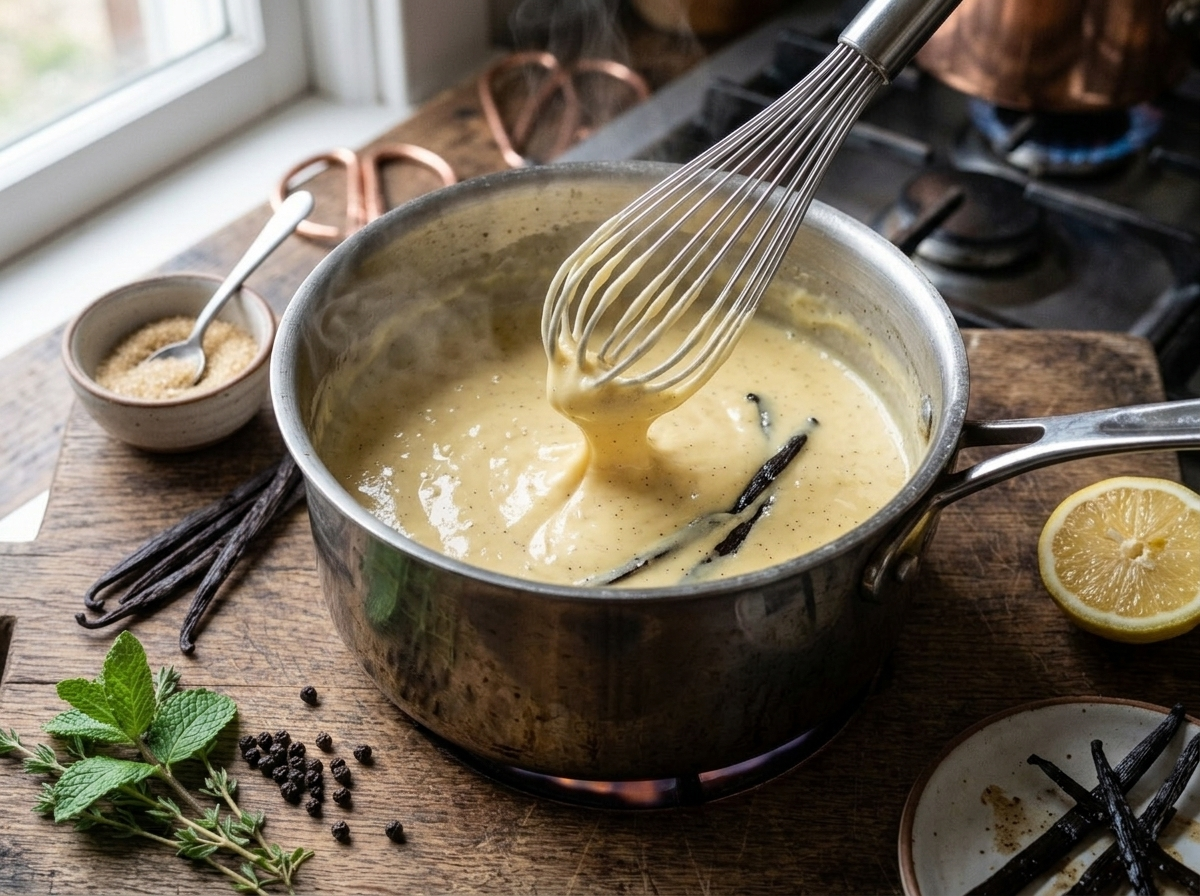
- Pour the tempered yolk mixture back into the saucepan with the remaining milk. Cook over medium-low heat, whisking constantly, until it thickens and the first bubble breaks the surface, 4 to 5 minutes. It should reach 82 C / 180 F.
- Keep whisking for 30 seconds past that first bubble to cook out the raw starch taste, then remove from heat right away.
- Strain through a fine-mesh sieve into a clean bowl to catch any stray bits. Press plastic wrap directly onto the surface so no skin forms.
- Chill for at least 2 hours before piping, spreading or spooning into your dessert of choice.
Notes
- Whisk cornstarch into yolks before adding hot milk to avoid lumps
- Remove from heat right at the first bubble, don't overcook past that point
- Chill at least 2 hours before piping into pastry shells
- Steep vanilla bean in warm milk for full flavor extraction
Tips for Success
- Whisk constantly once the custard hits direct heat to stop bits from scrambling on the pot bottom.
- Strain the finished cream through a fine-mesh sieve to catch stray egg strands or vanilla bits.
- Press plastic wrap directly onto the surface while it cools to stop a skin from forming.
- Use a heavy-bottomed saucepan so the custard heats evenly and doesn’t scorch on one side.
- Chill at least 2 hours before piping or layering so the cream firms up enough to hold shape.
Variations
- Melt 100 g dark chocolate into the hot cream right after straining for crema pasticcera al cioccolato.
- Swap the vanilla bean for extra lemon zest and a splash of juice for a brighter crema al limone.
- Fold in 200 ml whipped cream once chilled for crema diplomatica, a lighter version for filling cakes.
Storage and Reheating
Crema pasticcera keeps in the fridge for up to 3 days, covered with plastic wrap pressed onto the surface. Keep it in a shallow container so it chills through fast, within about 30 minutes.
Don’t freeze it. Egg and starch-based custards separate and turn watery once thawed, and no amount of whisking brings the texture back.
If it’s used cold as a filling, no reheating is needed, just whisk briefly to loosen it before piping. If you want it warm for a spoon dessert, stir over low heat for a minute or two, never boil it again.
Serving Suggestions
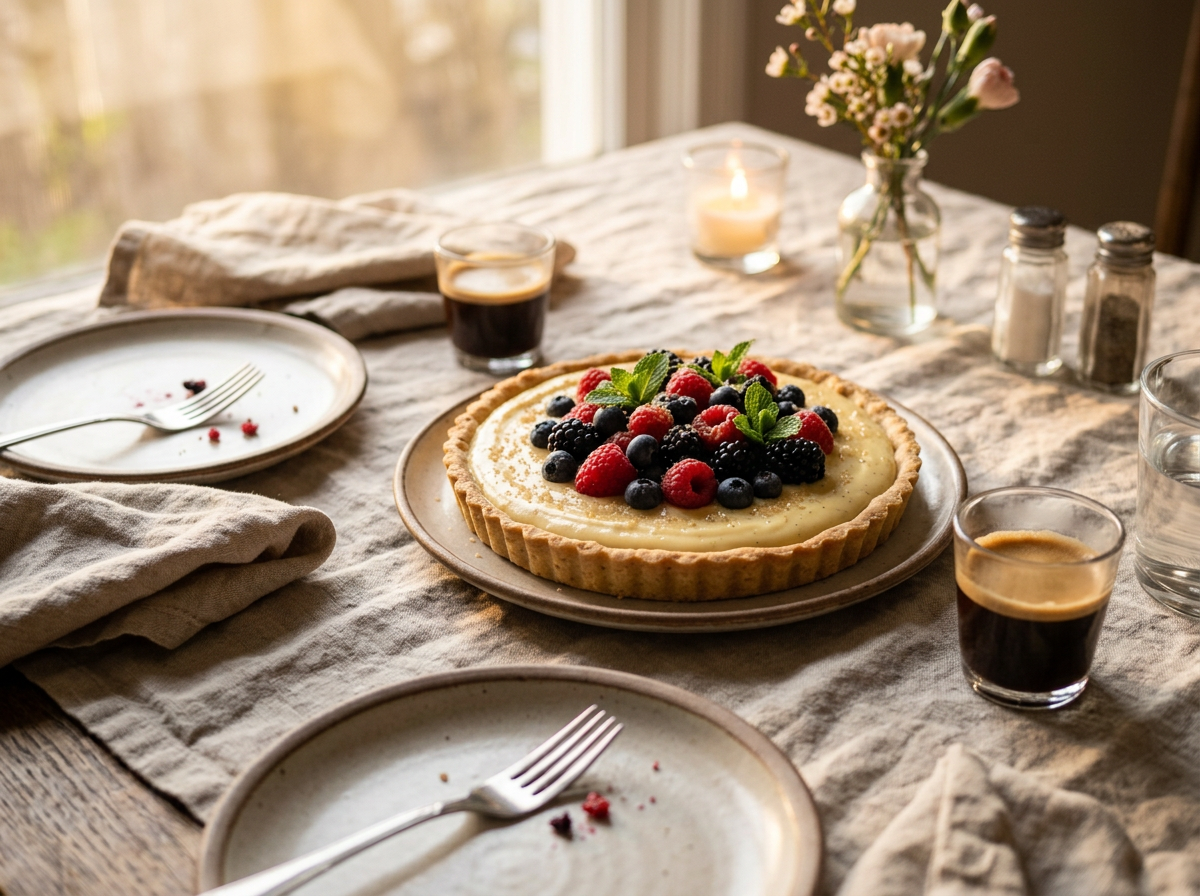
Pipe crema pasticcera into cooled bignè shells or use it as the base layer in a Torta della Nonna crostata before topping with fresh berries. It’s also the traditional filling for sfogliatelle and Italian layer cakes like pan di Spagna.
For something quicker, spoon it warm over sponge cake or into small glasses layered with crushed amaretti and espresso for an instant zuppa inglese-style dessert.
A spoonful alongside stewed fruit or a few crushed pistachios on top turns a simple bowl of custard into a plated dessert.
FAQ
Why is my crema pasticcera lumpy instead of smooth?
Lumps usually mean the yolks scrambled from heat added too fast, or the cornstarch wasn’t fully whisked into the yolks before cooking. Fix it going forward by tempering slowly, a third of the hot milk at a time, and always whisking the starch into cold yolks first. If it’s already lumpy, straining through a fine-mesh sieve rescues most batches.
Can I use flour instead of cornstarch in crema pasticcera?
Yes, 00 flour works as a substitute, though the texture turns slightly less glossy and a touch heavier. Use the same weight, or split it half cornstarch and half flour for a middle ground. Cook it a minute longer than the cornstarch version since flour needs more heat to lose its raw taste.
How long does crema pasticcera last in the fridge?
It keeps for 3 days when covered with plastic wrap pressed right onto the surface to stop a skin forming. Store it in a shallow container so it cools fast, within about 30 minutes of cooking. Don’t freeze it, since the egg and starch structure breaks down and turns watery once thawed.
What can I fill with crema pasticcera besides bignè?
Crostata, sfogliatelle, layered sponge cakes and trifle-style desserts all use crema pasticcera as the base filling. It also works spooned warm over plain cake or layered in glasses with crushed cookies and espresso for a quick zuppa inglese. Fresh berries on top cut the richness well.
Is crema pasticcera gluten free?
Yes, if made with cornstarch instead of flour, crema pasticcera contains no gluten. Check that any vanilla extract you use is labeled gluten free, since a few brands add trace grain alcohol. If you use the flour variation instead, it is not gluten free.
What’s the difference between crema pasticcera and French crème pâtissière?
They’re close cousins made with the same base of yolks, milk, sugar and starch, but crema pasticcera is usually thickened with cornstarch alone and skips the butter that French crème pâtissière often includes. The Italian version tends to be a bit lighter and less rich, meant to sit inside pastry rather than stand alone.