
Jump to Recipe
Spaghetti aglio e olio is a Roman pasta made with just garlic, olive oil, chile flakes, and parsley, tossed with the pasta itself and a splash of its own cooking water. No cream, no butter, no cheese in the traditional version. The sauce comes from starch and fat working together, not from a long ingredient list.
I make this when the fridge is empty and I still want something that tastes deliberate. The whole thing comes together in the time it takes the pasta water to boil and the noodles to cook.
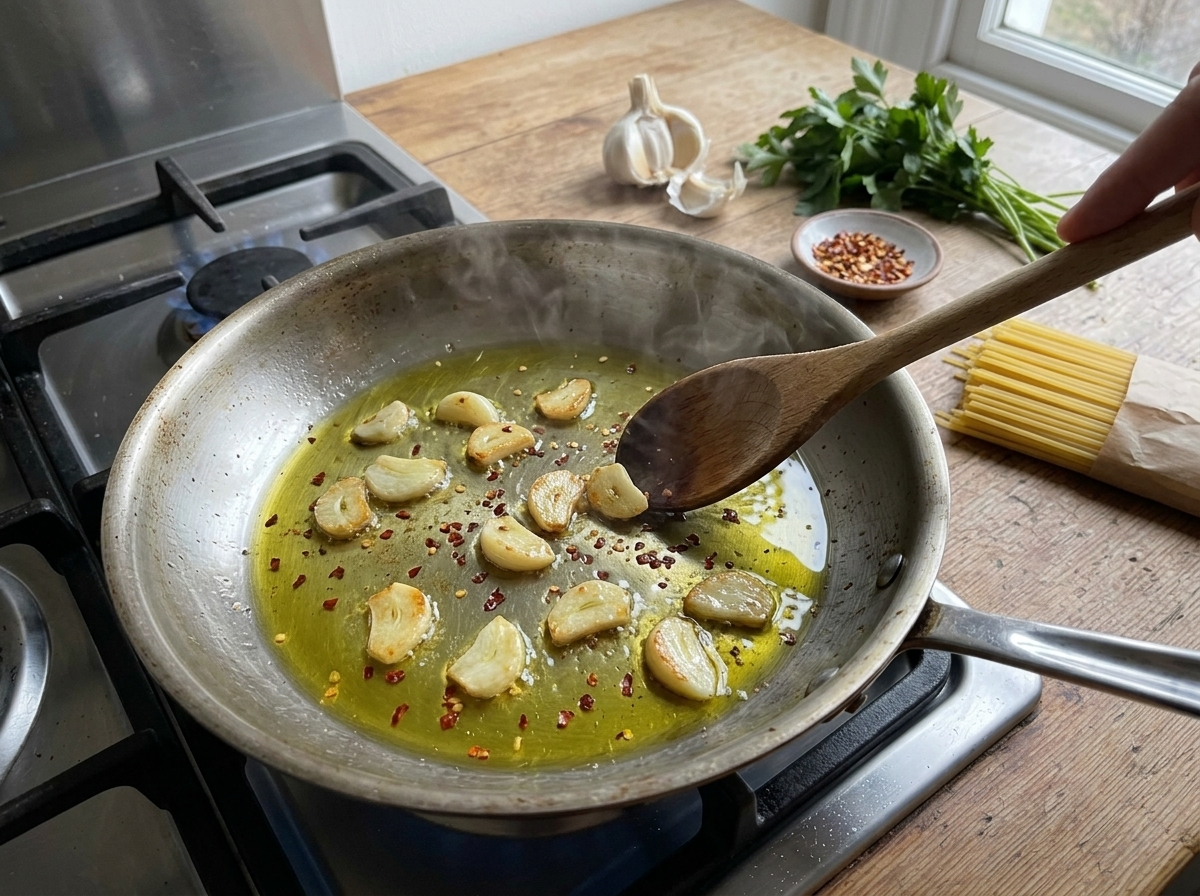
The one place this dish goes wrong is the garlic. Push it past pale gold and it turns bitter, and there’s no fixing a pan of burnt garlic short of starting over. Keep the heat at medium-low and watch it, not your phone.
Done right, you get glossy strands, a faint chile kick, and garlic that’s sweet rather than sharp.
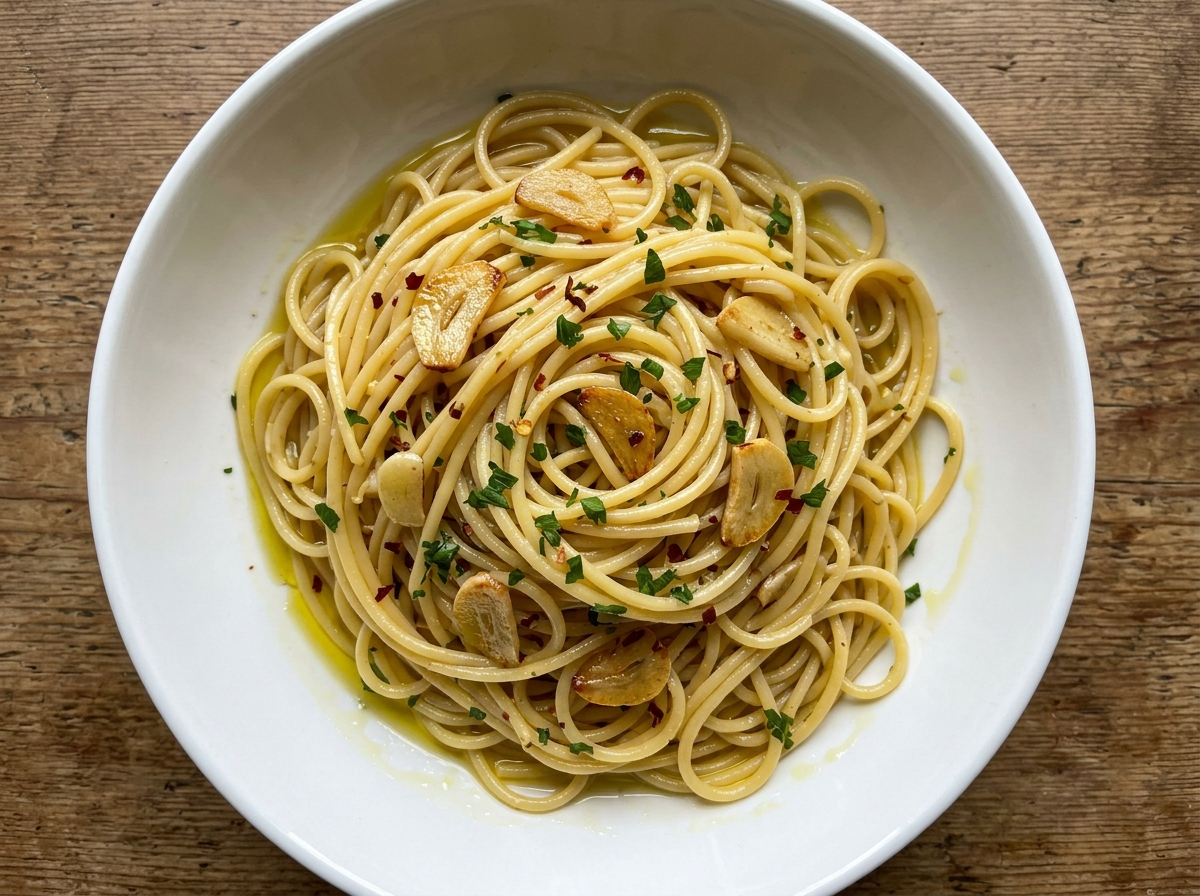
Why You’ll Love This Recipe
- Uses four pantry ingredients you likely already own
- Ready in 25 minutes start to finish
- No cream or butter, naturally dairy free
- Costs pennies per serving but tastes deliberate
Ingredient Notes
- Spaghetti: Standard dry spaghetti works best here since it holds the thin oil sauce well. Bucatini or linguine are fine substitutes if that’s what you have.
- Extra virgin olive oil: Use a decent everyday olive oil, not your finishing bottle, since this is the whole sauce. A cheap, thin oil will taste flat with nothing to hide behind.
- Garlic: Slice it thin rather than mincing so it toasts evenly and you can pull it before it burns. Six cloves sounds like a lot but it mellows completely once cooked slowly.
- Red chile flakes: Peperoncino is traditional here. Swap in one small fresh red chile, thinly sliced, if you want a fresher heat.
- Flat-leaf parsley: Adds color and a grassy note against the oil. Skip it if you don’t have it, the dish still works, it just looks flatter.
- Pasta water: This is what turns oil and starch into a sauce that clings instead of pooling. Reserve at least a cup before you drain, you’ll likely use half of it.
Spaghetti Aglio e Olio: Garlic, Chile, and Olive Oil
Ingredients
Method
- Bring a large pot of water to a boil and salt it generously, it should taste like seawater.
- Add spaghetti and cook 1 minute less than the package time, until al dente with a firm bite at the center. Reserve 1 cup of pasta water, then drain.
- While the pasta cooks, heat olive oil in a large skillet over medium-low heat. Add sliced garlic and cook 2-3 minutes, stirring often, until pale gold at the edges.
- Add chile flakes and stir 30 seconds until fragrant, watching that the garlic doesn't darken further.
- Add the drained spaghetti to the skillet with a splash of reserved pasta water, about 60 ml. Toss over medium heat 1-2 minutes, adding more water as needed, until the sauce clings and the pasta looks glossy.
- Remove from heat, stir in parsley and black pepper, and taste for salt.
- Serve immediately in warmed bowls with an extra drizzle of olive oil.
Notes
- Slice garlic thin and watch it closely, past pale gold it turns bitter fast.
- Reserve at least 1 cup pasta water before draining, you'll need it for the sauce.
- Cook pasta 1 minute under package time since it finishes in the skillet.
- Toss off heat once glossy to avoid scorching the garlic underneath.
Tips for Success
- Salt the pasta water generously so it tastes like the sea, this is your only chance to season the noodles themselves.
- Slice garlic instead of mincing it so you can see exactly when it turns pale gold and pull it off heat.
- Cook the spaghetti one minute under package time since it finishes cooking in the skillet with the sauce.
- Add pasta water gradually, a splash at a time, until the sauce clings to the noodles rather than sitting in the pan.
- Toss the pasta off heat once the sauce looks glossy so the residual heat doesn’t scorch the garlic underneath.
Variations
- Add sautéed shrimp or anchovies for a heartier main, cooking them in the same oil before the garlic.
- Stir in a handful of toasted breadcrumbs at the end for crunch, a common Southern Italian trick called mollica.
- Finish with grated pecorino romano if you don’t mind straying from tradition, it adds a salty edge the original skips.
Storage and Reheating
Spaghetti aglio e olio keeps in an airtight container in the fridge for up to 2 days. The oil will firm up and separate slightly once cold, that’s normal and not a sign it’s gone off.
Reheat gently in a skillet over low heat with a splash of water or olive oil, tossing until the noodles loosen and turn glossy again, about 2 to 3 minutes. Avoid the microwave if you can, it tends to dry the strands out unevenly.
This dish is best fresh since the emulsion between oil and starch is easiest to get right the first time. Leftovers are still good, just slightly less silky.
Serving Suggestions
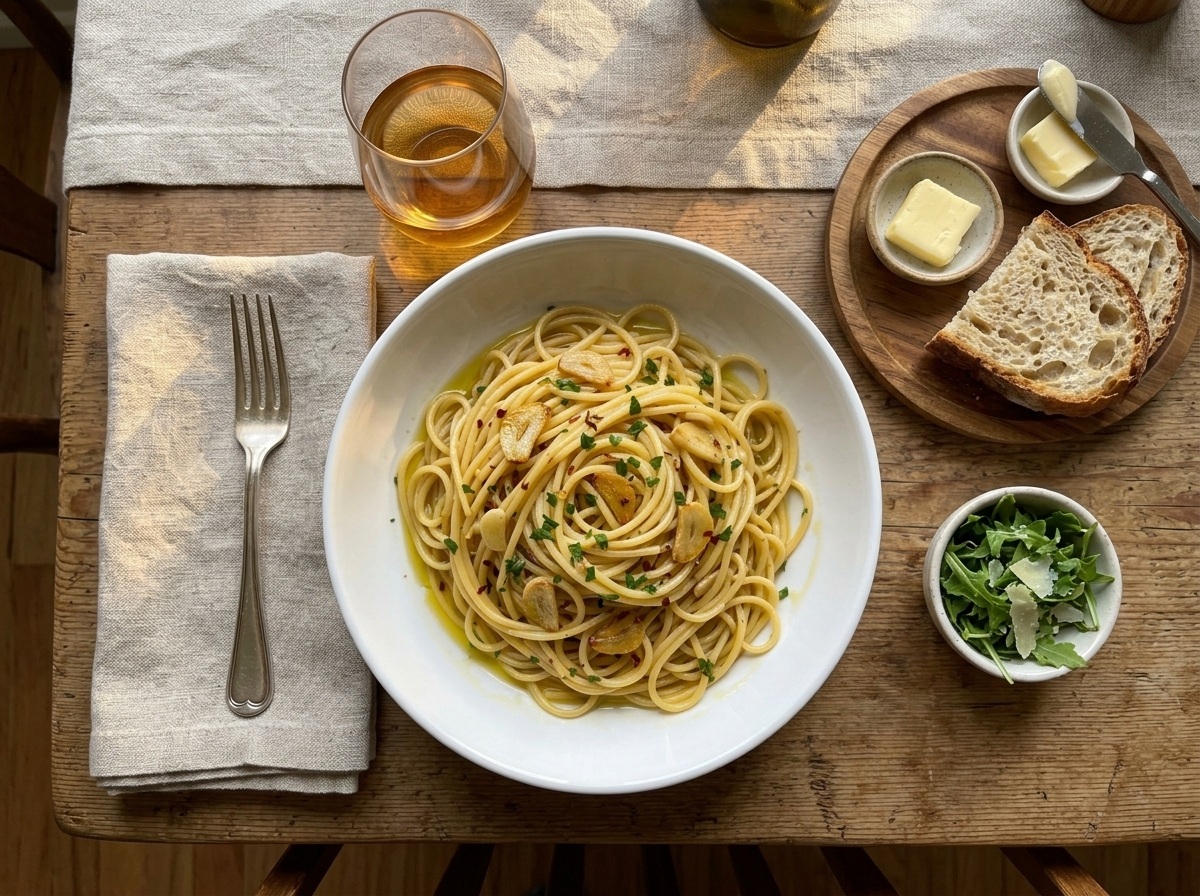
Spaghetti aglio e olio works as a light main on its own, or as a first course before something like grilled fish or roast chicken. A simple green salad with lemon and olive oil keeps the meal in the same flavor family.
Crusty bread is worth having on the table to catch any oil left in the bowl. A chilled glass of white wine, something like Vermentino or a dry Pinot Grigio, cuts through the richness without competing.
For a heartier plate, add sautéed shrimp, a fried egg on top, or a scattering of toasted breadcrumbs for texture.
FAQ
Why does my spaghetti aglio e olio taste bitter?
Bitter aglio e olio almost always means the garlic browned too far. Once garlic passes pale gold and starts turning deep brown, it releases compounds that taste burnt and sharp, and there’s no fixing it in the pan. Start over with fresh garlic and keep the heat at medium-low, stirring often.
Can I use garlic powder instead of fresh garlic in aglio e olio?
Fresh garlic works much better since the whole point of this dish is toasted, sliced cloves flavoring the oil. Garlic powder gives a flat, one-note heat with none of the sweetness that slow toasting produces. If you’re out of fresh garlic, this isn’t the recipe to substitute your way through.
Can I make spaghetti aglio e olio ahead and reheat it the next day?
Yes, it keeps in the fridge for up to 2 days in an airtight container. Reheat it in a skillet over low heat with a splash of water, tossing until it loosens and turns glossy again. The texture is slightly less silky than fresh, but the flavor holds up well.
What can I serve alongside spaghetti aglio e olio for a full dinner?
Grilled fish, roast chicken, or a simple green salad with lemon all pair well since they don’t compete with the garlic and oil. Crusty bread on the table is worth it for mopping up leftover oil. A dry white wine like Vermentino balances the richness.
Is spaghetti aglio e olio vegan?
Yes, the traditional version is vegan since it’s built from spaghetti, olive oil, garlic, chile flakes, and parsley with no dairy or animal products. Just skip the optional grated pecorino or parmesan some cooks add on top, that’s the only nontraditional add-in that isn’t plant-based.
What’s the difference between aglio e olio and cacio e pepe?
Aglio e olio is built on garlic and olive oil, while cacio e pepe relies on pecorino cheese and black pepper melted into pasta water for a creamy finish. Aglio e olio is naturally dairy free, cacio e pepe is not. Both use pasta water to build the sauce, just with different bases.