Jump to Recipe
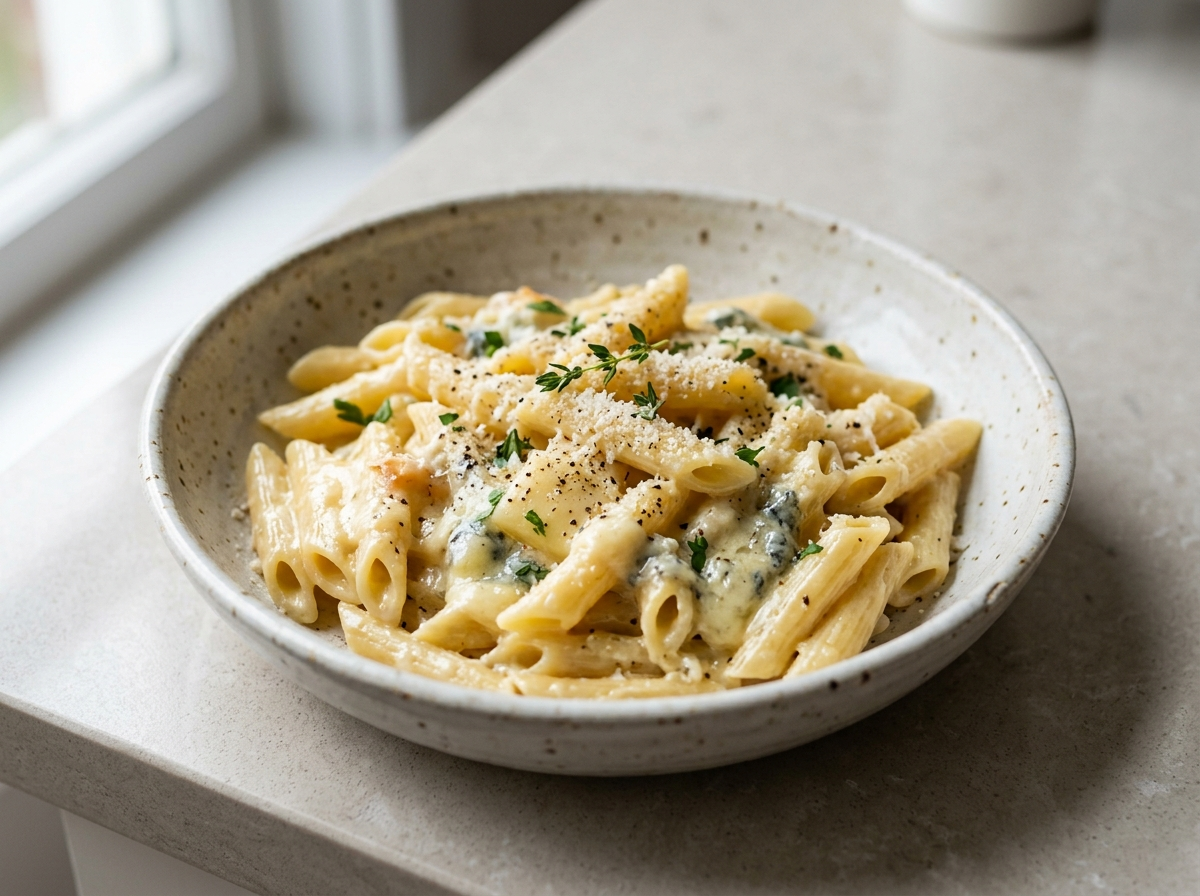
Pasta ai quattro formaggi is penne or rigatoni tossed in a sauce made from four melted Italian cheeses, usually a mix of soft and aged types for balance. Fontina brings the melt, gorgonzola dolce brings the tang, taleggio adds funk, and parmigiano ties it together with salt and depth.
The whole dish comes together in the time it takes to boil pasta. No roux, no flour, just butter, milk and cheese cut small enough to melt on low heat.
The one thing that trips people up is heat. Crank the burner once the cheese goes in and the fat splits out, leaving you with a greasy puddle instead of a sauce. Keep it low and slow and it stays smooth.
I use whichever four cheeses I have that cover sharp, soft, tangy and nutty. Gorgonzola dolce is the one I won’t swap out, it’s what gives the sauce its backbone.
Why You’ll Love This Recipe
- One pan for the sauce, ready before the pasta’s even drained
- No roux or flour, just butter, milk and cheese
- Four cheeses give sharp, tangy and nutty notes in one bite
- Pasta water fixes the sauce if it looks too thick
Ingredient Notes
- Penne or rigatoni: A ridged short shape holds the sauce best. Fresh tagliatelle works too if you want a softer bite.
- Fontina: Melts smoothly and gives body to the sauce. Young provolone is a fair stand-in if fontina isn’t available.
- Gorgonzola dolce: The soft, mild blue gives the sauce its signature tang. Skip the aged, crumbly gorgonzola piccante, it’s too sharp here.
- Taleggio: Adds a washed-rind funk that rounds out the sweetness of the fontina. Trim the rind before cubing.
- Parmigiano Reggiano: Grate it fresh, pre-grated versions have anti-caking starch that makes the sauce grainy.
- Whole milk: Keeps the sauce lighter than cream. Swap 100 ml for heavy cream if you want it richer.
Pasta ai Quattro Formaggi: Silky Four-Cheese Sauce
Ingredients
Method
- Bring a large pot of water to a boil and add the coarse salt.
- Add the penne and cook until al dente, about 10 to 11 minutes, stirring occasionally.
- Reserve 150 ml of the pasta water in a cup, then drain the pasta.
- While the pasta cooks, melt the butter in a medium saucepan over low heat.
- Pour in the warmed milk and let it come to a bare simmer, no bubbles breaking the surface.
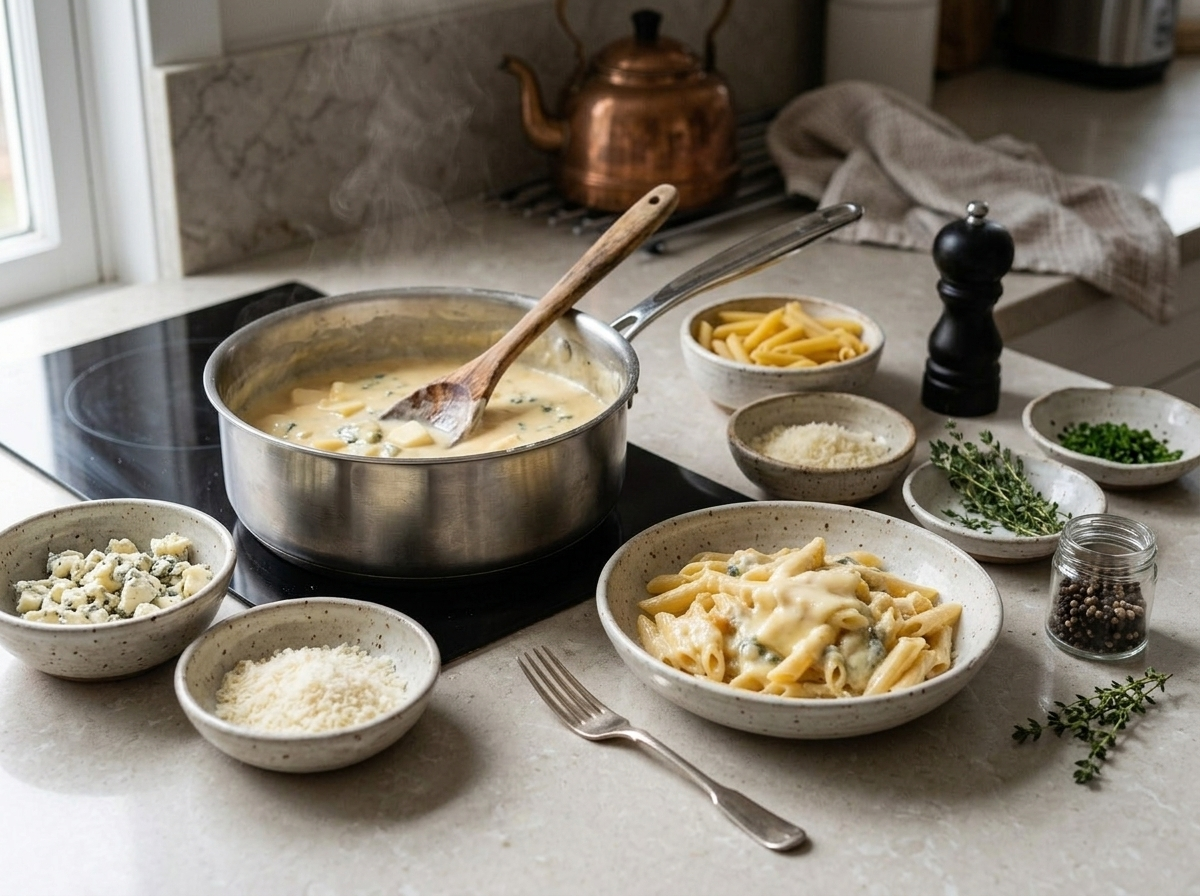
- Add the fontina, gorgonzola and taleggio. Stir gently over low heat for 4 to 5 minutes until melted and smooth.
- Remove from heat and stir in the parmigiano until fully melted into the sauce.
- Season with black pepper and a pinch of nutmeg if using.
- Add the drained pasta to the cheese sauce off the heat and toss to coat.
- Loosen with a splash of the reserved pasta water, a few tablespoons at a time, until the sauce clings to the pasta and coats the back of a spoon.
- Plate immediately with extra parmigiano and black pepper on top.
Notes
- Cube all cheeses before starting, this dish moves fast once the pasta's in the water.
- Don't let the milk boil once cheese is added, keep it at a bare simmer.
- Grate parmigiano fresh, pre-grated versions won't melt as smoothly into the sauce.
- Save pasta water in a cup before draining, you'll likely need it twice.
Tips for Success
- Cut all four cheeses into small, even cubes so they melt at the same rate without scorching.
- Reserve 120 ml of pasta water before draining, you’ll need it to loosen the sauce to the right consistency.
- Keep the burner on low once cheese goes into the milk, high heat splits the fat and turns the sauce oily.
- Use gorgonzola dolce, not the aged piccante, for a sauce that melts instead of staying grainy.
- Toss the drained pasta into the sauce off the heat, residual warmth finishes it without overcooking the cheese.
Variations
- Swap taleggio for mascarpone if you want a milder sauce with less funk and more sweetness.
- Stir in a few torn fresh sage leaves or a pinch of nutmeg for an autumn-leaning version.
- Spread the finished pasta in a baking dish, top with extra parmigiano and broil for 3 minutes for a gratin crust.
Storage and Reheating
Store leftover pasta ai quattro formaggi in an airtight container in the fridge for up to 3 days. The sauce firms up as it chills, that’s normal.
Reheat gently in a saucepan over low heat with a splash of milk, stirring until the sauce loosens back up. A microwave works too, but use 50% power and stir every 30 seconds so the cheese doesn’t split.
Freezing isn’t a good idea here. The cheese sauce separates on thawing and turns grainy no matter how carefully you reheat it.
Serving Suggestions
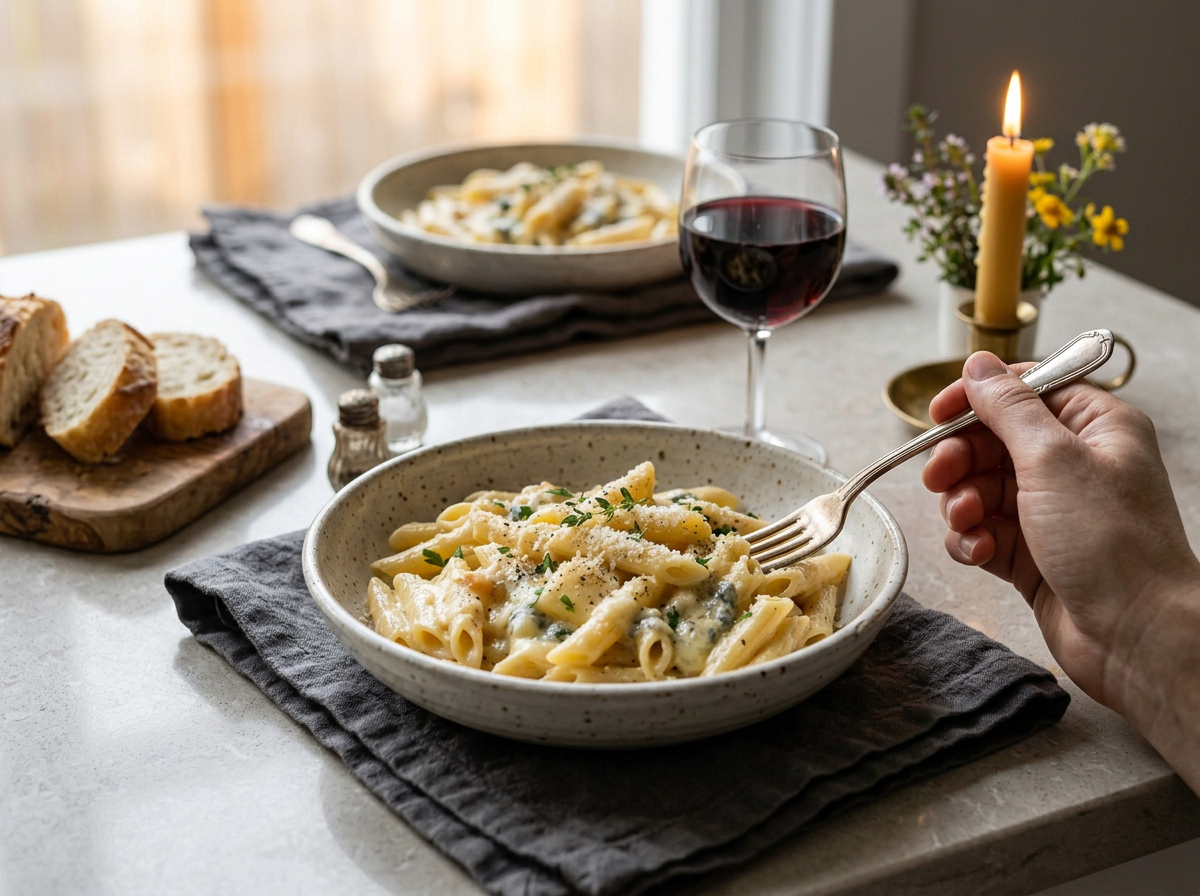
Pasta ai quattro formaggi is rich enough to stand alone with just black pepper and extra parmigiano on top. A bitter green salad, radicchio or arugula with a sharp vinaigrette, cuts through the fat well.
Pour a light red with some acidity, Barbera or a young Chianti, or a dry white like Gavi if you’d rather stay pale. Both hold up to the cheese without fighting it.
Crusty bread on the side is worth having, there’s always sauce left on the plate worth mopping up.
FAQ
Why did my pasta ai quattro formaggi sauce turn grainy and oily?
The heat was too high once the cheese went in. Cheese fat separates from the proteins above a gentle simmer, leaving an oily, grainy sauce instead of a smooth one. Pull the pan off heat as soon as the cheese starts melting and stir in short bursts, adding pasta water to bring it back together.
Can I use mozzarella instead of taleggio in pasta ai quattro formaggi?
Yes, mozzarella works if you want a milder, stretchier sauce with less funk. You’ll lose the washed-rind tang taleggio gives, so add a touch more gorgonzola or black pepper to keep the flavor from going flat. Cube it small since mozzarella melts stringier than taleggio.
Can I make pasta ai quattro formaggi ahead without the sauce breaking when reheated?
You can, but cook the pasta al dente and store the sauce separately if possible, that keeps it from breaking. Reheat the sauce alone over low heat with a splash of milk before tossing in the reheated pasta. Reheating both together straight from the fridge is more likely to split the fat.
What goes well with pasta ai quattro formaggi besides bread?
A bitter salad, radicchio or arugula with lemon vinaigrette, is the classic pairing since it cuts through the richness of four melted cheeses. A glass of Barbera or a dry Gavi also works well alongside it. Skip heavy sides, the pasta itself is already the main event.
Is pasta ai quattro formaggi gluten free?
Not as written, since it uses wheat pasta, but it’s easy to fix. Swap in your favorite gluten-free penne or rigatoni, the cheese sauce itself has no flour or gluten in it. Cook the gluten-free pasta a minute less than the package says, it can turn mushy fast in the sauce.
What’s the difference between pasta ai quattro formaggi and mac and cheese?
The cheeses and the sauce base are the main differences. Quattro formaggi uses aged Italian cheeses like gorgonzola and taleggio melted with milk and butter, while American mac and cheese usually starts with a flour roux and cheddar. The Italian version leans tangier and less thick.