
Jump to Recipe
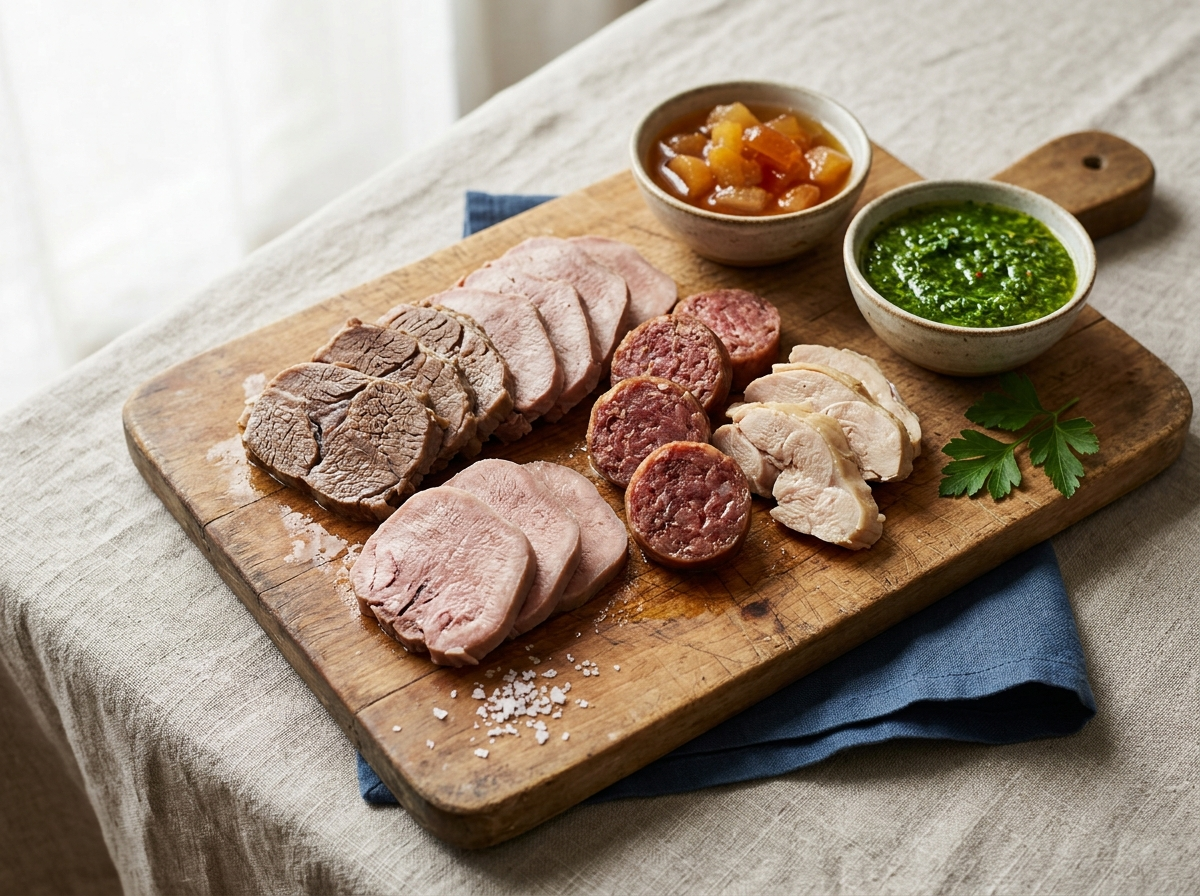
Bollito misto alla piemontese is a Piedmontese dish of several cuts of meat, beef shin, veal tongue, cotechino sausage, and capon, all simmered together in one pot until tender, then sliced and served warm with salsa verde like Florentine lampredotto and a sweet-tart mostarda.
The broth does double duty. Once the meats come out, it becomes a clean, gelatin-rich soup base you can spoon over tortellini the next day.
Timing matters more than technique here. Dump the chicken in at the start with the beef and it turns stringy long before the shin softens, so it goes in during the last 45 minutes instead.
This is a Sunday dish, built for a full table and a slow afternoon. Piedmont serves it around the holidays, but there’s no reason to wait for December.
Why You’ll Love This Recipe
- One pot builds four different meats and a broth
- Broth doubles as a soup base the next day
- Feeds 8 people off one long simmer
- Salsa verde adds a sharp, herby contrast to the meat
Ingredient Notes
- Beef shin: Choose a cut with bone and connective tissue, it gives the broth body and stays tender after hours of simmering.
- Veal tongue: If tongue isn’t for you, swap in another 500g of beef chuck. The broth loses a little depth but still works fine.
- Cotechino: A fresh, uncooked pork sausage sold vacuum packed around the holidays. Zampone, the stuffed trotter version, works the same way.
- Capon: A mature, fattier chicken. If you can’t find one, a whole roasting chicken or turkey thighs work as a substitute.
- Day-old bread: Soaked in vinegar, it thickens the salsa verde. Use a gluten-free slice if you need the sauce to stay gluten free.
- Mostarda or cognà: A sweet-tart fruit condiment traditional in Piedmont. Fig jam stirred with a spoon of mustard is a fast stand-in.
Piemontese Bollito Misto, Slow-Simmered and Hearty
Ingredients
Method
- Place beef shin and veal tongue in a large stockpot, at least 8 quarts, and cover with 4 liters cold water.
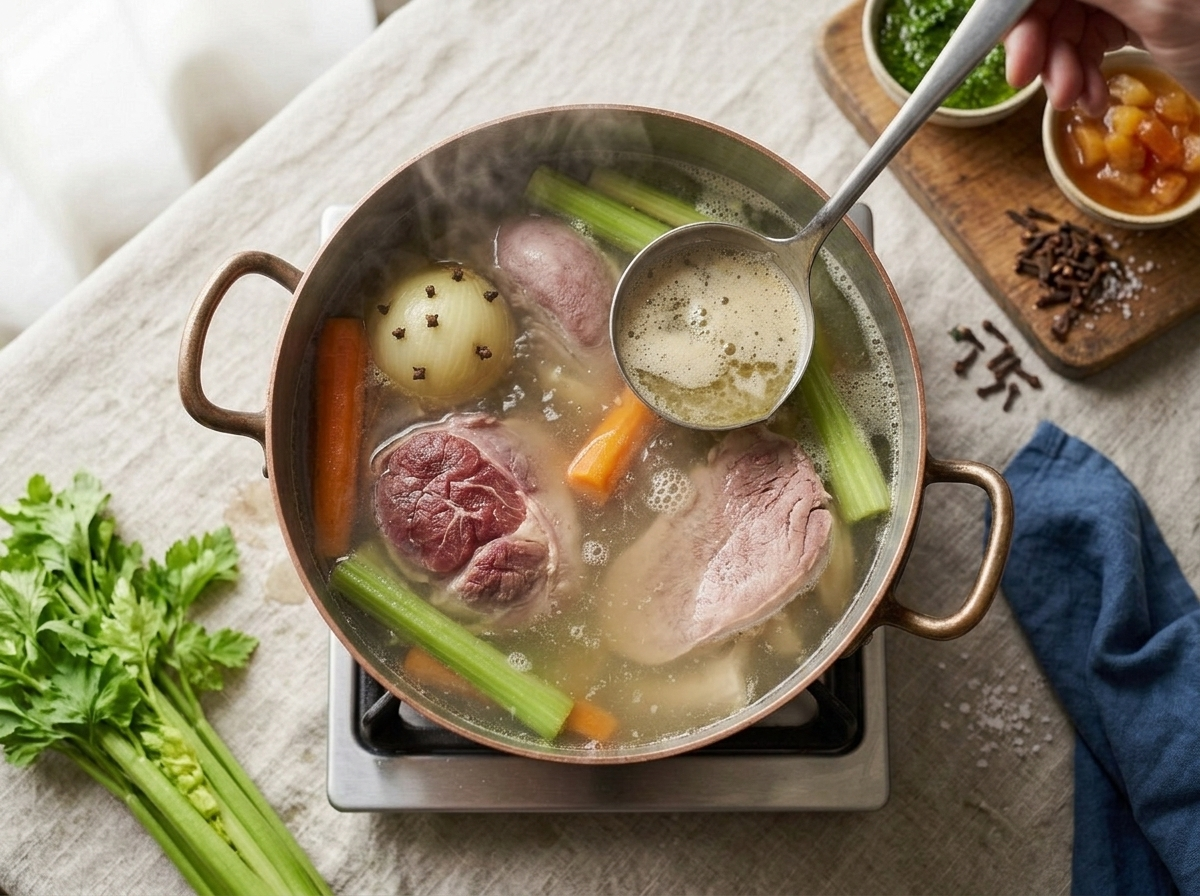
- Bring to a boil over high heat, then skim off the gray foam that rises for the first 10 minutes to keep the broth clear.
- Add the studded onion, carrots, celery, bay leaves, peppercorns, and 1 tbsp salt. Lower heat to a bare simmer.
- Simmer partially covered at a gentle bubble for 2.5 hours, until the beef is fork tender.
- Add the capon or chicken to the pot in the last 45 minutes of cooking. Added too early, it turns stringy and dry.
- Simmer until the chicken's internal temperature reaches 165 F / 74 C and the beef and tongue are fork tender, another 40 to 45 minutes.
- Turn off the heat and let everything rest in the broth for 10 minutes while you finish the cotechino and sauce.
- Meanwhile, prick the cotechino skin in several spots with a fork and wrap loosely in cheesecloth.
- Simmer in a separate pot of water, covered, for 1.5 hours, or per package instructions, keeping it apart from the main broth so its fat doesn't cloud the pot.
- Soak the bread slice in the vinegar for 2 minutes, then squeeze out the excess liquid.
- Pulse parsley, garlic, anchovies, capers, and soaked bread in a food processor until roughly chopped.
- Stream in the olive oil while pulsing, until you get a spoonable, still-textured sauce, not a smooth puree.
- Lift the tongue out and peel off the outer skin while it's still warm, it slides off easily now and tears once cool. Slice.
- Slice the beef, capon, and cotechino. Arrange all the meats on a warm platter.
- Ladle a little hot broth over the sliced meats to keep them glossy, and serve with salsa verde and mostarda alongside.
Notes
- Use a pot at least 8 quarts, the meats need room to simmer without crowding.
- Skim broth foam only in the first 10 minutes, after that it stops rising.
- Add chicken in the last 45 minutes, not at the start with the beef.
- Rest meats in the broth 10 minutes before slicing to keep them moist.
Tips for Success
- Skim the foam in the first 10 minutes of boiling to keep the finished broth clear enough to serve as a soup.
- Add the capon last so it stays juicy instead of turning stringy after hours next to the beef.
- Cook cotechino in its own pot, much like slow-roasted Italian oven-baked pork ribs, its rendered fat will cloud and grease the main broth if they share water.
- Peel the tongue while it’s still warm, the skin sticks tight and tears once the meat cools down.
- Save the strained broth for a rich Italian risotto or a simple tortellini in brodo the following day.
Variations
- Swap veal tongue for an extra piece of beef chuck if you’d rather skip organ meat, the broth still turns out rich.
- Add a piece of cotenna, pork rind, to the pot for extra gelatin and a silkier broth texture overall.
- Use turkey thighs instead of capon for a leaner, easier to find substitute that still shreds tender after simmering.
Storage and Reheating
Bollito misto keeps well because it’s essentially meat stored in its own broth. Store the sliced meats and the strained broth separately in airtight containers in the fridge for up to 3 days.
Reheat by simmering slices gently in a little broth on the stovetop for 5 to 8 minutes until warmed through. Don’t microwave it dry, the texture turns rubbery fast.
Freeze cooked meats submerged in broth for up to 2 months. Thaw overnight in the fridge before reheating on the stove.
Serving Suggestions
Bollito misto alla piemontese is traditionally served as a main course with coarse salt, salsa verde, and a sweet-tart mostarda or cognà on the side.
Ladle a cup of the broth as a starter first course, in brodo, before bringing out the sliced meats.
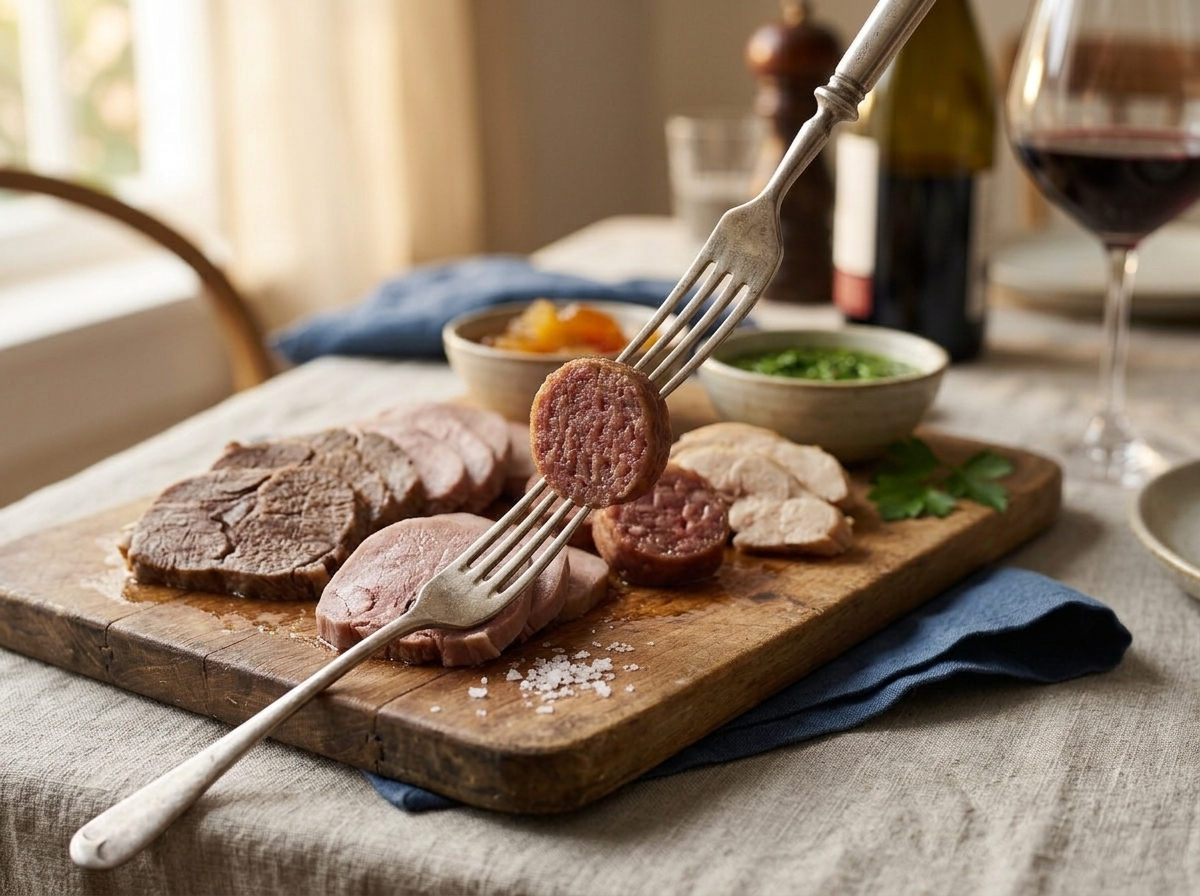
Round out the table with roasted potatoes or braised spinach, and a bottle of Barbera to cut through the richness.
FAQ
Why is my bollito misto tongue hard to peel?
The tongue’s skin sets tight as it cools, so peel it right after it comes out of the broth, while it’s still hot. Use a paring knife to loosen one edge, then pull the skin off in one motion. Let it cool first and you’ll be scraping instead of peeling.
Can I use zampone instead of cotechino for bollito misto?
Yes, zampone works as a straight swap for cotechino in bollito misto alla piemontese. It’s the same seasoned pork filling stuffed into a trotter instead of a casing, so the flavor is nearly identical. Simmer it the same way, separately from the main pot, for about 1.5 to 2 hours depending on size.
How do I store leftover bollito misto alla piemontese?
Store the sliced meats and the strained broth in separate airtight containers in the fridge for up to 3 days. Keep them submerged in a little broth so they don’t dry out. For longer storage, freeze meat and broth together in portions for up to 2 months and thaw overnight in the fridge before reheating.
What sauce goes with bollito misto besides salsa verde?
Mostarda or cognà, a sweet-tart fruit condiment from Piedmont, is the classic partner alongside salsa verde. Coarse sea salt and a bowl of horseradish cream are common too, since the fat in cotechino and tongue needs something sharp to cut through it. A simple grainy mustard works in a pinch.
Is bollito misto alla piemontese gluten free?
The meats and broth are naturally gluten free, but the salsa verde uses a slice of bread to thicken it, so check that detail. Swap in a gluten-free bread slice or skip it and add a few more capers for texture. Cotechino should be checked too, since some brands add fillers.
What’s the difference between bollito misto and lesso?
Lesso is a simpler dish, usually just one cut of beef simmered in water until tender and served plain or with salsa verde. Bollito misto is the fuller version, several meats like beef, tongue, cotechino, and capon simmered together and served as a shared main course, often for holidays or big gatherings.