
Jump to Recipe
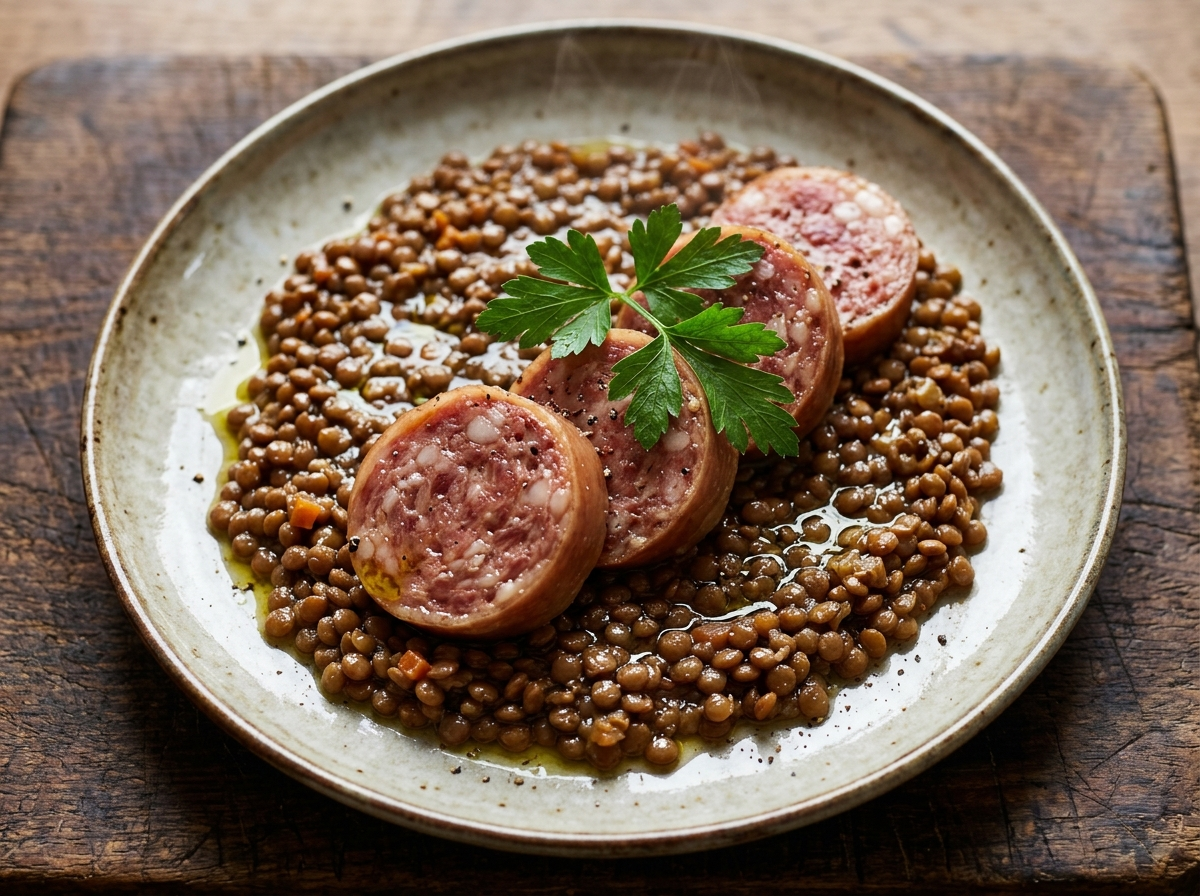
Cotechino con lenticchie pairs a fatty, spiced pork sausage with slow-simmered lentils, and it’s the dish nearly every Italian family puts on the table at midnight on December 31st, right alongside a slice of panettone fatto in casa.
The lentils stand in for coins. Round, small, and supposedly multiplying as they cook, they’re meant to bring money in the new year. Nobody I know actually believes it, but nobody skips the dish either.
I use the precooked, vacuum-sealed cotechino sold in most Italian grocery stores rather than a raw one that needs three hours of babysitting. It simmers right in its bag, so the fat stays where it belongs and the meat doesn’t dry out.
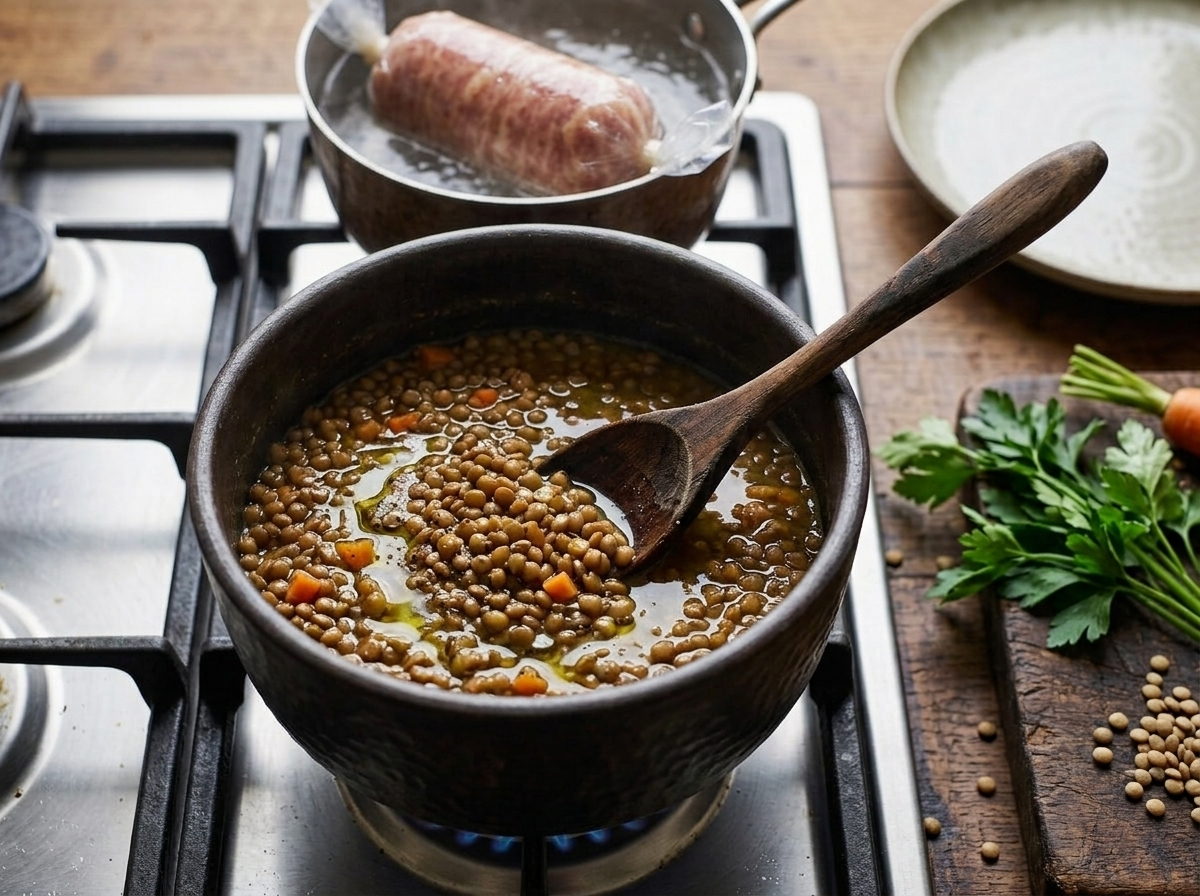
The lentils get a real soffritto, not just a splash of oil and a bay leaf. Onion, carrot, and celery cooked slowly until soft do more for the final flavor than anything added later.
One thing to watch: if the cotechino bag gets punctured before or during cooking, water seeps in and the sausage turns waterlogged instead of dense and savory. Check the seal before it goes into the pot.
Why You’ll Love This Recipe
- Only two pots and no fussy technique required
- Lentils taste better the next day, so leftovers work
- Feeds a crowd for a holiday dinner without much cost
- The soffritto base builds real flavor into the lentils
Ingredient Notes
- Cotechino: Buy the precooked, vacuum-sealed kind sold in most Italian delis. A raw fresh cotechino works too but needs 2.5 to 3 hours of slow simmering instead of 30 minutes.
- Lentils: Small Castelluccio or Umbrian lentils hold their shape best. Ordinary brown lentils work fine, just watch them closely near the end so they don’t turn to mush.
- Tomato paste: Adds color and a little depth to the soffritto. Two tablespoons of crushed tomatoes work as a swap if that’s what’s on hand.
- Broth: Use a low sodium vegetable or chicken broth since the cotechino is already salty. Water works too, but the lentils taste flatter.
- Bay leaf: Optional but worth adding. Pull it out before serving since it’s not meant to be eaten.
Cotechino con Lenticchie: Italy’s New Year’s Tradition
Ingredients
Method
- Heat the olive oil in a heavy-bottomed saucepan over medium heat. Add the onion, carrot, celery, and garlic, and cook for 5 to 6 minutes until softened and fragrant.
- Stir in the tomato paste and cook for 1 minute until it darkens slightly.
- Add the rinsed lentils, bay leaf, and broth. Bring to a boil, then reduce to a simmer.
- Cook uncovered for 30 to 35 minutes, stirring occasionally and adding more broth if the pan looks dry, until the lentils are tender but still holding their shape. Season with salt and pepper in the last 5 minutes.
- Meanwhile, submerge the sealed cotechino bag in a large stockpot of cold water without piercing it.
- Bring to a gentle boil, then reduce to a simmer and cook for 30 minutes, or per the package instructions, until heated through to 165 F / 74 C.
- Lift the bag out with tongs and let it rest for 5 minutes, then carefully cut it open and drain off the liquid.
- Slice the cotechino into rounds about 1.5 cm thick.
- Spoon the warm lentils onto plates, top with the sliced cotechino, drizzle with olive oil, and finish with black pepper and parsley if using.
Notes
- Buy a precooked, vacuum-sealed cotechino for the shortest and most reliable cook.
- Do not pierce the cotechino bag before or during simmering.
- Taste the lentils for salt only near the end, once the broth has reduced.
- Slice the cotechino while still warm for cleaner rounds.
Tips for Success
- Check the cotechino bag for tears before it goes into the pot, since punctures let water in and make the sausage mushy.
- Keep the water at a gentle simmer, never a rolling boil, or the casing can split and squeeze out fat.
- Rinse dried lentils and pick through them for small stones, especially with loose bulk lentils.
- Hold the lentils at a bare simmer once the broth goes in so they cook evenly without splitting.
- Slice the cotechino while it’s still warm, much like resting and carving arista di maiale al forno, since it firms up and gets harder to cut cleanly as it cools.
Variations
- Swap the cotechino for zampone, the same seasoned pork stuffed into a boned trotter, for the classic Modena version.
- Stir a splash of red wine into the soffritto before adding the lentils for a deeper, slightly acidic base.
- Use canned lentils and skip the 30 minute simmer, draining them and adding to the pan just to warm through for 10 minutes.
Storage and Reheating
Store the lentils and sliced cotechino in separate airtight containers in the fridge for up to 3 days.
Reheat the lentils in a saucepan with a splash of broth or water over medium-low heat, stirring until warmed through. Warm the cotechino slices in a covered skillet with a spoonful of broth, or in the microwave in 30 second bursts.
The lentils freeze well for up to 2 months. The cotechino’s texture suffers after freezing and thawing, so it’s better eaten fresh or refrigerated only.
Serving Suggestions
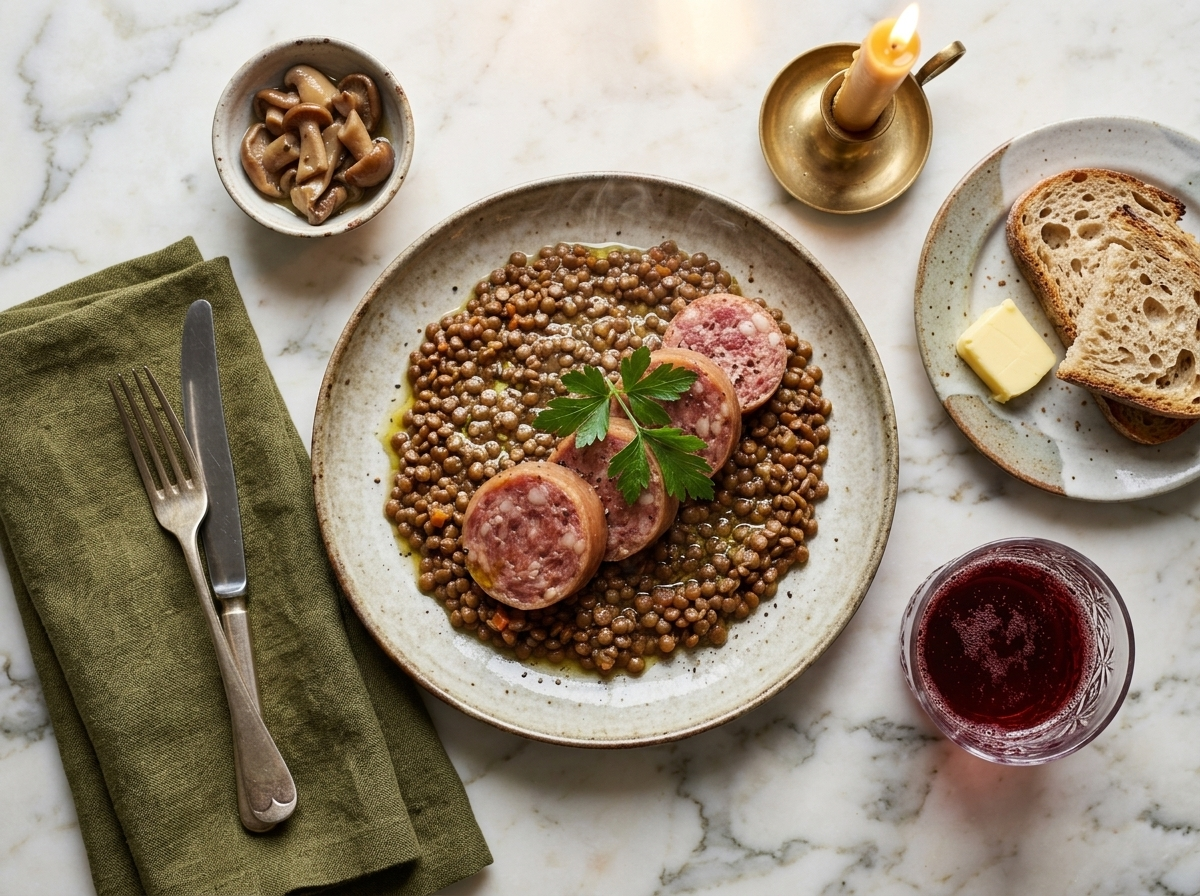
The traditional Italian New Year’s spread puts cotechino con lenticchie next to mashed potatoes or a chunk of crusty bread to soak up the broth from the lentils.
A glass of Lambrusco or a young Sangiovese cuts through the richness of the pork and matches the dish’s usual regional pairing from Emilia-Romagna, the same territory that gave us tagliatelle al ragù bolognese.
Add a side of sautéed greens or a simple radicchio salad, since something bitter balances the fattiness of the sausage.
FAQ
Why do Italians eat cotechino con lenticchie on New Year’s Eve?
Italians eat cotechino con lenticchie at midnight because the lentils are shaped like small coins and are thought to bring good luck and money for the new year. The tradition comes from Emilia-Romagna, where cotechino originated. It’s more custom than superstition at this point, but the dish stays on nearly every table anyway.
Can I use canned lentils instead of dried for cotechino con lenticchie?
Yes, canned lentils work as a shortcut. Skip the 30 to 35 minute simmer, drain and rinse the canned lentils, then stir them into the finished soffritto and warm through for about 10 minutes so they pick up the flavor without turning to mush.
Why did my cotechino turn out waterlogged instead of firm?
A waterlogged cotechino usually means the vacuum bag had a small tear before or during simmering, letting water in. Check the seal carefully before it goes into the pot, and keep the water at a gentle simmer rather than a rolling boil so the bag doesn’t get knocked around and split.
Can I make cotechino con lenticchie ahead for a New Year’s Eve dinner party?
Yes, both parts hold up well made a day ahead. Cook the lentils and simmer the cotechino separately, refrigerate in airtight containers, then reheat the lentils on the stove with a splash of broth and warm the sliced sausage in a covered skillet before serving.
What wine goes well with cotechino con lenticchie?
Lambrusco is the classic match since its light fizz and acidity cut through the fat in the sausage. A young Sangiovese also works if you prefer a still red. Both keep the richness of the pork from feeling heavy on the palate.
Is cotechino con lenticchie gluten-free?
Usually yes, since cotechino is traditionally made from pork, fat, and spices without gluten fillers, and lentils are naturally gluten-free. Check the package label on your specific cotechino brand though, since some producers add binders that contain gluten.