
Jump to Recipe
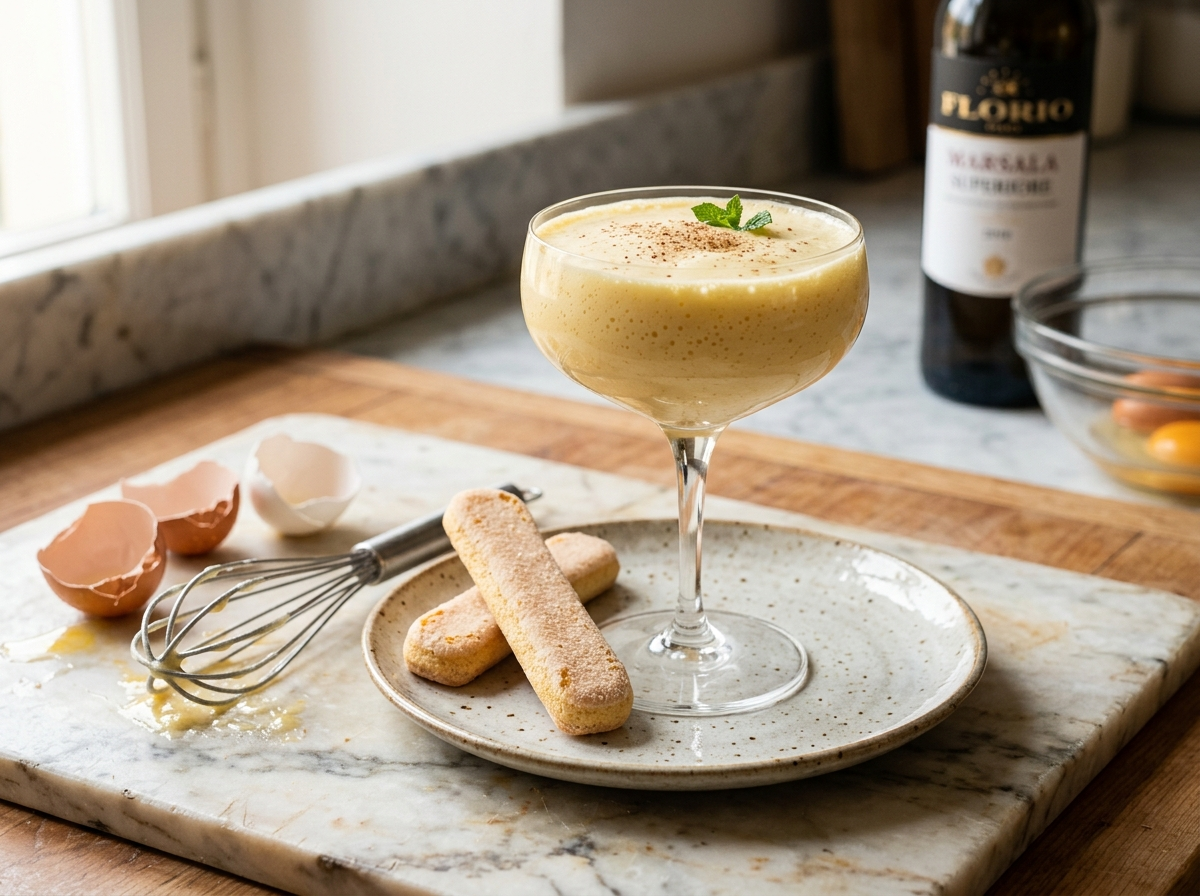
Zabaione is an Italian dessert made by whisking egg yolks, sugar, and Marsala wine together over a pot of barely simmering water until the mixture triples in volume and turns thick and pale gold. It takes about 10 minutes of steady whisking and no baking at all.
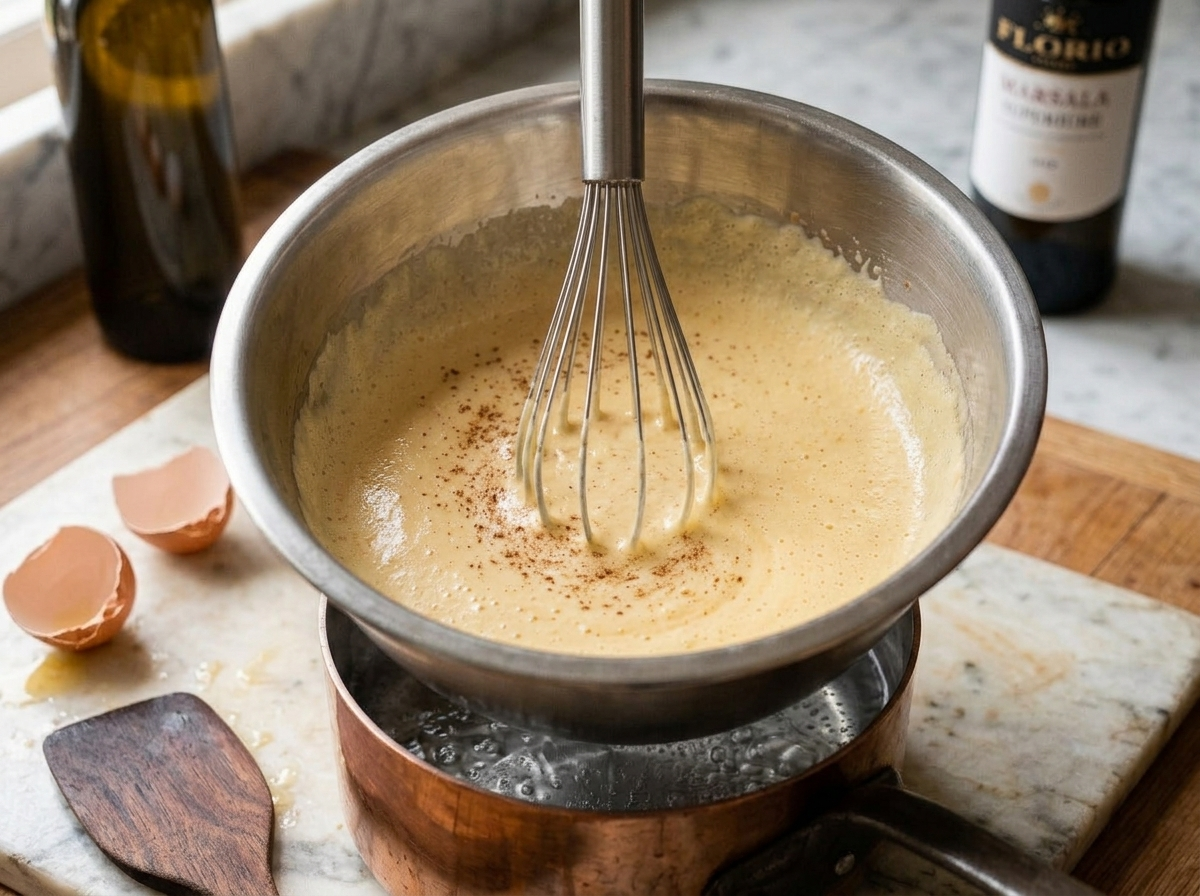
I learned this from watching my grandmother work a whisk by hand, no mixer, just wrist muscle and patience. She’d pull the bowl off the heat the moment it held a ribbon shape for 2 to 3 seconds when drizzled back into itself.
The whole dish rides on temperature control. Too hot and you get sweet scrambled eggs. Too cool and it stays runny and never sets into that airy custard texture zabaione is known for.
Serve it warm in stemmed glasses with crisp cookies for dipping, or spoon it over berries. It’s simple enough for a Tuesday and dressy enough for company.
Why You’ll Love This Recipe
- Ready in under 15 minutes with 4 ingredients
- No oven, no baking, just a whisk and a pot
- Doubles as a dessert, sauce, or light breakfast treat
- Uses pantry staples you likely already have on hand
Ingredient Notes
- Egg yolks: Use fresh, large yolks at room temperature, they whisk up faster and hold more volume than cold ones.
- Sugar: Fine granulated sugar dissolves quickest so the yolks don’t sit under undissolved grit while whisking.
- Marsala wine: Sweet Marsala is traditional, dry Marsala works but needs an extra tablespoon of sugar to balance the flavor.
- Salt: A small pinch is optional, it sharpens the sweetness but isn’t part of the classic recipe.
Classic Italian Zabaione Dessert with Marsala Wine
Ingredients
Method
- Fill a saucepan with about 2 inches of water and bring to a bare simmer, small bubbles, not a rolling boil.
- In a heatproof bowl that fits over the pan without touching the water, whisk egg yolks and sugar until pale and slightly thickened, about 1 minute.
- Set the bowl over the simmering water and whisk in the Marsala wine and salt.
- Whisk constantly, scraping the sides, for 8 to 10 minutes until the mixture triples in volume, turns pale gold, and reaches 160°F/71°C, it should hold a ribbon shape for 2 to 3 seconds when drizzled.
- Remove from heat immediately and keep whisking off heat for 30 seconds to stop the cooking.
- Pour into stemmed glasses or cups and serve right away with ladyfingers, biscotti, or fresh berries.
Notes
- Use a bowl at least 2 inches above the simmering water to avoid scrambling.
- Sweet Marsala gives the most balanced flavor, dry Marsala needs extra sugar.
- Whisk constantly, stopping even for 10 seconds can cook the yolks unevenly.
- Double the recipe for 8 servings, but whisk in two batches for even heating.
Tips for Success
- Use a metal or glass bowl that sits above the water, not touching it, to control heat evenly.
- Whisk in one direction or use a hand mixer on low speed to build volume faster without splashing.
- Warm the Marsala slightly before adding it so the custard doesn’t cool down too fast in the bowl.
- Check temperature at the 7-minute mark with an instant-read thermometer so you don’t overshoot 160°F/71°C.
- Serve zabaione the moment it’s done since it loses volume and turns runny within half an hour.
Variations
- Fold in a cup of whipped cream after cooling for a mousse-like cold zabaione served in glasses.
- Swap Marsala for Moscato or Vin Santo for a lighter, more floral version of the custard.
- Pour warm zabaione over sliced strawberries or peaches for a quick fruit dessert with almost no cleanup.
Storage and Reheating
Zabaione doesn’t store or reheat well in its warm, freshly whisked form, it deflates and can separate within 30 minutes at room temperature.
If you have leftovers, cover and refrigerate for up to 1 day, though the texture will loosen and turn more liquid than airy.
To turn leftovers into something better the next day, whisk cold zabaione into a bowl of whipped cream to make a quick mousse, or use it as a sauce over sliced fruit.
Serving Suggestions
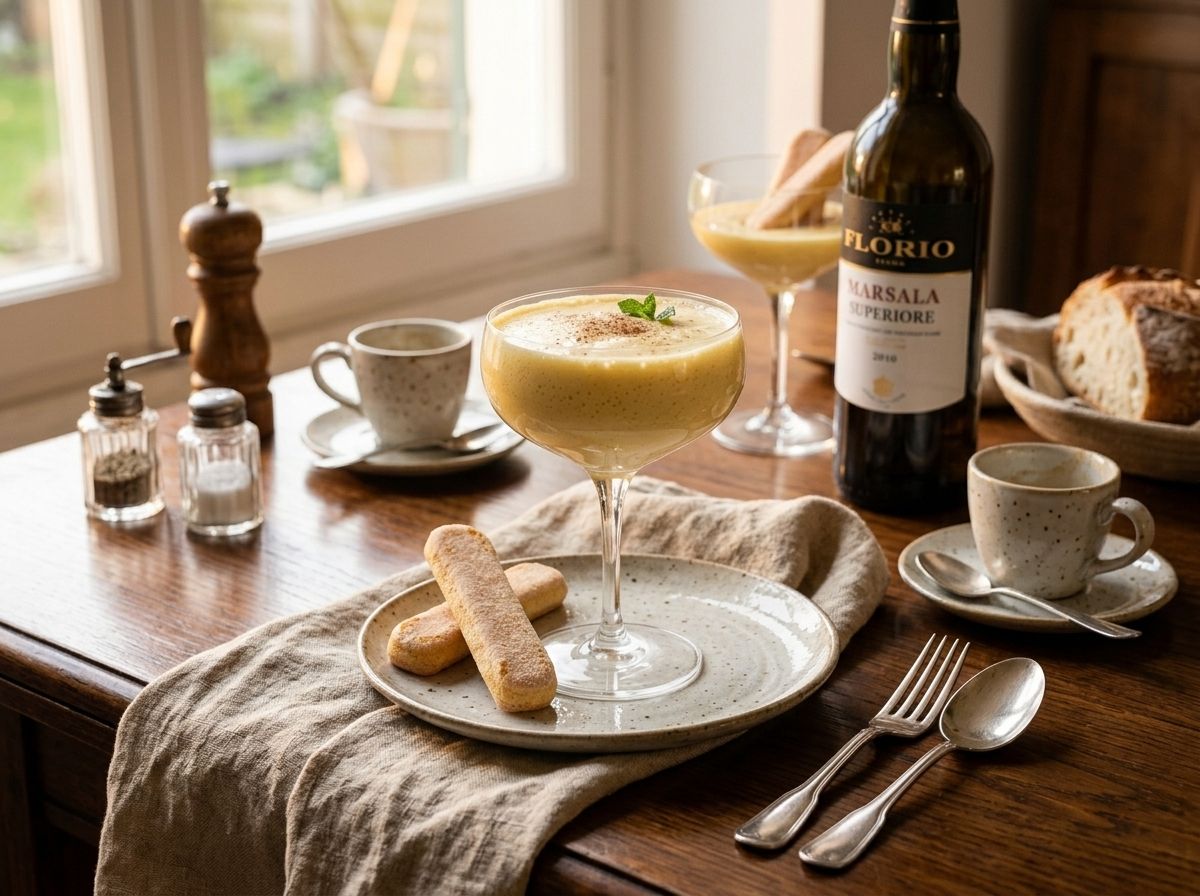
Pour zabaione into stemmed glasses or small cups right after whisking and serve it warm with a plate of ladyfingers or almond biscotti for dipping.
It works well spooned over fresh berries, sliced peaches, or a simple pound cake, the wine custard soaks in and adds richness without extra sugar.
For a dinner party, serve it in espresso cups alongside coffee, it’s a light way to end a heavy meal.
FAQ
Why did my zabaione turn into scrambled eggs?
Scrambled zabaione happens when the water boils too hard or the bowl touches the water, cooking the yolks too fast before they emulsify. Keep the water at a bare simmer, whisk constantly, and pull the bowl off heat the moment it hits 160°F/71°C and holds a ribbon. If you see flecks forming, whisk hard off heat right away.
Can I use dry Marsala instead of sweet Marsala for zabaione?
Yes, dry Marsala works, but add an extra tablespoon of sugar to balance it since sweet Marsala carries most of the dessert’s sweetness. Some cooks swap in Vin Santo or a sweet sherry for a similar caramelized-nut flavor. Avoid cooking Marsala with added salt, it throws off the taste.
Can I make zabaione ahead of time and refrigerate it?
Zabaione is best whisked right before serving since it starts to deflate and separate within 20 to 30 minutes at room temperature. You can make a cold version by whisking it over an ice bath after cooking, then folding in whipped cream, this holds in the fridge for up to a day. Plain hot zabaione does not store well.
What cookies go well with warm zabaione?
Crisp, plain cookies work best because they hold up against the warm custard without turning soggy right away. Ladyfingers, biscotti, and amaretti are the classic dippers in Italian kitchens. A few fresh berries on the side add acidity that cuts the richness.
Is zabaione gluten free?
Yes, zabaione is naturally gluten free since it’s just egg yolks, sugar, and Marsala wine whisked together. Double check the cookies or biscotti you serve alongside it though, since most traditional dippers like ladyfingers contain wheat flour. The custard itself has no flour or gluten-containing ingredients.
What’s the difference between zabaione and zabaglione?
There’s no real difference, zabaione and zabaglione are the same dessert, just regional spelling variations across Italy. Zabaione shows up more in northern Italian kitchens while zabaglione is common in English-language cookbooks and menus. Both refer to the same egg yolk and Marsala custard whisked over a bain-marie.