
Jump to Recipe
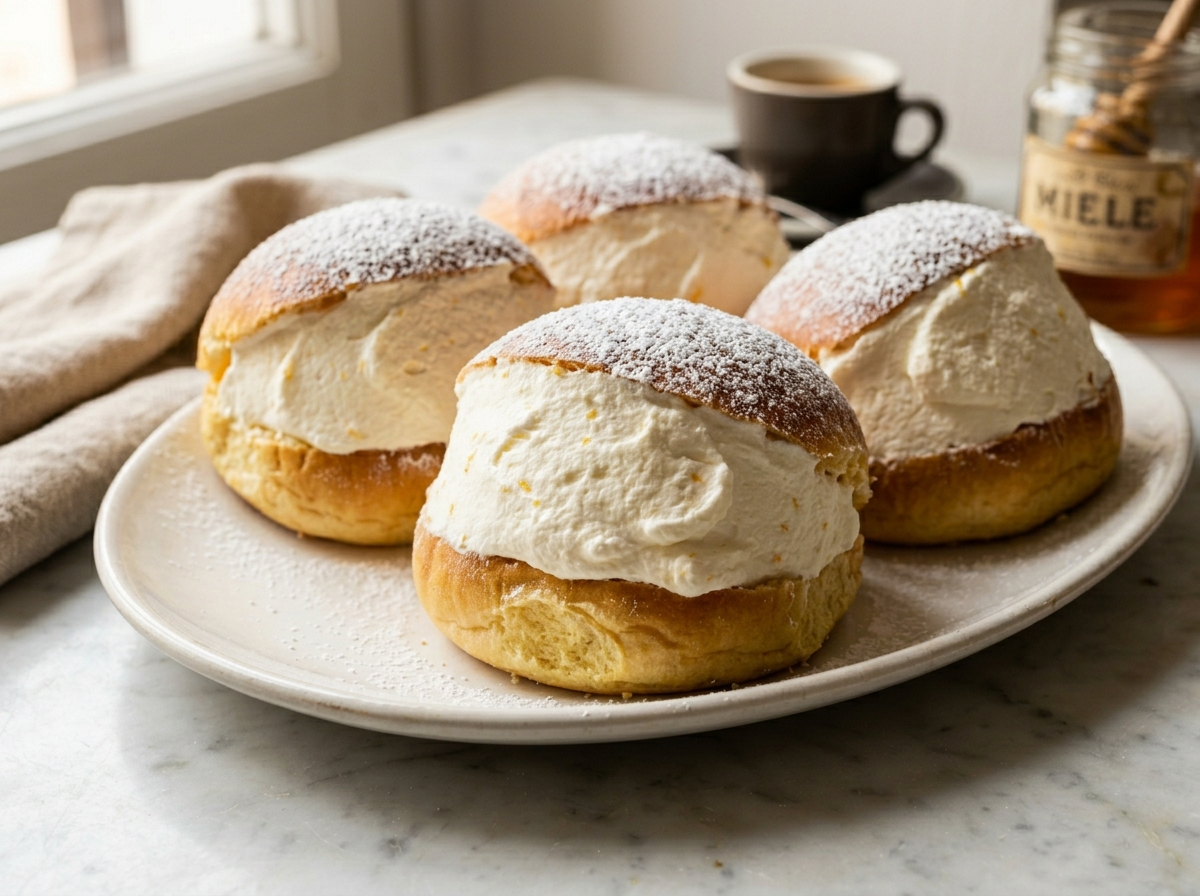
Maritozzi romani are small, oval, honey-glazed buns served split open and filled with a thick slab of whipped cream that overflows both sides. You eat them cold, usually at a bar counter, with an espresso. That contrast – cold cream, warm pastry cabinet air, strong coffee – is the whole point.
The bun itself is an enriched dough, somewhere between a brioche and a dinner roll. Eggs, butter, honey, and a touch of orange zest go into the mix. It’s not overly sweet on its own, because the cream does the sweet lifting.
The technique is straightforward, but the dough needs two proper rises. Rushing either one produces a dense crumb that can’t hold the cream without collapsing. Plan for about three hours start to finish, or make the dough the night before.
The filling is just heavy cream, a little powdered sugar, and vanilla. Keep it cold, whip it firm, and don’t skimp on quantity. A real maritozzo is nearly more cream than bun.
Why You’ll Love This Recipe
- Authentic Roman recipe with correct enriched dough ratio
- Make-ahead dough saves morning prep time
- Cold cream filling stays stable for plating and serving
- No stand mixer required, just patient hand kneading
Ingredient Notes
- bread flour (Manitoba or strong flour): High-protein Manitoba flour gives the dough enough structure for two rises and a pillowy interior. Plain all-purpose flour works but produces a slightly less chewy crumb.
- honey: Wildflower or acacia honey both work well. Honey adds flavor and helps the crust brown evenly. Don’t substitute with sugar alone – the moisture honey adds affects dough texture.
- unsalted butter: Room temperature butter incorporates more evenly. If you use salted butter, drop the added salt by half.
- orange zest: One orange gives you all you need. Lemon zest is a common substitute and gives a slightly sharper, brighter note.
- heavy cream (double cream): Use cream with at least 35% fat so it whips to a stable, spreadable consistency. Keep the bowl and beaters cold before whipping for best results.
- instant dry yeast: Fresh yeast works too – use 12 g in place of 4 g instant dry yeast. Dissolve fresh yeast in the warm milk before adding to the flour.
Maritozzi Romani con Panna
Ingredients
Method
- Combine the warm milk and instant dry yeast in a small bowl. Stir briefly and leave for 5 minutes until slightly foamy.
- Put the flour, sugar, salt, and orange zest in a large mixing bowl or the bowl of a stand mixer. Make a well in the center.
- Add the yeast-milk mixture, eggs, honey, and vanilla extract to the well. Mix until a shaggy dough forms.
- Knead by hand on a lightly floured surface, or on medium speed with the dough hook, for 8 minutes until the dough is smooth and elastic.
- Add the butter in three additions, kneading each piece in fully before adding the next. This takes about 6 to 8 more minutes. The dough will look greasy at first, then smooth out. It should pass the windowpane test - stretch a small piece thin without it tearing.
- Form the dough into a ball, place in a lightly oiled bowl, cover with plastic wrap, and leave to rise at room temperature for 90 minutes, or until doubled in size.
- Turn the dough onto an unfloured surface. Divide into 8 equal pieces, about 80 g each.
- Shape each piece into an oval bun by rolling it gently and tucking the ends under to build surface tension. Place on a baking tray lined with parchment paper, spaced 4 cm apart.
- Cover loosely with plastic wrap and leave to rise for 60 minutes until noticeably puffed and soft to a light touch.
- Heat the oven to 180 C / 355 F, conventional (not fan) if possible.
- Bake for 18 to 20 minutes until the buns are golden on top and sound hollow when tapped on the base.
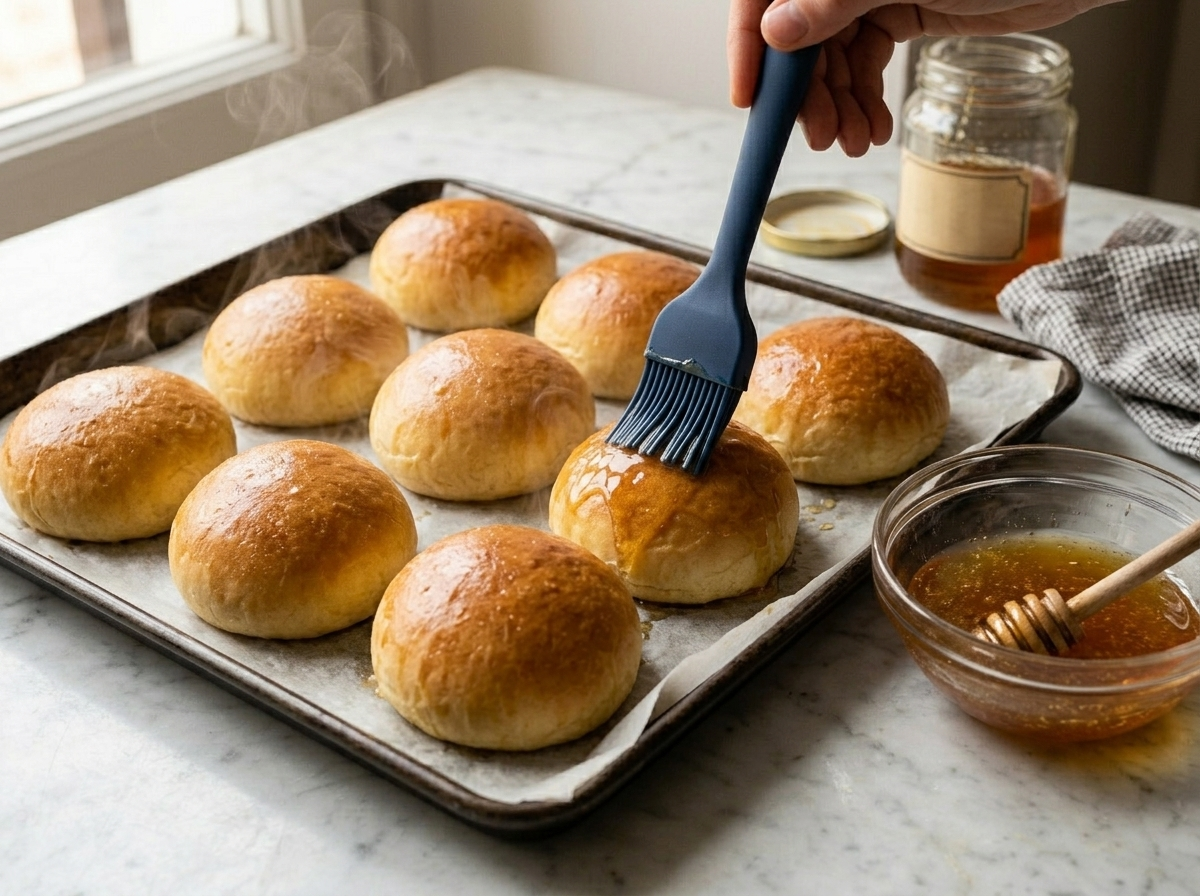
- While the buns are still hot from the oven, stir together the honey and warm water, then brush generously over the tops. The glaze will sink in slightly and give a shiny finish.
- Transfer to a wire rack and cool completely before filling, at least 45 minutes.
- Put the heavy cream, powdered sugar, and vanilla in a cold bowl. Whip with electric beaters on medium-high speed until the cream holds stiff peaks and does not move when you tilt the bowl.
- Score each cooled maritozzo lengthways along the top with a serrated knife, cutting about two-thirds of the way through. Open gently.
- Spoon or pipe the whipped cream generously into each bun, filling the cavity and letting it overflow both sides. Use a palette knife or the back of a spoon to smooth it level with the cut edges.
- Dust lightly with powdered sugar and serve immediately, or refrigerate for up to 3 hours before serving.
Notes
Tips for Success
- Knead the dough until it passes the windowpane test – stretch a small piece thin without it tearing.
- Add butter in three small additions, waiting for each piece to fully absorb before adding the next.
- Shape each bun tightly by tucking the dough under itself to build surface tension before the second rise.
- Brush with honey glaze immediately out of the oven while hot so it soaks in slightly rather than sitting on top.
- Fill the maritozzi only when completely cool – adding cream to a warm bun makes it collapse and go soggy.
Variations
- Chocolate chip maritozzi: fold 50 g dark chocolate chips into the dough after the first knead.
- Candied orange peel filling: stir 30 g finely chopped candied peel into the whipped cream before filling.
- Pistachio cream version: replace one third of the heavy cream with Sicilian pistachio paste for a pale green filling.
Storage and Reheating
Store unfilled buns at room temperature in an airtight container for up to 2 days. They lose their softness faster than brioche, so a quick 5-minute warm in a 150 C / 300 F oven restores most of the texture.
Filled maritozzi must be refrigerated and eaten within 3 to 4 hours. The cream holds its shape in the fridge, but the bun starts to absorb moisture after that window.
Unfilled buns freeze well for up to 1 month. Wrap individually in plastic film, then in foil. Thaw at room temperature for 1 hour, then warm briefly in the oven before splitting and filling.
Serving Suggestions
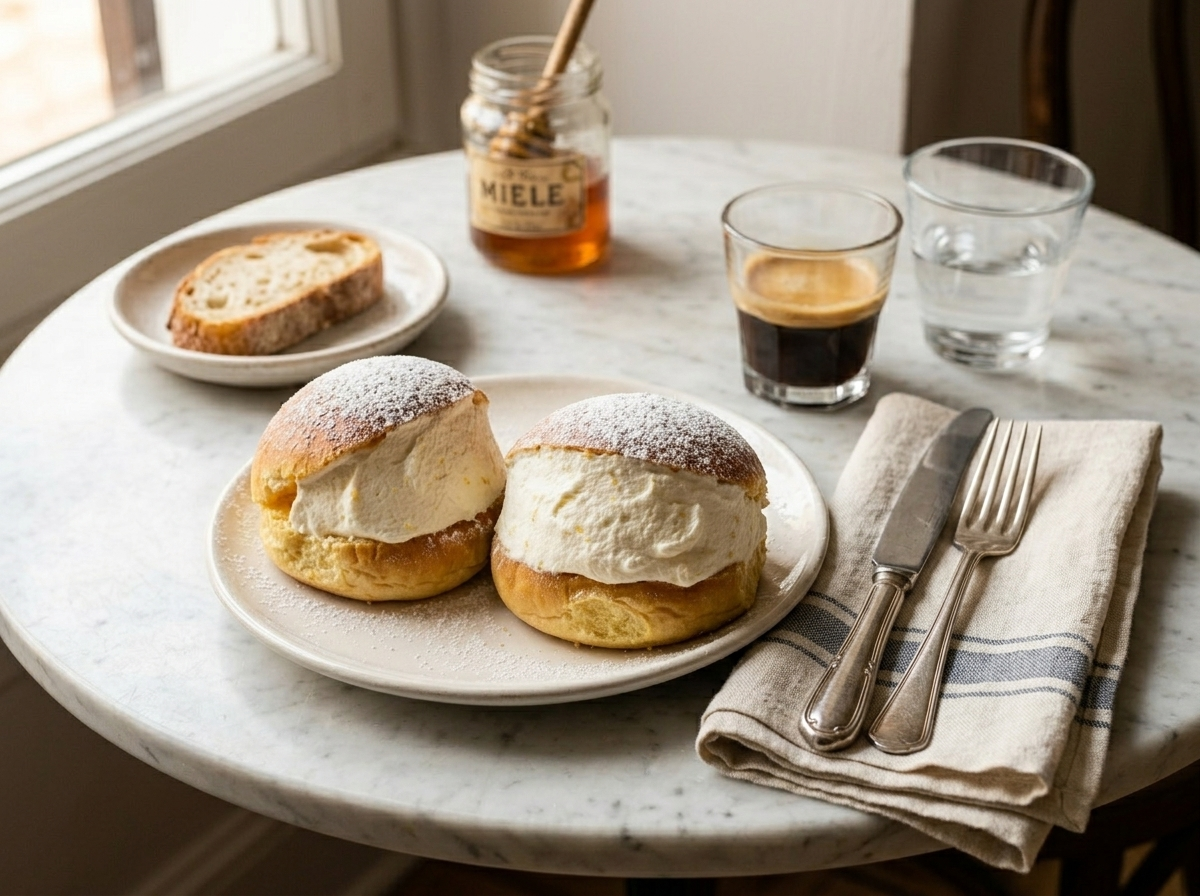
The classic Roman pairing is a short, strong espresso or a cappuccino, the same instinct behind serving bold Roman flavours with something that cuts through richness. The bitterness cuts through the cream and makes the honey notes in the bun more noticeable. Serve them cold from the fridge or at room temperature – never warm with cream inside.
For a home brunch, set the filled maritozzi on a wooden board with a small dusting of powdered sugar over the cream. They look more impressive than they were difficult to make, which is a reasonable trade.
If you’re serving a group, fill the buns just before guests arrive and keep them in the fridge uncovered for up to 30 minutes. Any longer and the cream compresses under its own weight.
FAQ
Why is my maritozzo dough not smooth after kneading?
The butter takes time to fully incorporate into enriched dough. If the dough looks greasy or lumpy, keep kneading – it comes together after 12 to 15 minutes by hand. Adding butter too fast at once is the most common cause.
Can I use all-purpose flour instead of Manitoba flour for maritozzi?
You can, but all-purpose flour has less protein, so the dough will be slightly softer and the buns may spread more during baking. The result is still good – just not quite as structured in the crumb.
Can I make the maritozzi dough the night before and bake in the morning?
After the first rise, shape the buns, place them on the baking tray, cover tightly with plastic wrap, and refrigerate overnight. Pull them out 1 hour before baking to finish the second rise at room temperature, then bake as directed.
How do I know when the whipped cream for maritozzi is firm enough to hold its shape?
The cream should hold stiff peaks and not move when you tilt the bowl. If it flows at all, it will spill out of the bun. Don’t go past stiff peaks or it will turn grainy and butter-like.
What is the difference between a maritozzo romano and a brioche col tuppo?
A maritozzo romano is an oval honey-glazed bun, enriched but not as buttery as brioche, specifically designed to be split and filled with whipped cream. A brioche col tuppo is a Sicilian round brioche, much richer and butterier, traditionally served with granita rather than cream — a pairing not unlike the light yeast cake soaked in rum syrup that defines another Italian pastry tradition built around cream and a bold contrast.
Are maritozzi romani suitable for people avoiding gluten?
No. The recipe is built on strong wheat flour, which is essential to the dough structure and rise. A gluten-free version would require a dedicated GF enriched bread blend and the result would differ significantly in texture.