Jump to Recipe
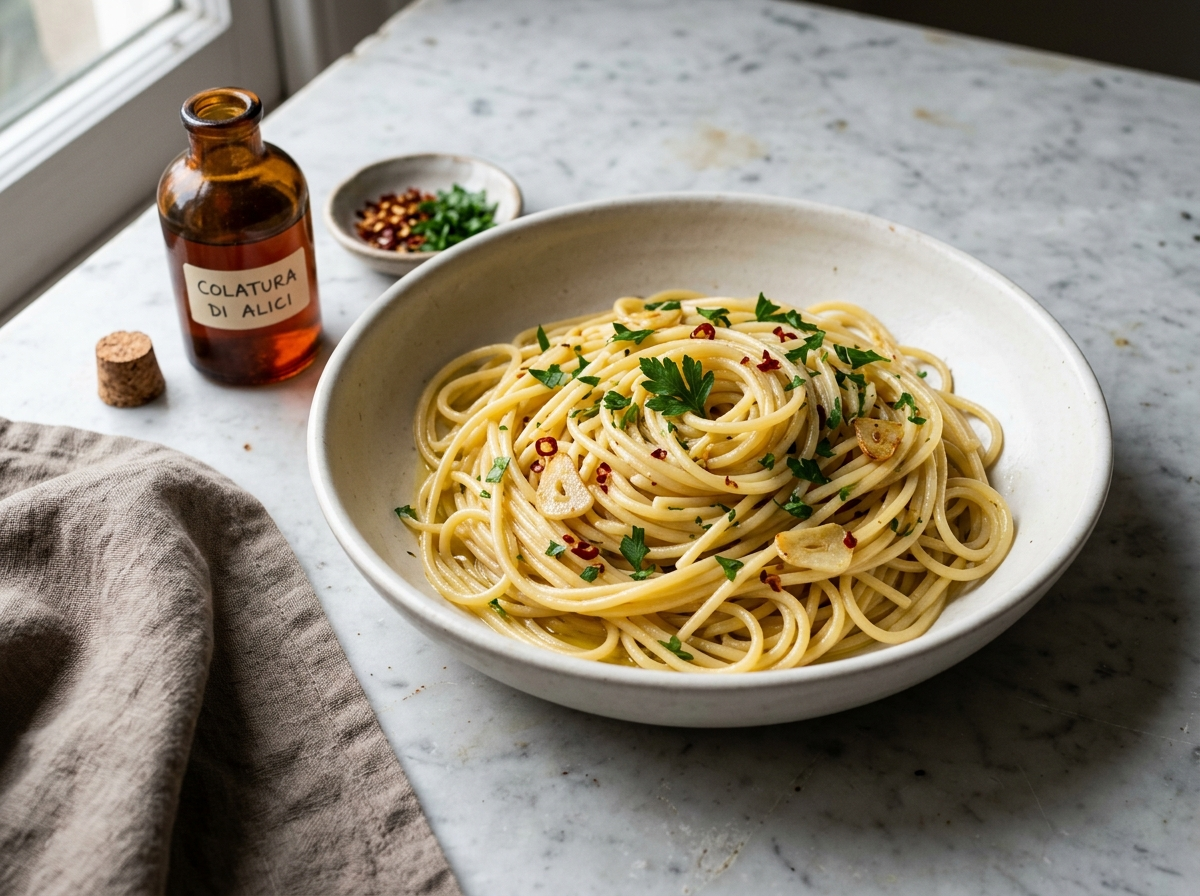
Colatura di alici is the liquid that drains from barrels of salt-cured anchovies during a months-long fermentation in Cetara, a small fishing town on the Amalfi Coast. A few drops carry more savory punch than a whole tin of anchovies.
The technique here is almost the opposite of most pasta sauces. You don’t cook the colatura. You build a raw dressing of colatura, good extra-virgin olive oil, garlic, and chili, then loosen it with a ladle of starchy pasta water just before tossing.
The heat of the freshly drained spaghetti does the rest. It blooms the garlic and chili, emulsifies the oil, and pulls the colatura into a glossy coating rather than a puddle at the bottom of the bowl.
This is weeknight food by Campanian standards – fast, pantry-driven, and completely reliant on ingredient quality over technique complexity.
Why You’ll Love This Recipe
- Five pantry ingredients deliver restaurant-level depth
- No cooked sauce – dressing takes 5 minutes to mix
- Colatura keeps in the pantry for months after opening
- Naturally dairy-free and ready faster than delivery
Ingredient Notes
- Colatura di alici: Look for Cetara-made colatura in Italian delis or online. Start with 2 tsp per serving and taste – it’s salty, so you may not need extra salt at all.
- Spaghetti: Use a bronze-die dried spaghetti (spaghetti di Gragnano works great). The rough surface holds the thin dressing better than smooth commercial pasta.
- Extra-virgin olive oil: Use a fruity, mild Sicilian or Ligurian oil here. A peppery Tuscan oil can compete with the colatura rather than carry it.
- Garlic: Slice it thin rather than mince it – you want visible pale slices in the finished dish, not a paste. Mashed garlic can turn bitter when hit with hot pasta water.
- Fresh parsley: Flat-leaf only. It adds a clean, grassy note that cuts the salt. Add it off the heat so it stays bright green.
- Dried chili flakes: Calabrian chili flakes are traditional and slightly fruity. Standard red pepper flakes work fine as a substitute.
Spaghetti con la Colatura di Alici
Ingredients
Method
- Bring a large pot of lightly salted water to a rolling boil. Use less salt than usual - about half your normal amount - since colatura is already very salty.
- Add the spaghetti and cook 1 minute less than the packet directions, stirring occasionally to prevent sticking.
- While the pasta cooks, combine the olive oil, sliced garlic, and chili flakes in a large mixing bowl. Stir briefly so the garlic is coated in oil.
- Add the colatura di alici to the bowl and stir to combine with the oil mixture. Do not heat this dressing.
- About 2 minutes before the pasta is ready, ladle 120 ml of the starchy cooking water into the bowl with the dressing. Stir until the oil and water look loosely combined.
- Drain the spaghetti and immediately transfer it to the bowl with the dressing.
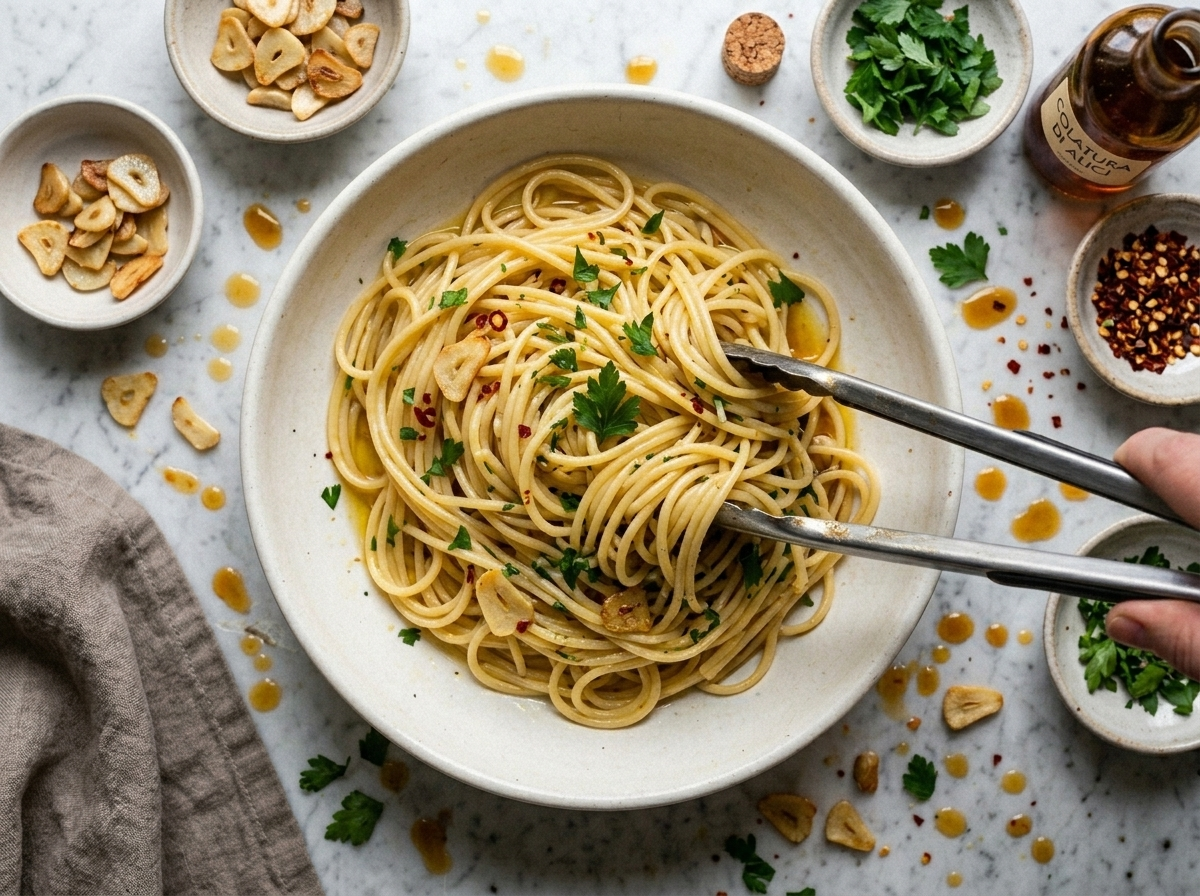
- Toss vigorously with tongs for 60 to 90 seconds, adding a splash more pasta water if the dressing looks tight, until every strand is glossy and the oil has emulsified into a light coating.
- Add the chopped parsley and toss once more. Serve straight away in warm bowls.
Notes
Tips for Success
- Reserve at least 120 ml of pasta cooking water before draining – you’ll need it to loosen the dressing.
- Cook spaghetti 1 minute less than the packet says so it finishes in the dressing without going soft.
- Mix the colatura dressing in a large bowl, not a pan – you’re not cooking it, just bringing it together with hot pasta.
- Add pasta water a splash at a time, tossing constantly, until the dressing clings to the strands rather than pools.
- Taste before adding any salt – colatura is concentrated fish sauce and the pasta water is already salted.
Variations
- Add 60 g bottarga, finely grated, over the finished pasta for a double hit of cured fish umami.
- Stir through 2 tbsp toasted breadcrumbs (pangrattato) just before serving for a crunchy Sicilian contrast.
- Use spaghettoni (thicker spaghetti) and double the rest time in the bowl so the thicker noodles absorb more dressing.
Storage and Reheating
This pasta is best eaten the moment it’s tossed. The dressing is raw oil and colatura – it doesn’t reheat cleanly.
If you have leftovers, store them in an airtight container in the fridge for up to 1 day. Reheat gently in a pan with a splash of water over low heat, tossing until just warm.
Do not freeze. The emulsion breaks on freezing and the pasta turns mushy.
Serving Suggestions
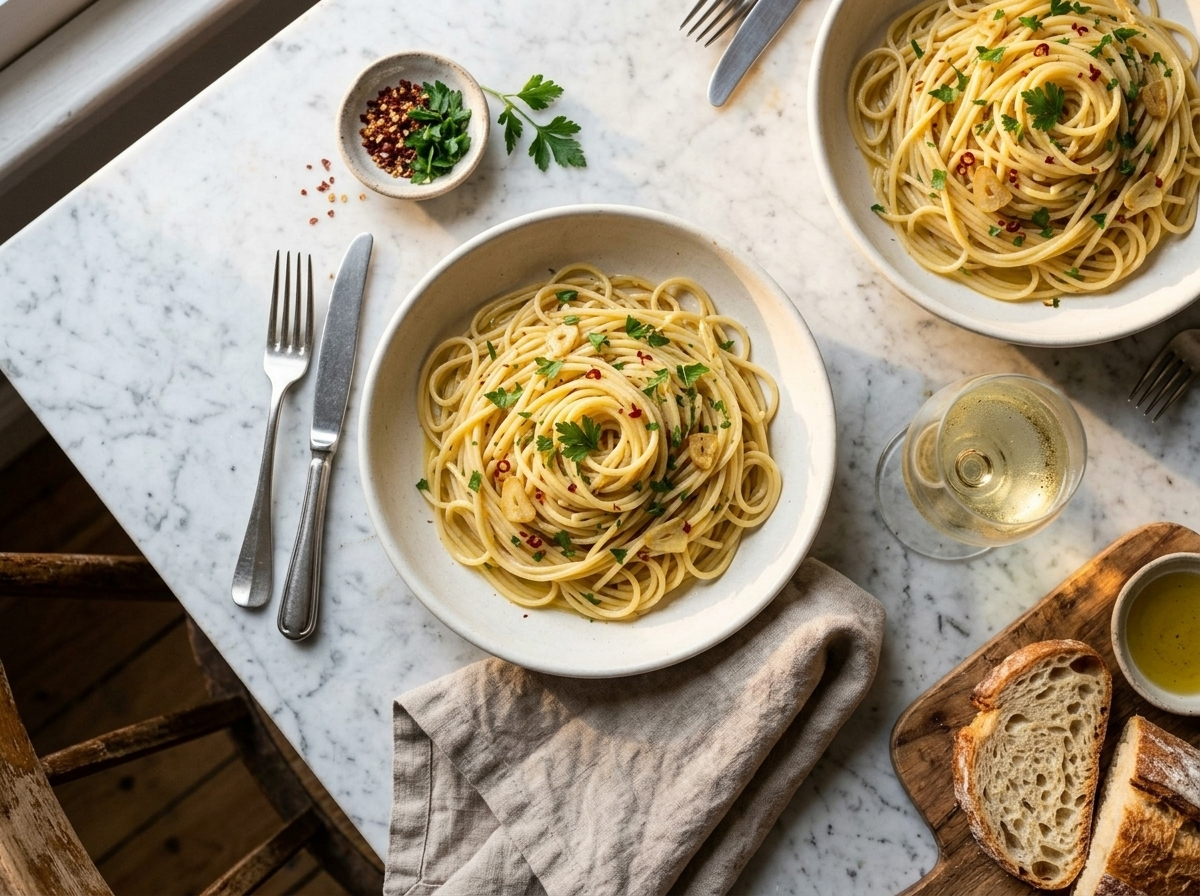
Serve straight from the bowl with no extra cheese – Parmesan and colatura compete for the same savory frequency and the result is muddy.
A glass of dry Campanian white wine like Fiano di Avellino or a crisp Falanghina works well alongside. The mineral acidity cuts through the salt.
For a fuller meal, start with a few slices of bruschetta rubbed with tomato, then follow with the spaghetti. Keep the table simple – this dish doesn’t need competition.
FAQ
Why does my spaghetti con colatura taste too salty?
Colatura is highly concentrated, so a small excess throws the whole dish off. Use no salt in the pasta water beyond a light pinch, and start with 1.5 tsp colatura per serving rather than 2. You can always add more at the table.
Can I use regular fish sauce instead of colatura di alici?
You can, but the flavor profile shifts. Fish sauce (like Thai nam pla) is sharper and more pungent. Colatura is mellower and more fermented-olive-oil in character. Use half the amount of fish sauce if substituting and taste as you go.
How do I know when the colatura dressing has emulsified properly?
The dressing should look glossy and lightly opaque rather than oily and separated. When you lift the spaghetti with tongs, it should fall back in a single coated ribbon, not drip with loose oil.
Is spaghetti con la colatura di alici gluten-free?
Not as written – it uses standard wheat spaghetti. Swap in a good bronze-die rice or corn spaghetti to make it gluten-free. The colatura itself contains no gluten, but check the label if your colatura is blended with other ingredients.
What is the difference between colatura di alici and Worcestershire sauce?
Colatura is a single-ingredient fermented anchovy extract with a clean, saline, almost sweet depth. Worcestershire sauce contains vinegar, tamarind, onion, and spices, making it tangy and complex. They’re not interchangeable in this recipe.
Can I make the colatura dressing ahead of time?
Mix the oil, sliced garlic, chili flakes, and parsley up to 2 hours ahead and leave at room temperature. Add the colatura only when the pasta is about to drain – colatura in contact with garlic for too long can turn slightly bitter.