Jump to Recipe
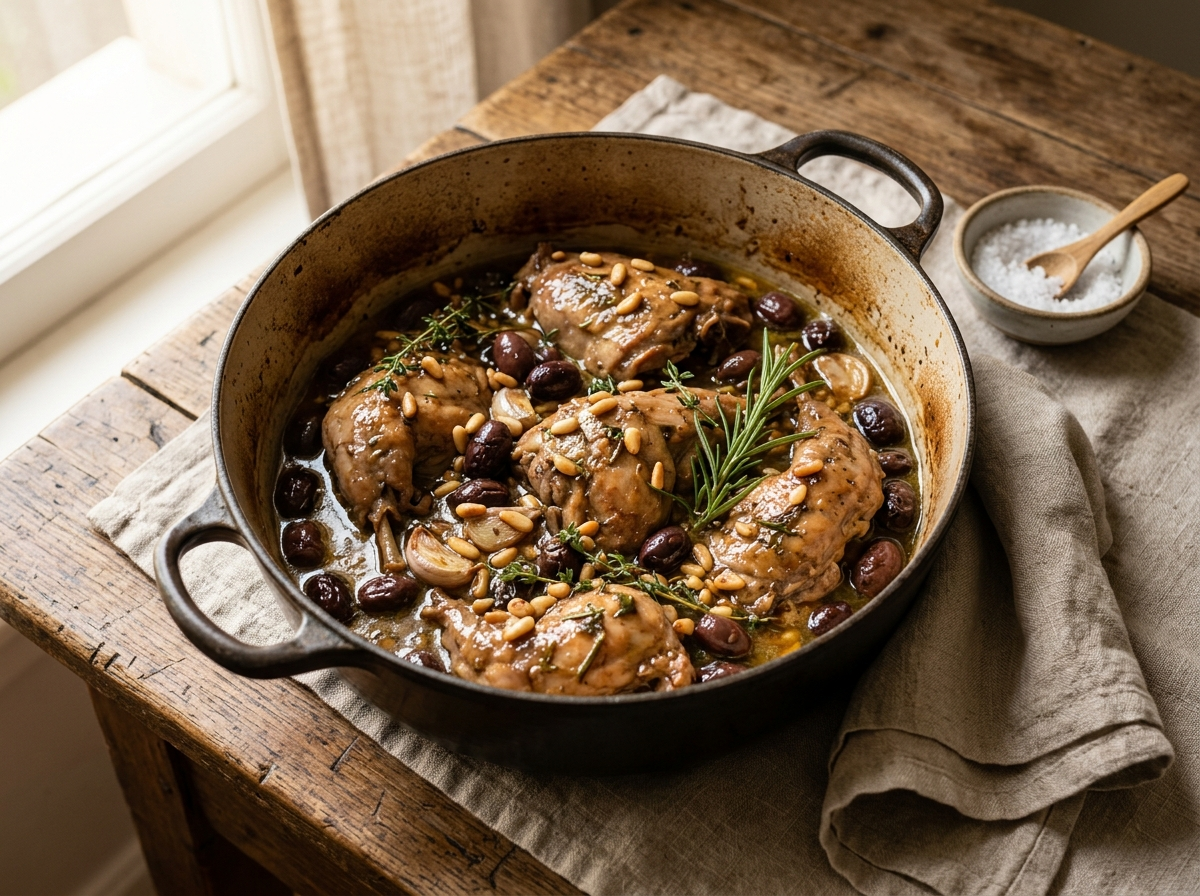
Coniglio alla Ligure is a farmhouse dish from the Ligurian hills, where rabbit has been raised for centuries alongside olive trees. The combination of taggiasca olives, pine nuts, and white wine is not decoration – it is the structural flavor of this region.
The technique is a slow braise, not a quick sauté. You brown the rabbit pieces first to build color, then let everything cook down together until the braising liquid reduces into a loose, herb-scented sauce that coats every piece.
Taggiasca olives are small, low in bitterness, and slightly buttery. They hold their shape through the long cook, which matters. If you can’t find them, Castelvetrano olives are a closer substitute than standard black olives from a can.
This is a practical weeknight dish if you buy the rabbit pre-cut. The hands-on time is short – the oven or a covered pot does the rest.
Why You’ll Love This Recipe
- Taggiasca olives and pine nuts build real depth
- One pot from sear to table, minimal cleanup
- Rabbit stays moist because the braise protects it
- Make-ahead friendly – flavor improves overnight
Ingredient Notes
- Rabbit: Ask your butcher to joint the rabbit into 6-8 pieces. Farmed rabbit is milder and cooks more evenly than wild. If rabbit is unavailable, bone-in chicken thighs work with the same method and timing.
- Taggiasca olives: The small, pitted Ligurian olives sold in brine or oil. Castelvetrano olives are a reasonable swap. Avoid kalamata here – the sharpness throws the balance off.
- Pine nuts: Toast them dry in a skillet for 2 minutes before adding to the pot. This stops them from turning soggy during the braise.
- Dry white wine: A Ligurian Vermentino or Pigato is traditional. Any dry, clean white wine works – avoid anything oaked or very aromatic.
- Fresh rosemary: One full sprig is enough for the braise. Add a second sprig in the last 10 minutes if you want a brighter herb note at the finish.
- Garlic: Whole peeled cloves, not minced. They soften into the sauce over the long cook and add sweetness rather than sharpness.
- Extra-virgin olive oil: Use a Ligurian or other mild, fruity olive oil here. The grassy intensity of a Sicilian oil competes with the taggiasca olives.
Coniglio alla Ligure: Rabbit Braised with Olives, Pine Nuts, and White Wine
Ingredients
Method
- Pat the rabbit pieces completely dry with paper towels. Season all sides with salt and black pepper.
- Heat the olive oil in a 5-quart Dutch oven over medium-high heat until shimmering. Add half the rabbit pieces in a single layer and sear for 4-5 minutes per side until deep golden brown. Transfer to a plate and repeat with the remaining pieces.
- Reduce the heat to medium. Add the whole garlic cloves to the same pot and cook for 1-2 minutes, stirring occasionally, until pale gold and fragrant.
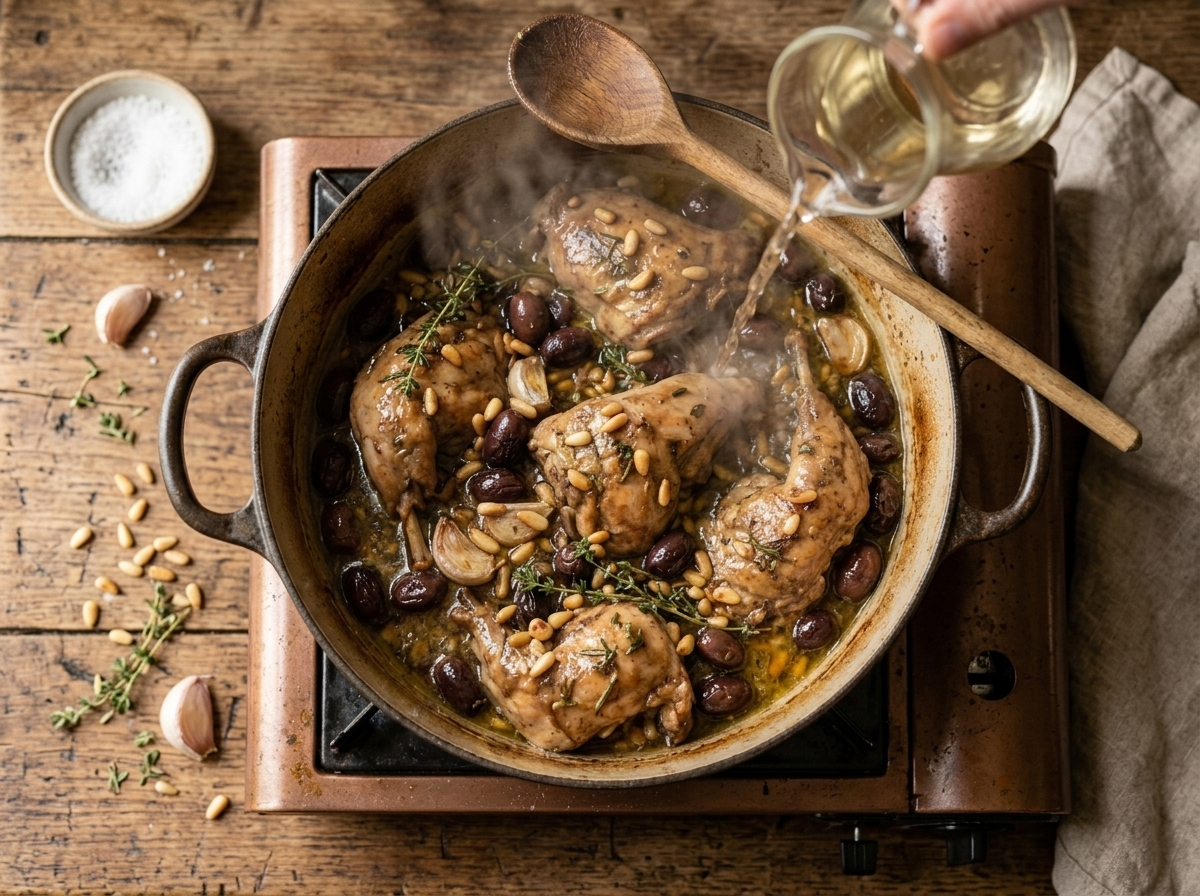
- Pour in the white wine and scrape the bottom of the pot with a wooden spoon to release all the browned bits. Let the wine bubble for 2 minutes.
- Return all the rabbit pieces to the pot. Add the chicken stock, one rosemary sprig, thyme sprigs, and bay leaves. The liquid should come about one-third of the way up the rabbit pieces.
- Bring to a gentle simmer, then cover with a tight-fitting lid and cook over low heat for 30 minutes.
- Add the pitted taggiasca olives and toasted pine nuts to the pot. Stir gently to distribute them around the rabbit.
- Re-cover and continue to braise over low heat for a further 20 minutes, until the rabbit meat pulls easily from the bone.
- Remove the lid, add the second rosemary sprig, and increase the heat to medium. Cook uncovered for 5-8 minutes to reduce and concentrate the braising liquid into a loose sauce.
- Remove and discard the bay leaves, thyme sprigs, and rosemary sprigs. Taste and adjust salt if needed. Rest covered for 10 minutes before serving.
Notes
Tips for Success
- Pat the rabbit pieces completely dry before searing, or they’ll steam instead of browning.
- Brown the rabbit in two batches to keep the pan hot enough for a proper crust.
- Deglaze with white wine and scrape the pan bottom before adding the olives and pine nuts.
- Keep the braise at a gentle simmer, not a rolling boil, so the rabbit stays tender and doesn’t toughen.
- Rest the finished dish covered for 10 minutes off the heat before serving to let the sauce settle.
Variations
- Add a handful of dried apricots with the olives for a sweet-savory Ligurian agrodolce note.
- Stir in two anchovy fillets when frying the garlic for deeper, saltier background flavor.
- Use bone-in chicken thighs instead of rabbit and reduce the braise time to 35 minutes.
Storage and Reheating
Store leftovers in an airtight container in the refrigerator for up to 3 days. The olive and pine nut sauce deepens overnight, so this is worth making a day ahead.
To reheat, place the rabbit pieces and sauce in a covered pan over low heat with a splash of water or white wine. Warm for 10-12 minutes until heated through. Avoid microwaving on high – the rabbit dries out.
Coniglio alla Ligure freezes well for up to 2 months. Freeze in the braising liquid to protect the meat. Thaw overnight in the refrigerator before reheating gently on the stovetop.
Serving Suggestions
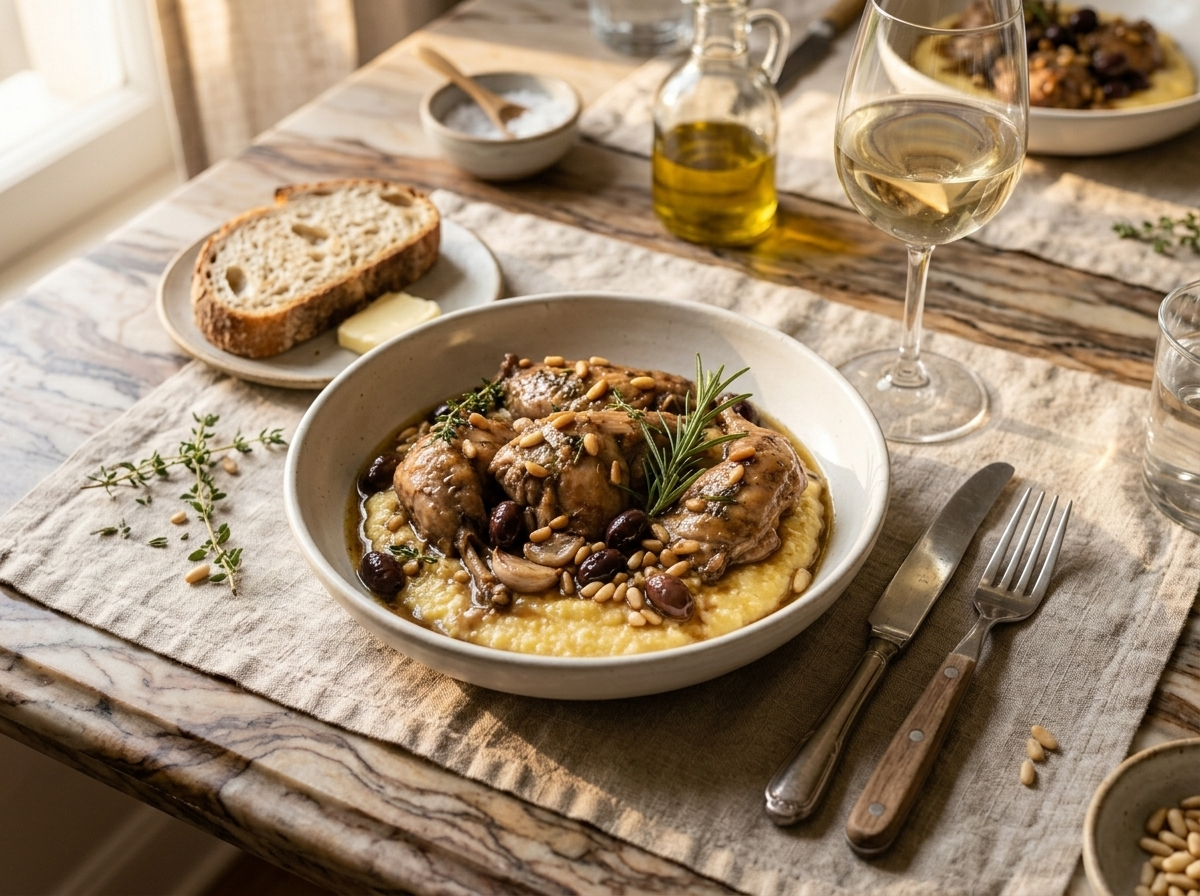
Serve over soft polenta to catch the olive-pine nut sauce, or alongside a thick slice of grilled bread rubbed with garlic. Ligurian focaccia is the traditional pairing and works here for the same reason.
A simple green salad dressed with lemon and olive oil is enough on the side. The rabbit dish is rich but not heavy, so you don’t need a starchy side unless you want one.
For wine, go with a Ligurian Vermentino or a light northern Italian red like Dolcetto d’Alba, the same kind of pairing that works alongside Italian spicy grilled chicken. The wine you used in the braise is always a safe match at the table.
FAQ
Why is my coniglio alla Ligure dry after braising?
Rabbit dries out when the braise runs too hot or too long. Keep the heat at a low simmer and check the rabbit at 45 minutes – the meat should pull gently from the bone but not fall apart. A tight-fitting lid also helps retain moisture.
Can I use Castelvetrano olives instead of taggiasca olives in this recipe?
Yes, Castelvetrano is the closest swap in terms of mild flavor and buttery texture. Avoid standard canned black olives – they go soft and bitter during the long cook.
Can I make coniglio alla Ligure the day before serving?
This dish actually improves after a night in the refrigerator. The olives, pine nuts, and herbs have more time to work into the sauce. Cool it fully before refrigerating and reheat gently on the stovetop with a splash of wine.
What is the difference between coniglio alla Ligure and coniglio all’ischitana?
Coniglio all’ischitana is the Neapolitan island version, cooked with tomato, chili, and white wine but without olives or pine nuts — a tradition that echoes the bold pantry approach behind dishes like Neapolitan tomato and olive pasta. The Ligurian version relies on taggiasca olives and pine nuts for its character, with no tomato in the sauce.
Is coniglio alla Ligure gluten-free?
The dish as written contains no wheat, flour, or gluten ingredients. Just confirm your white wine and any olives in brine are labeled gluten-free if you’re cooking for someone with celiac disease.
What goes well with coniglio alla Ligure besides bread?
Soft polenta is the most practical base for soaking up the olive and pine nut sauce. Boiled or roasted potatoes work too. A crisp Ligurian Vermentino ties together the herbaceous, briny notes in the dish.