Jump to Recipe
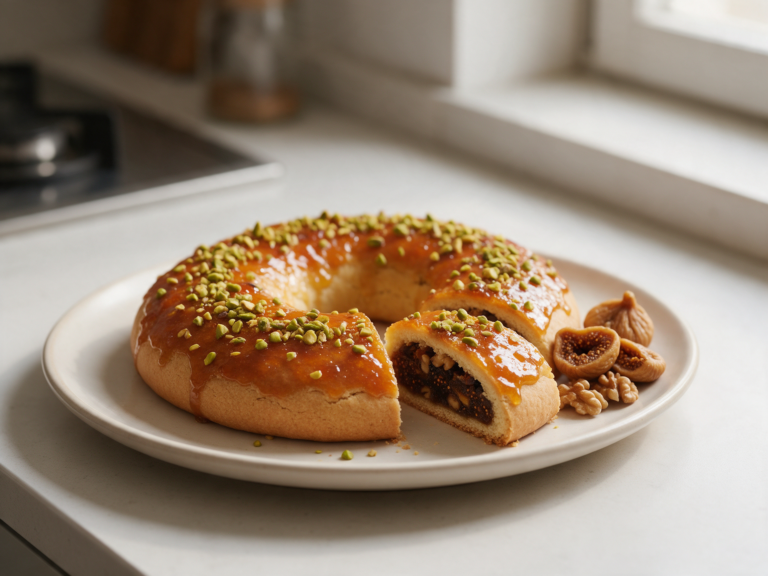
Buccellato siciliano is a Christmas ring from Sicily, a buttery shortcrust wrapped around a dense filling of dried figs, walnuts, almonds and orange. This fig and nut Christmas ring bakes at 180 C / 350 F for about 40 minutes and cuts into 12 slices.
The filling is the part to get right. Figs, toasted nuts, Marsala and orange zest are pulsed to a coarse paste, not a smooth jam, so every slice shows flecks of nut and a little chew from the fruit.
The dough is a simple butter shortcrust, closer to a crostata base than a bread. It stays tender because you handle it as little as possible and chill it for 60 minutes before rolling.
It’s also a good make-ahead bake. The flavors settle overnight, and the ring keeps for 5 days.
Why You’ll Love This Recipe
- Filling comes together in a food processor in minutes
- Keeps 5 days and tastes better on day two
- Butter shortcrust rolls cleanly once it has chilled
- Built from pantry dried fruit and nuts, no yeast
Ingredient Notes
- dried figs: Use soft figs such as Turkish or Calimyrna. If they feel leathery, soak them in hot water for 15 minutes, drain and pat dry before trimming the stems.
- Marsala: Sweet or dry Marsala both work. Orange juice is a straightforward alcohol-free swap, though the filling tastes a little brighter and less deep.
- candied orange peel: Look for soft, diced peel in the baking aisle. If you can’t find it, use the zest of a second orange and chopped dried apricots.
- walnuts and almonds: Pistachios or hazelnuts can replace either one. Toast them first, because raw nuts taste flat against the sweet figs.
- butter: Traditional versions often use lard for a shorter crumb. Cold unsalted butter gives a similar tenderness and a cleaner flavor.
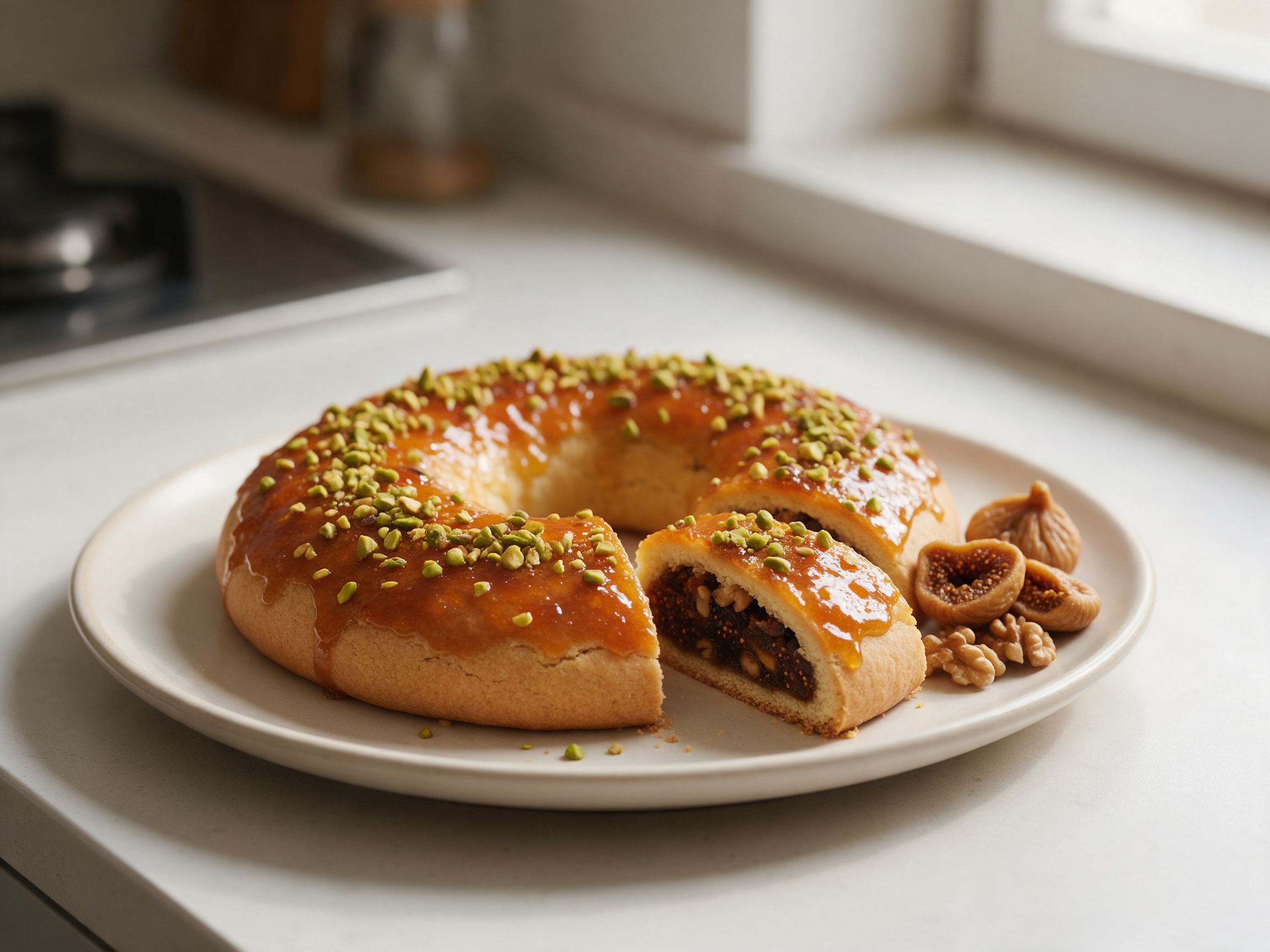
Buccellato Siciliano Christmas Ring with Fig and Nuts
Ingredients
Method
- Toast the walnuts and almonds in a dry 24 cm / 10-inch skillet over medium heat for 4 to 5 minutes, shaking often, until fragrant. Tip them onto a plate to cool.
- Pulse the figs, raisins, candied peel, Marsala, honey, orange zest and cinnamon in a 2.6 L / 11-cup food processor about 20 times, until a coarse, sticky paste forms. Add the cooled nuts and chocolate and pulse 6 to 8 times, until the nuts are pea-sized. Scrape the filling onto parchment and set aside.
- Whisk the flour, sugar, baking powder and salt in a 28 cm / 11-inch bowl. Rub in the cold butter with your fingertips until the mixture looks like coarse sand. Stir in the eggs and lemon zest with a fork, then press into a dough, adding cold water a teaspoon at a time only if it's crumbly. Flatten into a rectangle, wrap and chill for 60 minutes.
- Heat the oven to 180 C / 350 F and line a sheet pan (33 x 46 cm / 13 x 18 inch) with parchment. Roll the dough between two sheets of parchment into a 55 x 18 cm rectangle, 5 mm thick, working in sections and patching any gaps with scraps.
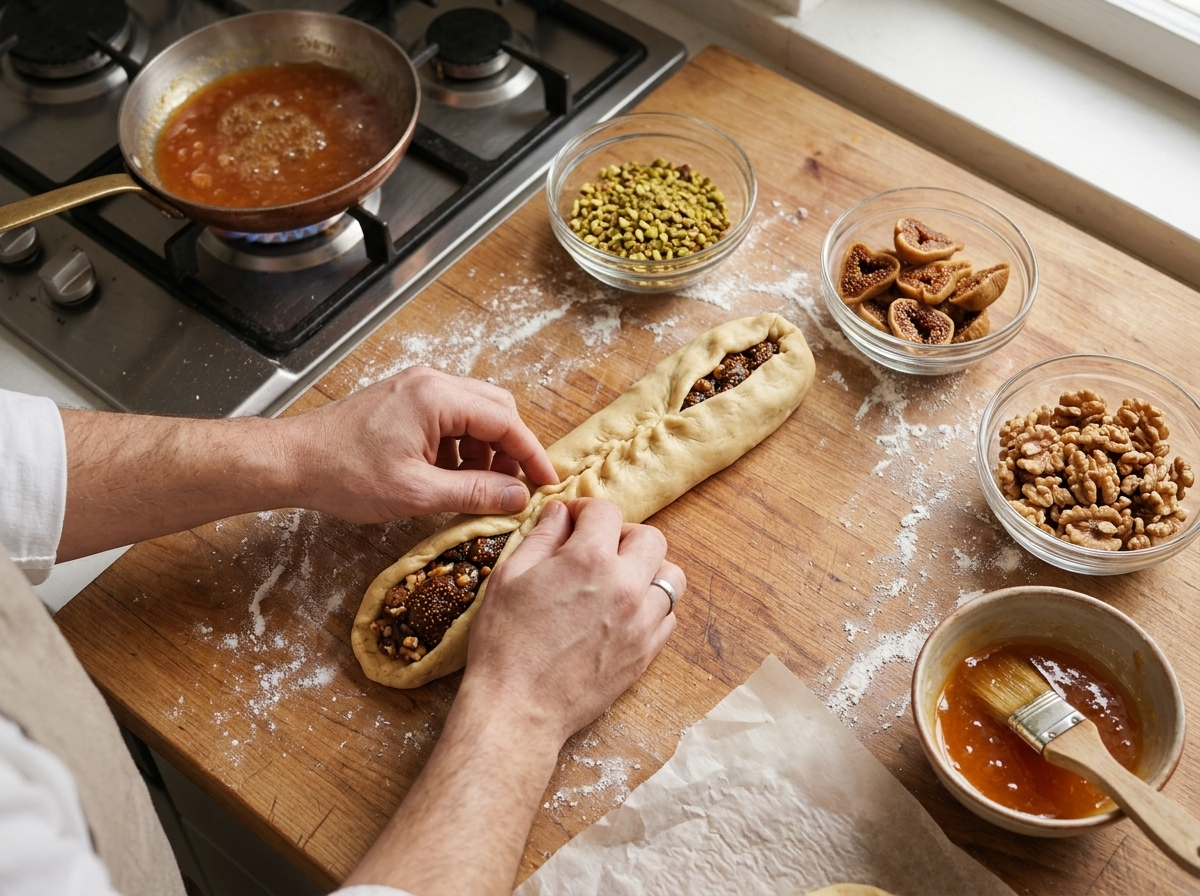
- Roll the filling into a 55 cm log, about 4 cm thick, and lay it along one long edge of the dough, 2 cm in from the edge. Lift the parchment to fold the dough over the log, trim the overlap and pinch the seam firmly shut. Using the parchment as a sling, set the log seam-side down on the sheet pan, curve it into a ring about 18 cm across and press the ends together.
- Beat the egg with the milk and brush it over the ring. Cut shallow slits every 3 cm with a small sharp knife, through the dough only. Bake for 38 to 42 minutes, until the crust is deep golden and firm to the touch.
- Warm the jam with 1 tbsp water in a small bowl in the microwave for 20 seconds. Cool the ring on the pan for 15 minutes, brush with the jam and scatter the pistachios. Slide it onto a rack and cool completely, about 60 minutes in all, before slicing with a serrated knife.
Notes
- Toast the nuts in a dry skillet for 4 to 5 minutes until fragrant.
- Keep the dough at 5 mm thick so the ring holds its shape.
- Cool the ring for 60 minutes before slicing so the filling sets.
- Make the filling up to 5 days ahead and keep it chilled.
Tips for Success
- Trim the hard stems from the figs before processing, since they stay woody and show up as tough bits in the slice.
- Pulse the nuts in last, in short bursts, so they stay pea-sized instead of turning into a uniform paste.
- Roll the dough between two sheets of parchment and lift with the paper, so the long strip moves without tearing.
- Press the seam firmly and set it face down on the pan, because a loose seam splits in the oven and leaks filling onto the parchment.
- Slice with a serrated knife once the ring has cooled completely, using a gentle sawing motion so the crust doesn’t crack.
Variations
- Swap the walnuts and almonds for pistachios and hazelnuts, and use orange juice instead of Marsala for an alcohol-free ring.
- Replace the candied orange peel with 50 g of chopped dried apricots for a tarter, less sweet center.
- Skip the jam glaze and brush with a simple icing of 100 g powdered sugar and 1 tbsp lemon juice, then add sprinkles.
Storage and Reheating
Buccellato keeps for 5 days at room temperature, wrapped in parchment and then foil, or in an airtight tin. The filling is mostly dried fruit and nuts, so it doesn’t need the fridge, and the flavors deepen after the first day.
To freeze, wrap the cooled ring or individual slices tightly and freeze for up to 2 months. Thaw at room temperature, still wrapped, for 3 to 4 hours.
Slices taste best at room temperature. If you want one warm, heat it on a sheet pan at 150 C / 300 F for 8 minutes.
Serving Suggestions
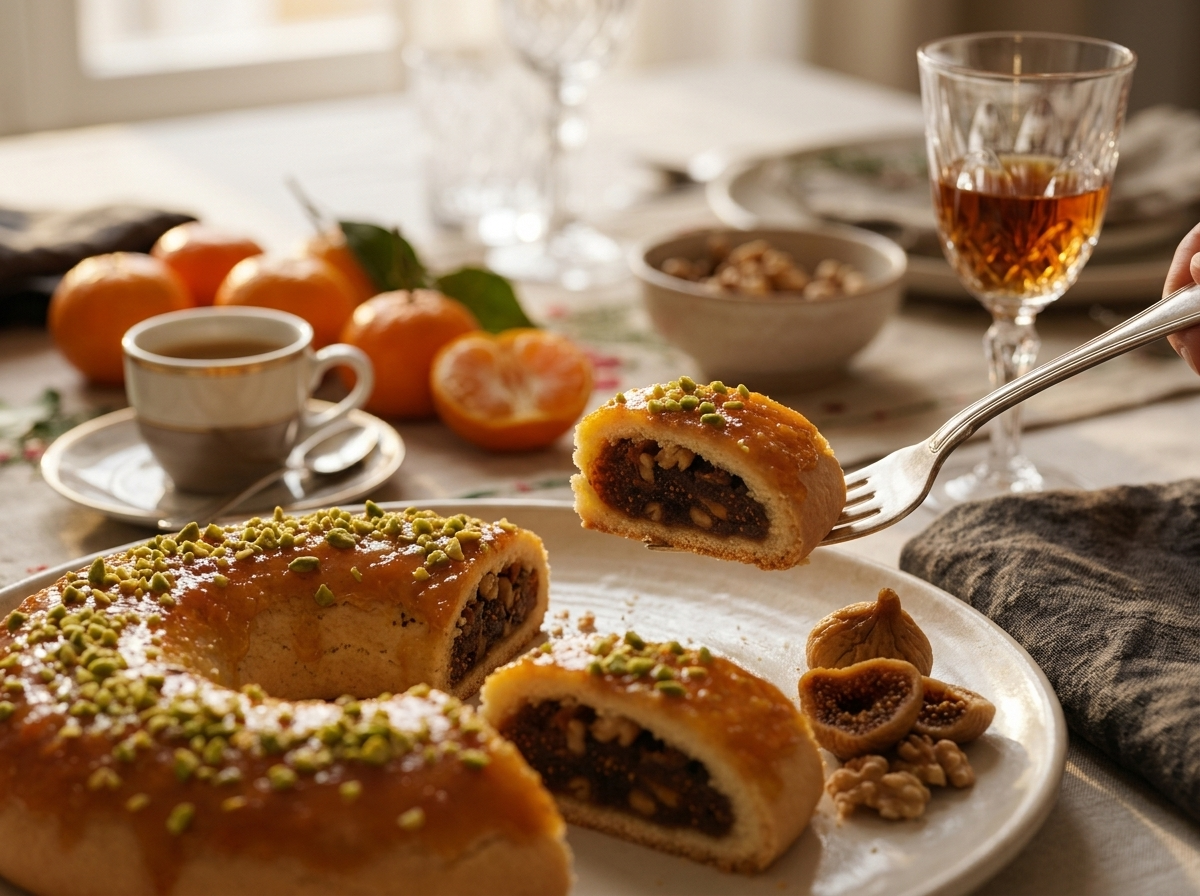
Cut buccellato siciliano into 12 small slices, because the filling is dense and sweet. Set the whole ring on a board and let guests cut their own.
Serve it after dinner with espresso, or with a small glass of sweet Marsala or Passito di Pantelleria. The bitterness of the coffee and the honeyed wine both work against the figs.
For a Christmas brunch plate, add whole-milk ricotta stirred with a spoonful of honey and a few clementine segments.
FAQ
How do I know when buccellato siciliano is baked through?
A buccellato is done when the crust is deep golden, the base looks golden when you lift the ring with a spatula, and the surface feels firm when pressed. At 180 C / 350 F this takes 38 to 42 minutes. Pale dough at the seam means it needs more time.
Can I use fig jam instead of dried figs in buccellato?
Only partly. Fig jam is too wet on its own and tends to leak through the seam, so mix 250 g of thick jam with the nuts, raisins and 3 tbsp fine breadcrumbs to absorb the moisture. Dried figs give the denser, chewier slice that defines a buccellato.
Can I make the buccellato filling ahead of time?
Yes. The fig and nut filling keeps for 5 days in a covered container in the fridge, and the shortcrust dough keeps 2 days wrapped in the fridge. Let both sit at room temperature for 20 minutes before shaping so the filling molds easily and the dough doesn’t crack when rolled.
What wine goes with buccellato siciliano?
Sweet Marsala, Moscato d’Asti or Passito di Pantelleria all work, since their honeyed fruit matches the figs. Espresso is the usual non-alcoholic choice because its bitterness cuts through the sweet filling. Serve small slices, as the ring is dense.
Is buccellato siciliano gluten free or nut free?
No, it’s neither as written. The dough uses wheat flour, butter and eggs, and the filling relies on walnuts and almonds. A 1:1 gluten-free flour blend should work for the crust, though the dough is more fragile, so roll it closer to 6 mm and chill it again if it softens.
What is the difference between buccellato and cucciddatu?
Cucciddatu (cuccidati) are small individual fig cookies, while buccellato is one large ring with a similar fig and nut filling. Both are Sicilian Christmas sweets. Don’t confuse it with buccellato di Lucca, a Tuscan sweet bread flavored with anise and raisins, which is a different recipe entirely.