
Jump to Recipe
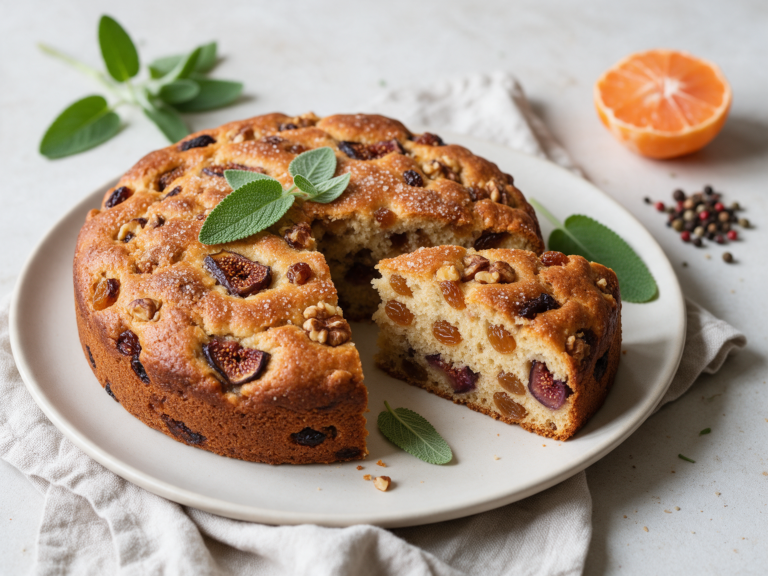
Cotizza dolce di Berbenno is a soft, lightly sweet cake from Berbenno di Valtellina, in the Alps of northern Lombardy. This version is a yeasted dough studded with figs, raisins and walnuts, then scented with a few chopped leaves of erba di San Pietro, also known as costmary.
Family versions differ from house to house, so treat this as my home adaptation rather than a fixed rule. The costmary is the part to watch. Its flavor sits between mint and balsam with a bitter edge, and more than about 8 leaves turns the whole cake medicinal.
You’ll need two rises, 100 minutes in total, but almost none of that is hands-on. The dough comes together in 10 minutes of kneading and the cake bakes in 35.
It slices cleanly once cooled and tastes better on day two, when the herb has settled into the crumb.
Why You’ll Love This Recipe
- Two rises, but only about 40 minutes of real work
- Pantry fruit and nuts, no special equipment needed
- Keeps soft for 4 days and improves on day two
- Costmary gives a cool, resinous note you won’t find in store cakes
Ingredient Notes
- erba di San Pietro (costmary): Use fresh leaves, finely chopped, and weigh them. Fresh spearmint is the closest substitute, about 6 leaves, and the result is brighter and less balsamic.
- dried figs: Choose soft, plump figs and cut off the hard stems. If they feel stiff, soak them 5 minutes longer in the grappa and water.
- grappa: It sharpens the fruit and carries the herb flavor. Dark rum or warm water with a squeeze of lemon works if you’d rather skip alcohol.
- walnuts: Toast them for 6 minutes at 160 C / 320 F if they taste flat. Cool them before adding so they don’t warm the dough.
- all-purpose flour: Type 0 flour or bread flour both work. Bread flour gives a slightly chewier crumb, which I find less suited to this cake.
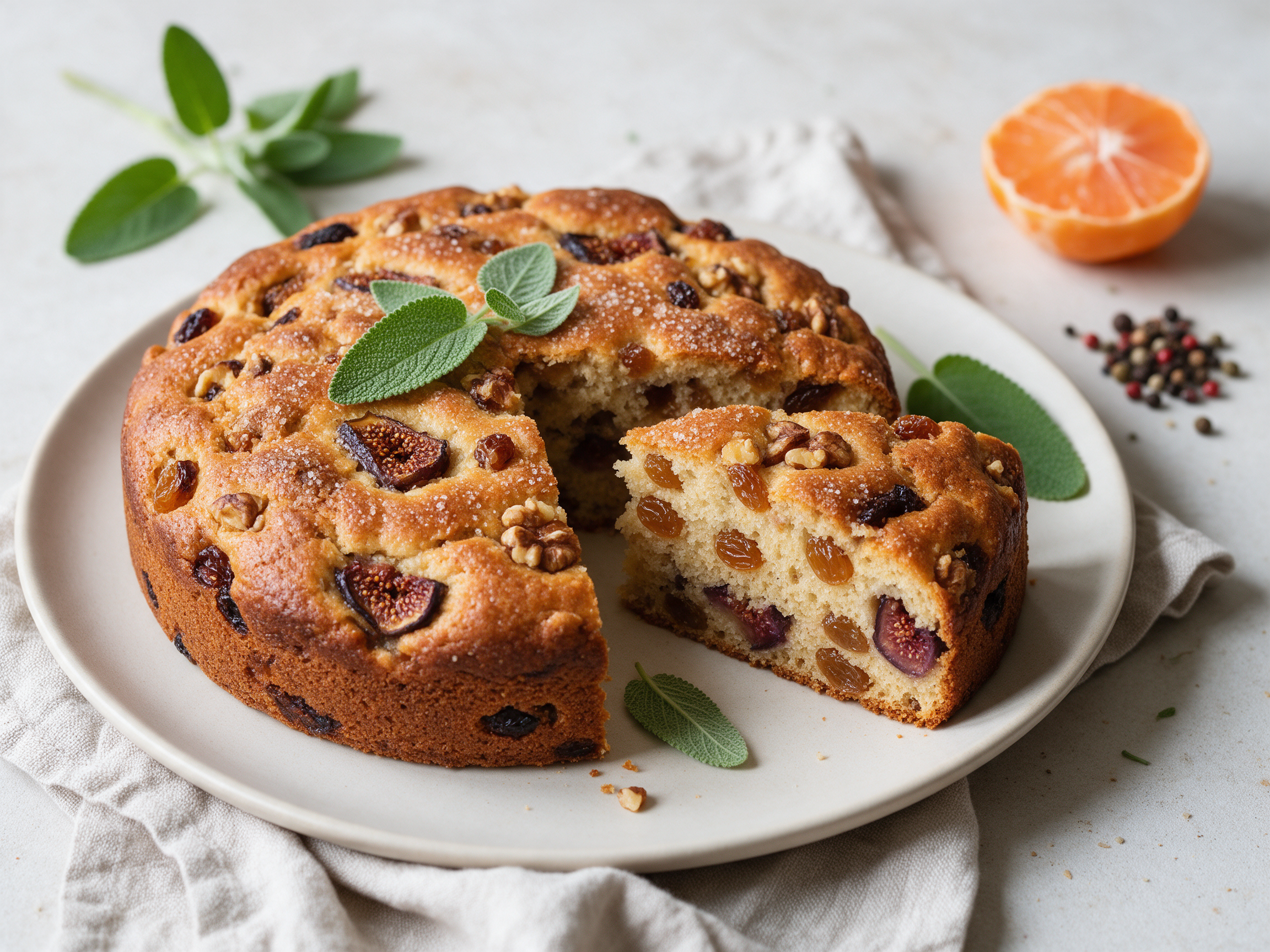
Cotizza Dolce di Berbenno with Erba di San Pietro and Figs
Ingredients
Method
- Whisk the flour, yeast, sugar, salt and lemon zest in a 4-quart / 3.8 L bowl. Add the lukewarm milk and egg and mix until shaggy. Knead on a lightly floured counter for 5 minutes, add the soft butter in three pieces, then knead 5 more minutes until the dough is smooth, slightly tacky and springs back when pressed.
- Return the dough to the bowl, cover, and let it rise at about 24 C / 75 F for 60 minutes until doubled. While it rises, soak the raisins and chopped figs in the grappa and warm water for 15 minutes or longer, then drain well and pat dry on a towel.
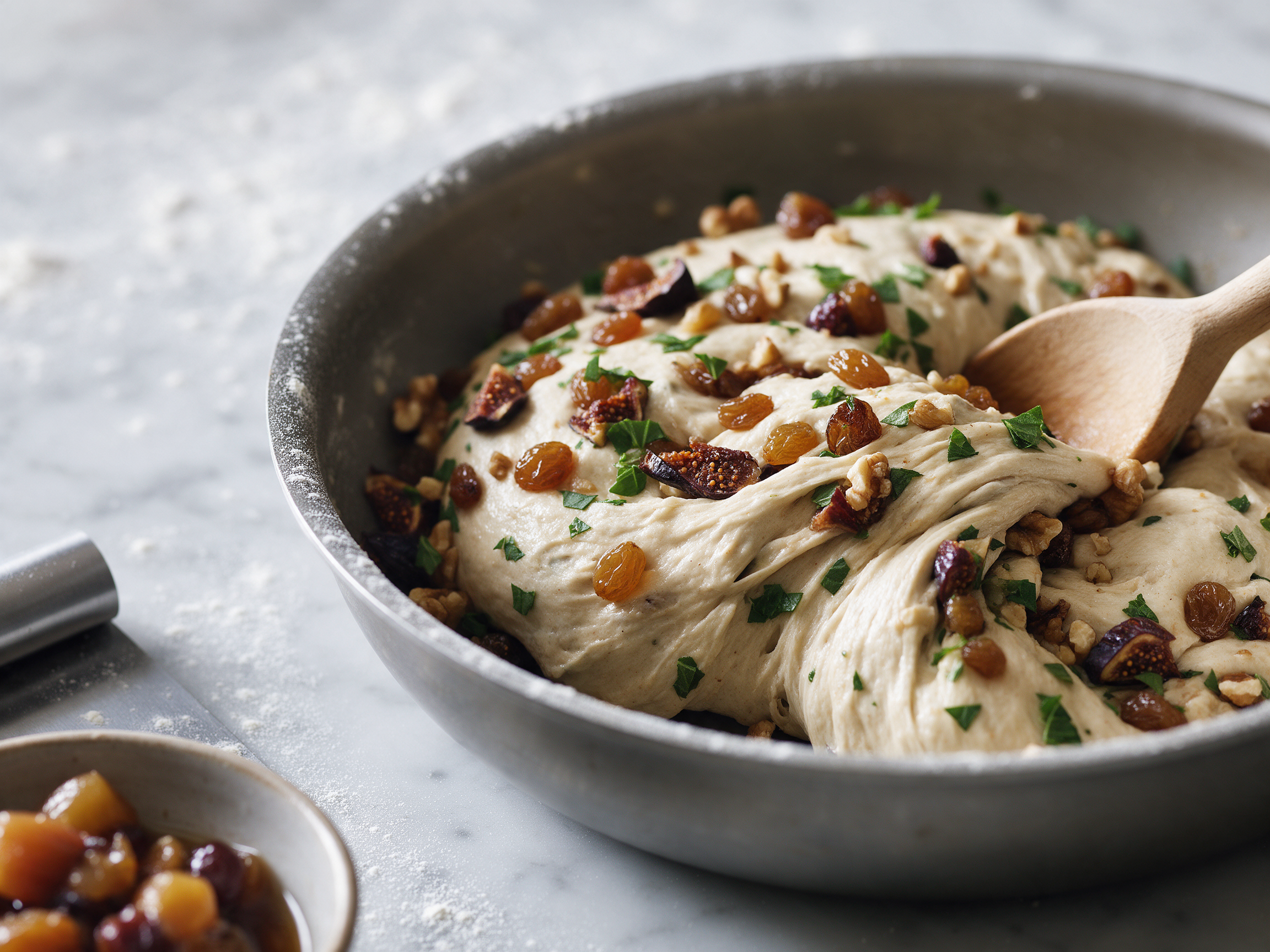
- Punch down the dough and flatten it into a rough 25 x 20 cm rectangle. Scatter the fruit, walnuts and chopped erba di San Pietro over it, fold the dough over, and knead for 1 minute, dusting with a little flour, until the fruit is evenly spread.
- Butter a 23 cm / 9-inch springform pan and line the base with parchment. Shape the dough into a ball and press it edge to edge to a thickness of about 3 cm. Cover and let it rise for 40 minutes until puffy and slow to spring back when poked. Heat the oven to 180 C / 355 F for the last 15 minutes.
- Brush the top with milk and sprinkle with coarse sugar. Bake for 35 minutes until deep golden and a thermometer in the center reads 93 C / 200 F. If the top is already dark at minute 25, tent it with foil.
- Cool in the pan for 10 minutes, release the springform, and move the cake to a wire rack. Let it cool for 20 more minutes so the crumb sets, then cut into 10 wedges with a serrated knife.
Notes
- Weigh the costmary leaves. Over 4 g makes the whole cake taste bitter.
- Drain and pat the soaked fruit dry before folding it into the dough.
- Press the dough edge to edge in the pan for an even 3 cm layer.
- Wait the full 30 minutes before slicing so the crumb sets.
Tips for Success
- Chop the costmary very fine and weigh it, because 4 g is the ceiling and the flavor deepens as the cake rests overnight.
- Pat the soaked figs and raisins dry on a towel so extra liquid doesn’t leave gummy pockets around the fruit.
- Keep the dough slightly tacky after kneading, since folding in the fruit with a light dusting of flour will firm it up.
- Press the dough into the pan edge to edge, about 3 cm thick, so the cake rises evenly instead of doming.
- Tent the top with foil at minute 25 if it’s already deep golden, then check the center for 93 C / 200 F.
Variations
- Swap the raisins for dried sour cherries or chopped prunes for a tarter, darker crumb with the same soaking method.
- Replace 60 g of the flour with buckwheat flour for a nutty, slightly denser cake that nods to Valtellina’s pantry.
- Use hazelnuts instead of walnuts, toasted and roughly chopped, for a rounder, less bitter nut flavor.
Storage and Reheating
Cotizza dolce di Berbenno keeps for 4 days at room temperature, about 20 C / 68 F, wrapped in a clean kitchen towel or stored in an airtight tin. Skip the fridge, which dries the crumb and dulls the costmary.
To reheat, warm a wedge in a 150 C / 300 F oven for 8 minutes. The crust softens slightly and the walnuts crisp back up.
For longer storage, slice the cooled cake, wrap each wedge in parchment, and freeze in a bag for up to 2 months. Thaw for 1 hour at room temperature before warming.
Serving Suggestions
Cotizza dolce works best at room temperature or gently warmed, cut into 10 wedges with a serrated knife. It’s only lightly sweet, so it suits breakfast as much as dessert.
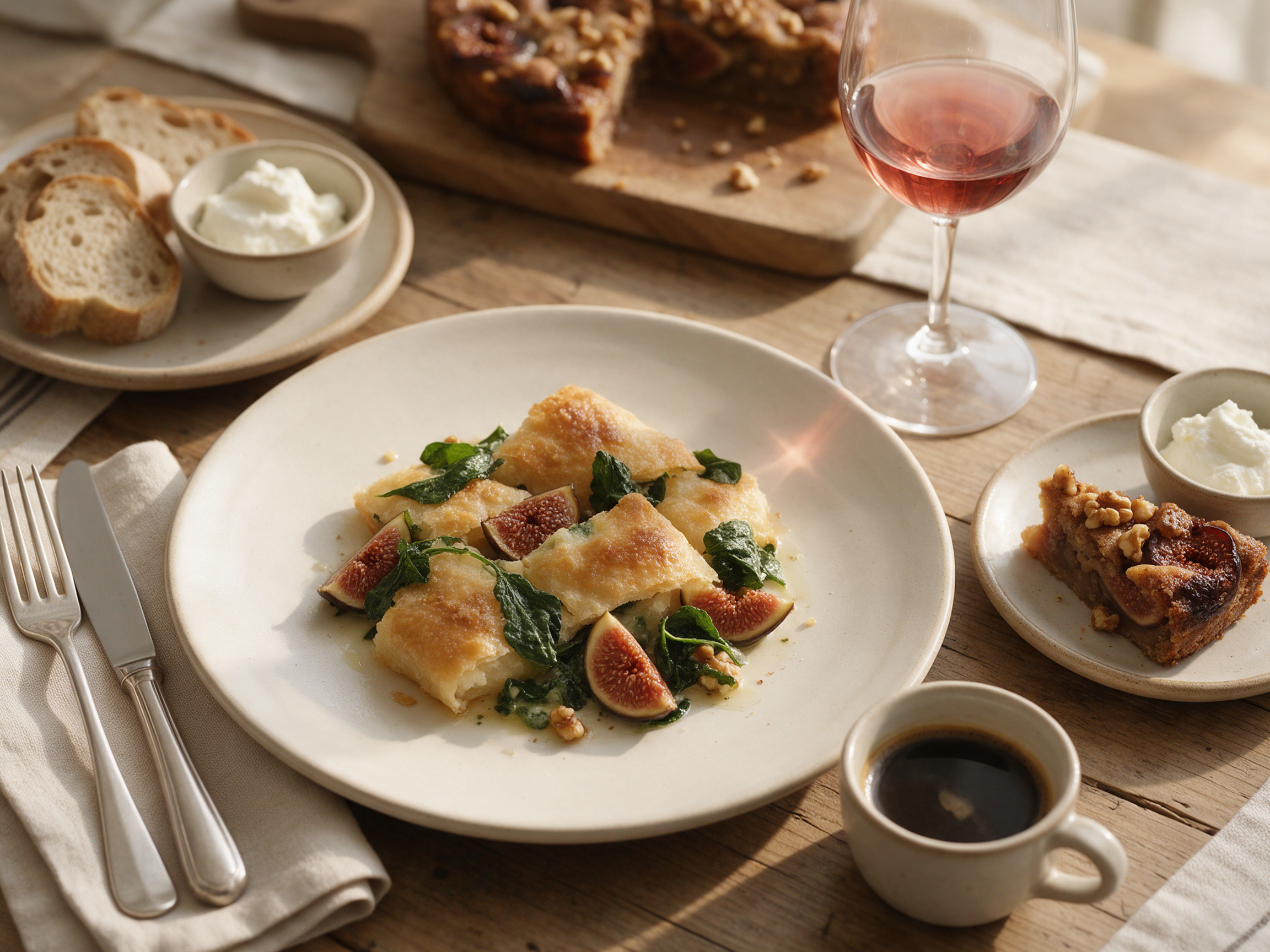
Spoon fresh ricotta alongside, or add a thin spread of butter on a warm slice. Strong black coffee balances the figs.
After dinner, serve a small wedge with a glass of passito or moscato. A few slices of young Casera on the side suit anyone who likes sweet and savory together.
FAQ
Why does my cotizza taste bitter or medicinal?
Too much erba di San Pietro is the usual cause. Costmary has a camphor-like, minty bitterness, so keep it to about 8 leaves (4 g) for the whole 23 cm cake and chop them finely so they spread evenly. If your leaves are large or old, use fewer and taste one raw first.
How do I know when cotizza dolce is baked through?
A thermometer in the center should read 93 C / 200 F, and the top should be deep golden. Don’t rely on a toothpick, because sticky fig pieces make it look wet even when the crumb is done. The base should sound hollow when you tap it after unmolding.
Can I use fresh mint instead of erba di San Pietro?
Yes, use 6 finely chopped spearmint leaves. The cake will taste fresher and less balsamic, since costmary has a camphor edge that mint lacks. Skip peppermint, which turns sharp against the figs. If you have neither herb, leave it out and add an extra pinch of lemon zest.
Can I freeze cotizza dolce di Berbenno?
Yes, freeze it for up to 2 months once fully cooled. Slice it first, wrap each wedge in parchment, then put the wedges in a freezer bag so you can take out one at a time. Thaw for 1 hour at room temperature, then warm in a 150 C / 300 F oven for 8 minutes.
What goes well with cotizza dolce at breakfast or after dinner?
Fresh ricotta and strong black coffee suit it best, since the cake is only lightly sweet. After dinner, a small glass of passito or moscato matches the figs. A few slices of young Casera cheese on the side work too if you like sweet and savory together.
Can I make cotizza dolce dairy free or nut free?
Yes to both, with small changes. For dairy free, swap the milk for unsweetened oat milk and the butter for 50 ml mild olive oil. For nut free, replace the walnuts with 80 g extra chopped figs or pumpkin seeds. The crumb will be slightly less rich but still slices cleanly.