Jump to Recipe
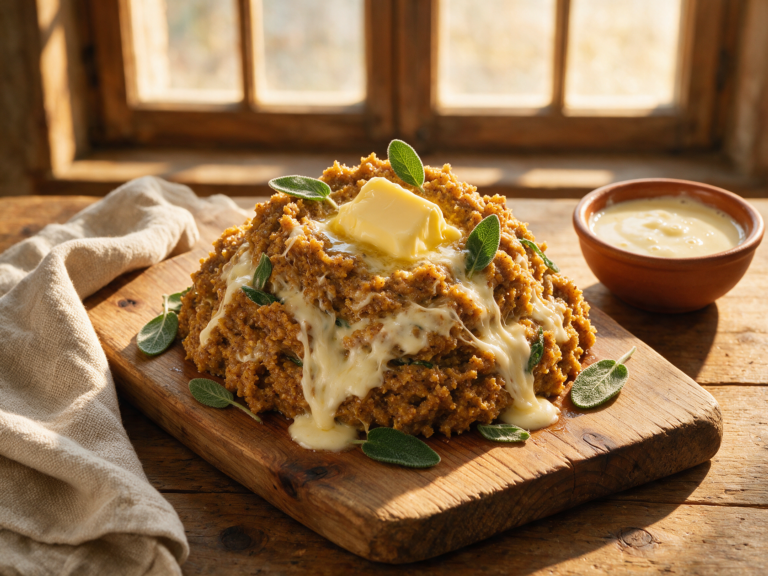
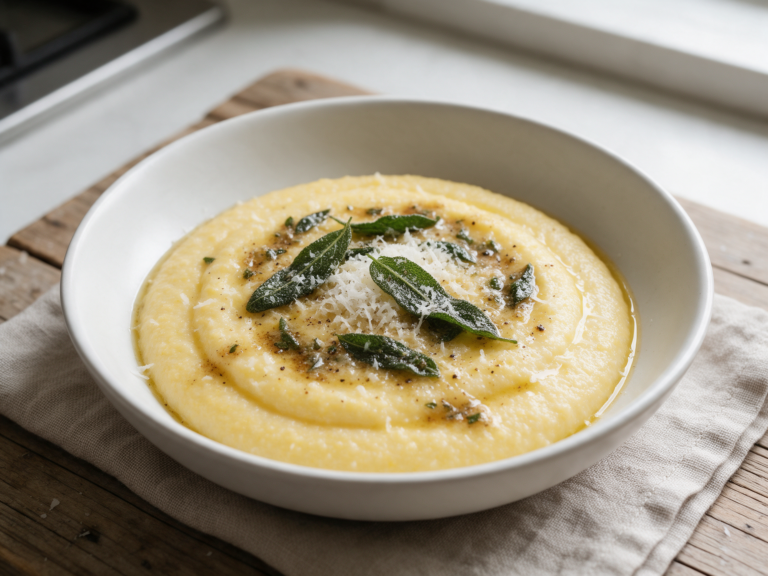
Polenta in fiur is a soft, spoonable polenta cooked in water and a little milk, then finished with butter, Parmigiano and browned sage butter. Versions vary from house to house, so this is how I make it. It takes 50 minutes, and 35 of those are a slow simmer with occasional stirring.
The texture defines the result. You want it loose enough to settle flat in a bowl, but thick enough that a spoon leaves a trail for a second.
Use coarse stone-ground cornmeal, not instant. It needs the full 35 minutes to lose its grit. If it still feels sandy at that point, it isn’t done. Stir in 100 ml hot water and keep cooking for another 5 to 10 minutes.
It works as a weeknight primo or as a side for braised meat, and it costs about a dollar a serving.
Why You’ll Love This Recipe
- One pot, a whisk, and a small skillet for the sage
- Costs about a dollar a serving using pantry staples
- Reheats smoothly with a splash of milk or water
- Naturally gluten free and vegetarian without any substitutions
Ingredient Notes
- coarse stone-ground polenta: Look for bags labeled bramata or stone-ground, with visible grains. Instant polenta cooks in 5 minutes but tastes flatter and gives a pastier texture.
- whole milk: A quarter of the liquid is milk, which rounds out the corn flavor and keeps the color pale. Use all water for a plainer, dairy-free version.
- Parmigiano Reggiano: Grate it fine so it melts straight into the polenta. Pecorino works too, but it’s saltier, so cut the added salt slightly.
- unsalted butter: Half goes into the polenta and half into the sage butter. Unsalted lets you control the seasoning, since the cheese adds salt.
- fresh sage: Choose small to medium leaves, which crisp evenly in the butter. Dried sage turns bitter when fried, so skip it.
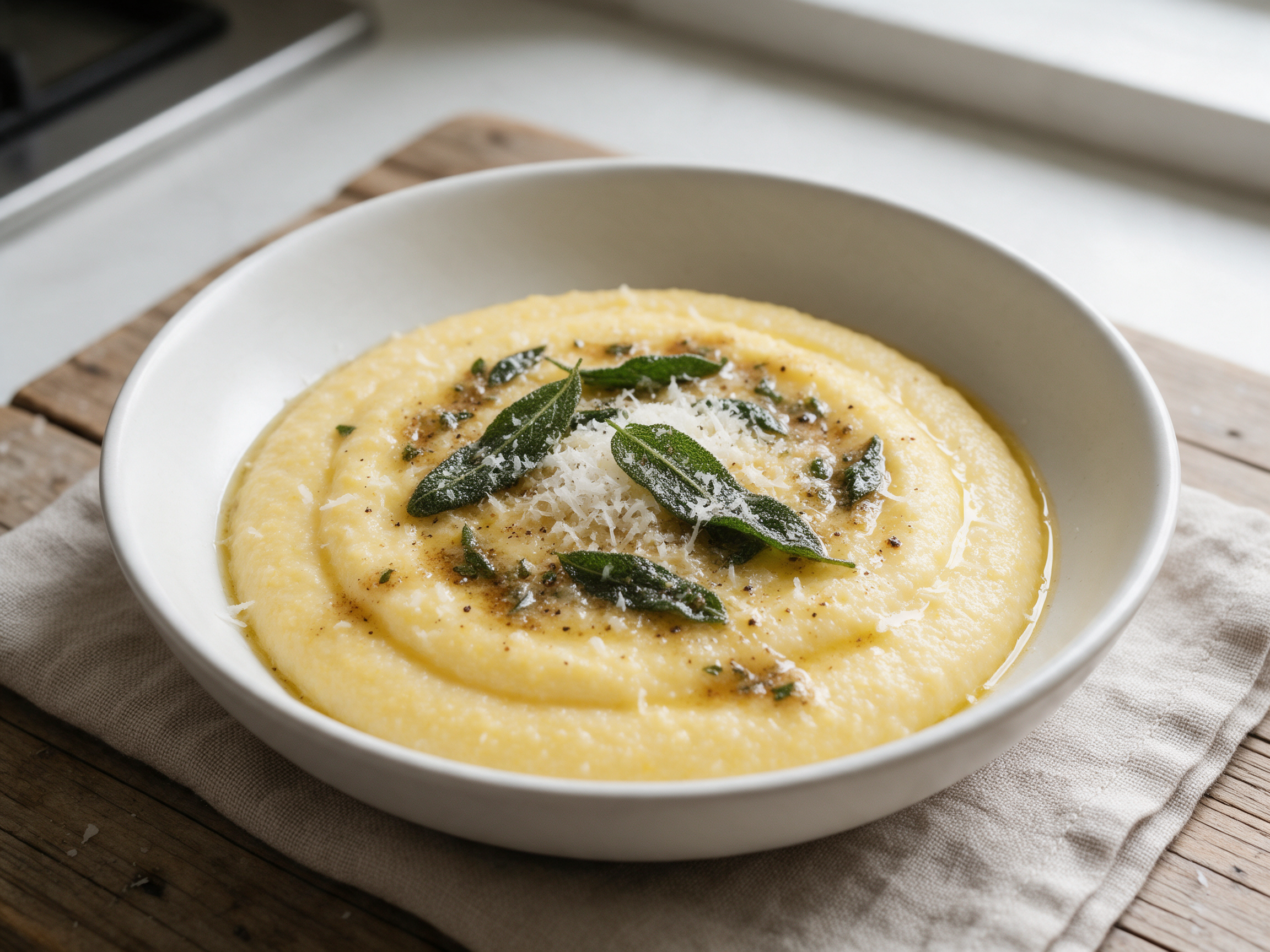
Soft Polenta in Fiur with Sage Butter and Parmigiano
Ingredients
Method
- Pour the water and milk into a 4-quart / 3.8 L heavy-bottomed pot, add 1 tsp salt, and bring to a gentle boil over medium-high heat, about 8 minutes.
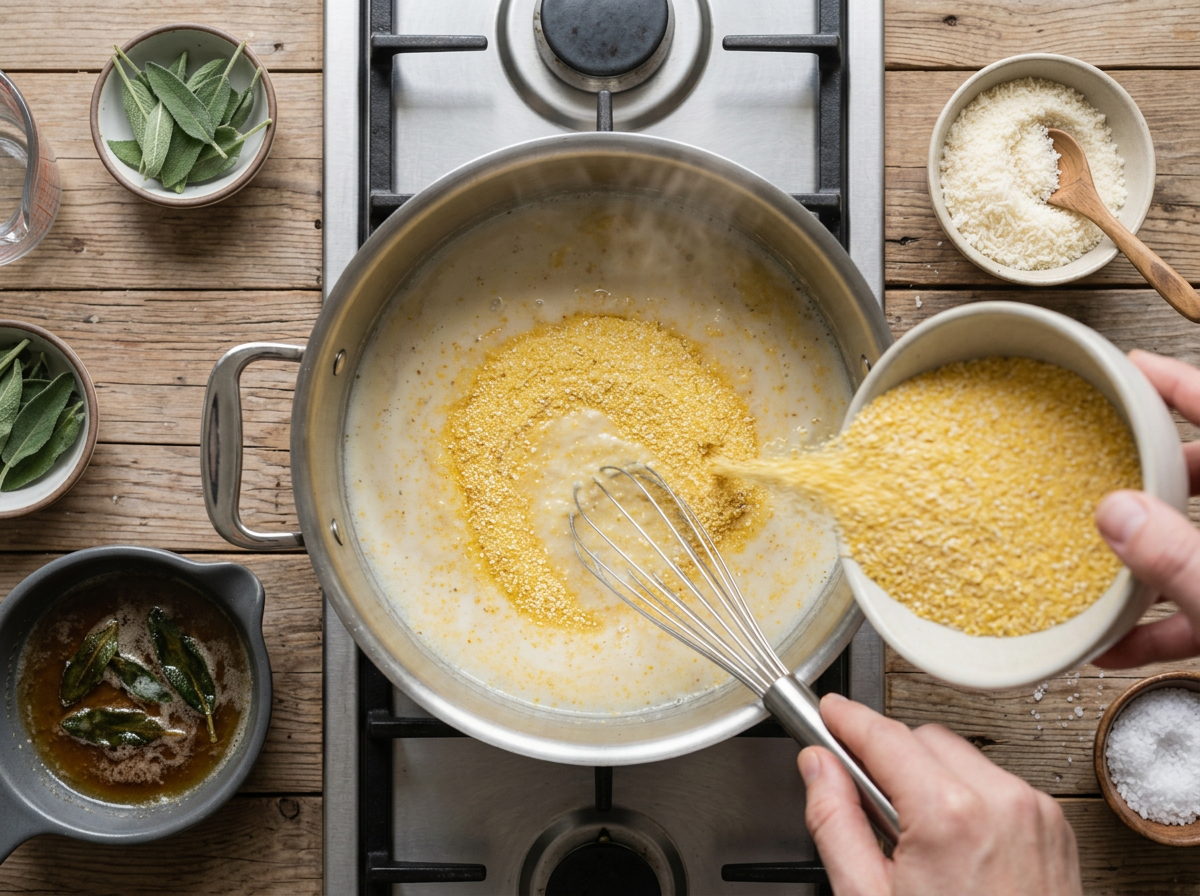
- Lower the heat to medium-low. Whisking constantly with one hand, pour in the polenta in a thin, steady stream, then keep whisking for 1 minute until no lumps remain. Switch to a wooden spoon.
- Cook for 35 minutes at a slow bubble, stirring every 3 to 4 minutes and scraping the corners. It's done when it pulls away from the sides and tastes smooth with no grit. If it gets too thick, loosen it with 50 ml hot water at a time.
- During the last 5 minutes, melt 40 g butter in an 18 cm / 7-inch skillet over medium heat. Add the sage leaves and cook for 2 to 3 minutes until the butter foams, turns pale amber and smells nutty, and the leaves crisp. Remove from the heat.
- Take the polenta off the heat and stir in the remaining 40 g cubed butter and the Parmigiano until glossy. Taste, then add pepper and more salt if needed. Spoon into warm bowls, top with the sage butter and leaves, and serve within 10 minutes.
Notes
- Use coarse stone-ground cornmeal and give it the full 35 minutes.
- Add hot water, never cold, if the polenta thickens too much.
- Keep the heat at medium-low and stir every 3 to 4 minutes.
- Serve within 10 minutes, because polenta tightens as it cools.
Tips for Success
- Pour the cornmeal in a thin, steady stream while whisking with your other hand, so lumps never form in the first place.
- Keep the heat at medium-low so the surface blips slowly, because a hard boil spits hot polenta and scorches the bottom.
- Scrape the corners of the pot every 3 to 4 minutes with a flat-edged wooden spoon, since that’s where cornmeal sticks first.
- Add 1 tsp salt at the start, then taste at the end, because the Parmigiano adds more salt than you expect.
- Warm your bowls and serve within 10 minutes, since polenta tightens quickly as it cools on the plate.
Variations
- Swap the Parmigiano for 80 g diced fontina or Taleggio, stirred in off the heat, for a stretchier, milder finish.
- Top each bowl with sauteed mushrooms or crumbled Italian sausage instead of sage butter to turn it into a heartier main.
- Pour leftover polenta into a loaf pan to set, then slice and pan-fry the pieces in butter until crisp at the edges.
Storage and Reheating
Polenta in fiur keeps 3 to 4 days in an airtight container in the fridge. It sets firm as it cools, which is normal. Make fresh sage butter when you reheat, since it only takes 3 minutes.
To reheat, spoon portions into a saucepan with 60 to 100 ml milk or water per portion. Warm over low heat, whisking for 5 to 8 minutes until it loosens and turns glossy. Add a small knob of butter at the end.
You can freeze it in portions for up to 2 months. Thaw overnight in the fridge and reheat the same way. The texture comes back slightly less silky, so finish with a little fresh Parmigiano.
Serving Suggestions
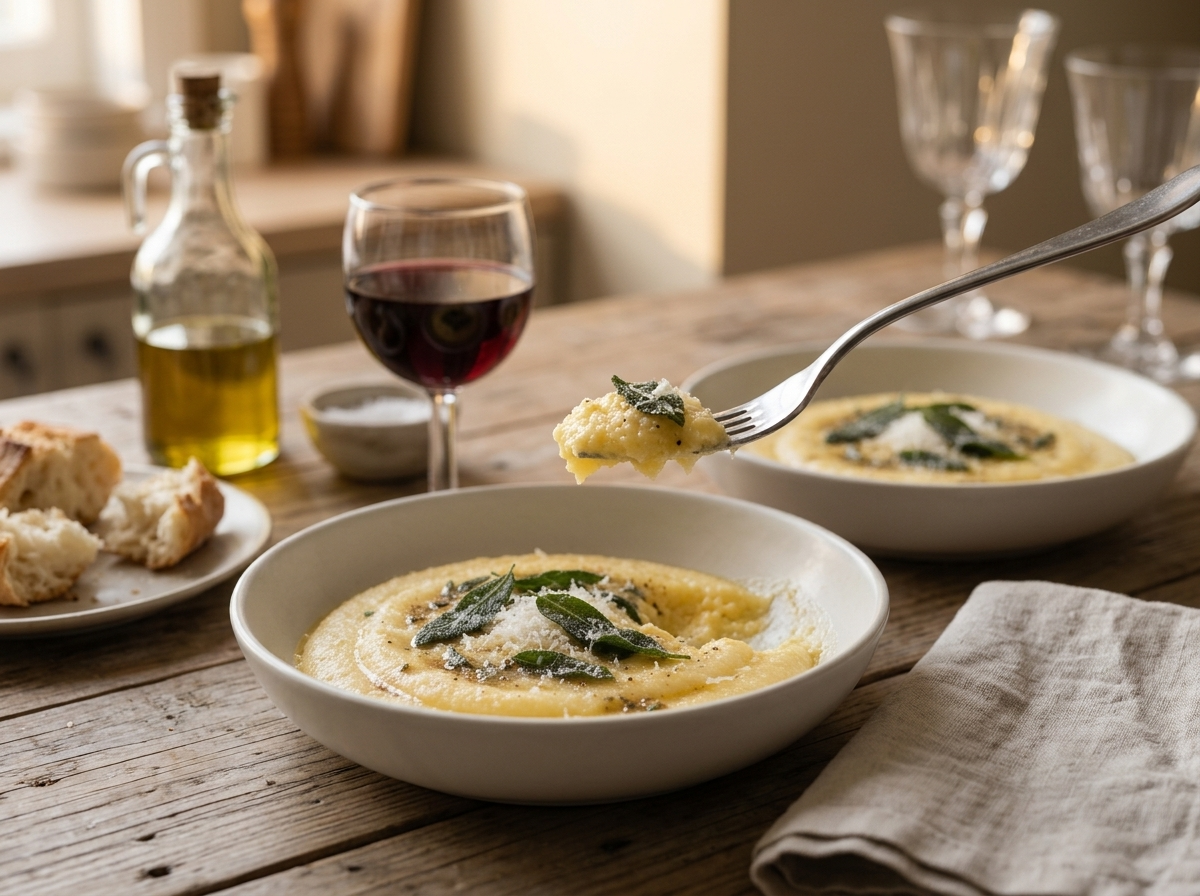
Spoon polenta in fiur into warm, shallow bowls and pour the sage butter over the top just before it hits the table. Serve within 10 minutes so the texture stays loose.
It pairs well with anything that brings its own sauce. Braised beef, sausage with grapes, a mushroom ragu, or beans with garlic and rosemary all pool nicely into the soft corn.
For a lighter meal, add sauteed chard or bitter greens on the side and a glass of Barbera. A piece of crusty bread is optional, but it helps with the butter left in the bowl.
FAQ
Why is my polenta in fiur gritty even after 30 minutes?
Coarse cornmeal needs the full 35 minutes at a slow bubble to soften, so it’s likely just underdone. Stir in 100 ml hot water and cook another 5 to 10 minutes, stirring every couple of minutes. Heat that’s too low also leaves it sandy, so look for slow, steady bubbles.
Can I use instant polenta instead of coarse cornmeal for polenta in fiur?
Yes, but the texture is flatter and less corny. Instant polenta cooks in about 5 minutes, so follow the package ratio and skip the 35-minute simmer. I’d still add the butter, Parmigiano and sage butter, since they carry most of the flavor in that version.
How do I reheat polenta in fiur without it turning into a solid block?
Add liquid and whisk. Put the cold polenta in a saucepan with 60 to 100 ml milk or water per portion, warm it over low heat, and whisk for 5 to 8 minutes until smooth. Chilled polenta sets firm because the starch gels as it cools, so it needs that extra liquid.
What goes with polenta in fiur besides the sage butter?
Braised meat, sausage or mushrooms work best because their sauce pools into the soft polenta. Sauteed bitter greens like chard or cime di rapa also balance the butter. Beans with garlic and rosemary are the budget option. Spoon any topping over at the table so the polenta stays hot.
Is polenta in fiur gluten free, and can I make it dairy free?
Cornmeal is naturally gluten free, but check the label for cross-contamination if you’re strict about it. For dairy free, cook in 1.25 L water, use olive oil instead of butter, and finish with a spoonful of nutritional yeast instead of Parmigiano. Expect a plainer, less rich result.
What’s the difference between polenta in fiur and polenta concia?
Polenta concia, from Piedmont and the Aosta Valley, is stirred with plenty of cheese and butter. Polenta in fiur, as I make it here, uses 50 g Parmigiano and 80 g butter for four people, so it stays lighter and the sage butter does the finishing.