
Jump to Recipe
Garganelli al prosciutto is ridged egg pasta tubes tossed in a butter and cream sauce with diced prosciutto cotto and peas, finished with grated Parmigiano. It comes from Emilia-Romagna, the region that also gave us tortellini and strozzapreti alla romagnola.
The ridges on garganelli aren’t decorative. They come from rolling small pasta squares over a pettine, a ridged wooden comb, and those grooves grab sauce in a way smooth penne can’t. Store-bought fresh garganelli from an Italian deli works fine here, and dried garganelli is easy to find too.
The sauce itself is simple: butter and shallot, diced prosciutto cotto for salt and body, peas for sweetness and color, then cream loosened at the end with starchy pasta water. Parmigiano goes in off the heat so it melts into the sauce instead of seizing into strings.
Don’t let the cream reduce hard before the pasta goes in. Once it coats the back of a spoon, pull it off heat and stir the pasta through, or the sauce turns greasy when the cheese hits it.
This whole thing comes together in about 35 minutes and uses ingredients most Italian delis or grocery stores already stock.
Why You’ll Love This Recipe
- Ready in 35 minutes with pantry-friendly ingredients
- Ridged garganelli holds the cream sauce better than smooth pasta shapes
- Prosciutto cotto and peas balance salt and sweetness in every bite
- One skillet for the sauce keeps cleanup short
Ingredient Notes
- Garganelli: Fresh garganelli from an Italian deli cooks in 2-3 minutes. Dried garganelli or penne rigate work as a substitute, just adjust boiling time to the package.
- Prosciutto cotto: This is Italian cooked ham, not the air-dried crudo. Buy it in one thick slice and dice it yourself for better texture than pre-sliced deli meat.
- Heavy cream: Gives the sauce body without breaking over gentle heat. Whole milk works in a pinch but the sauce will be thinner and less glossy.
- Parmigiano Reggiano: Grate it off the block. Pre-grated cheese has anti-caking starch that makes the sauce grainy instead of smooth.
- Frozen peas: No need to thaw first, they cook through in the skillet in about 2 minutes and keep their color.
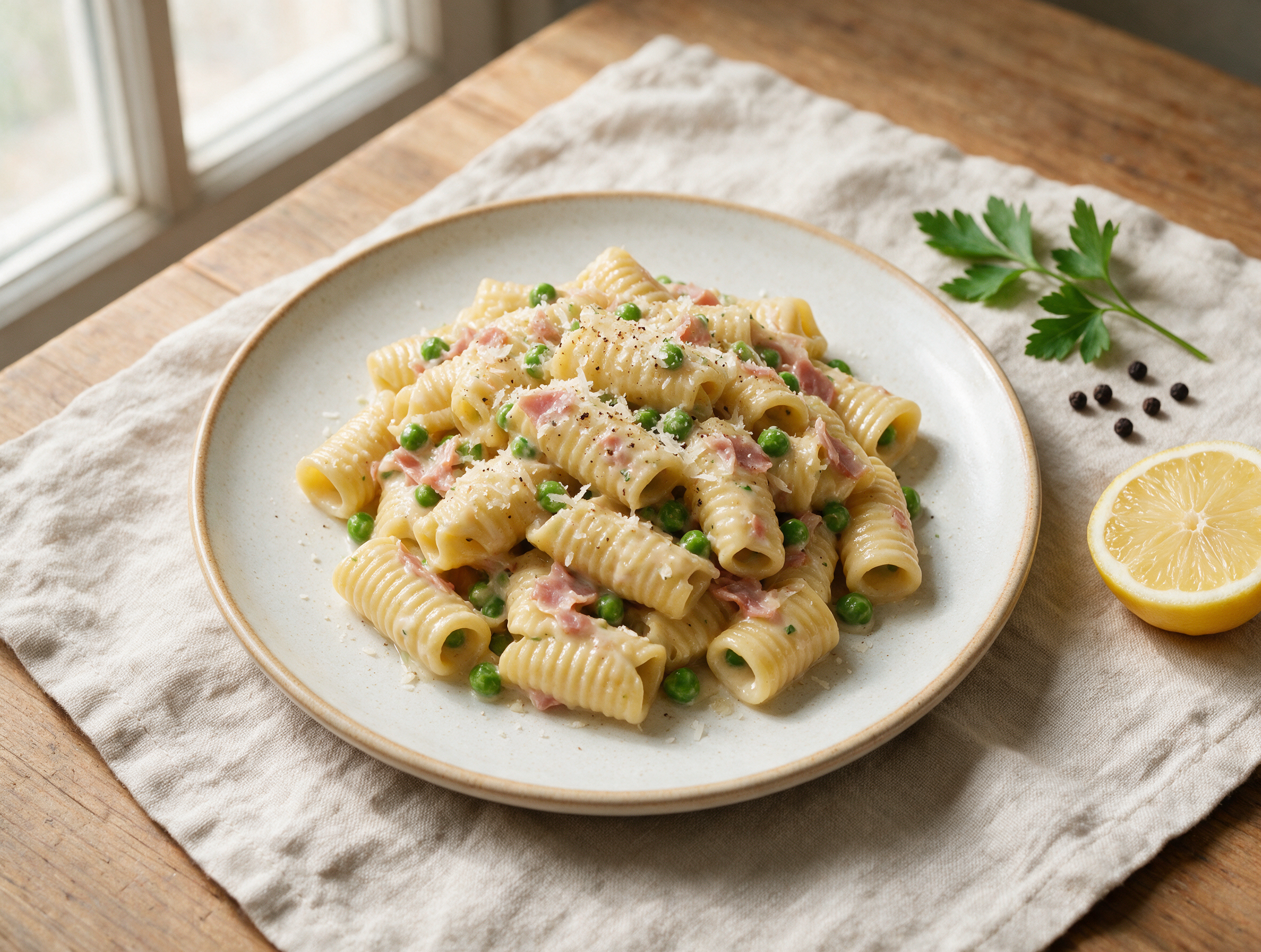
Fresh Garganelli al Prosciutto with Peas and Cream
Ingredients
Method
- Bring a 6-quart / 5.7L pot of water to a rolling boil and salt it generously, until it tastes like seawater.
- Melt the butter in a 12-inch / 30cm skillet over medium heat. Add the shallot and cook for 3 minutes, until soft and translucent but not browned.
- Add the diced prosciutto cotto and cook for 2 minutes, until the edges just start to color.
- Stir in the peas and cook for 2 minutes, until they're bright green and heated through.
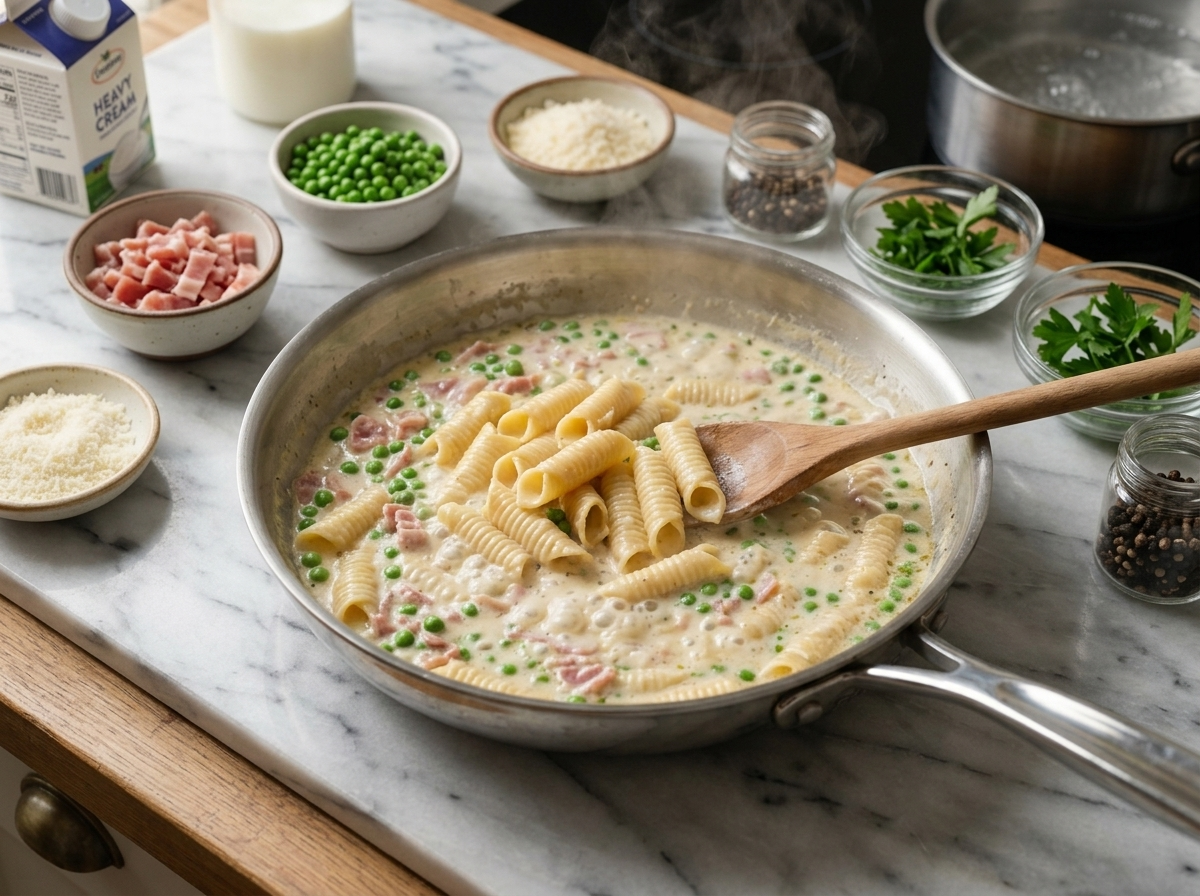
- Pour in the cream and lower the heat. Simmer gently for 3 to 4 minutes, until the sauce coats the back of a spoon. Pull the skillet off the heat.
- Meanwhile, cook the garganelli in the boiling water 1 minute short of the package time. Reserve 1 cup / 240 ml of pasta water, then drain the pasta.
- Add the drained garganelli to the skillet with a splash of the reserved pasta water. Toss over low heat for 1 minute to finish cooking the pasta in the sauce.
- Off the heat, stir in the grated Parmigiano a little at a time, adding more pasta water as needed until the sauce turns glossy and clings to the pasta.
- Grate in the nutmeg and add black pepper. Toss once more and taste for salt.
- Plate immediately and top with extra Parmigiano and a final crack of pepper.
Notes
- Dice prosciutto cotto by hand from a thick slice for the best texture.
- Keep the cream at a bare simmer once it hits the skillet.
- Stir in Parmigiano off heat to avoid clumping or graininess.
- Use fresh garganelli if you can find it, it cooks in 2-3 minutes.
- Save pasta water before draining, the sauce needs it to loosen.
Tips for Success
- Reserve at least 1 cup of pasta water before draining, you’ll need it to loosen the sauce.
- Dice prosciutto cotto from a thick deli slice rather than using pre-sliced ham for better texture.
- Grate Parmigiano off the block instead of using pre-grated cheese to avoid a gritty sauce.
- Cook garganelli 1 minute short of package time, it finishes cooking in the skillet with the sauce.
- Warm the cream gently and pull it off heat once it coats a spoon, before adding cheese.
Variations
- Swap peas for asparagus tips in spring, sauteing them with the shallot before adding the prosciutto.
- Use diced pancetta instead of prosciutto cotto for a smokier, saltier version of the sauce.
- Stir in a handful of baby spinach at the end, letting it wilt in the residual heat of the skillet.
Storage and Reheating
Garganelli al prosciutto keeps 3 days in the fridge in a sealed container. The cream sauce holds up well since it’s built with a modest amount of cream rather than a heavy reduction.
Reheat gently in a 10-inch / 25 cm skillet over low heat with a splash of milk or cream, stirring until the sauce loosens back up, about 3 to 4 minutes. A microwave works too, at 50% power in 30-second bursts, stirring between each.
This sauce doesn’t freeze well. Cream sauces tend to separate once thawed, so plan to eat this within a few days instead of freezing portions.
Serving Suggestions
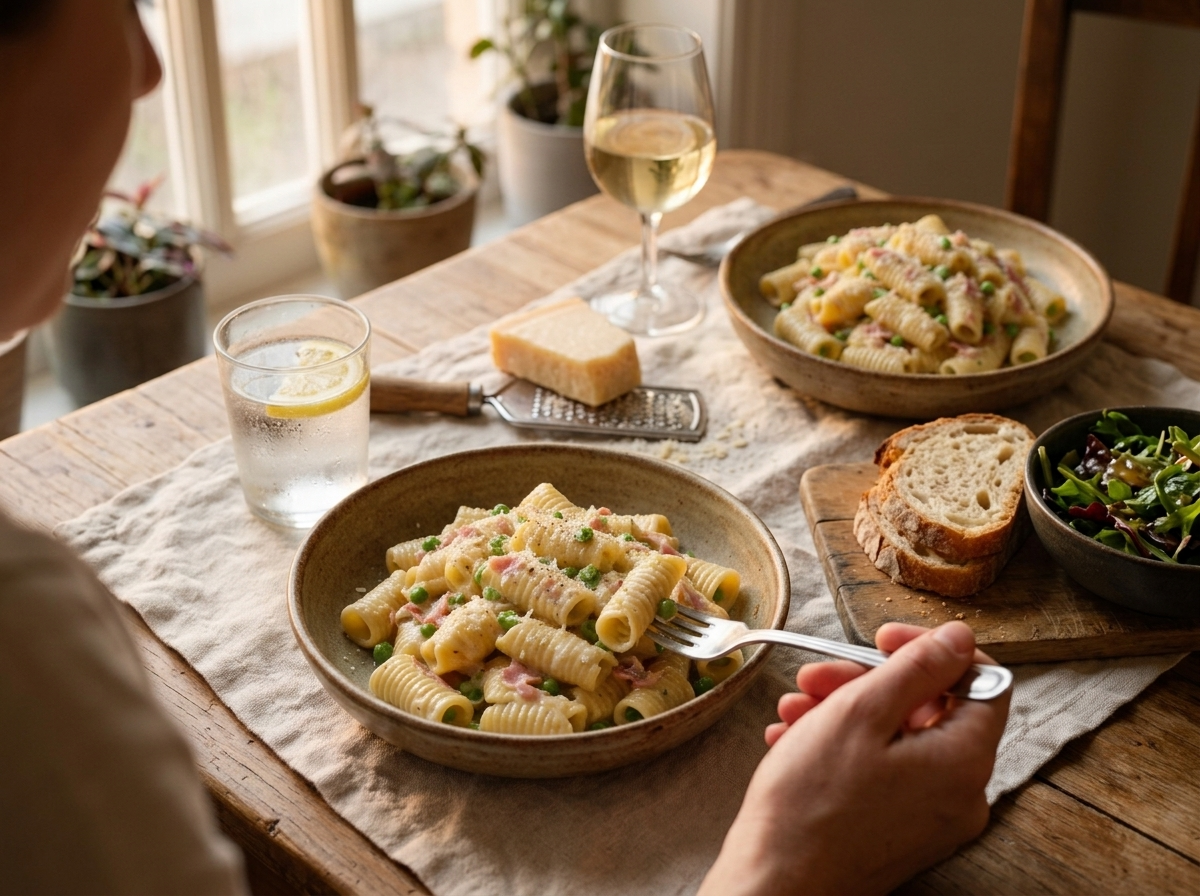
Garganelli al prosciutto is rich enough to stand on its own as a main course. A simple green salad with a sharp vinaigrette cuts through the cream and gives the meal some crunch.
Crusty bread on the side is worth having, mostly for mopping up the last of the sauce. A dry white from Emilia-Romagna, like Pignoletto or Trebbiano, has enough acidity to balance the richness.
For a lighter starter before this pasta, a plate of thinly sliced prosciutto crudo with melon keeps the meal in the same regional territory without repeating flavors.
FAQ
Why did my garganelli al prosciutto sauce turn grainy instead of smooth?
Grainy sauce usually means the cream reduced too far or the Parmigiano went in over direct heat. Pull the skillet off the burner before stirring in the cheese, and add it gradually with a splash of reserved pasta water. Pre-grated cheese with anti-caking starch is another common culprit, so grate it fresh off the block.
Can I use pancetta instead of prosciutto cotto in garganelli al prosciutto?
Yes, diced pancetta works well and gives the dish a smokier, saltier edge. Render it in the skillet for 3 to 4 minutes before adding the shallot, since pancetta needs more time to crisp than fully cooked prosciutto cotto. Skip added salt in the sauce if you go this route.
Can I make garganelli al prosciutto ahead and reheat it the next day?
Yes, it keeps 3 to 4 days in the fridge and reheats fine in a skillet over low heat with a splash of milk or cream. Avoid freezing it, since the cream sauce tends to separate once thawed. Reheat gently and stir often so the sauce comes back together smoothly.
What goes well with garganelli al prosciutto besides bread?
A green salad with a sharp vinaigrette balances the richness of the cream sauce nicely. A dry white wine from Emilia-Romagna, like Pignoletto, also works because its acidity cuts through the butter and Parmigiano. Keep sides simple since the pasta itself is the main event.
Is garganelli al prosciutto gluten free?
No, traditional garganelli is made from wheat flour and eggs, so it contains gluten. You can swap in a gluten-free egg pasta or gluten-free penne rigate and the sauce itself will work the same way, since the gluten comes only from the pasta, not the sauce.
What’s the difference between garganelli and penne rigate?
Garganelli is hand-rolled egg pasta shaped into short tubes on a ridged wooden comb, while penne rigate is extruded from semolina dough with machine-cut ridges. Garganelli has a thinner, more delicate bite from the egg dough, and its ridges tend to be finer and less uniform than penne’s.