
Jump to Recipe
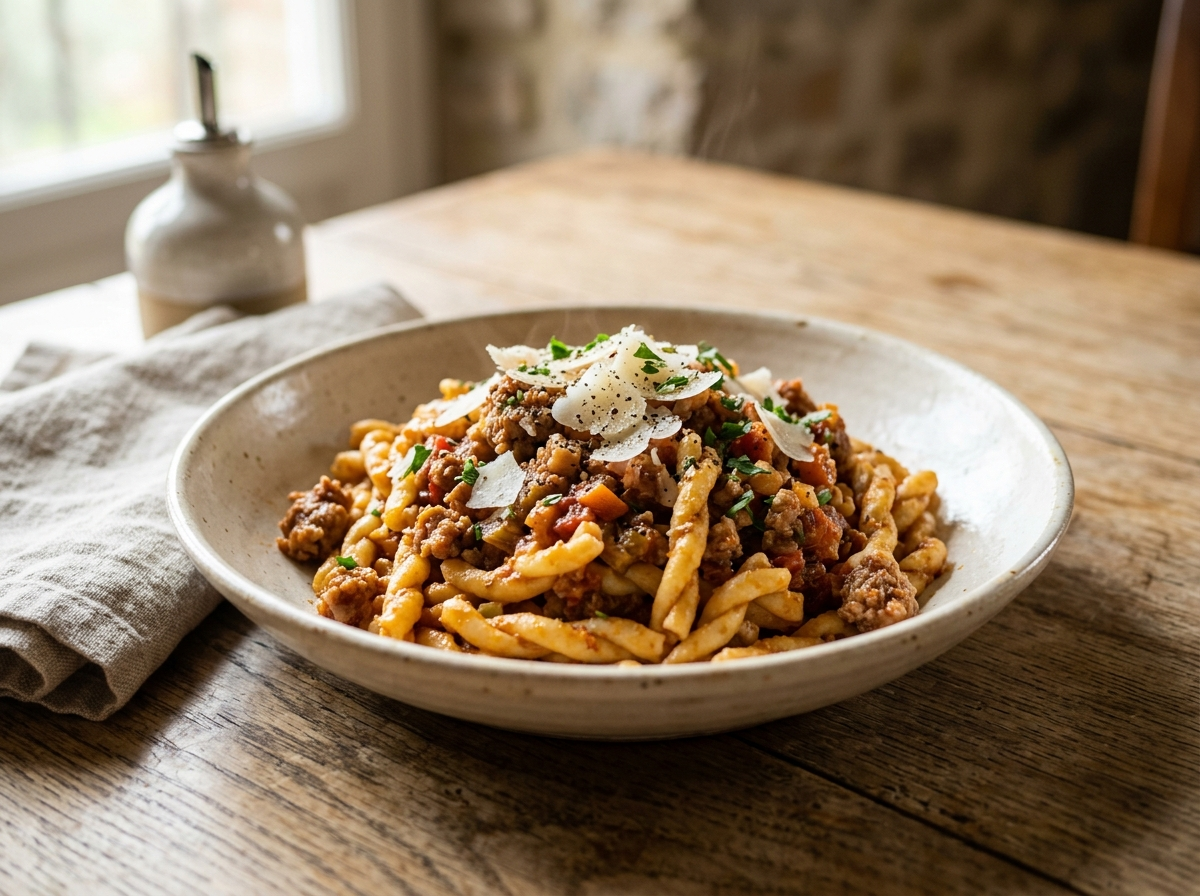
Strozzapreti alla romagnola is a hand-twisted, egg-free pasta from Emilia-Romagna tossed with a slow sausage ragù built on soffritto, pancetta, and tomato passata. The pasta’s rope-like shape traps sauce in its folds better than a smooth noodle would.
I make the ragù first and let it go low for 35 to 40 minutes while the kitchen fills up with the smell of rendered pancetta and wine. That’s the part that can’t be rushed. If you pull it off the heat early, the sauce stays loose and slides off the pasta instead of clinging to it.
Strozzapreti means “priest stranglers” in the local dialect, a name tied to old jokes about greedy clergy eating too fast. You can buy dried strozzapreti at most Italian grocers, which cuts a chunk of prep time without hurting the final dish.
This one feeds four generously and reheats well the next day, arguably better once the flavors settle.
Why You’ll Love This Recipe
- One pan ragù, minimal cleanup after dinner
- Sauce freezes well for a fast weeknight meal later
- Twisted pasta shape holds onto every bit of sauce
- Tastes better the next day once flavors settle
Ingredient Notes
- Strozzapreti: Dried works fine and saves time. If you find fresh at an Italian deli, it cooks in 3-4 minutes instead of 10-12.
- Italian sausage: Use mild fennel sausage and remove the casing so it breaks apart into small pieces in the pan.
- Pancetta: Guanciale is the more traditional choice in Romagna if you can find it, with a stronger, fattier flavor.
- Tomato passata: Smooth strained tomato works better here than chunky crushed tomatoes, since the sauce should coat, not chunk up.
- White wine: A dry white like Trebbiano or Pinot Grigio deglazes the pan and cuts through the fat. Dry vermouth works in a pinch.
- Parmigiano Reggiano: Grate it fresh at the table. Pre-grated versions have anti-caking starch that dulls the finish.
Strozzapreti alla Romagnola with Rustic Sausage Ragù
Ingredients
Method
- Heat olive oil in a wide saucepan over medium-low heat. Add pancetta and cook for 4 to 5 minutes until the fat renders and it starts to crisp at the edges.
- Add onion, carrot, and celery. Cook for 7 to 8 minutes, stirring often, until soft and pale gold.
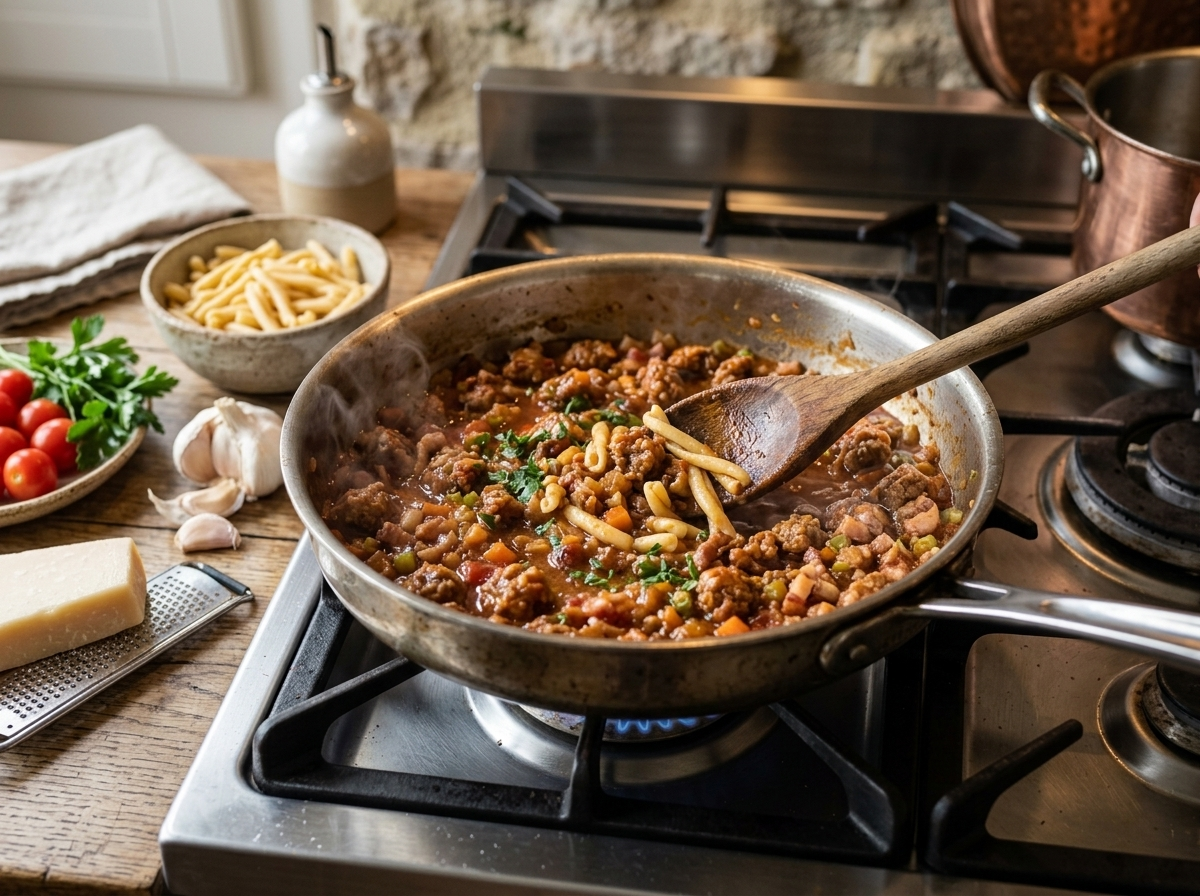
- Add sausage, breaking it into small pieces with a wooden spoon. Cook for 6 to 7 minutes until browned all over.
- Pour in the wine and let it bubble for 2 to 3 minutes until the sharp smell fades and most of it has cooked off.
- Stir in the tomato passata, season with salt and pepper, and bring to a gentle simmer. Cover and cook on low for 30 minutes, stirring occasionally.
- Uncover and simmer another 8 to 10 minutes until the sauce coats the back of a spoon and no longer looks watery.
- Bring a large pot of salted water to a boil. Cook strozzapreti according to package directions, about 10 to 12 minutes for dried or 3 to 4 minutes for fresh, until al dente.
- Reserve a mug of pasta water, then drain the pasta and add it directly to the ragù.
- Toss over low heat for 1 to 2 minutes, adding a splash of pasta water if the sauce looks tight. Stir in the butter and half the Parmigiano.
- Divide among bowls and top with the remaining Parmigiano and a crack of black pepper.
Notes
- Render pancetta over medium-low heat, not high, to avoid burning the fat before it renders.
- Simmer the ragù uncovered near the end if it looks thin, until it coats a spoon.
- Save a mug of pasta water before draining to loosen the sauce if needed.
- Finish pasta in the sauce pan for 1 to 2 minutes so it absorbs flavor.
Tips for Success
- Render the pancetta slowly over medium-low heat so the fat melts out before you add the vegetables.
- Break the sausage into small, uneven pieces with a wooden spoon instead of one big mass.
- Simmer the sauce uncovered for the last 10 minutes if it looks thin, letting it reduce until it coats a spoon.
- Save a mug of starchy pasta water before draining, since it loosens the sauce without watering down the flavor.
- Finish the pasta in the sauce pan for 1 to 2 minutes so the strozzapreti absorbs some of the ragù.
Variations
- Add 15g dried porcini, soaked and chopped, along with their soaking liquid for an earthier, deeper sauce.
- Swap pork sausage for a mix of ground pork and beef if you want a closer texture to ragù bolognese.
- Stir in a splash of heavy cream at the end for a rounder, softer sauce, common in home versions.
Storage and Reheating
Strozzapreti alla romagnola keeps in an airtight container in the fridge for up to 3 days. The sauce actually tastes better on day two once the pancetta fat and tomato have had time to settle together.
Reheat gently in a skillet over low heat with a splash of water or stock, stirring until warmed through, about 4 to 5 minutes. Avoid the microwave if you can, since it tends to dry out the pasta unevenly.
The ragù alone freezes well for up to 3 months in a sealed container. Thaw it overnight in the fridge and cook fresh pasta to go with it rather than freezing the dish fully assembled.
Serving Suggestions
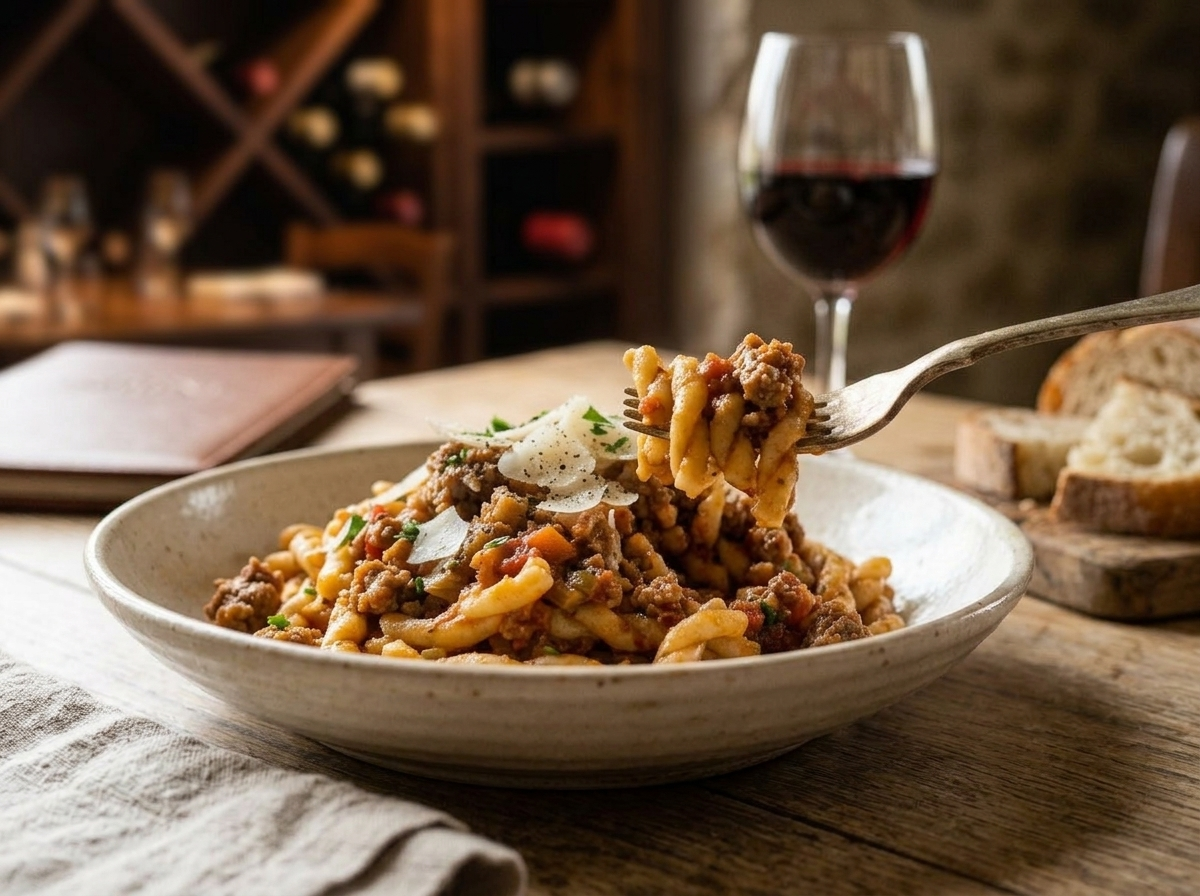
Serve strozzapreti alla romagnola in shallow bowls with a final grating of Parmigiano Reggiano and a crack of black pepper. A few torn basil leaves on top add a little brightness against the fat of the pancetta.
A simple green salad with a sharp vinaigrette works as a palate cleanser between bites of the rich sauce. Crusty bread on the side is worth having around to catch the last of the ragù in the bowl.
For wine, pour the same dry white you cooked with, or a light Sangiovese if you want something with more grip.
FAQ
Why is my strozzapreti alla romagnola sauce too watery?
It usually means the ragù didn’t simmer long enough or the lid stayed on too long. Uncover the pan for the last 10 minutes of cooking and let it reduce until it coats the back of a spoon. If it’s still thin after that, simmer another 5 minutes on slightly higher heat.
Can I use rigatoni instead of strozzapreti for this ragù?
Yes, rigatoni or fusilli both work since their ridges grip the sauce in a similar way. Strozzapreti’s twisted rope shape is closer to the traditional pairing, but any short pasta with texture will hold this ragù better than a smooth noodle like spaghetti.
Can I freeze strozzapreti alla romagnola sauce?
Yes, the sausage and pancetta ragù freezes well on its own for up to 3 months in a sealed container. Thaw it overnight in the fridge, then cook fresh pasta to go with it. Freezing the pasta already tossed in sauce tends to make it mushy once reheated.
What wine pairs well with strozzapreti alla romagnola?
A dry white like Trebbiano di Romagna pairs well since it’s the same wine used to deglaze the pan. If you prefer red, a light Sangiovese from the same region has enough acidity to cut through the pancetta fat without overpowering the sauce.
Is strozzapreti alla romagnola gluten free?
No, traditional strozzapreti is made from wheat flour and this recipe uses regular dried pasta. You can swap in a gluten-free short pasta shape like gluten-free fusilli and the ragù itself is naturally gluten free, so the sauce doesn’t need any changes.
What’s the difference between strozzapreti alla romagnola and ragù bolognese?
The main difference is the meat and texture. Ragù bolognese uses finely ground beef and pork simmered with milk for a smoother sauce, while strozzapreti alla romagnola relies on coarser sausage and pancetta pieces, giving it a rustic, chunkier bite that clings to the pasta’s twists.