Jump to Recipe
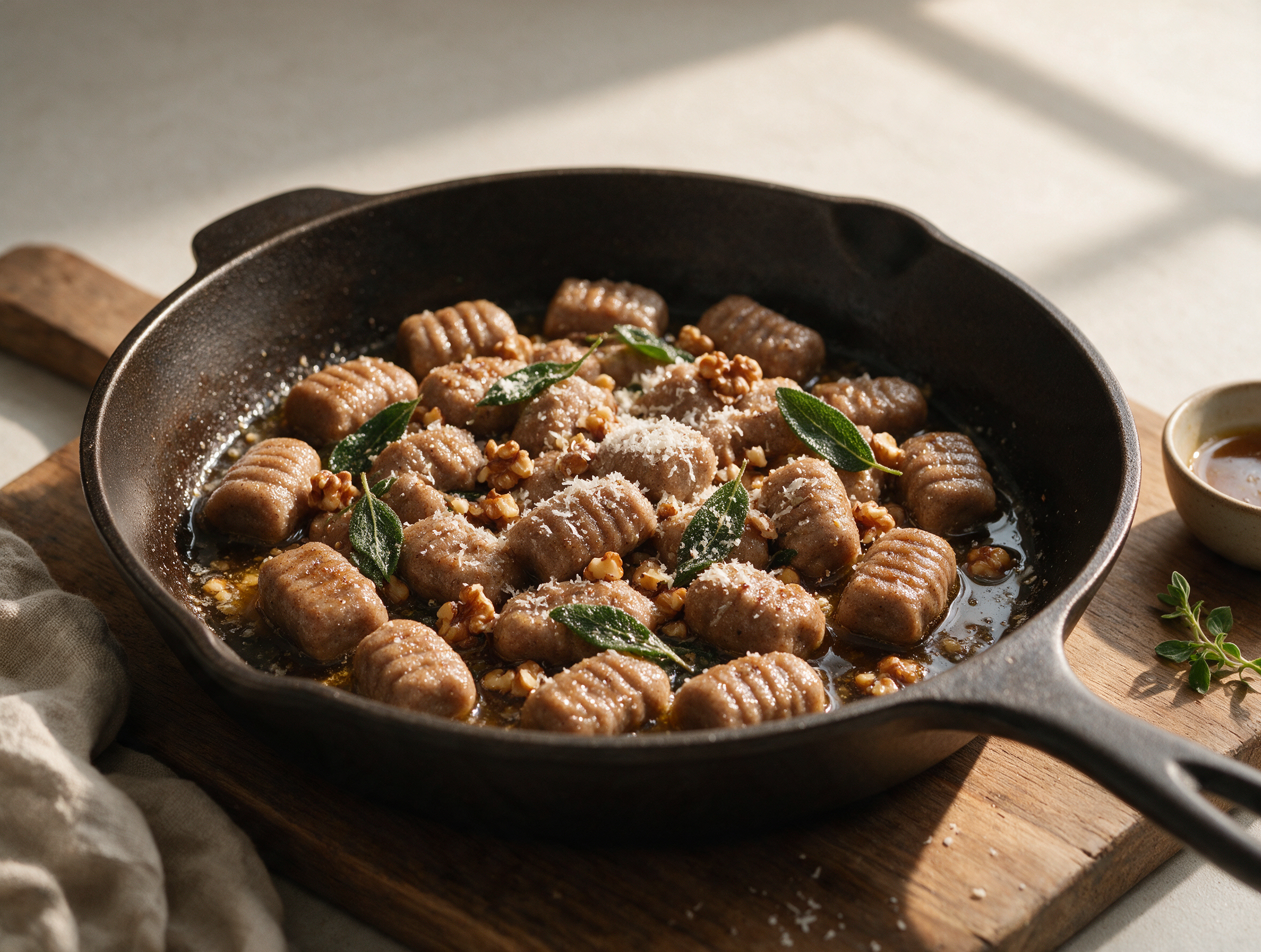
Gnocchi di castagne are potato gnocchi with part of the flour replaced by chestnut flour, giving the dumplings a faint sweetness, a grayish-brown color, and a denser bite than the plain potato version.
The dish comes from chestnut country, places like Tuscany’s Garfagnana and Lunigiana where chestnut flour stood in for wheat for centuries. It’s a poor-man’s ingredient that turned into something people still cook on purpose long after wheat became cheap.
I boil the potatoes whole with the skin on so they don’t soak up water, then rice them warm before working in the two flours and an egg. The dough gets shaped into short ropes, cut, and boiled just like regular gnocchi.
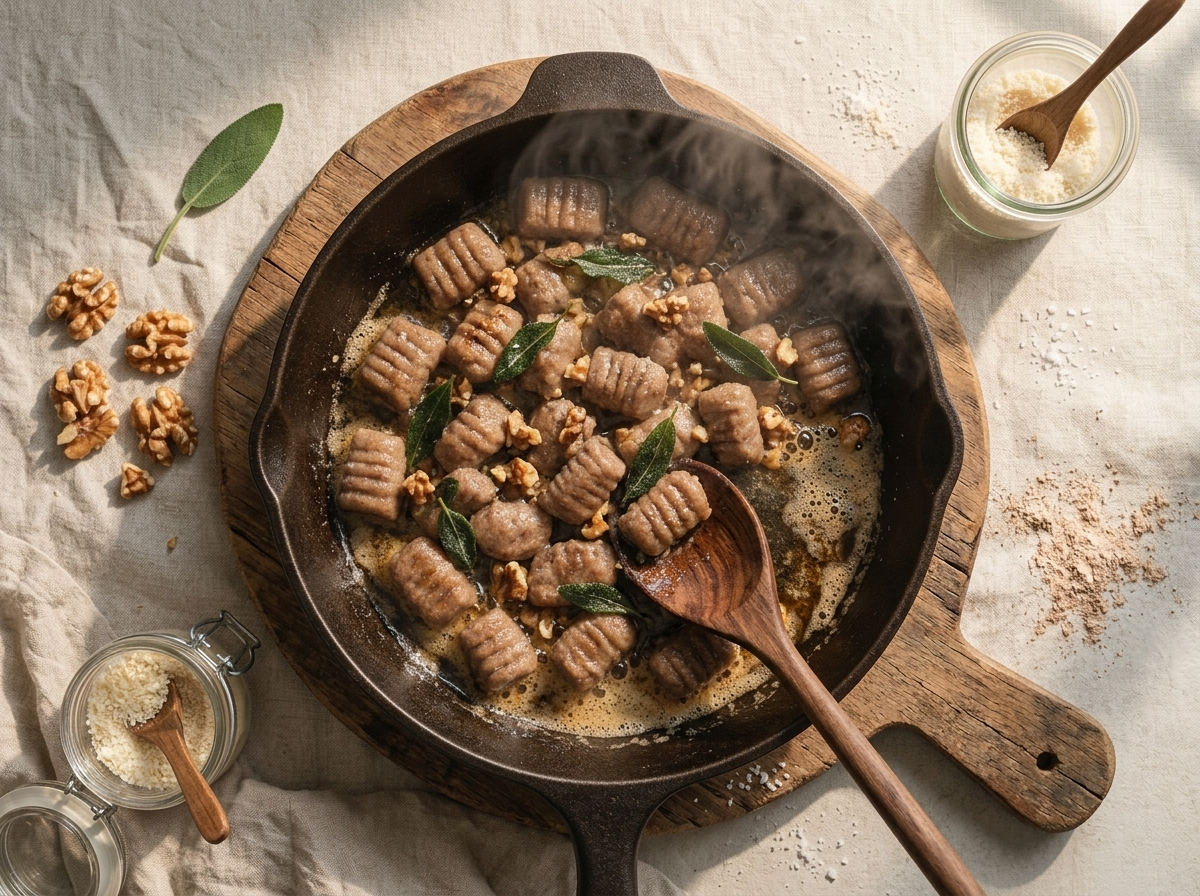
Once they float, I lift them straight into brown butter sage that’s been browned until it smells nutty, then finish with toasted walnuts and parmesan. The one thing that trips people up is overworking the dough, chestnut flour has no gluten, so a heavy hand just makes it gummy.
Why You’ll Love This Recipe
- Chestnut flour gives the dough a faint natural sweetness
- Brown butter and sage take five minutes to make
- Uncooked gnocchi freeze well for a fast weeknight meal
- Toasted walnuts add crunch without extra ingredients
Ingredient Notes
- potatoes: Choose starchy potatoes like Russet or Yukon Gold. Waxy potatoes hold too much moisture and make sticky dough.
- chestnut flour: Look for it at Italian delis or online. It has a naturally sweet, faintly smoky flavor unlike wheat flour.
- 00 flour: All-purpose flour works as a substitute if you can’t find Italian 00.
- egg: Binds the dough. One small egg, about 50 g, is enough for this amount of potato.
- butter: Use unsalted so you control the seasoning once the parmesan goes in.
- sage: Fresh leaves crisp up in the hot butter. Dried sage won’t give the same texture.
- walnuts: Toast briefly to bring out their oil and keep them from tasting flat.
- parmesan: Grate it yourself. Pre-shredded cheese has anti-caking starch that won’t melt as smoothly.
Homemade Chestnut Flour Gnocchi with Brown Butter
Ingredients
Method
- Put the potatoes in a 6-quart / 5.7 L pot, cover with cold water, and boil whole with the skin on for 35 to 40 minutes until a knife slides in with no resistance.
- Drain and let the potatoes cool just until you can handle them, then peel while still warm and pass through a potato ricer onto a clean work surface. Working with warm potatoes keeps the dough dry.
- Spread the riced potato out, sift the chestnut flour and 00 flour over the top, sprinkle with the salt, and pour the beaten egg over the mound.
- Work the ingredients together with a bench scraper or your hands just until a soft, slightly tacky dough forms, about 1 minute. Chestnut flour has no gluten to toughen, so stop as soon as the dough holds together, over-kneading makes it gummy.
- Cut the dough into 4 pieces. Roll each piece on a lightly floured surface into a rope about 2 cm / 3/4 inch thick.
- Cut each rope into 2 cm / 3/4 inch pieces. Roll each piece over the tines of a fork or a gnocchi board for ridges, or leave them plain.
- Bring a 6-quart / 5.7 L pot of generously salted water to a boil. Drop the gnocchi in batches of about 20 so the water stays at a boil, stirring once gently so they don't stick to the bottom.
- Cook until the gnocchi float to the surface, 2 to 3 minutes, then let them bob for another 20 to 30 seconds before lifting out with a slotted spoon. Reserve a splash of the cooking water.
- While the first batch cooks, melt the butter in a 12-inch / 30 cm skillet over medium heat. Add the sage leaves and cook for 3 to 4 minutes, swirling the pan, until the butter turns golden brown and smells nutty.
- Transfer the drained gnocchi straight into the skillet with the browned butter. Add a splash of the reserved cooking water and toss gently to coat.
- Scatter in the toasted walnuts and half the Parmigiano, tossing for 1 minute over low heat so the cheese just melts into the butter.
- Plate immediately, finish with the remaining Parmigiano and a few grinds of black pepper.
Notes
- Rice potatoes while still warm, cold potatoes turn the dough gummy.
- Test one gnocco before boiling the whole batch, add more flour if it falls apart.
- Don't overwork the dough, chestnut flour has no gluten to toughen.
- Toast walnuts in a dry pan for 3 minutes to deepen their flavor.
Tips for Success
- Rice the potatoes while they’re still warm so the dough stays dry and doesn’t need extra flour.
- Test-boil one gnocco before cooking the full batch, add a spoonful of flour if it disintegrates.
- Keep the sage butter moving in the skillet once it starts foaming, it goes from nutty to burnt fast.
- Cook gnocchi in batches of about 20 so the water never stops boiling.
- Save a mug of the starchy cooking water, it helps the brown butter cling to the gnocchi.
Variations
- Swap walnuts for toasted hazelnuts and finish with a drizzle of chestnut honey for a sweeter edge.
- Skip the walnuts and toss the gnocchi with a light porcini mushroom ragu instead of brown butter.
- Add 50 g crumbled gorgonzola to the hot skillet for a creamier, tangier sauce.
Storage and Reheating
Freeze uncooked gnocchi on a parchment-lined sheet pan for 1 to 2 hours until solid, then transfer to a freezer bag for up to 2 months. Boil straight from frozen, no need to thaw, adding about 1 minute to the usual 2 to 3 minute cooking time.
Cooked, sauced gnocchi keep in an airtight container in the fridge for 2 to 3 days. Reheat in a skillet over medium-low heat with a small knob of browned butter for 3 to 4 minutes, stirring gently, until warmed through.
Serving Suggestions
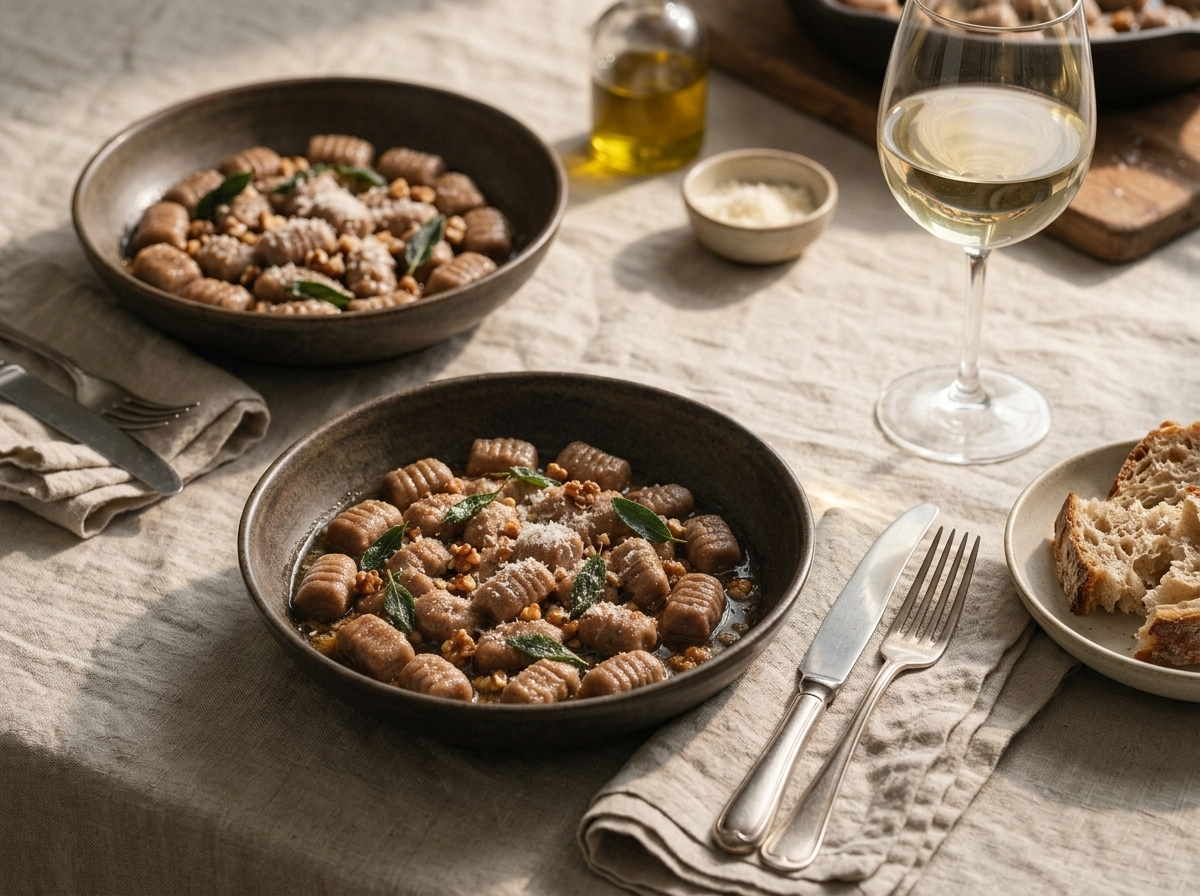
Serve gnocchi di castagne as a first course, straight from the skillet with the last of the brown butter spooned over. A simple green salad with a sharp vinaigrette cuts through the richness.
Pour a glass of Vermentino or a light Chianti, both have enough acidity to balance the nutty sauce. Crusty bread on the side is good for mopping up whatever butter is left in the pan.
FAQ
Why are my chestnut flour gnocchi falling apart in the boiling water?
Usually too much moisture in the dough or not enough flour, since chestnut flour has no gluten to hold pieces together. Rice the potatoes while warm so extra liquid evaporates, and test-boil one piece first, adding a spoonful more flour if it dissolves. Overworking the dough after adding flour also weakens it.
Can I use all chestnut flour instead of mixing it with 00 flour?
I don’t recommend it, straight chestnut flour has no gluten and makes a dough too fragile to hold its shape in boiling water. The 100 g of 00 flour here gives just enough structure while the chestnut flour still comes through in color and flavor. You can push it to 150 g chestnut and 50 g 00 for a stronger taste, but the gnocchi will be softer.
Can I freeze gnocchi di castagne before cooking them?
Yes, freeze the shaped, uncooked gnocchi on a parchment-lined sheet pan for 1 to 2 hours until firm, then transfer to a freezer bag for up to 2 months. Boil them straight from frozen, no need to thaw, adding about 1 minute to the usual 2 to 3 minute cooking time.
What wine goes well with chestnut flour gnocchi?
A Vermentino or a light Chianti works well, both have enough acidity to cut through the browned butter and walnuts. If you’d rather stick with white, a Vernaccia di San Gimignano has a similar bright edge. Avoid heavy, oaky reds, they compete with the sage instead of complementing it.
Are gnocchi di castagne gluten free?
Not as written here, this recipe uses 100 g of 00 flour alongside the chestnut flour, so it does contain gluten. Some traditional versions use only potato and chestnut flour with no wheat at all, though that dough is more fragile and needs a gentler hand when boiling.
What’s the difference between gnocchi di castagne and regular potato gnocchi?
Gnocchi di castagne swap part of the flour for chestnut flour, which gives the dough a grayish-brown color, a faint natural sweetness, and a denser bite than plain potato gnocchi. The dish comes from chestnut-growing regions like Tuscany’s Garfagnana and Lunigiana, where chestnut flour stood in for wheat historically.