
Jump to Recipe
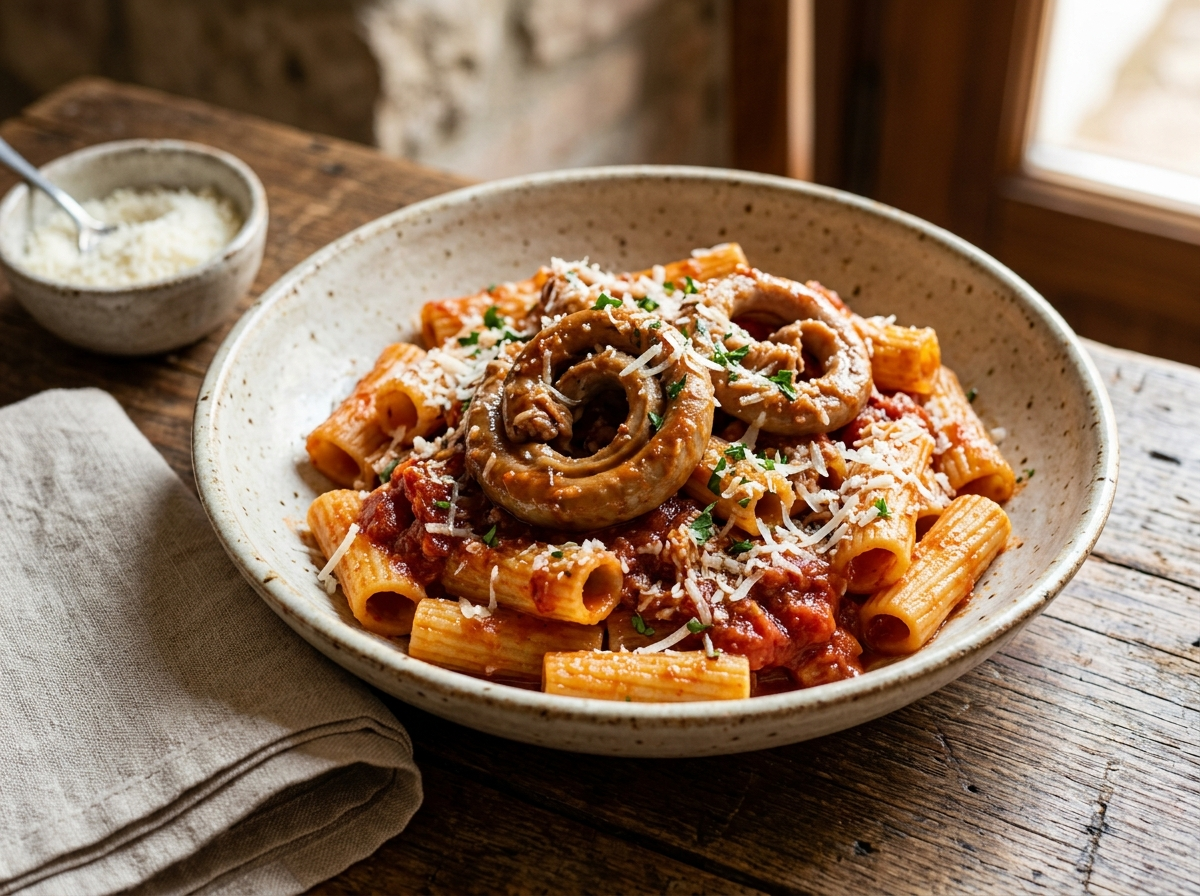
Rigatoni con la pajata is a Roman dish built on veal intestines braised whole in tomato sauce, then tossed with rigatoni and pecorino romano. The intestines still hold the calf’s last feed of milk, and that milk sets into soft curds as it cooks, giving the sauce a mild, almost ricotta-like richness.
This is old Roman quinto quarto cooking, built from parts butchers used to give away rather than sell. You won’t find pajata on many menus outside Rome. Most countries restrict sale of intestines from calves past a certain age because of BSE rules, so you need a butcher who sources young, milk-fed veal and can vouch for where it came from.
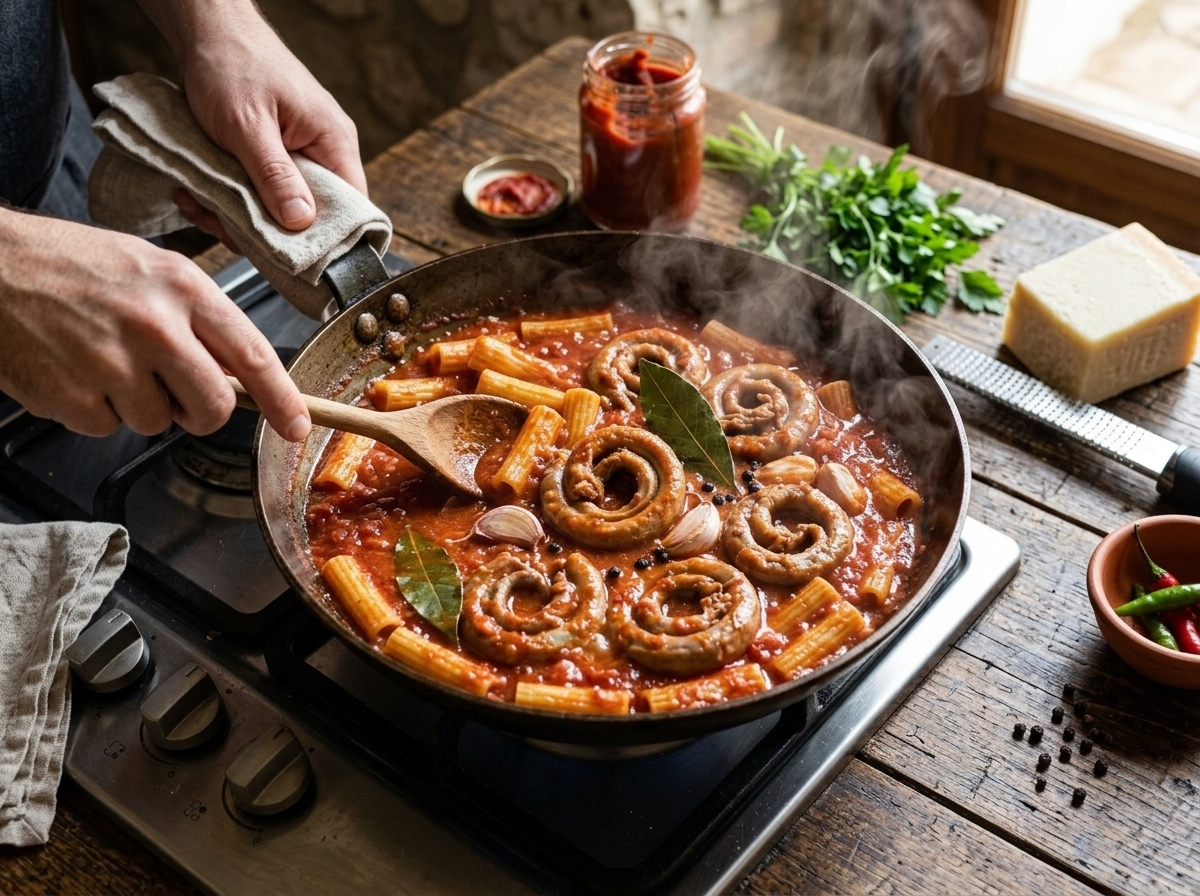
Once you have good pajata, the cooking is straightforward. Brown the rings in oil and garlic, deglaze with white wine, then simmer in tomato until the casing turns tender and the milk inside firms up, 45 to 60 minutes. The result sits closer to a light ragu than a heavy meat sauce.
Why You’ll Love This Recipe
- Braises in one pot, no special equipment needed
- Milk inside the pajata sets into soft curds as it cooks
- Classic quinto quarto flavor rarely found outside Rome
- Rigatoni ridges hold the tomato sauce in every bite
Ingredient Notes
- Pajata: Veal intestines still containing the calf’s milk, tied into rings by the butcher. Ask specifically for milk-fed veal pajata and check it’s legal to sell where you live before ordering.
- Rigatoni: The ridges and wide hole catch the sauce well. Mezze rigatoni or paccheri work as a substitute.
- San Marzano tomatoes: Canned whole peeled tomatoes crushed by hand give a cleaner, less watery sauce than pre-crushed cans.
- Dry white wine: Adds acidity to cut the richness of the pajata. Skip it and add an extra splash of water if you don’t cook with wine.
- Pecorino Romano: Sharp and salty, it’s the traditional finish here. Parmigiano works but tastes milder and less salty.
- Peperoncino: Dried chili flakes, optional but traditional in small amounts. Leave out for a milder sauce.
Rigatoni con la Pajata: Rome’s Classic Offal Pasta
Ingredients
Method
- Rinse the pajata rings under cold water and pat dry. If not already tied, loop each into a rough coil and tie loosely with kitchen string so the milk stays inside.
- Pat the rings dry again with paper towel. Excess moisture stops them from browning properly.
- Warm olive oil in a wide heavy pot over medium heat. Add garlic and chili flakes, cook 1 minute until fragrant.
- Add pajata rings and brown 4 to 5 minutes per side until the casing looks blistered and lightly golden.
- Pour in white wine, scrape up any browned bits, and let it bubble 2 minutes until mostly evaporated.
- Add crushed tomatoes, bay leaf, a good pinch of salt and pepper. Bring to a bare simmer.
- Cover, reduce heat to low, and simmer 45 to 60 minutes, turning the rings once, until the casing is tender and the milk inside has set into soft curds. Press a ring with a spoon; it should feel firm, not liquid.
- Bring a large pot of well-salted water to a boil. Cook rigatoni until al dente, 1 minute less than the package suggests.
- Reserve 1 cup of pasta water, then drain the rigatoni.
- Remove the bay leaf. Lift out the pajata rings, cut into shorter pieces if you like, and return them to the sauce.
- Add the drained rigatoni to the pot with the sauce, tossing over low heat and adding splashes of pasta water until it clings to the pasta, about 1 to 2 minutes.
- Stir in half the pecorino, then plate and top with more pecorino and a crack of black pepper.
Notes
- Ask your butcher for young, milk-fed veal pajata; freshness matters more than anything else here.
- Don't rush the browning step, or the casing turns tough instead of tender.
- Simmer gently; a hard boil can split the rings and spill the curds into the sauce.
- Sauce keeps better than tossed pasta, so store leftovers separately when possible.
Tips for Success
- Tie each pajata ring loosely with kitchen string so the milk stays inside while it browns and simmers.
- Brown the pajata gently, 4 to 5 minutes per side; rushing this step toughens the casing.
- Keep the simmer low and barely bubbling so the casing doesn’t split and dump the curds into the sauce.
- Salt the tomato sauce lightly at first since pecorino romano adds a strong salty finish at the end.
- Reserve a cup of pasta water before draining; you’ll need it to loosen the sauce when tossing.
Variations
- Swap veal pajata for lamb intestines if that’s what your butcher carries; the flavor is milder and cooks a bit faster.
- Add a spoon of rendered guanciale fat to the soffritto for a version closer to some Roman trattorie use.
- Finish with grated pecorino and cracked black pepper only, skipping the chili for a milder, kid-friendlier sauce.
Storage and Reheating
Rigatoni con la pajata keeps in an airtight container in the fridge for up to 3 days. Store the sauce separately from the pasta if you have leftovers of both, since the rigatoni softens faster than the sauce holds up.
Reheat gently on the stovetop over low heat with a splash of water or broth, stirring until warmed through. A microwave works in a pinch but can toughen the casing if you blast it on high.
The sauce alone, without pasta, freezes well for up to 2 months in a sealed container. Thaw overnight in the fridge and reheat slowly before tossing with freshly cooked rigatoni.
Serving Suggestions
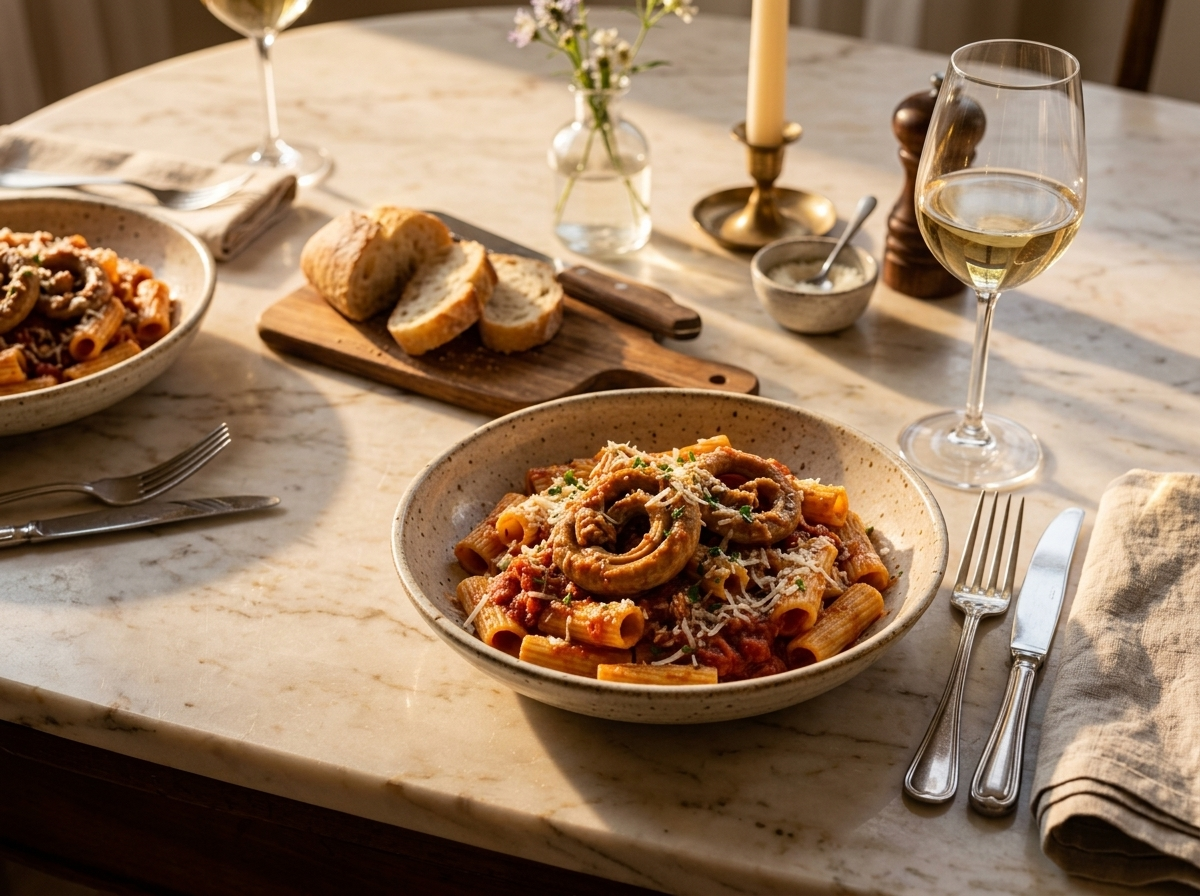
Rigatoni con la pajata is rich enough to stand alone as a full plate, but a simple side balances it. Puntarelle salad with anchovy dressing or cicoria ripassata in garlic and oil are classic Roman pairings.
A glass of Frascati or a light Lazio red cuts through the richness without fighting it. Keep the wine on the dry, acidic side.
Have crusty bread on the table for scarpetta, mopping up whatever sauce is left in the bowl.
FAQ
Why did my pajata sauce turn watery instead of creamy?
This usually means the pajata simmered too fast or too briefly, so the milk inside never fully set into curds. Cook it at a bare simmer for the full 45 to 60 minutes and check by pressing a ring with a spoon; it should feel firm, not liquid, before you toss it with the pasta.
Can I use lamb intestines instead of veal pajata?
Yes, lamb intestines work as a substitute and are sometimes easier to source. They cook slightly faster, closer to 35 to 45 minutes, and taste milder than veal pajata. Check the casing the same way, pressing gently to make sure the milk inside has set before serving.
Can I make rigatoni con la pajata a day ahead?
You can make the pajata and tomato sauce a day ahead and refrigerate it, but cook the rigatoni fresh right before serving. Reheat the sauce gently on the stove, then toss with newly boiled pasta so the rigatoni doesn’t turn mushy from sitting in sauce overnight.
What wine goes with rigatoni con la pajata?
A dry white like Frascati is the traditional Roman pour, since its acidity cuts through the richness of the pajata. A light, low-tannin red such as a young Sangiovese also works if you prefer red with pasta. Avoid heavy, oaky wines that compete with the dish’s mild flavor.
Is pajata safe to eat, and why is it hard to find in the US?
Pajata from properly sourced young, milk-fed veal is considered safe in the countries where it’s legally sold, but many places, including the US, restrict or ban sale of calf intestines due to BSE regulations that classify certain tissues as risk material. Always buy from a licensed butcher who can confirm the source.
What’s the difference between pajata and trippa alla romana?
Pajata comes from milk-fed veal intestines still containing curdled milk, giving it a soft, slightly sweet richness. Trippa alla romana uses beef tripe, the stomach lining, simmered in tomato with mint, and has a chewier texture and no milky curds. Both are Roman quinto quarto dishes but taste and feel distinct on the plate.