
Jump to Recipe
Animelle di vitello, pan-fried veal sweetbreads, have a delicate, custardy center under a golden seared crust once they’re poached, pressed and dredged in flour before hitting hot butter.
The texture, not the seasoning, defines this dish. A short poach firms the outside just enough to handle, then a weighted press flattens and tightens the piece so it slices clean and holds together in the pan.
I use throat sweetbreads (the round, dense lobe) when I can get them, since heart sweetbreads run softer and break apart more easily under the knife. Either works here, but the round ones are more forgiving for a first attempt.
This isn’t a weeknight dish. Between soaking, poaching and pressing you’re looking at close to two hours of mostly hands-off time, but the actual cooking at the stove takes under 15 minutes.
Why You’ll Love This Recipe
- Restaurant-style texture you rarely get outside a trattoria
- Pressing step means clean slices that hold together in the pan
- Ready to fry in under 15 minutes once prepped
- Sage butter sauce comes together in the same skillet
Ingredient Notes
- veal sweetbreads: Look for the rounder, denser throat sweetbreads if your butcher offers a choice. They hold together better under the knife than the softer heart lobe.
- white vinegar: Firms the sweetbreads and keeps the poaching water clean-tasting. Fresh lemon juice works the same way.
- capers: Optional, but they cut the richness of the butter. Skip them if you’d rather keep the sauce plain.
- sage leaves: Fresh only here. Dried sage won’t crisp in the butter the same way and turns bitter fast.
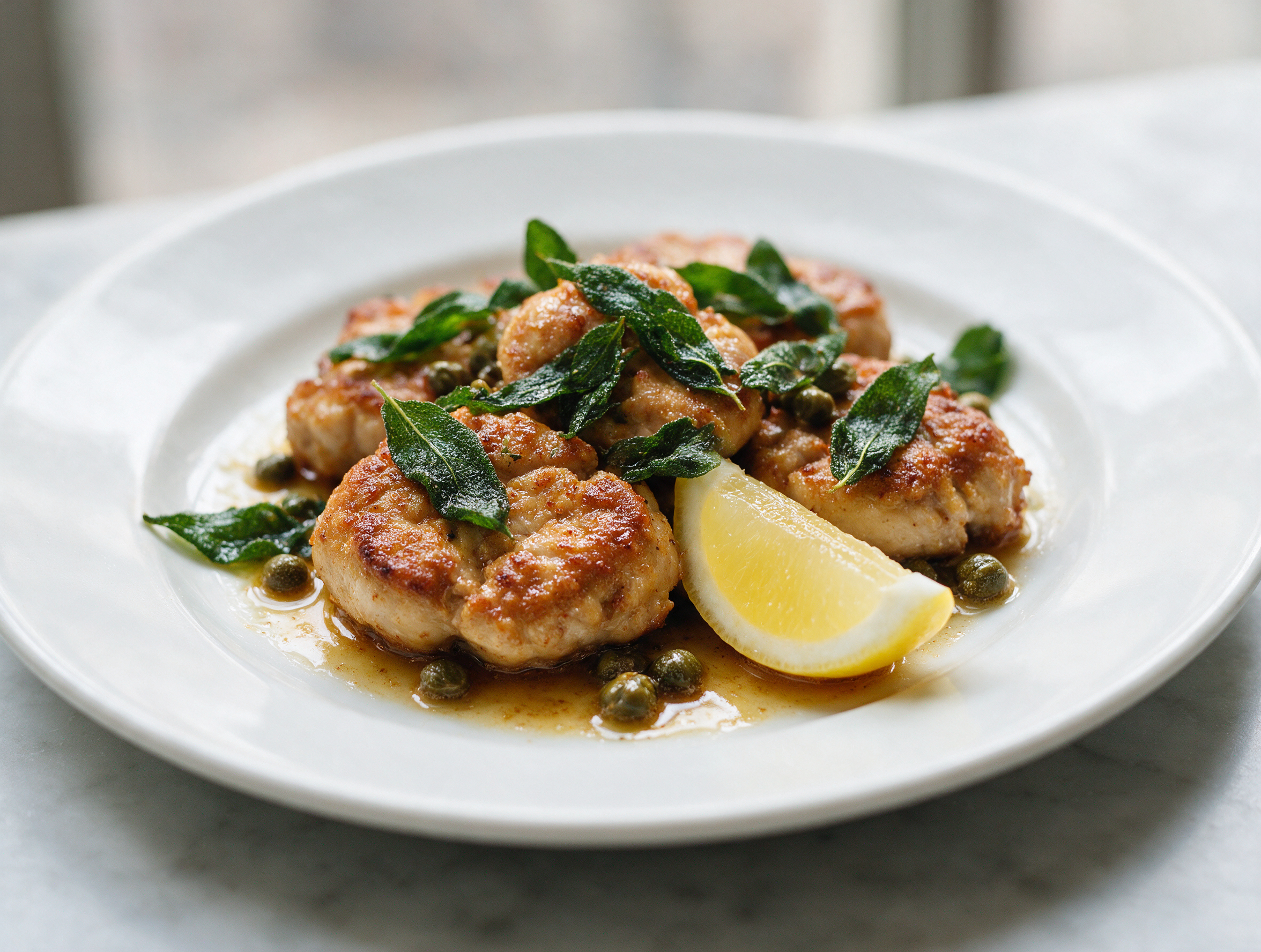
Crispy Pan-Fried Veal Sweetbreads with Sage Butter
Ingredients
Method
- Place the sweetbreads in a bowl of cold water and refrigerate for 45 minutes to 1 hour, changing the water once or twice, until it runs mostly clear.
- Bring water to a bare simmer in a 3-quart / 2.8L saucepan with the vinegar, bay leaf, peppercorns and 1 tsp salt.
- Slide in the sweetbreads and poach gently for 3 to 4 minutes, until firm but still yielding when pressed. Lift straight into a bowl of ice water.
- Once cool enough to handle, peel away the outer membrane and any visible tubes or dark veins with a paring knife, working over a bowl since bits pull away easily.
- Sandwich the peeled sweetbreads between two plates, weigh the top plate down with a couple of cans, and refrigerate for 30 to 45 minutes. This flattens them so they slice evenly and hold together in the pan; skip it and the slices crumble when you try to turn them.
- Slice the pressed sweetbreads into 1.5 cm / 5/8-inch medallions. Season both sides with salt and pepper.
- Dredge each piece lightly in flour, shaking off the excess.
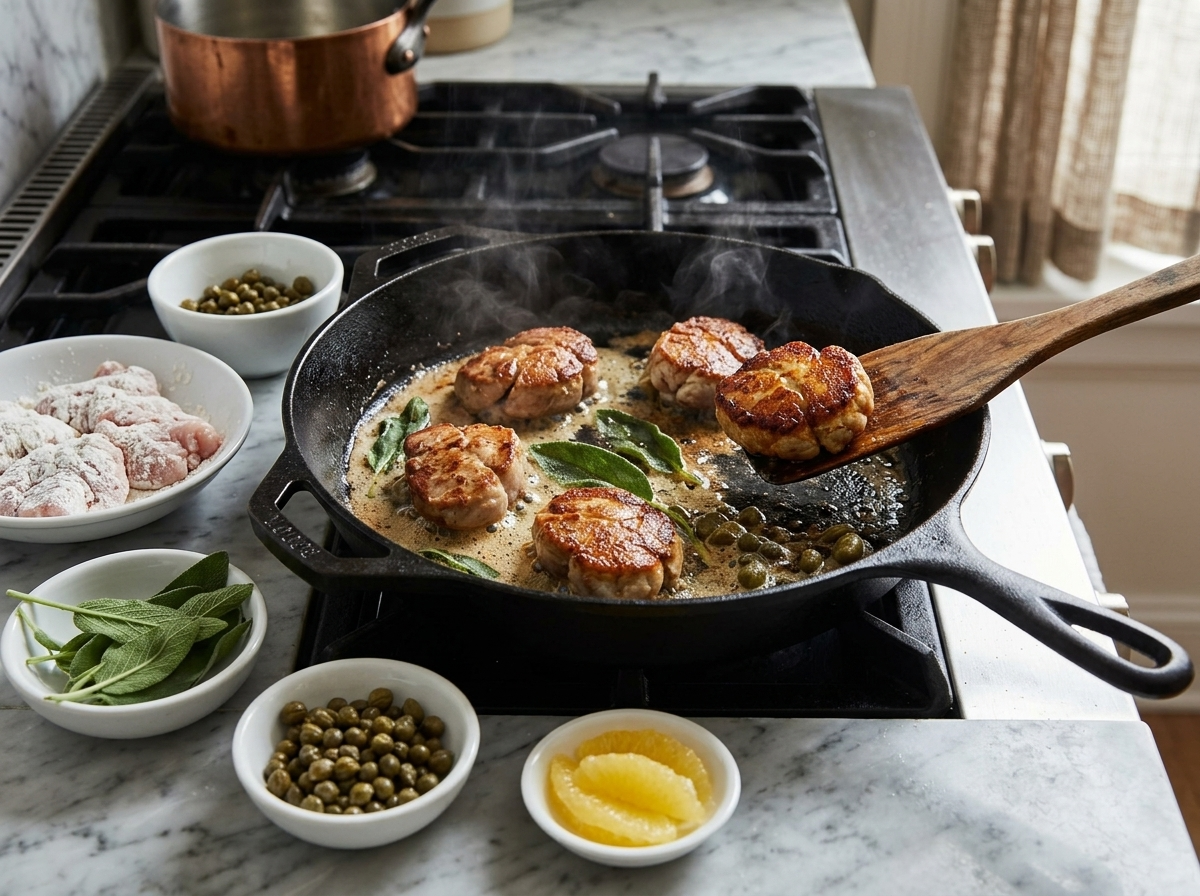
- Melt half the butter with the olive oil in the 12-inch / 30cm skillet over medium-high heat until the foam subsides.
- Add the sweetbreads in a single layer, working in batches so the pieces don't touch, and sear for 3 to 4 minutes per side until deep golden and an instant-read thermometer reads 165 F / 74 C at the center.
- Transfer the seared pieces to a plate. Add the remaining butter and sage leaves to the skillet and let the butter turn nutty and the sage crisp, about 1 minute.
- Off heat, stir in the lemon juice and capers, scraping up any browned bits from the pan.
- Spoon the sage butter over the sweetbreads, scatter with parsley, and serve right away with lemon wedges.
Notes
- Trim visible fat and connective tissue before soaking, it shortens peeling later.
- Don't crowd the skillet, sear in batches so each piece browns instead of steams.
- Keep the press weight light, a couple of cans is enough.
- Serve immediately, the crust softens within minutes off the heat.
Tips for Success
- Change the soaking water two to three times so the sweetbreads turn pale, not gray, before poaching.
- Poach only until firm, not fully cooked. They finish cooking in the skillet.
- Press the sweetbreads for a full 30 minutes. Rushing this step is why slices fall apart later.
- Work in batches in the skillet so each piece has room to brown instead of steam.
- Baste with the sage butter for the last 30 seconds instead of stirring, so the leaves stay crisp.
Variations
- Swap sage for fresh thyme and finish with a splash of dry Marsala instead of lemon juice.
- Toss the pan sauce with wilted spinach and spoon it alongside the sweetbreads for a heartier plate.
- Use veal kidneys prepared the same way if sweetbreads aren’t available at your butcher.
Storage and Reheating
Cooked sweetbreads keep in an airtight container in the fridge for 2 days. The crust softens overnight, so treat this as a short-term leftover rather than a make-ahead centerpiece.
Reheat in a dry skillet over medium heat for 2 to 3 minutes per side to bring back some crispness, or 8 minutes in a 180 C / 350 F oven. Skip the microwave, it turns the texture spongy.
Freezing isn’t worth it here. Freezing breaks down the pressed texture and the sweetbreads turn mushy once thawed. If you want a head start, poach and press up to 1 day ahead, then slice and pan-fry just before serving.
Serving Suggestions
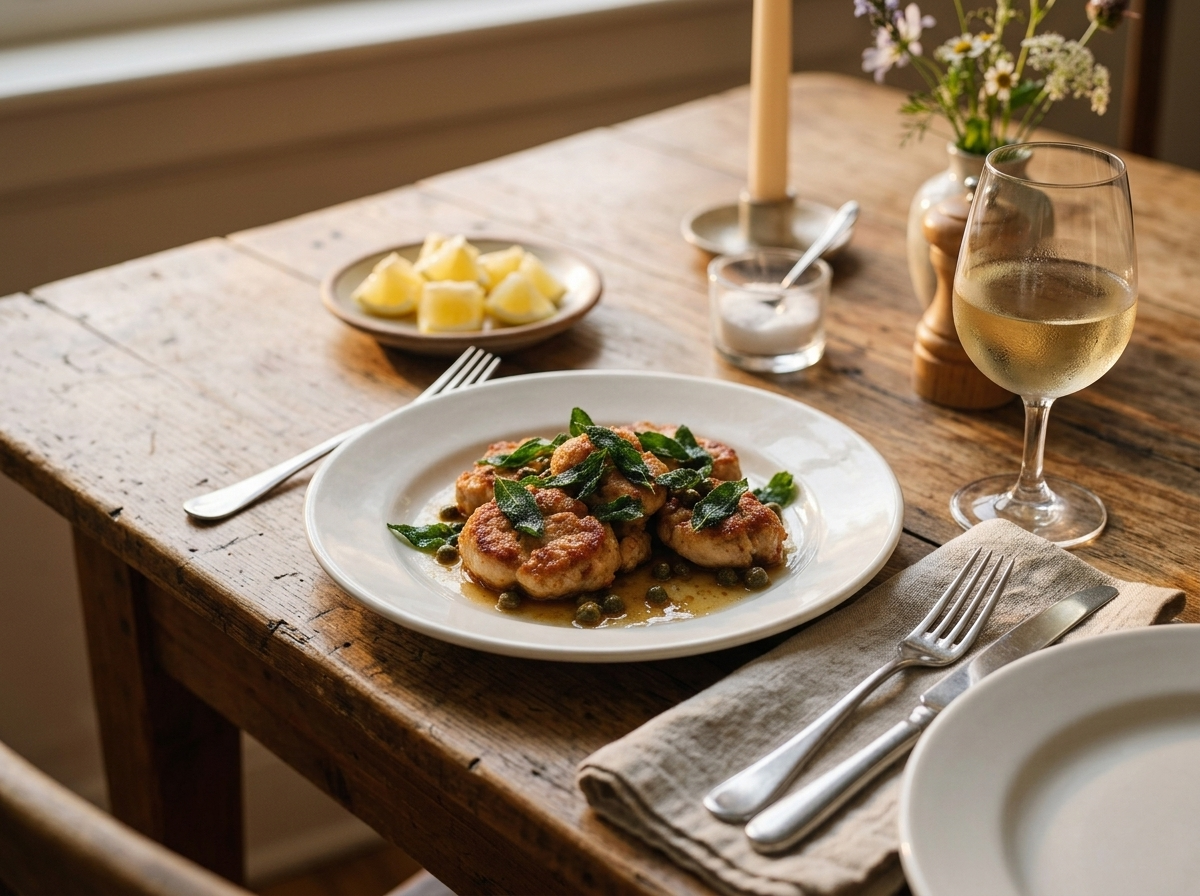
Pan-fried veal sweetbreads want something plain alongside so the sage butter sauce stays the focus. A simple risotto bianco or buttered mashed potatoes soaks up the pan juices well.
Sauteed spinach or a bitter green like radicchio, dressed with just oil and lemon, balances the richness. A slice of crusty bread on the side is worth having for mopping the plate.
Pour a dry white with some acidity, a Vermentino or Verdicchio, to cut through the butter. This isn’t a dish for a heavy red.
FAQ
Why are my pan-fried veal sweetbreads rubbery instead of creamy?
Rubbery sweetbreads usually mean they were overcooked in the poach or the pan, or the outer membrane wasn’t fully peeled off. Poach only 3 to 4 minutes until just firm, then sear to 165 F / 74 C and stop. Extra time on the heat toughens the texture fast.
Can I use beef sweetbreads instead of veal for this recipe?
You can, but beef sweetbreads are larger and denser, with a stronger flavor than veal. They’ll need a longer poach, closer to 6 to 8 minutes, and a longer press before slicing. Veal stays the milder, more delicate choice for this dish.
Can I poach and press the sweetbreads a day before pan-frying?
Yes, this is the easiest way to break up the work. Poach, press and refrigerate the trimmed sweetbreads, tightly wrapped, up to 1 day ahead, then slice, dredge and pan-fry just before serving so the crust stays fresh and crisp.
What goes well with pan-fried veal sweetbreads?
Something plain works best, like risotto bianco, buttered mashed potatoes, or sauteed spinach with lemon. A dry white wine such as Vermentino cuts through the sage butter. Skip heavy sauces since the dish already carries plenty of richness.
How do I know pan-fried veal sweetbreads are cooked through and safe to eat?
Check with an instant-read thermometer for 165 F / 74 C at the center, the same benchmark used for poultry since sweetbreads are glandular tissue. The crust should be deep golden on both sides and the center firm but still tender, not soft or translucent.
What’s the difference between animelle di vitello and other organ meats like brains or liver?
Animelle di vitello are the thymus and pancreas glands, with a milder taste and firmer, meatier texture than brains, which are much softer, or liver, which is stronger tasting and grainier. Sweetbreads pan-fry into a crisp crust with a custardy center, unlike either.