Jump to Recipe
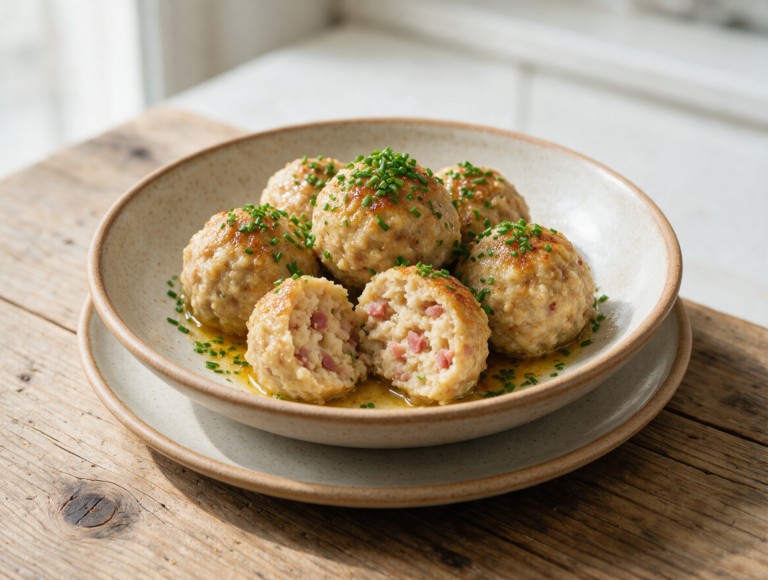
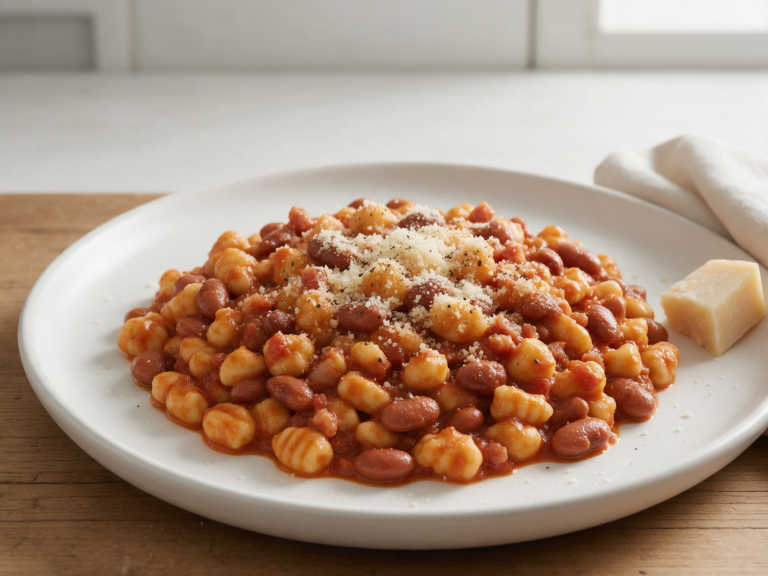
Pisarei e faso is the classic dish of Piacenza: tiny bread dumplings made from breadcrumbs, flour and hot water, simmered in a borlotti bean and tomato sauce. It takes 60 minutes, and the shaping is the only slow part.
There’s no egg or potato in the dough. Hot water softens the crumbs, and a thumb press leaves a dimple that holds the sauce.
The sauce starts with a soffritto and diced pancetta. Canned borlotti beans keep it a weeknight dish, and mashing a few against the pan thickens it without cream or flour.
Aim for a dough that feels like soft modeling clay. If it’s too wet, the dumplings turn gluey in the pot, so add flour a tablespoon at a time until it stops sticking to your palm.
Why You’ll Love This Recipe
- Pantry staples: breadcrumbs, flour, canned beans and passata
- No egg and no potato, so the dough is cheap
- Raw shaped dumplings freeze for later weeknight dinners
- Thick bean sauce clings to every dimple
Ingredient Notes
- fine dry breadcrumbs: Use plain, unseasoned, fine crumbs. Panko is too coarse and makes a crumbly dough. You can dry stale bread in a low oven and blitz it fine.
- borlotti beans: Canned borlotti (cranberry beans) are fine for a weeknight. Cannellini work as a swap and give a paler, milder sauce.
- pancetta: Many Piacenza cooks start the soffritto with lard. Diced pancetta is easier to find, and unsmoked bacon works if you can’t get it.
- Grana Padano: Parmigiano-Reggiano is a straight swap. Grate it fresh, since pre-grated cheese doesn’t melt smoothly into the sauce.
- tomato passata: Smooth passata gives a clean-tasting, even sauce. Crushed canned tomatoes work, but the sauce will be chunkier.
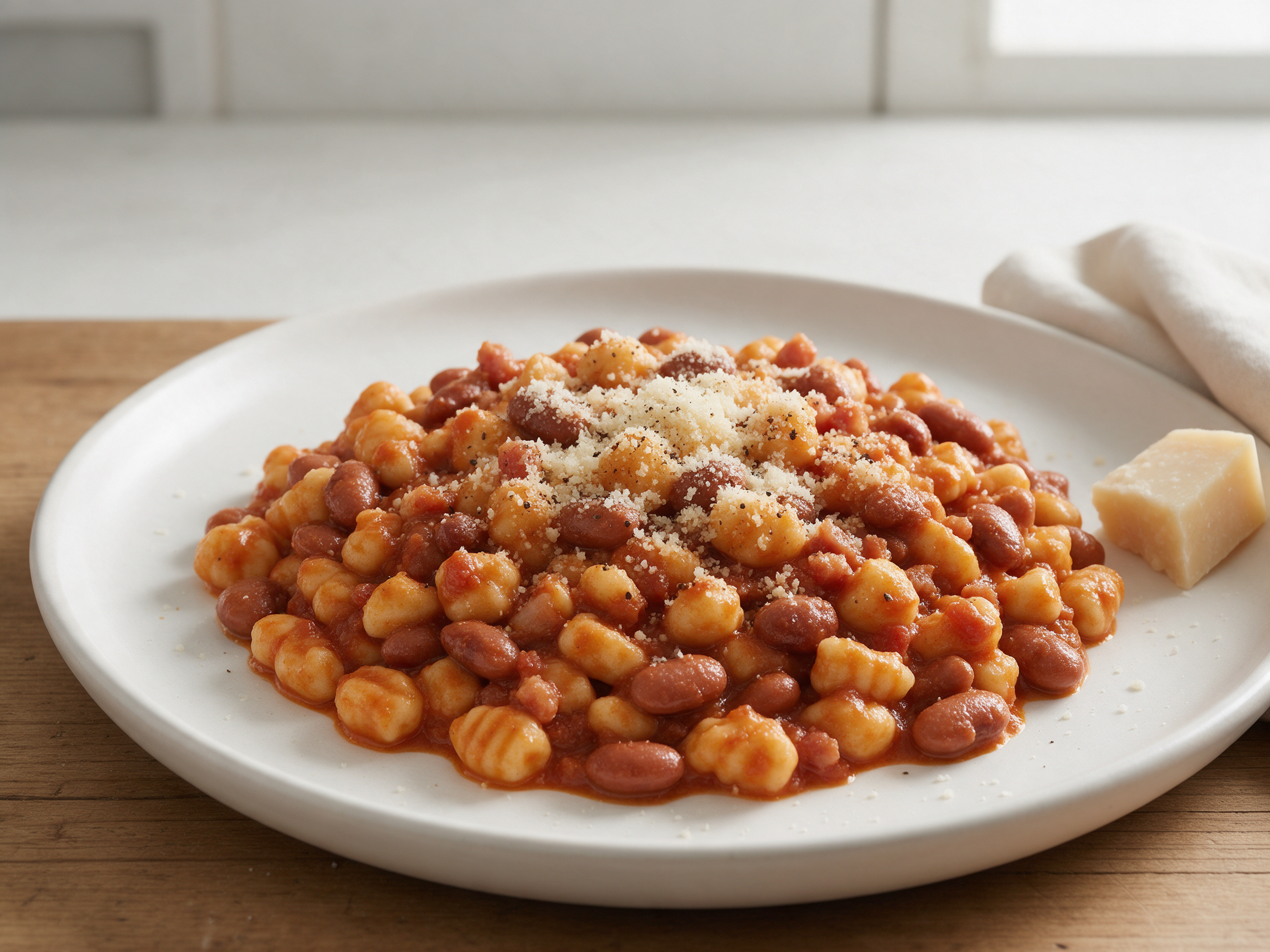
Pisarei e Faso: Piacenza Bread Dumplings with Beans
Ingredients
Method
- Stir the breadcrumbs, flour and fine salt together in a mixing bowl. Pour in 180 ml of hot water, stir with a wooden spoon until shaggy, then tip onto the counter and knead for 2 minutes. Add up to 20 ml more water if the dough crumbles, or a tablespoon of flour if it sticks to your palm, until it feels like soft modeling clay.
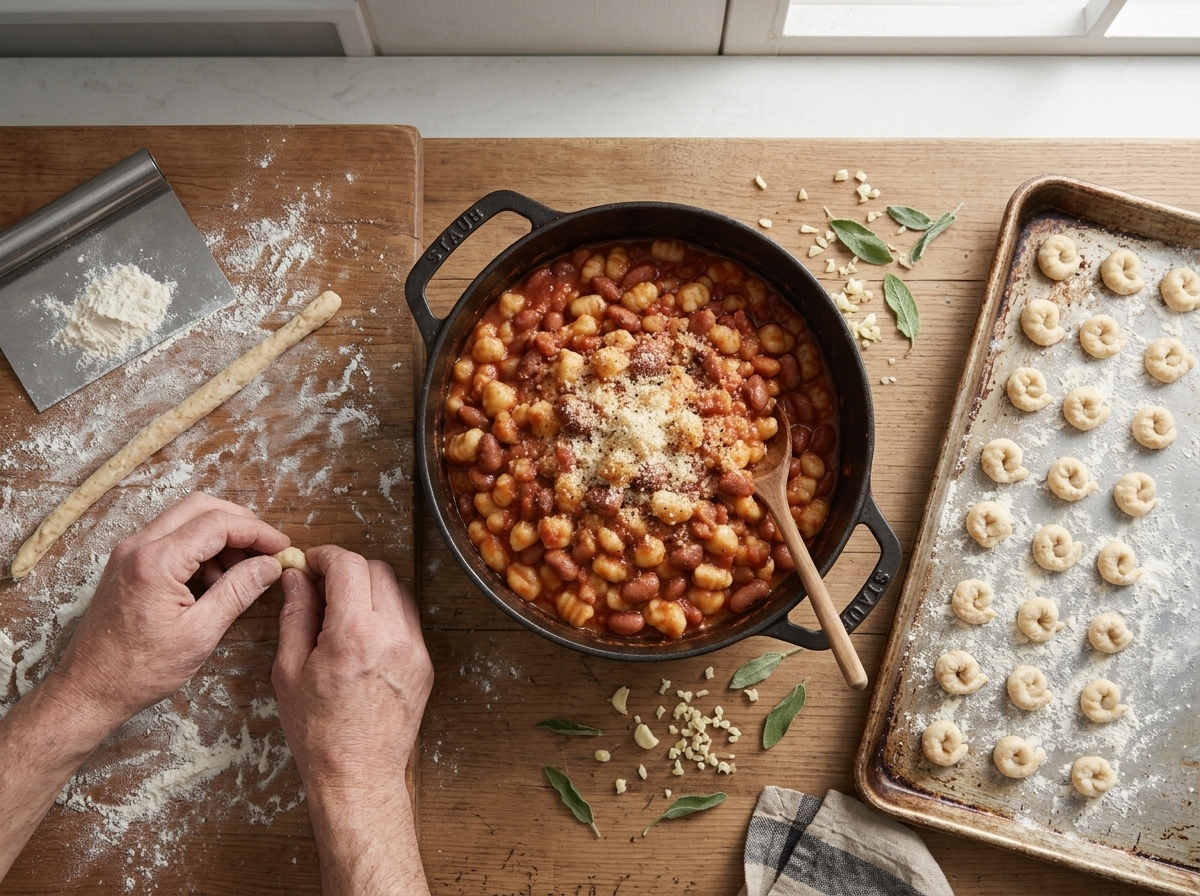
- Cut the dough into 4 pieces and roll each into a rope about 1 cm thick, keeping the rest under a damp towel. Cut each rope into 1 cm pieces, press each with your thumb and drag it slightly toward you to make a shallow curl. Set the pisarei in a single layer on a floured 33 x 46 cm / 13 x 18 inch sheet pan. You'll have a few hundred, and shaping takes about 20 minutes.
- Warm the olive oil and pancetta in a 28 cm / 11-inch deep sauté pan over medium heat for 3 minutes, until the fat renders and the edges turn pale gold. Add the onion, carrot, celery and a pinch of salt, and cook over medium-low heat for 7 minutes, until soft and translucent but not browned.
- Stir in the tomato paste for 1 minute, then add the passata, borlotti beans and broth. Simmer gently, uncovered, for 15 minutes, mashing a ladleful of beans against the side of the pan halfway through so the sauce thickens and coats a spoon. While it simmers, bring 4 litres of water to a boil in a 24 cm / 5-quart (4.7 L) pot and add the coarse salt.
- Boil the pisarei in the salted water for 4 to 5 minutes. They rise to the surface after about 2 minutes, but keep cooking and bite one: the center should be tender with no dry floury spot. Scoop out 120 ml of the cooking water, then lift the dumplings into the sauce with a slotted spoon.
- Toss over low heat for 1 minute, adding cooking water a splash at a time until the sauce loosens and coats the dumplings. Off the heat, stir in half the Grana Padano, taste for salt, and serve with black pepper and the remaining cheese.
Notes
- Cover dough you aren't shaping with a damp towel so it doesn't dry and crack.
- Dust shaped pisarei with flour and keep them in a single layer so they don't stick.
- Taste for salt at the end, since pancetta, canned beans and Grana Padano are all salty.
- Make the sauce a day ahead and shape the dumplings fresh for the best texture.
Tips for Success
- Add the hot water gradually and stop when the dough feels like soft modeling clay that doesn’t stick to your palm.
- Roll ropes about 1 cm thick and cut 1 cm pieces so the pisarei cook evenly in 4 to 5 minutes.
- Press each piece with your thumb and drag slightly toward you to form a shallow curl that holds the sauce.
- Mash a ladleful of beans against the side of the pan to thicken the sauce without adding flour.
- Reserve 120 ml of the dumpling cooking water before draining, then loosen the sauce with a splash if it tightens.
Variations
- Skip the pancetta, add 1 extra tablespoon of olive oil and use vegetable broth, with a vegetarian hard cheese for a meat-free version.
- Use cannellini beans instead of borlotti for a paler, milder sauce, and finish with a few torn sage leaves.
- Drop a Parmigiano rind into the simmering sauce for savory depth, and remove it before tossing in the dumplings.
Storage and Reheating
Pisarei e faso keeps in an airtight container in the refrigerator for 3 to 4 days. The dumplings keep absorbing sauce as they sit, so the dish thickens and firms up overnight.
Reheat in a 28 cm / 11-inch skillet over medium-low heat with 60 to 80 ml of water or broth per portion. Stir gently for 5 to 6 minutes until steaming hot throughout. In the microwave, cover the bowl, add a splash of water and heat in 60-second bursts, stirring between each.
For freezing, spread raw shaped pisarei on a floured tray, freeze for 1 hour, then bag them for up to 2 months. Boil them straight from frozen for 5 to 6 minutes. The sauce alone freezes for up to 3 months.
Serving Suggestions
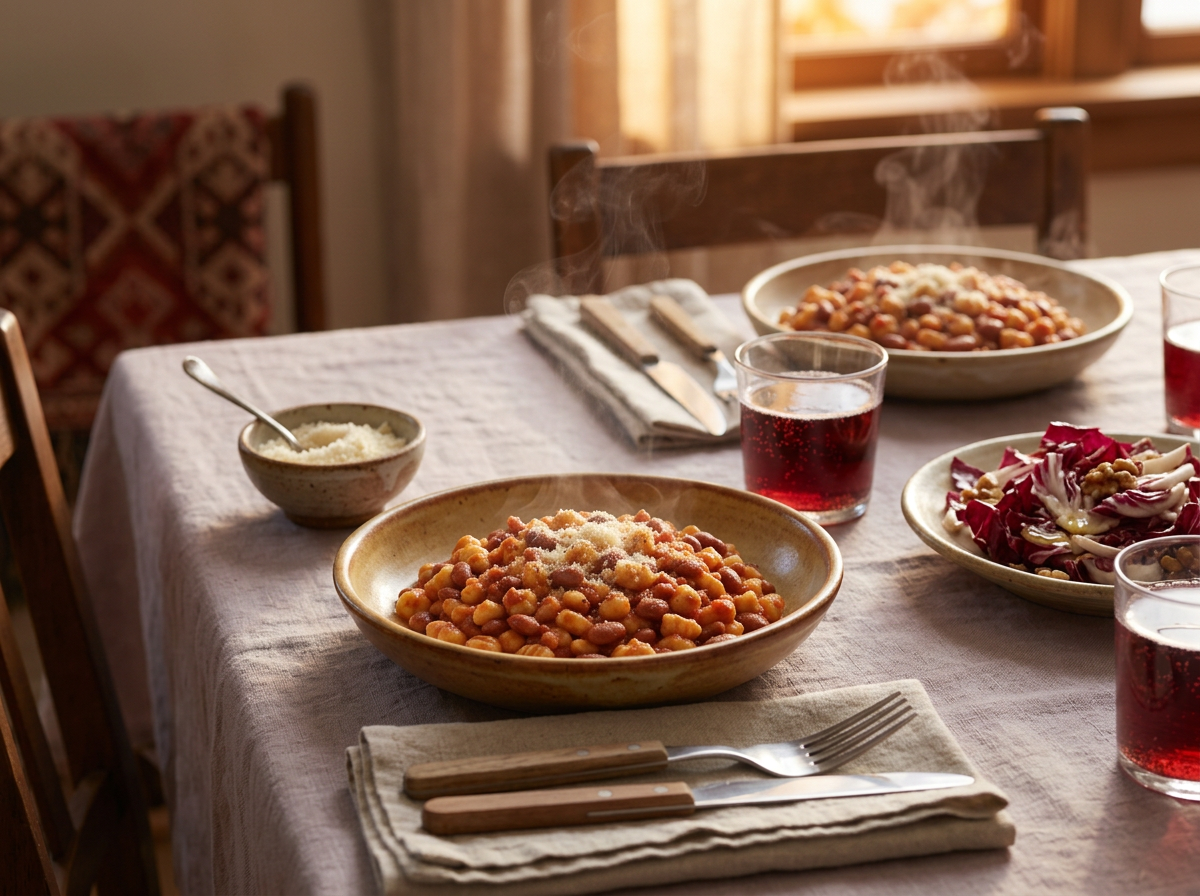
Serve pisarei e faso in warm shallow bowls straight from the pan, with extra Grana Padano and black pepper at the table. It works as a primo before a light secondo, or as a full dinner with a salad.
A bitter greens salad, such as radicchio or rocket dressed with lemon and olive oil, cuts through the pancetta and cheese. For wine, a lightly sparkling red Gutturnio from the Colli Piacentini is the local choice.
Serve within 10 minutes of tossing, before the dumplings soak up too much of the sauce. A thin drizzle of good olive oil on top is optional.
FAQ
How do I know if my pisarei dough is the right texture?
The dough is right when it feels like soft modeling clay: smooth, slightly springy, and not sticking to your palm. If a rope cracks as you roll it, knead in a teaspoon of hot water. If it sticks, add a tablespoon of flour. Wet dough turns gluey in the pot.
Can I use dried borlotti beans instead of canned for pisarei e faso?
Yes. Use 200 g dried borlotti, soak them overnight, then simmer for 60 to 75 minutes until tender. That gives about 480 g cooked, the same as two drained cans. Replace some of the broth with the bean cooking liquid for a creamier sauce.
Can you freeze pisarei before cooking them?
Yes, raw pisarei freeze well. Spread them in a single layer on a floured tray, freeze for 1 hour, then transfer to a bag for up to 2 months. Cook straight from frozen in salted boiling water for 5 to 6 minutes. Thawing first makes them sticky.
What wine and side dish go with pisarei e faso?
A lightly sparkling red Gutturnio from the Colli Piacentini is the local pairing, and a dry Barbera also works. For a side, serve a bitter green salad like radicchio dressed with lemon and olive oil. The acidity balances the pancetta and Grana Padano.
How do I make pisarei e faso vegetarian?
Leave out the pancetta, add 1 extra tablespoon of olive oil and use vegetable broth. A pinch of smoked paprika replaces some of the savory depth. Grana Padano is made with animal rennet, so choose a vegetarian hard cheese if that matters to you.
What is the difference between pisarei and gnocchi?
Pisarei are made from breadcrumbs, flour and hot water, with no potato or egg, while gnocchi usually rely on potato or ricotta. The bread gives pisarei a denser bite. They’re also pressed into tiny dimples with a thumb, so they’re much smaller than most gnocchi.