
Jump to Recipe
Cassone romagnolo is a stuffed piadina, folded in half like a savory turnover and pan-cooked on a hot griddle until the dough blisters and the cheese inside turns molten. Emilia-Romagna cooks have made these for generations, usually with whatever wild greens grew nearby that week.
I use a mix of spinach and Swiss chard here, wilted with garlic and a little chili, then folded with torn squacquerone. Squacquerone is the soft, spreadable cheese Romagna is known for, but stracchino or fresh mozzarella work if you can’t find it.
The dough itself is close to a lean bread dough, no yeast needed, just flour, water, salt, and a little olive oil rubbed in for tenderness. Traditional recipes lean on lard for that same effect, and you can swap it in if you want the older flavor.
The one thing that trips people up is overfilling. Pack the greens too generously and the seam splits open on the griddle, spilling melted cheese onto the pan.
Why You’ll Love This Recipe
- Crisp, blistered dough wraps around molten cheese and greens.
- Uses one bowl and a hot skillet, no oven needed.
- Freezer-friendly, so you can stash extras for busy nights.
- Budget-friendly filling built from greens and one soft cheese.
Ingredient Notes
- flour: Use a mid-protein all-purpose or Italian 00 flour for a tender, pliable dough that folds without cracking.
- olive oil: A fruity olive oil rubbed into the flour gives the dough its short texture. Lard is the traditional Romagna choice if you want the older flavor.
- greens: A mix of spinach and Swiss chard works well. Wild chicory is the traditional choice in Romagna if you can find it.
- garlic: Slice it instead of mincing so it flavors the oil without burning during the quick sauté.
- squacquerone: This soft, spreadable cheese from Romagna melts fast. Stracchino or fresh mozzarella are close substitutes.
- baking soda: A small pinch keeps the dough tender without any rise. Skip it and the cassone will just be a bit firmer.
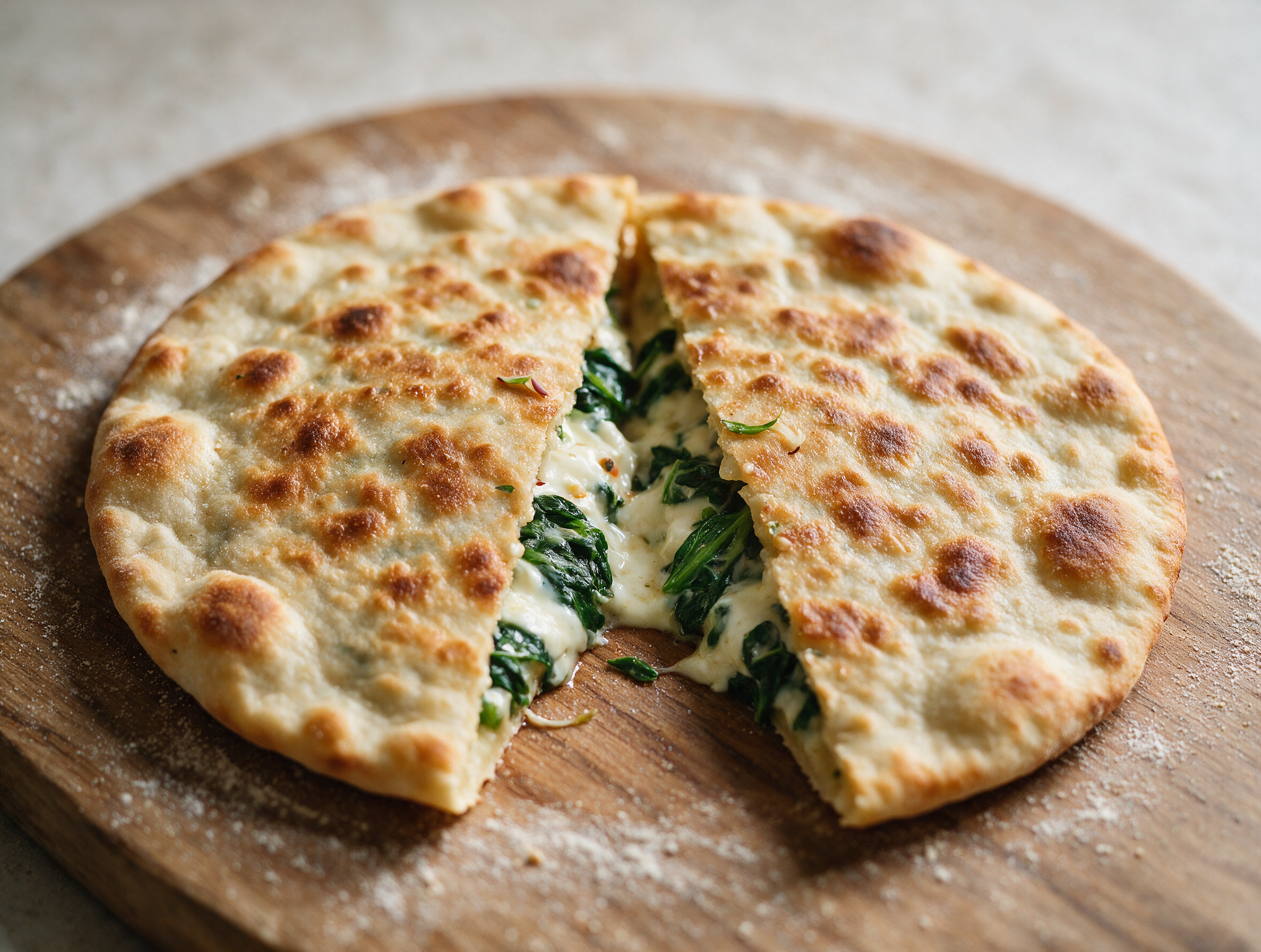
Pan-Cooked Cassoni Romagnoli with Greens and Cheese
Ingredients
Method
- Heat 2 tablespoons of olive oil in a 25 cm / 10-inch skillet over medium heat. Add the garlic and chili flakes, if using, and cook for 30 seconds until fragrant, not browned.
- Add the mixed spinach and Swiss chard in batches, letting each batch wilt down before adding more. Season with salt and pepper and cook for 6 to 7 minutes, stirring occasionally, until wilted and most of the liquid has cooked off.
- Tip the greens into a colander and press out any remaining liquid with the back of a spoon. Cool for 5 minutes, then chop roughly.
- In a large bowl, whisk together the all-purpose or 00 flour and baking soda. Gradually stir in the warm water until a rough dough forms.
- Knead the dough on a lightly floured surface for about 5 minutes until smooth and elastic, then cover and let rest for 20 minutes.
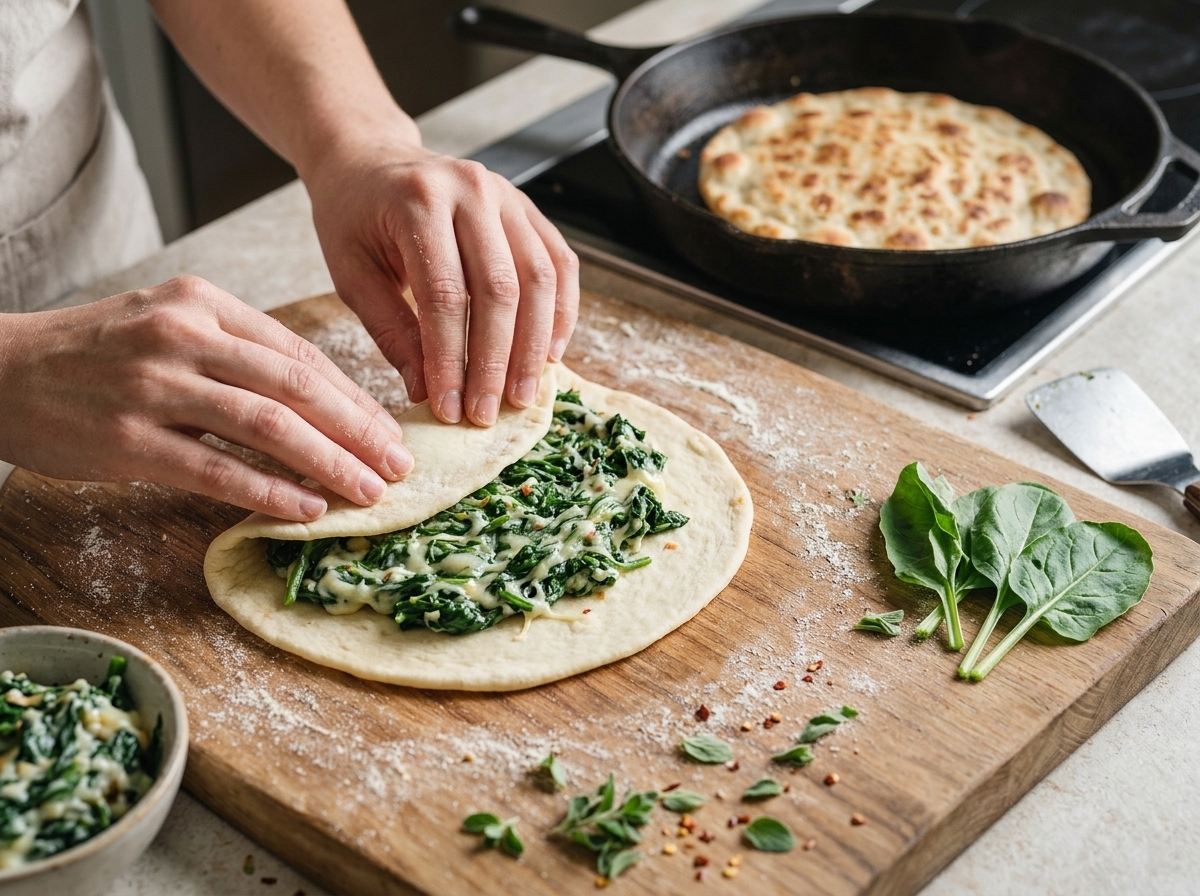
- Roll the dough into thin rounds, cook on a hot skillet for 1 to 2 minutes per side until lightly charred, then spread with squacquerone cheese and top with the wilted greens before folding and serving warm.
Notes
- Rest the dough 30 minutes minimum for easier rolling and folding.
- Squeeze greens completely dry before filling to prevent a soggy seam.
- Don't overfill each round, or the seam bursts on the griddle.
- Use a dry, ungreased skillet so the crust blisters instead of frying.
Tips for Success
- Rest the dough for a full 30 minutes before rolling, or it will spring back and tear when you fold it.
- Squeeze the wilted greens dry in a colander before filling, since watery greens turn the dough soggy and hard to seal.
- Fill each round with about 3 tablespoons of greens and 50 g of cheese, no more, so the seam holds through cooking.
- Preheat the skillet dry for a full 2 minutes before adding the first cassone so the dough starts blistering right away.
- Crimp the edges with a fork after folding to double-seal the seam and stop cheese from leaking onto the griddle.
Variations
- Swap the greens for sautéed radicchio and add crumbled sausage for a heartier filling typical of colder months.
- Use stracchino or fresh mozzarella instead of squacquerone if it’s easier to find, keeping the same 200 g quantity.
- Add a few anchovy fillets to the wilting greens for a salty, umami note common in coastal Romagna kitchens.
Storage and Reheating
Cassoni romagnoli keep in the fridge for 2 to 3 days once cooked, stored in an airtight container with parchment between layers so the dough doesn’t stick together.
Reheat them in a dry skillet over medium heat for 2 to 3 minutes per side, which brings back the crisp, blistered exterior. Skip the microwave, since it turns the dough limp and the cheese rubbery.
For longer storage, freeze the assembled but uncooked cassoni on a tray until firm, then bag them for up to 2 months. Cook straight from frozen in a hot skillet, adding 1 to 2 extra minutes per side.
Serving Suggestions
Serve cassoni romagnoli warm, cut in half so the melted cheese and greens show at the cut edge.
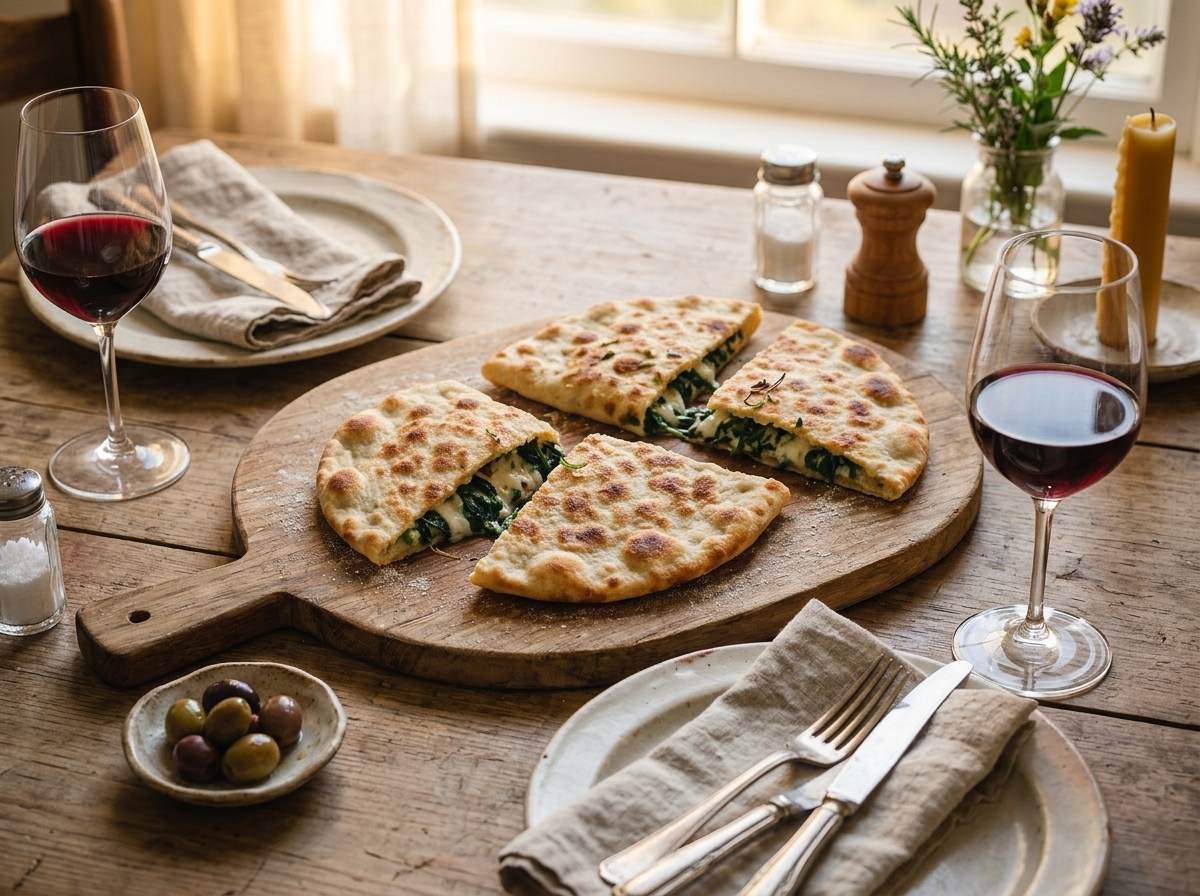
A simple green salad with lemon and olive oil balances the richness, and a glass of dry Sangiovese or Trebbiano is the local pour in Romagna.
They also work cut into smaller wedges for an antipasto spread, alongside cured meats, olives, and a soft cheese or two.
FAQ
Why did my cassone romagnolo burst open on the griddle?
The seam split because the dough was overfilled or not pressed tight enough before crimping. Keep the greens and cheese to about a quarter cup per round, leave a clear border, and press the edges firmly with your fingers or a fork before it hits the pan. A loose seal is the main reason melted cheese leaks out and scorches.
Can I use spinach instead of chicory in cassoni romagnoli?
Yes, spinach works well and is what many home cooks use when wild chicory isn’t in season. Swiss chard is another good stand-in, or a mix of both, since all three wilt down the same way with garlic and olive oil. Squeeze out the extra liquid so the filling doesn’t turn watery inside the dough.
Can I freeze cassoni romagnoli before cooking them?
Yes, assemble the cassoni fully, then freeze them uncooked on a tray before transferring to a bag for up to 2 months. Cook straight from frozen in a hot skillet, adding 1 to 2 extra minutes per side so the dough cooks through before the cheese scorches. Don’t thaw first or the dough turns soggy.
What pairs well with cassoni romagnoli filled with greens?
A sharp, dressed salad or a glass of dry Sangiovese cuts through the rich, cheesy filling nicely. I usually serve them with thinly sliced radicchio tossed in lemon and olive oil, or a simple tomato and cucumber salad on the side. Cured meats or a soft cheese board round out a light lunch spread.
Are cassoni romagnoli gluten free?
No, the dough is made with wheat flour, so it’s not gluten free as written. You can swap in a 1:1 gluten-free flour blend, though the dough will be more delicate and needs gentler handling when you roll and fold it. Expect a slightly less chewy bite than the wheat version.
What’s the difference between a cassone and a regular piadina?
A cassone is a stuffed, folded piadina, sealed at the edges like a half-moon turnover, while a regular piadina stays open and gets its filling added after cooking, more like a wrap. Cassoni cook the filling and dough together on the griddle, so the cheese melts inside instead of just warming on top.