
Jump to Recipe
Pappardelle sulla lepre is a Tuscan hunter’s dish: wide ribbons of pasta tossed with a hare ragu that’s been marinated overnight in red wine and slow-braised for close to three hours until the meat falls off the bone. It’s the kind of recipe that shows up in Maremma trattorias in autumn, when hare is in season and the sauce needs a whole afternoon.
I marinate the hare in Chianti with juniper, cloves and a cinnamon stick before it ever hits the pot, the same red-wine approach that makes braised venison in red wine so deeply flavored. That step tames the gamy edge and builds the base for the sauce.
Don’t rush the braise. Two and a half hours minimum is what gets the meat to shred with a fork instead of fighting you off the bone.
If you can’t find hare, rabbit works and cuts the braise time by about an hour. The sauce won’t taste quite as deep, but it’s still a good plate of pasta.
Why You’ll Love This Recipe
- Marinade and braise build deep, layered flavor over one afternoon
- Sauce freezes well, so leftovers turn into an easy weeknight dinner
- Uses one pot for the whole ragu, less cleanup after
- Classic Tuscan hunting dish you can make in a home kitchen
Ingredient Notes
- hare: Ask your butcher to cut it into serving pieces. Wash your hands well after handling raw hare and cook it through; the long braise easily takes it past the 165 F / 74 C safety minimum for game meat.
- red wine: Use a dry Sangiovese-based wine like Chianti. It’s what you marinate in and what you’ll want to pour at the table.
- pancetta: Adds fat and salt to the base. Diced bacon works in a pinch, though it’s smokier.
- juniper berries: Crush them lightly with the flat of a knife first so they release more flavor into the marinade.
- tomato paste: Cook it briefly in the fat before adding liquid; it loses its raw, tinny taste and deepens in color.
- pappardelle: Dried is fine and holds up well against the meaty sauce. Fresh egg pappardelle cooks in 2 to 3 minutes, so watch it closely.
- Parmigiano Reggiano: Grate it fresh if you can. Pre-grated cheese doesn’t melt into the sauce the same way.
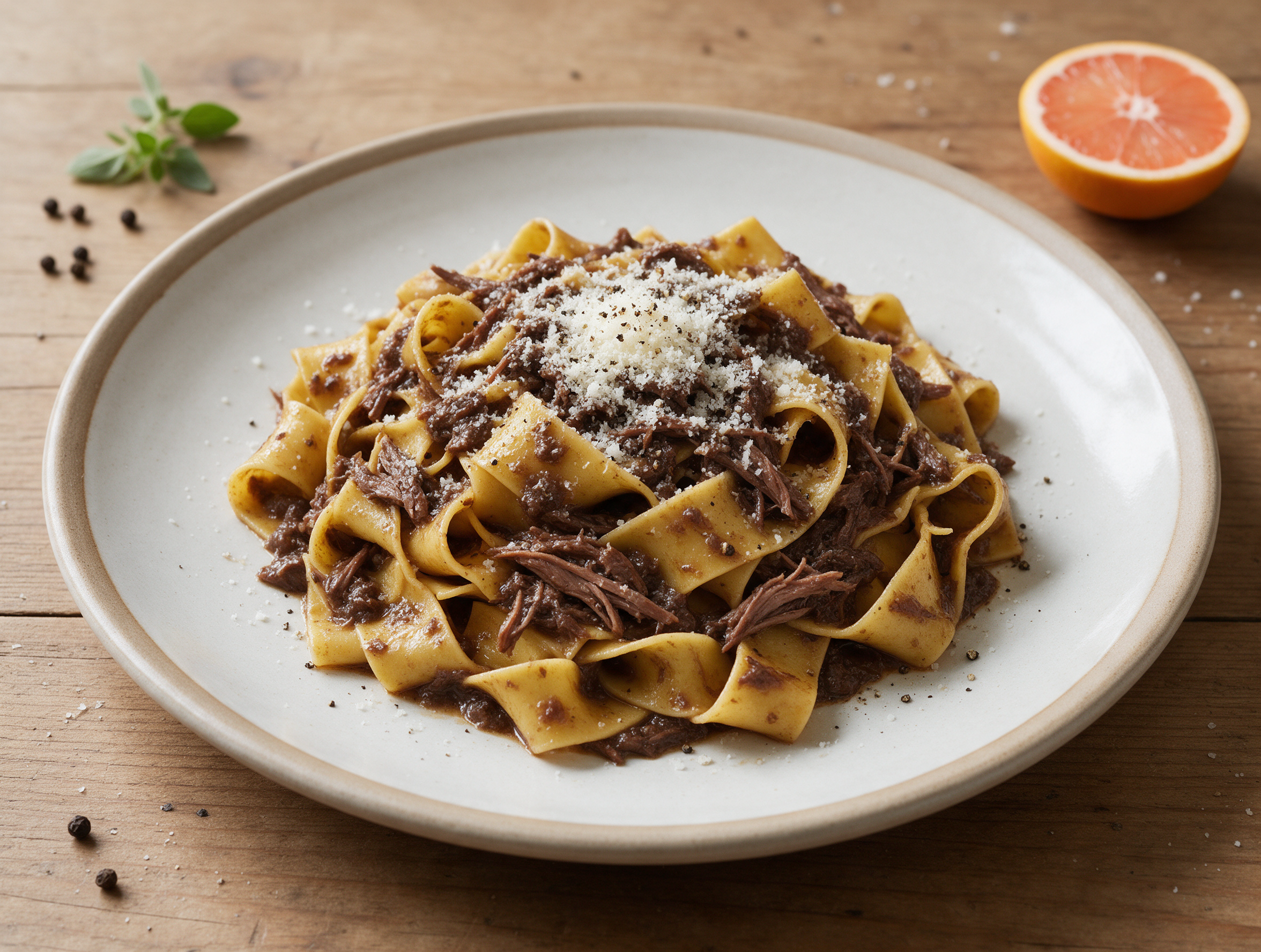
Pappardelle alla Lepre: Slow-Braised Tuscan Hare Ragu
Ingredients
Method
- Place the hare pieces in a large bowl with the onion, carrots, celery, garlic, bay leaves, juniper berries, cloves and cinnamon stick. Pour the red wine over everything, cover and refrigerate for at least 8 hours, up to 24.
- Remove the hare from the marinade and pat dry with paper towels. Reserve the marinade with its vegetables and spices. Season the hare with salt and pepper.
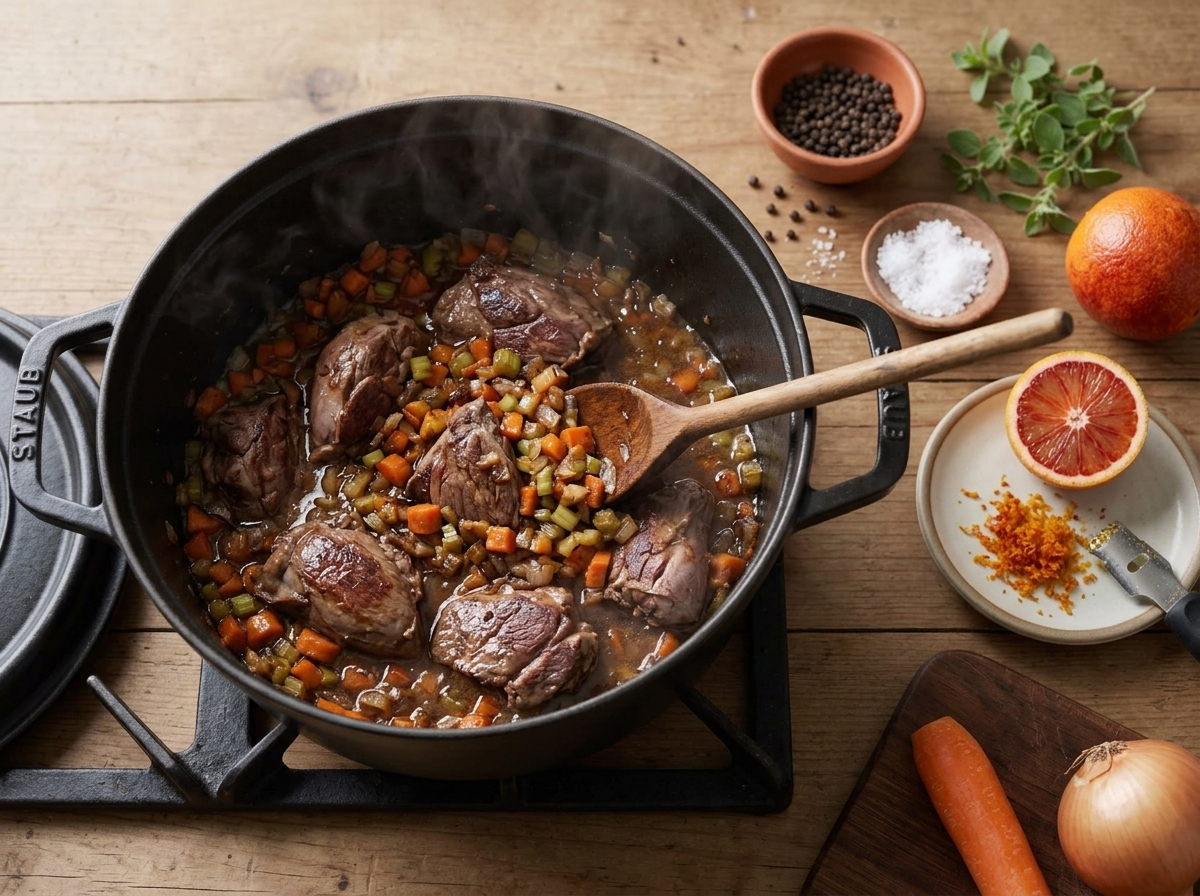
- Heat 1 tbsp olive oil in a 26 cm / 10-inch Dutch oven over medium-high. Add the pancetta and cook 4 to 5 minutes until the fat renders and it's lightly crisp. Remove with a slotted spoon.
- Brown the hare in the same pot in 2 batches, 3 to 4 minutes per side, until deep golden. Don't crowd the pot, or the meat will steam instead of browning. Set the hare aside with the pancetta.
- Add the remaining 2 tbsp olive oil and strained vegetables from the marinade to the pot. Cook 8 to 10 minutes until softened. Stir in the tomato paste and cook 1 to 2 minutes until it darkens.
- Strain the reserved marinade liquid to remove the whole spices, then pour it into the pot with the hare and pancetta. Bring to a simmer and cook uncovered 8 to 10 minutes to cook off the raw wine smell.
- Add the crushed tomatoes and stock. Season with salt and pepper, bring to a gentle simmer, cover and reduce heat to low. Cook 2.5 to 3 hours, until the meat is fork-tender and pulls easily off the bone. The internal temperature will read well past the 165 F / 74 C safety minimum for game meat long before this point; the extra time is for texture, not safety.
- Remove the hare pieces and let cool slightly. Shred the meat off the bones with two forks, discard the bones, cinnamon stick and bay leaves. Return the shredded meat to the sauce and simmer uncovered 10 to 15 minutes until it coats the back of a spoon.
- Bring a 6-quart / 5.7 L pot of well-salted water to a boil. Cook the pappardelle 1 to 2 minutes short of the package instructions for al dente, reserving 1 cup of pasta water before draining.
- Add the drained pappardelle straight into the ragu pot. Toss over low heat with the butter and a splash of pasta water until the sauce clings to the noodles, 1 to 2 minutes.
- Stir in the grated Parmigiano Reggiano. Plate immediately, topped with more cheese and cracked black pepper.
Notes
- Marinate hare at least 8 hours, up to 24, for the best flavor.
- Strain the marinade before cooking; whole spices turn bitter over a 3-hour simmer.
- Brown hare in batches so the pot doesn't crowd and steam the meat.
- Reduce the sauce uncovered at the end if it looks thin after shredding the meat.
Tips for Success
- Pat the hare fully dry before searing so it browns instead of steaming in the pot.
- Strain the marinade before adding it to the pot; whole cloves and peppercorns turn bitter over a long simmer.
- Brown the hare in two batches in the 26 cm Dutch oven so each piece actually colors.
- Reserve a cup of pasta water before draining, the same trick that helps the pancetta sauce cling to hand-torn fregnacce abruzzesi pasta rags.
- Shred the meat once it’s cool enough to handle, not straight out of the pot, so you can pick out small bones safely.
Variations
- Swap hare for rabbit and cut the braise to 1.5 to 2 hours since rabbit meat is leaner and cooks faster.
- Add a small square of dark chocolate to the sauce in the last 20 minutes for a rounder finish, a trick borrowed from cinghiale ragu.
- Use pici or tagliatelle instead of pappardelle if that’s what’s in the pantry; both hold the sauce almost as well.
Storage and Reheating
Pappardelle sulla lepre keeps well because the ragu is a slow braise, not a delicate sauce. Store leftovers in an airtight container in the fridge for 3 to 4 days.
Reheat gently in a 10-inch skillet over medium-low heat with a splash of water or stock, stirring until the pasta loosens and the sauce is hot through, about 5 minutes.
The ragu on its own, without pasta, freezes well for up to 3 months. Freeze it in portions and cook fresh pappardelle only when you’re ready to eat.
Serving Suggestions
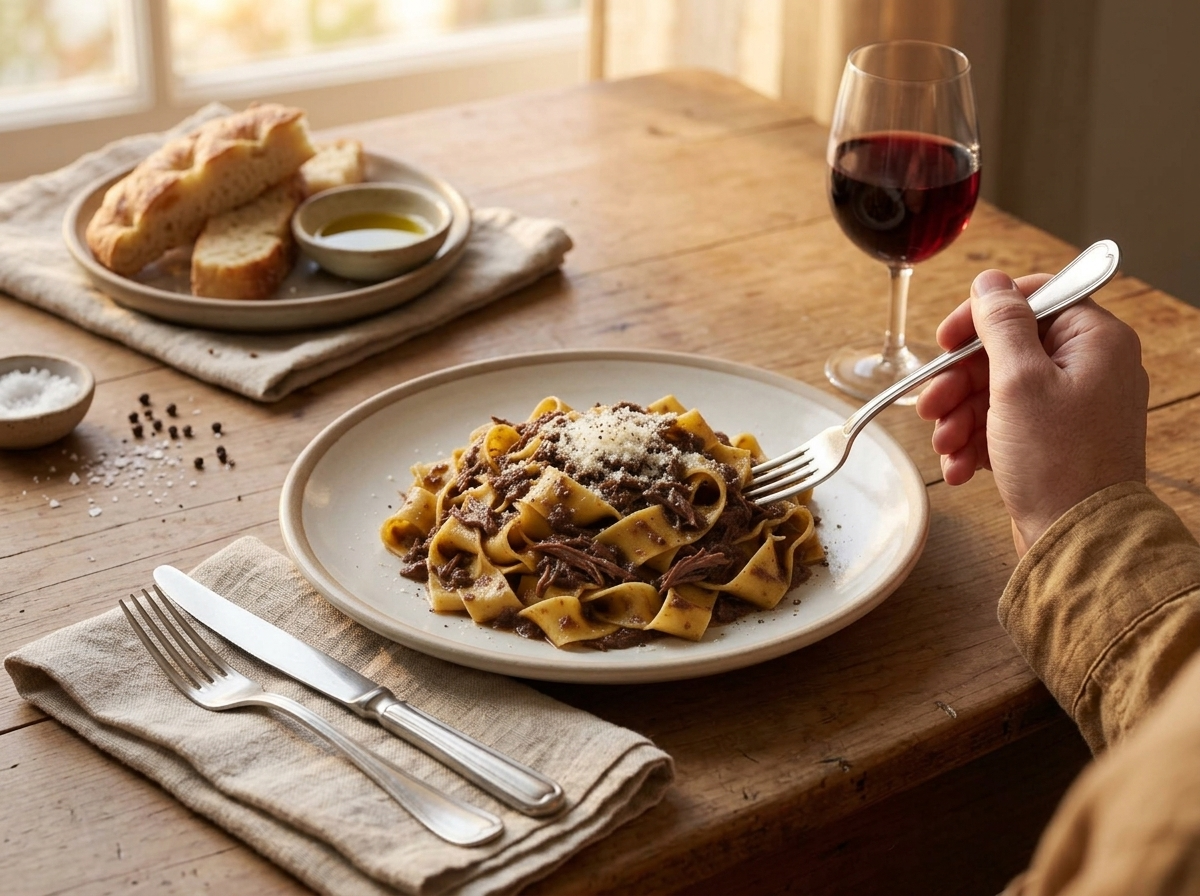
Pappardelle sulla lepre needs little beside itself. Grate extra Parmigiano Reggiano over the top at the table and finish with a crack of black pepper.
A green salad with a sharp vinaigrette cuts through the richness of the sauce. Crusty bread is useful too, for mopping up whatever sauce is left in the bowl.
Pour the same Chianti you cooked with. Its acidity matches the depth of the braise better than something lighter.
FAQ
How do I know when the hare ragu is done simmering?
The hare is ready when the meat pulls easily off the bone with a fork and the sauce coats the back of a spoon, usually after 2.5 to 3 hours of low simmering. If the meat still clings to the bone, keep going. Undercooked hare stays tough and stringy, not tender.
Can I use rabbit instead of hare for pappardelle sulla lepre?
Yes, rabbit works well and has a milder flavor than hare. Cut the braise time to about 1.5 to 2 hours since rabbit meat is leaner and cooks faster, and check for fork-tenderness a bit earlier so it doesn’t dry out.
Can I make the hare ragu ahead of time and freeze it?
Yes, the ragu freezes well for up to 3 months if you freeze it before tossing with pasta. Thaw it overnight in the fridge and reheat gently in a skillet with a splash of stock, then cook fresh pappardelle to go with it.
What wine goes with pappardelle alla lepre?
A Chianti Classico or other Sangiovese-based red is the classic match, and it’s worth pouring the same bottle you used for the marinade. The wine’s acidity cuts through the richness of the braised hare and pancetta.
Is pappardelle sulla lepre gluten-free?
No, traditional pappardelle is made with wheat flour, so this dish isn’t gluten-free as written. Swap in a gluten-free pappardelle or tagliatelle and the hare ragu itself, which contains no flour, will work with it without other changes.
What’s the difference between pappardelle alla lepre and cinghiale ragu?
Pappardelle alla lepre uses hare, which is leaner and gamier, while cinghiale ragu is made with wild boar and tends to be richer and fattier. Lepre leans on cloves, juniper and cinnamon for spicing, while cinghiale ragu often adds rosemary and sometimes a touch of dark chocolate.