Jump to Recipe
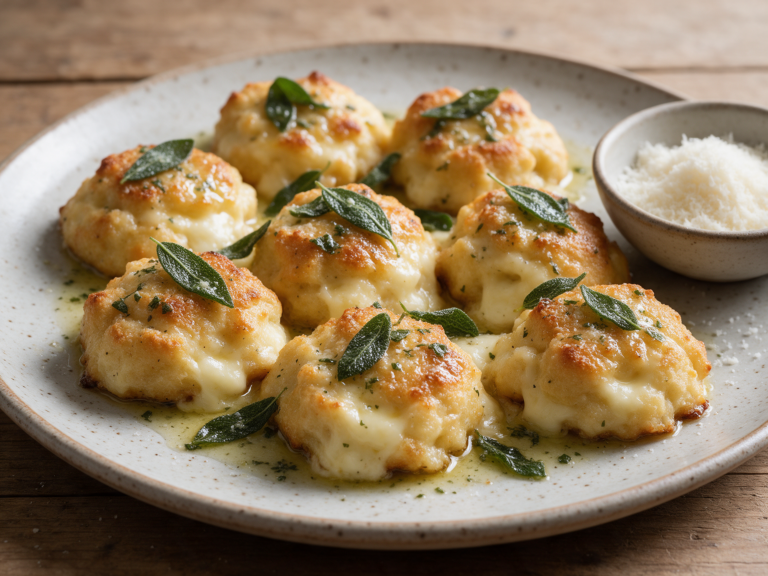
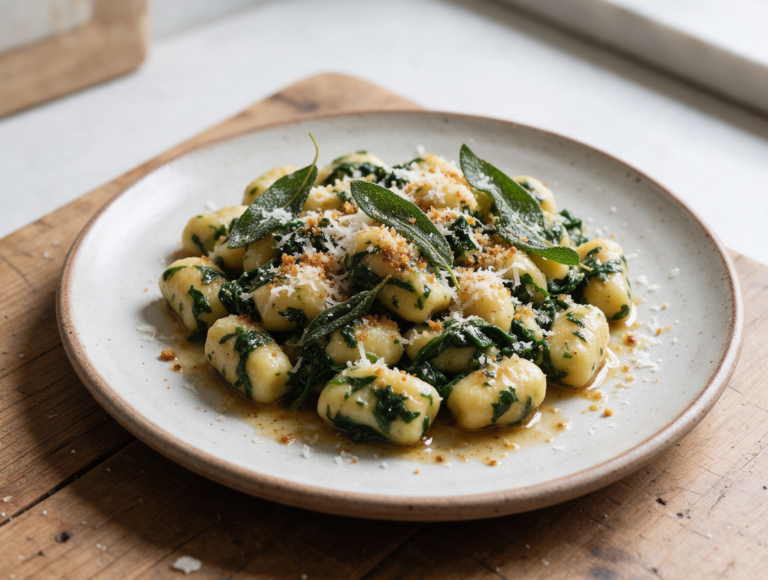
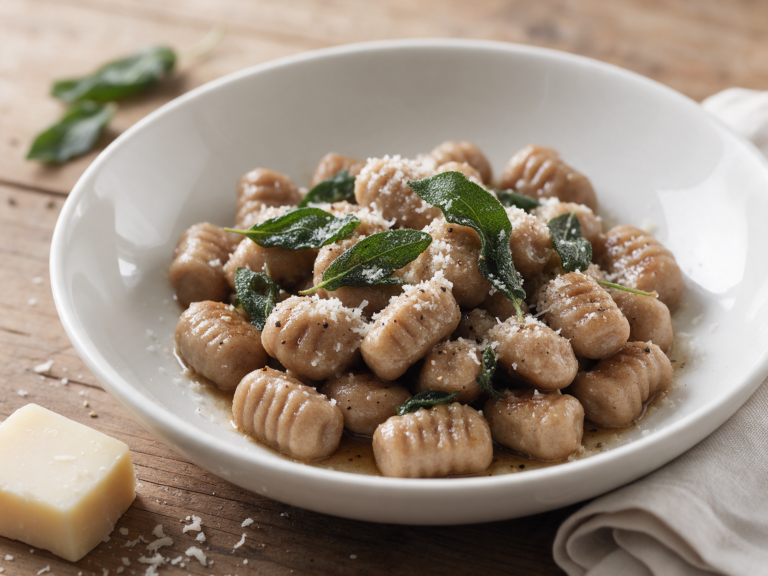
Gnocchi di castagne valtellinesi are potato gnocchi made with chestnut flour, a dish from the Alpine valleys of northern Lombardy. You boil the dumplings until they float, then toss them in browned sage butter with grated Casera cheese.
The chestnut flour turns the dough pale brown and adds a mild, sweet, nutty taste. Texture decides this dish more than the sauce does. The gnocchi should be soft inside and hold their shape in the pan.
I boil the potatoes whole with the skins on so they stay dry, and I add only as much wheat flour as the dough needs. Extra flour makes the gnocchi dense.
Plan on 75 minutes from start to plate for 4 servings. The shaped gnocchi freeze raw, so a weekend batch covers a weeknight dinner later.
Why You’ll Love This Recipe
- Chestnut flour adds mild sweetness and a nutty taste
- Shaped gnocchi freeze raw and cook straight from frozen
- The sauce is only butter, sage, and cheese, done in minutes
- Potatoes and pantry flour keep the ingredient list short
Ingredient Notes
- Chestnut flour (farina di castagne): Look for a pale beige flour with a sweet smell, since old flour tastes flat and slightly bitter. Sift it to break up lumps before mixing.
- Potatoes: Russet or Yukon Gold work best. Boil them whole with the skins on, because cut potatoes absorb water and force you to add more flour.
- Casera DOP: A semi-hard, mild cow’s milk cheese from Valtellina. Fontina or Bitto DOP are good substitutes. Traditional Casera uses animal rennet, so check the label if you cook for strict vegetarians.
- Fresh sage: Use fresh leaves only. Dried sage turns dusty in butter and doesn’t crisp.
- 00 flour: All-purpose flour works at the same weight if you don’t have 00.
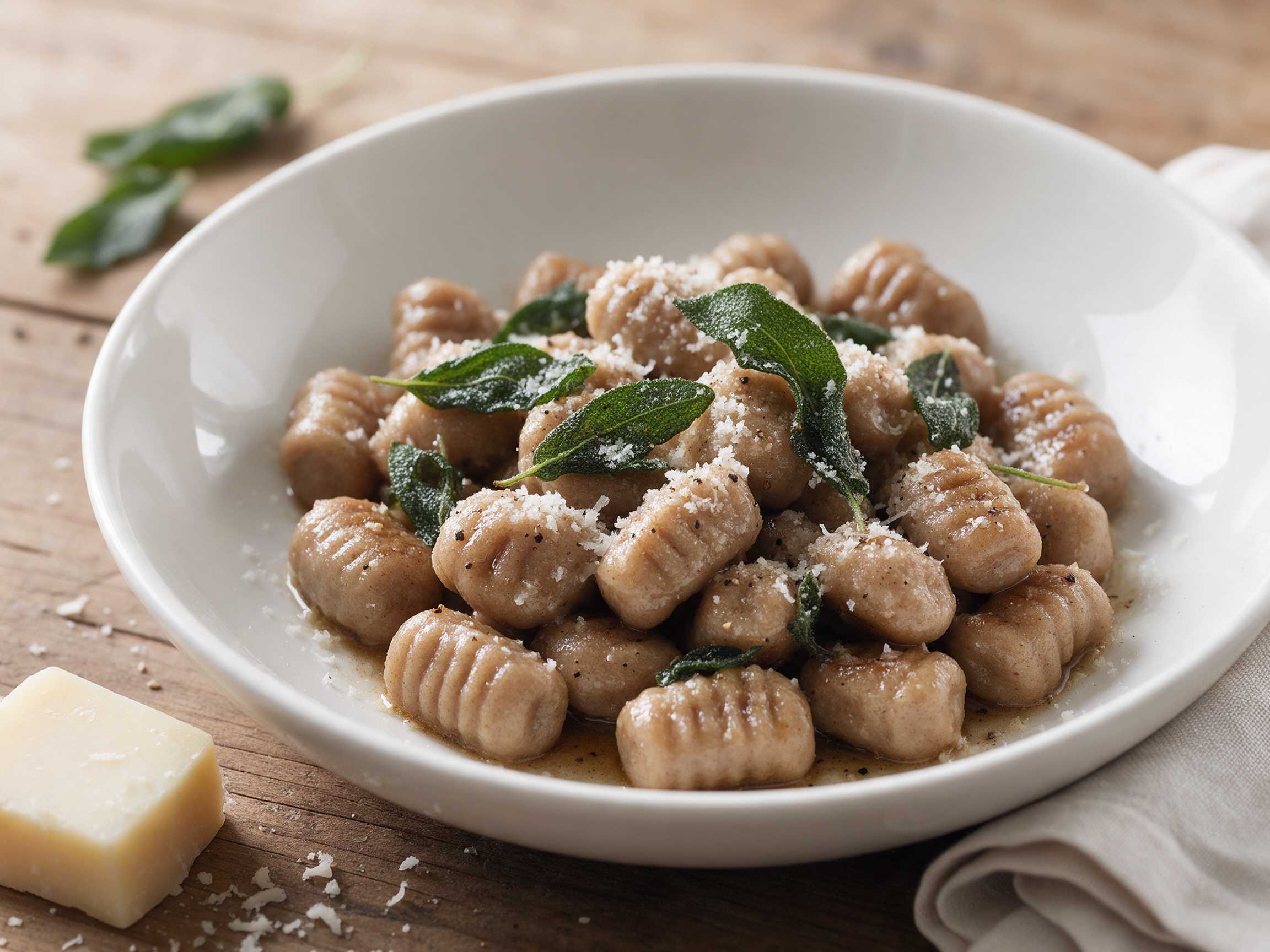
Gnocchi di Castagne Valtellinesi with Sage Butter and Casera
Ingredients
Method
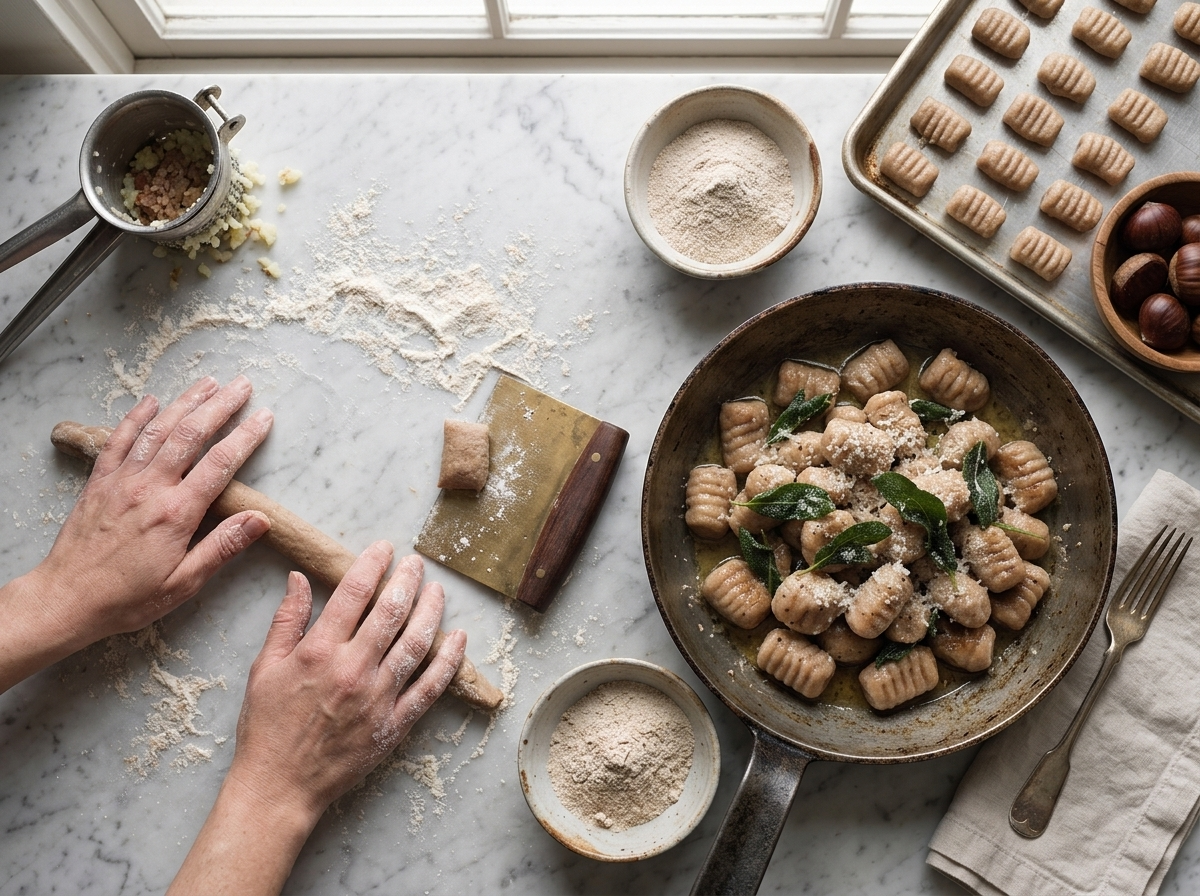
- Put the whole, unpeeled Russet or Yukon Gold potatoes in the 22 cm / 9-inch saucepan, cover with cold water by 2.5 cm / 1 inch, and bring to a boil. Reduce to a simmer and cook for 30 to 35 minutes, until a knife slides to the center with no resistance. Drain.
- Peel the potatoes while hot, holding each in a dish towel. Pass them through the ricer in an even layer onto a clean counter and leave for 10 minutes, until they stop steaming and feel just warm.
- Sprinkle the chestnut flour, 80 g of 00 flour, and the fine salt over the potatoes, then add the egg. Gather everything with your hands and knead for 1 to 2 minutes, stopping as soon as you have a soft, slightly tacky dough.
- Bring the 3 L of water and the coarse salt to a gentle boil in the 24 cm / 9.5-inch stockpot. Roll a small piece of dough into a 2 cm / 3/4-inch rope, cut off one piece, and drop it in. Cook until it floats, then 30 seconds more. If it holds its shape, the dough is ready. If it falls apart, knead 1 tablespoon of 00 flour into the dough and test again.
- Divide the dough into 8 pieces and roll each into a rope about 2 cm / 3/4 inch thick. Cut the ropes into 2 cm pieces, using the remaining dusting flour only on the counter. Spread the gnocchi in a single layer on the floured sheet pan and keep the water at a low simmer.
- Melt the butter in the 30 cm / 12-inch skillet over medium heat. Add the sage leaves and cook for 2 to 3 minutes, until the butter foams, smells nutty, and the leaves turn crisp. Reduce the heat to low.
- Return the stockpot to a gentle boil and lower in half of the gnocchi. Cook about 2 minutes until they float, then 30 seconds more, and lift them into the skillet with the slotted spoon. Repeat with the second batch, then scoop out 60 ml / 1/4 cup of the cooking water.
- Set the skillet over medium-low heat, add the cooking water and half of the Casera, and toss gently for 1 minute until the sauce turns glossy and coats the gnocchi. Divide among 4 warm plates, top with the remaining cheese and black pepper, and serve right away.
Notes
- Use floury potatoes like Russet or Yukon Gold. Waxy potatoes hold more water and make a gluey dough.
- Keep dusting flour to a minimum. Every extra spoonful makes the gnocchi denser.
- Cook in two batches and lift the gnocchi out with a slotted spoon, not a colander.
- Gnocchi are ready 30 seconds after they float to the surface.
Tips for Success
- Boil the potatoes whole with the skins on, then peel them while hot, holding each in a dish towel, so the flesh stays dry.
- Rice the potatoes right after peeling and spread them out for 10 minutes so the steam escapes before you add any flour.
- Cook one test gnocco before shaping the rest, and knead in 1 tablespoon of 00 flour only if it falls apart.
- Cook the gnocchi in two batches in the 24 cm stockpot so the water stays at a gentle boil and they don’t stick together.
- Brown the sage butter over medium heat until it smells nutty and the sage crisps, then drop to low before the gnocchi go in.
Variations
- Swap the Casera for Bitto DOP or Fontina. Both melt smoothly into the butter, and Fontina is the easier one to find.
- Wilt 150 g shredded savoy cabbage in the butter before adding the sage for a pizzoccheri-style version with a slight bitter edge.
- Scatter 30 g toasted walnuts over the plated gnocchi for a crunch that suits the sweetness of the chestnut flour.
Storage and Reheating
Gnocchi di castagne keep in an airtight container in the refrigerator for 3 days, ideally already tossed in the sage butter so they don’t stick together.
Reheat them in a 26 cm / 10-inch nonstick skillet over medium heat with 1 tablespoon of water and a small knob of butter. Cover for 2 minutes, then uncover and warm for 2 to 3 minutes more, until hot throughout and lightly golden at the edges.
For longer storage, freeze the gnocchi raw. Space them on a floured tray for 1 hour, then move them to a freezer bag for up to 2 months. Boil straight from frozen, without thawing, and cook about 1 minute after they float.
Serving Suggestions
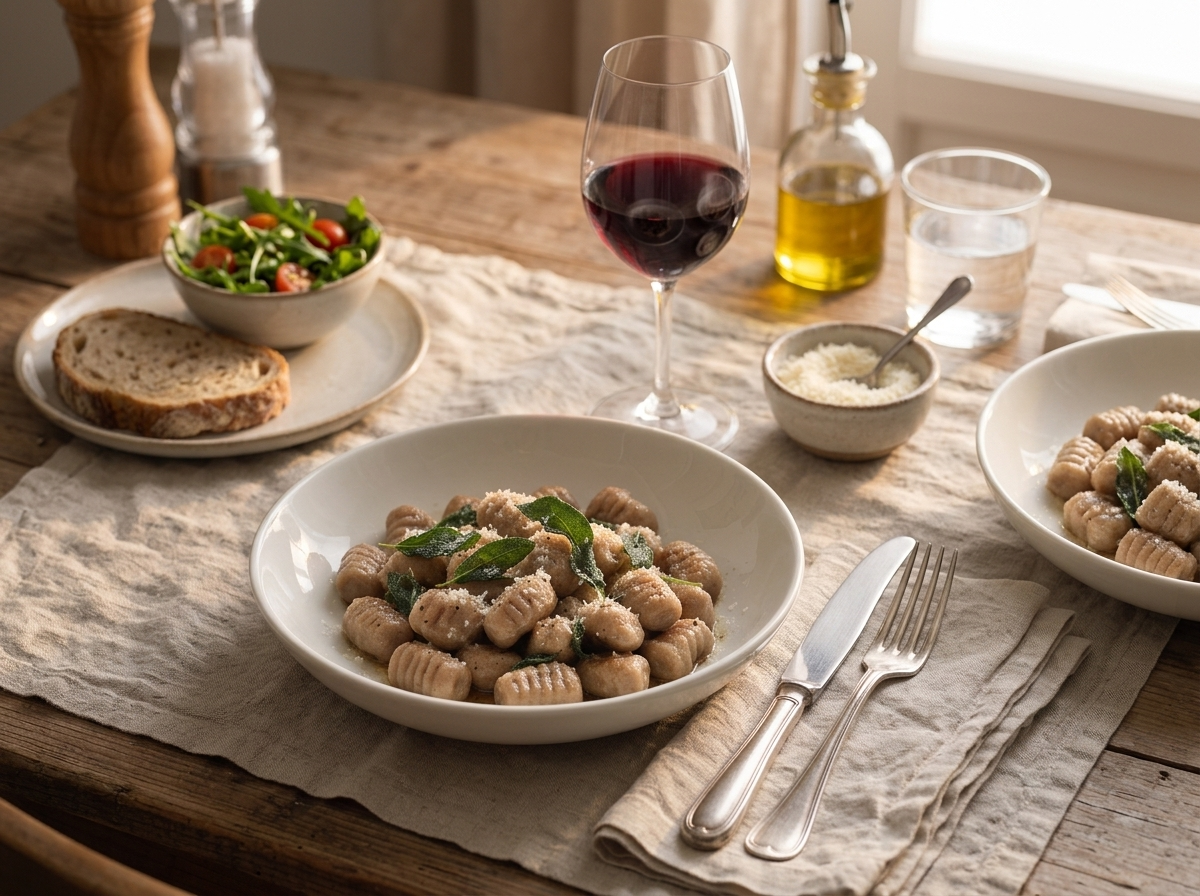
Gnocchi di castagne are served as a primo, about 200 g per person, straight from the skillet with a little extra grated Casera and black pepper.
For a fuller Valtellina-style meal, follow with a secondo such as braised beef or roast pork. A salad of radicchio or other bitter greens dressed with lemon and olive oil cuts through the butter.
Skip heavy sides. The sauce is rich enough that a glass of Rosso di Valtellina and a bitter salad are all the plate needs.
FAQ
Why do my chestnut flour gnocchi fall apart in boiling water?
Usually the dough has too little flour for the moisture in the potatoes. Boil one test gnocco first. If it softens or breaks, knead in 1 tablespoon of 00 flour at a time and test again. Also keep the water at a gentle boil, since a rolling boil can split delicate chestnut dough.
Can I use Fontina instead of Casera on gnocchi di castagne?
Yes. Fontina melts smoothly into the butter and tastes mild and slightly nutty. Bitto DOP is the closest match to Casera if you can find it, and Parmigiano Reggiano works when you want a sharper, saltier finish. Use the same 80 g, and taste before adding extra salt to the sauce.
Can I freeze gnocchi di castagne before cooking them?
Yes, freeze them raw. Space the shaped gnocchi on a floured tray for 1 hour, then transfer them to a freezer bag for up to 2 months. Boil straight from frozen without thawing, since thawed chestnut gnocchi turn sticky. Expect them to need about 1 minute longer after they float.
What wine goes with gnocchi di castagne with sage butter?
A Valtellina Rosso or Rosso di Valtellina is the natural match. It’s a red made from Nebbiolo, locally called Chiavennasca, with enough acidity to cut the butter and enough lightness not to bury the chestnut. If you prefer white, choose a dry, crisp one such as Pinot Bianco.
Are chestnut gnocchi gluten free?
Not as written. Chestnut flour is naturally gluten free, but this dough also uses 80 g of 00 flour and a little wheat flour for dusting. You can replace it with more chestnut flour or a gluten-free blend, but the dough gets more fragile, so shape gently and boil in small batches.
What is the difference between gnocchi di castagne and pizzoccheri?
Gnocchi di castagne are soft potato dumplings flavored with chestnut flour. Pizzoccheri are flat, tagliatelle-style buckwheat noodles from the same Valtellina area, cooked with potatoes and savoy cabbage and layered with Casera or Bitto and garlic butter. Both rely on butter and local cheese, but the textures are not alike.