Jump to Recipe
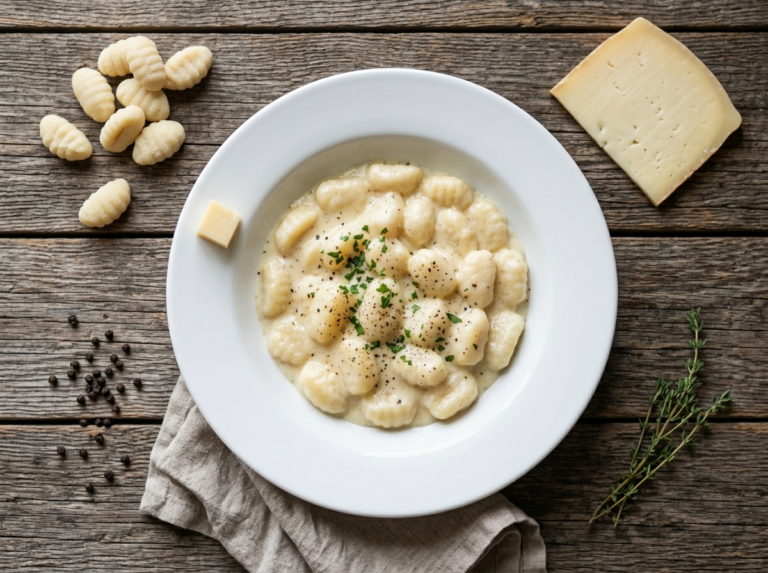
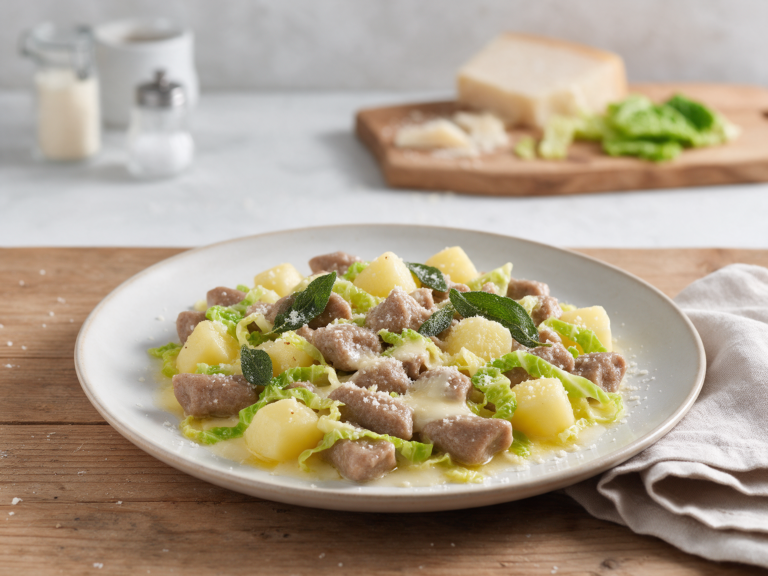
Menudei di Teglio are small buckwheat and wheat flour dumplings from Teglio in Valtellina, boiled with potato and Savoy cabbage and tossed in sage butter with Casera cheese. In my kitchen the dish takes 60 minutes, and 20 of those are hands-off while the dough rests.
The flavors follow the pizzoccheri pattern of the valley, as in this Valtellina minestra de dumèga: earthy flour, soft cabbage, melting cheese, browned butter. Versions differ from house to house, so treat this as one sound approach rather than the only one.
The dough is the part to watch. Buckwheat has no gluten, so the dough should feel stiff and slightly tacky. If it’s too wet, the dumplings slump in the water and turn gluey, so add flour a spoonful at a time until a rolled rope holds its shape.
Everything cooks in one pot, which makes this a practical weeknight dinner once you’ve made the dough a single time.
Why You’ll Love This Recipe
- One pot handles dumplings, potato and cabbage together
- Dough uses two flours and pantry staples only
- Texture is tender with a slight, nutty chew
- Raw dumplings freeze well for quick dinners later
Ingredient Notes
- buckwheat flour: Use dark, whole buckwheat flour for the nutty flavor. It’s gluten-free on its own, but the 00 flour in this dough means the dish contains gluten.
- Valtellina Casera: This semi-soft cow’s milk cheese melts smoothly and tastes mildly tangy. Fontina is the closest substitute, and young Asiago works if that’s what you have.
- Savoy cabbage: Its crinkled leaves turn tender fast and hold the butter. Regular green cabbage works, but cook it 2 minutes longer.
- potato: Choose a waxy variety such as Yukon Gold so the 1.5 cm cubes stay intact instead of dissolving into the cooking water.
- sage and garlic: Fresh sage matters here, since dried turns dusty in butter. Slice the garlic rather than mincing it so it doesn’t scorch.
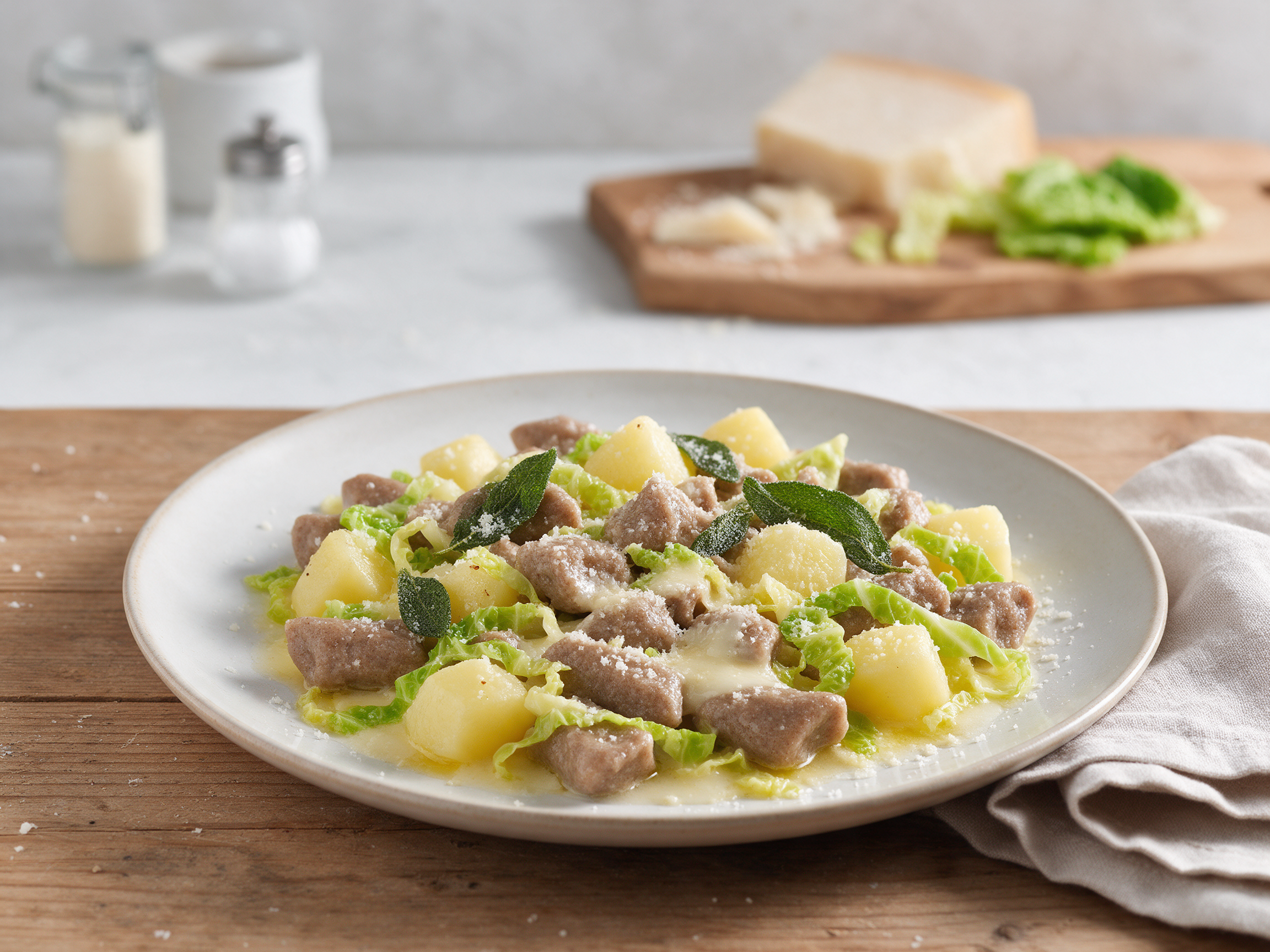
Buckwheat Menudei di Teglio with Sage Butter and Casera
Ingredients
Method
- Whisk the buckwheat flour, 00 flour and fine salt together in a bowl. Beat the egg with 110 ml milk, pour it in and mix with a fork, then knead on the counter for 2 minutes until the dough is stiff and slightly tacky. If it's crumbly, add milk 1 tbsp at a time. If it sticks to your hands, knead in flour by the spoonful.
- Wrap the dough or cover the bowl and rest for 20 minutes. While it rests, fill the 26 cm / 10-inch stockpot with 3 L water, add 1 tbsp coarse salt, bring to a boil, and prep the potatoes, cabbage and cheese.
- Dust a board with 00 flour. Roll the dough into ropes about 1 cm thick and cut them into 1.5 cm pieces. Toss the pieces in a little flour so they don't stick together. A rope that slumps or smears means the dough needs more flour.
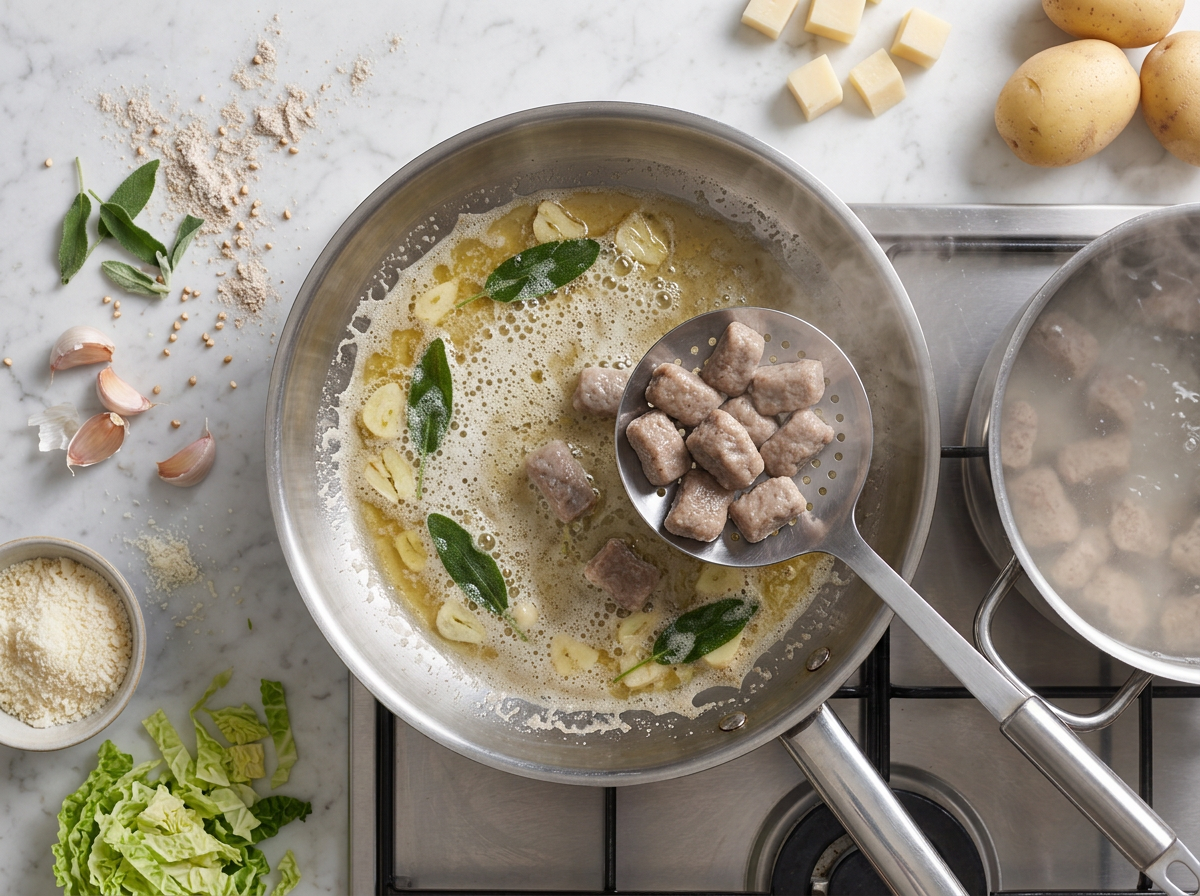
- Drop the potatoes into the boiling water and cook for 4 minutes. Add the cabbage and cook for 4 minutes more, then add the dumplings and reduce to a steady simmer for 4 minutes, until they float and a cut piece is evenly grey-brown with no pale center.
- While the dumplings simmer, melt the butter in the 30 cm / 12-inch deep sauté pan over medium heat. Add the garlic and sage and cook for 2 to 3 minutes, until the butter foams, the sage turns crisp and the garlic is pale gold. Remove from the heat if it's ready early.
- Lift the dumplings, potato and cabbage into the pan with a slotted spoon, letting a little water come along. Add the Casera and half the Parmigiano, set over low heat, and toss for about 1 minute until the cheese melts into a glossy coating. Season with pepper and serve within 10 minutes with the remaining Parmigiano.
Notes
- Add milk to the dough gradually, since buckwheat absorbs unevenly between brands.
- Salt the cooking water well, because the dumplings absorb it as they simmer.
- Keep the cheese cubes small so they melt before the dish cools.
- Serve within 10 minutes of tossing for the best texture.
Tips for Success
- Weigh the flours instead of scooping, since buckwheat packs densely and a 20 g difference changes how much milk the dough needs.
- Rest the dough for the full 20 minutes so the flours absorb the milk and the ropes roll without cracking.
- Keep the pot at a steady simmer once the dumplings go in, because a hard boil breaks the soft edges apart.
- Lift everything out with a slotted spoon rather than a colander, so a little starchy water comes along for the sauce.
- Add the Casera on the lowest flame, toss for about a minute, and serve within 10 minutes while it’s still molten.
Variations
- Swap the Savoy cabbage for Swiss chard, stems and leaves, and add it with the dumplings so it stays green.
- Use Fontina for half of the Casera for a milder, creamier finish that suits children.
- Let the butter turn nutty and hazel-brown for about a minute longer before adding the garlic and sage.
Storage and Reheating
Menudei di Teglio keep in an airtight container in the fridge for 3 to 4 days. Cool them within an hour of cooking before you close the lid.
Reheat in a 26 cm / 10-inch skillet over medium-low heat with 2 to 3 tbsp of milk or water. Cover and warm for 5 to 6 minutes, stirring once, until steaming hot. The cheese tightens in the fridge and loosens again with the added liquid.
For longer storage, freeze the uncooked dumplings. Spread the cut pieces on a floured tray, freeze until firm, then bag them for up to 2 months. Boil straight from frozen and add about 2 minutes to the cooking time.
Serving Suggestions
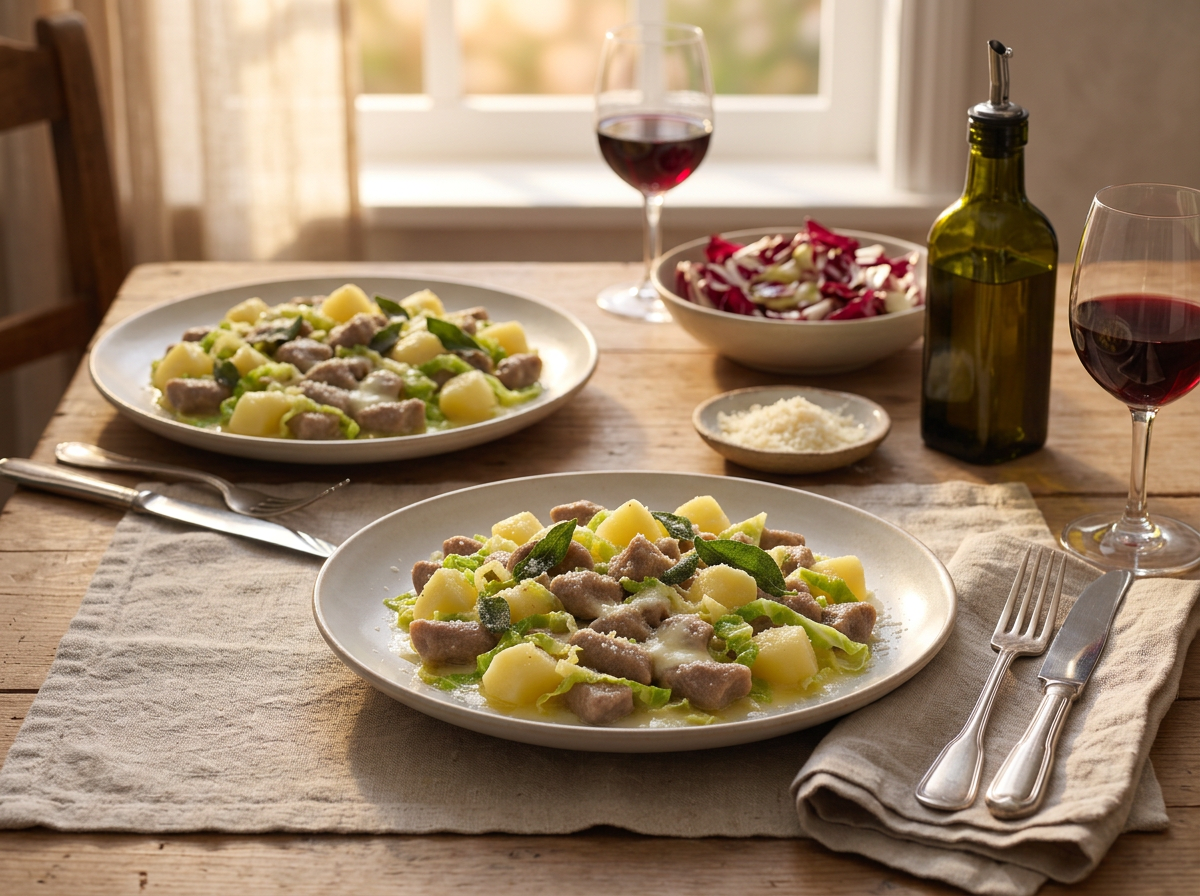
Serve menudei di Teglio straight from the pan within 10 minutes, in warm shallow bowls. Pass extra Parmigiano and a pepper mill at the table.
A bitter salad of radicchio or endive with a sharp vinegar dressing balances the butter and cheese. Keep it plain, with no cheese or nuts.
For a drink, a light red such as Rosso di Valtellina suits the dish and the region. Sparkling water with lemon works well if you’d rather skip wine.
FAQ
Why are my menudei di Teglio turning gluey or falling apart in the pot?
The dough is usually too wet, or the water is boiling too hard. Buckwheat has no gluten to hold things together, so the dough should be stiff and a little tacky, and the pot should stay at a steady simmer. Add flour by the spoonful until a rolled rope keeps its shape.
How do I know when menudei di Teglio are cooked through?
Simmer them for 4 minutes in total. They rise to the surface after about 2 minutes, and a piece cut in half should be evenly grey-brown with no pale, floury center. If you’re unsure, taste one. It should be tender with a slight chew.
Can I use Fontina instead of Casera in menudei?
Yes. Fontina melts well and has a similar mild, milky flavor, though it’s less tangy than Valtellina Casera. Young Asiago or rindless Taleggio also work. Use the same 120 g, cut into small cubes so it melts in the minute or so before you serve.
Can you freeze menudei di Teglio dough or the cooked dish?
Freeze the uncooked dumplings, not the finished dish. Spread the cut pieces on a floured tray, freeze until firm, then bag them for up to 2 months. Boil straight from frozen and add about 2 minutes to the 4-minute cook. Cooked leftovers turn soft after freezing.
What wine or salad goes with menudei di Teglio?
A bitter salad such as radicchio with a sharp vinegar dressing cuts through the butter and cheese. For wine, a light red like Rosso di Valtellina fits both the region and the dish. Keep the salad simple, without cheese or nuts, so the plate stays balanced.
What’s the difference between menudei and pizzoccheri?
Both use buckwheat flour and finish with butter, sage, cabbage, potato and Casera, but the shape differs. Pizzoccheri are cut into short, flat ribbons, while the menudei here are small cut dumplings that are thicker and chewier. Recipes vary by household, so some cooks adjust the flour mix.