Jump to Recipe
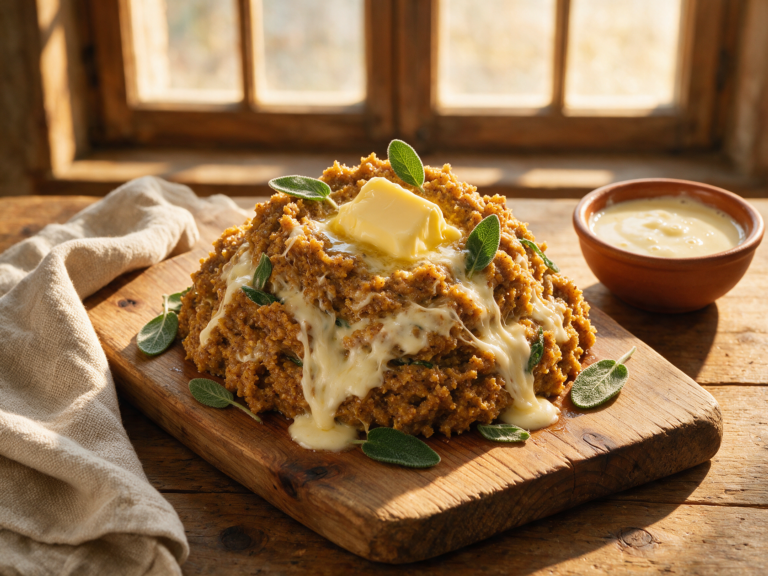
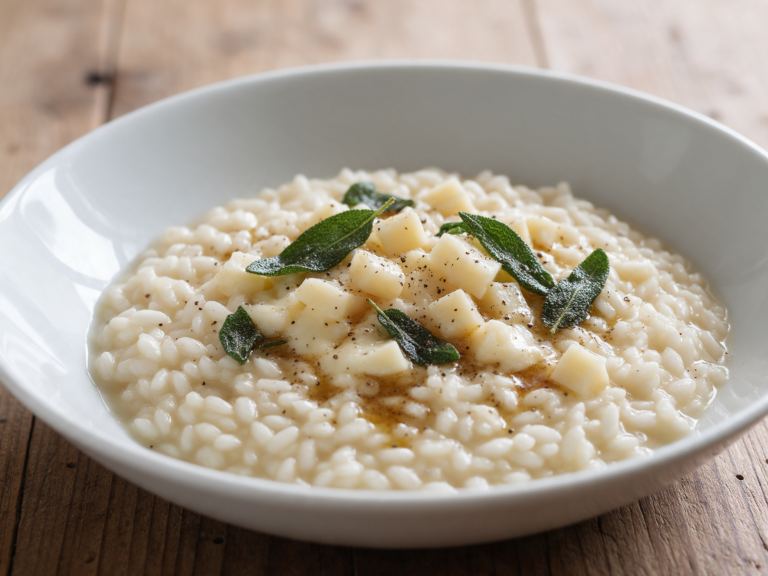
Riso Maseràt dell’Aprica is a risotto-style rice dish from the Aprica area of Valtellina, finished with Casera cheese, butter, and sage. This version takes 37 minutes, uses one wide pan, and serves four.
Aprica sits in the Lombard Alps, where dairy shapes the pantry. Household versions vary, so treat this as the way I cook it, not a fixed rule.
The texture defines the result. You want rice that flows slowly when you tilt the pan, not rice that sits in a stiff mound. Add the hot broth a ladle at a time and stir often so the grains release their starch.
One judgment call matters here: Casera turns stringy and oily if the rice is still bubbling when it goes in. Take the pan off the heat first, then stir in the cheese.
Why You’ll Love This Recipe
- One wide pan and a small skillet, nothing more
- Uses pantry staples plus one regional cheese
- Casera melts into a silky, clean-tasting finish
- Reheats well with a splash of broth
Ingredient Notes
- Carnaroli rice: Carnaroli holds its shape and releases plenty of starch. Arborio works, but it softens faster, so start tasting at 14 minutes.
- Casera cheese: A semi-hard Valtellina cow’s-milk cheese that melts smoothly when cut small. Fontina is the closest substitute, and young Asiago also works.
- Broth: Use a light chicken, beef, or vegetable broth and keep it hot. Cold broth stalls the cooking and makes the rice gummy.
- Fresh sage: Pick small, firm leaves. They crisp in the butter in 2 to 3 minutes. Dried sage turns bitter here, so skip it.
- Dry white wine: Any crisp, unoaked white works. Replace it with an extra 80 ml of broth and a squeeze of lemon if you’d rather skip alcohol.
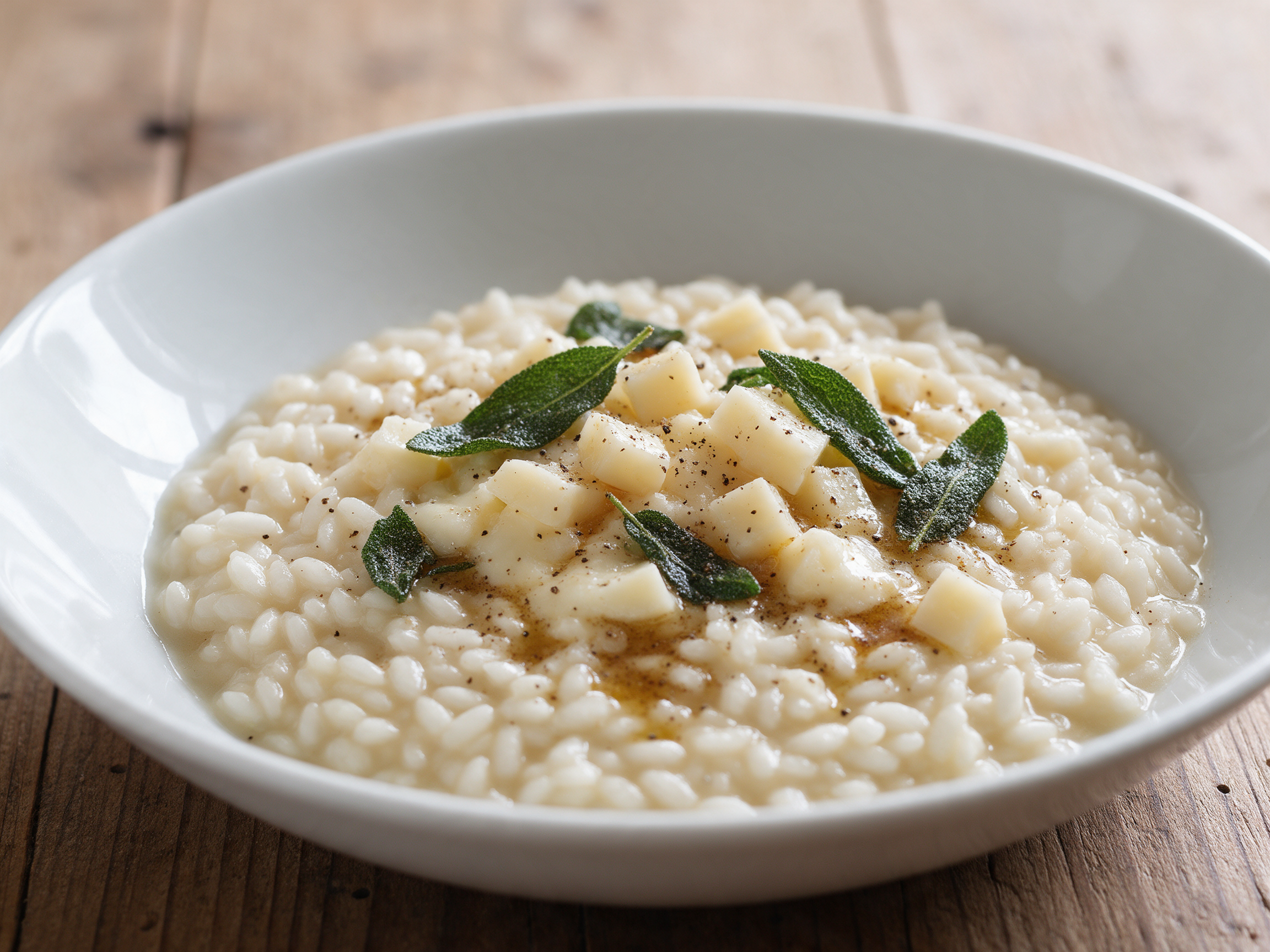
Riso Maseràt dell’Aprica with Casera and Sage Butter
Ingredients
Method
- Pour the chicken, beef, or vegetable broth into a 2-quart / 1.9 L saucepan and bring it to a bare simmer, then keep it hot over low heat. Finely chop the onion and cut the Casera into 1 cm cubes.
- Melt 20 g butter in a 28 cm / 11-inch heavy-bottomed sauté pan over medium-low heat. Add the onion and the salt, then cook for 5 minutes, stirring, until soft and translucent but not browned.
- Add the rice and stir for 2 minutes until the grains turn translucent at the edges and smell nutty. Pour in the wine and stir for about 1 minute until it's absorbed.
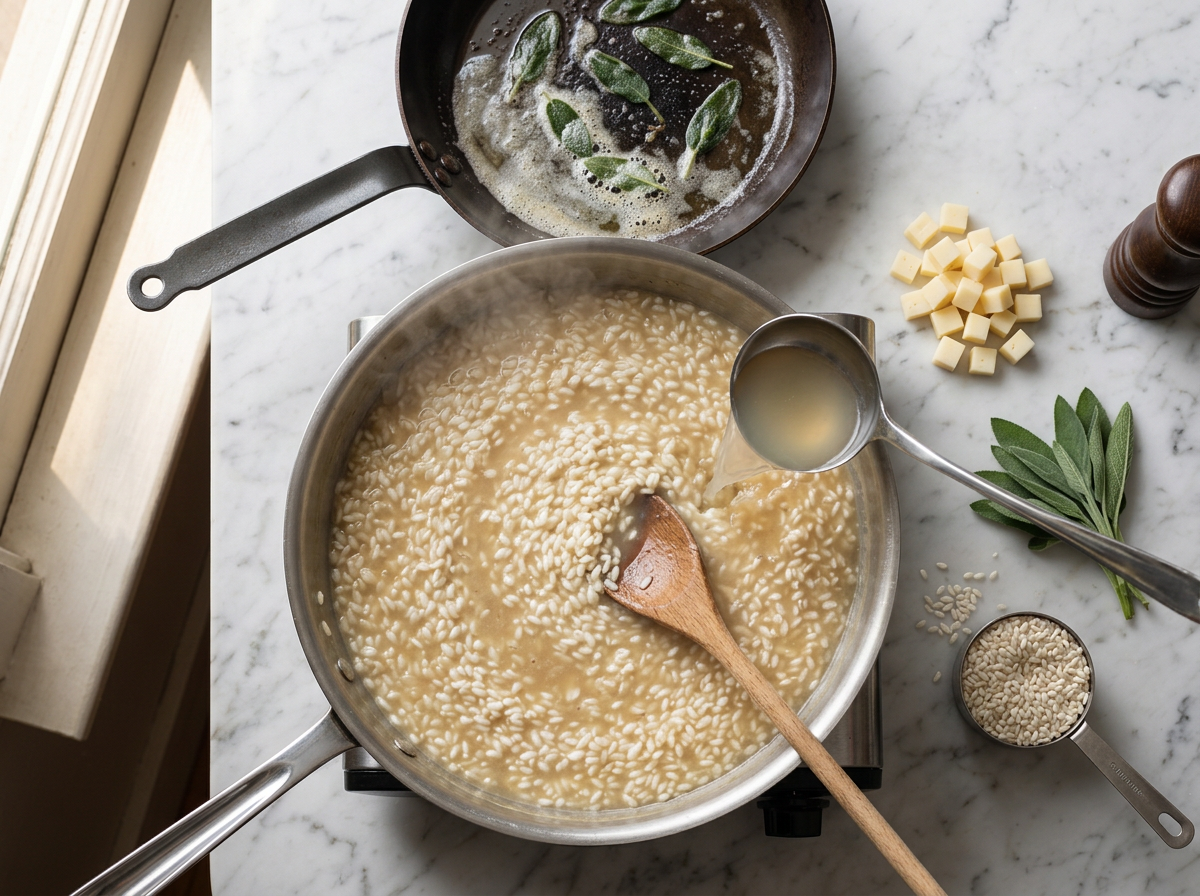
- Add the hot broth about 150 ml at a time, stirring often over medium heat so the mixture stays at a gentle bubble. Add the next ladle when the pan is nearly dry. Keep going for 16 to 18 minutes, until the grains are tender with a slight bite at the center and the rice flows slowly when you tilt the pan. Keep the last ladle of broth in reserve.
- During the last 5 minutes of cooking, melt 30 g butter in an 18 cm / 7-inch skillet over medium heat. Add the sage leaves and cook for 2 to 3 minutes until the butter foams and smells nutty and the leaves turn crisp. Remove from the heat.
- Take the rice off the heat and wait 30 seconds. Stir in the Casera, the 10 g cold butter, and the reserved broth until glossy, then cover and rest for 2 minutes. Season with pepper and adjust the salt, then spoon into warm bowls and top with the sage butter. Serve right away.
Notes
- Keep the broth hot the whole time so the rice cooks evenly.
- Take the pan off the heat before adding Casera to avoid oily strings.
- Rest the rice covered for 2 minutes, then serve right away.
- Salt gently, since Casera and broth both add sodium.
- Hold back the last ladle of broth to adjust the texture at the end.
Tips for Success
- Keep the broth at a bare simmer on a back burner so every ladle goes in hot.
- Cut the Casera into 1 cm cubes so it melts in under a minute off the heat.
- Toast the rice for a full 2 minutes until the edges look translucent and smell nutty.
- Hold back the last ladle of broth and stir it in with the cheese to adjust the texture.
- Watch the sage butter closely and pull it off the heat when the foam settles, before it browns dark.
Variations
- Stir in 100 g of sliced bresaola at the end for a cured, lean contrast to the butter.
- Swap half the Casera for 40 g grated Parmigiano Reggiano for a sharper, saltier finish.
- Fold in 150 g of sautéed chicory or Swiss chard just before the cheese for a bitter edge.
Storage and Reheating
Riso Maseràt dell’Aprica keeps for 2 to 3 days in the fridge. Spread the leftovers in a shallow container within 1 hour of cooking, cool for a few minutes, then cover and refrigerate. Cooked rice left warm for hours can grow bacteria whose toxins reheating won’t destroy.
To reheat, put a portion in a 24 cm / 10-inch skillet over low heat with 3 to 4 tbsp of hot broth. Stir gently for 4 to 5 minutes until it’s steaming hot at 165 F / 74 C. Make a fresh batch of sage butter if you want crisp leaves.
Don’t freeze it. The Casera turns grainy and the rice goes soft after thawing. For make-ahead, heat the broth and cube the cheese a day early, then cook the rice fresh.
Serving Suggestions
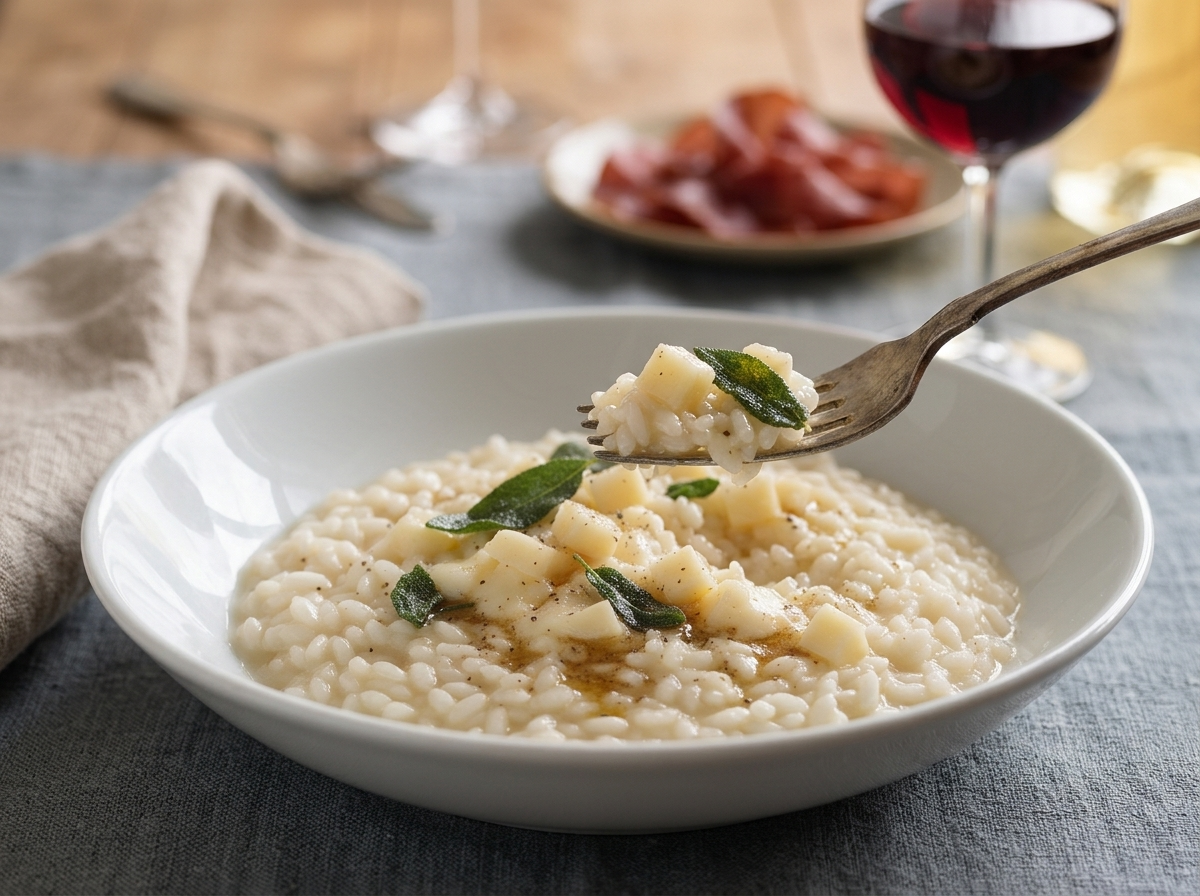
Serve Riso Maseràt dell’Aprica straight from the pan after its 2-minute rest, in warm shallow bowls. Spoon the sage butter and crisp leaves over each portion so the butter pools at the edges.
Sautéed chicory or other bitter greens balance the richness. Thin slices of bresaola on the side add a lean, cured contrast.
Pour a Valtellina Rosso, which is made from Nebbiolo, or any dry red with firm acidity. A light white such as Soave also works.
FAQ
Why is my Riso Maseràt dell’Aprica stringy or oily after adding the Casera?
The pan was too hot when the cheese went in. Boiling rice makes the Casera fat separate into oily strings. Take the pan off the burner, wait 30 seconds, then stir in 1 cm cubes with the cold butter and a splash of broth until the rice looks glossy.
Can I use Fontina instead of Casera in riso maseràt?
Yes, Fontina is the closest swap, and young Asiago also works. Fontina is milder and melts more smoothly, so add a pinch more salt and some black pepper. Use the same 120 g, cut into small cubes, and stir it in off the heat.
How do I know when the rice for Riso Maseràt dell’Aprica is done?
The rice is done after 16 to 18 minutes of simmering, when each grain is tender outside with a slight bite at the center. The mixture should flow slowly when you tilt the pan, like thick soup. Start tasting a grain at 15 minutes and check every minute after.
Can I reheat leftover Riso Maseràt dell’Aprica without it turning gluey?
Yes. Warm it in a 24 cm / 10-inch skillet over low heat with 3 to 4 tbsp of hot broth per portion. Stir gently for 4 to 5 minutes until it’s steaming hot at 165 F / 74 C. The broth loosens the starch, while the microwave heats unevenly and tightens the rice.
What wine and side go with Riso Maseràt dell’Aprica?
Sautéed chicory or other bitter greens cut the butter, and thin slices of bresaola add a cured, lean contrast. For wine, a Valtellina Rosso made from Nebbiolo matches the cheese and sage. Keep the plate simple because the rice is already rich.
Is Riso Maseràt dell’Aprica gluten free?
Yes, rice, butter, Casera, and sage contain no gluten. Check the label on your broth and choose a gluten-free one if you’re cooking for someone with celiac disease, since some stock cubes contain wheat. The wine and cheese are gluten-free as sold.