Jump to Recipe
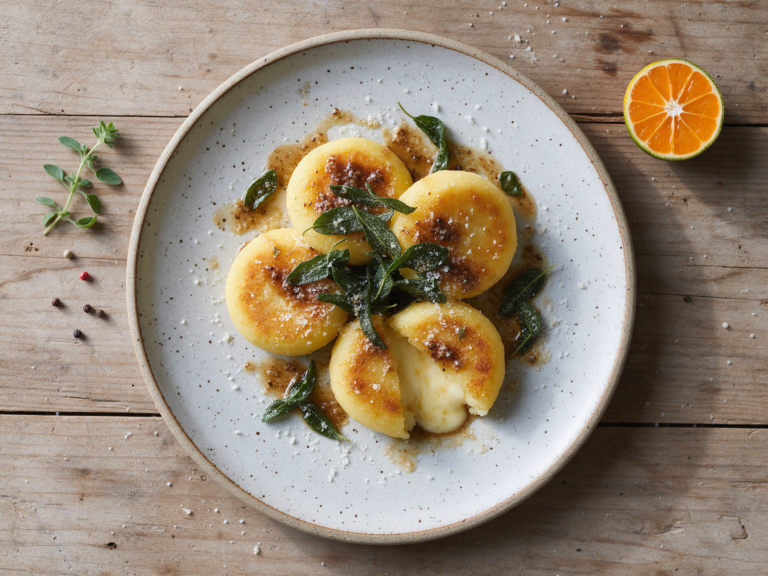
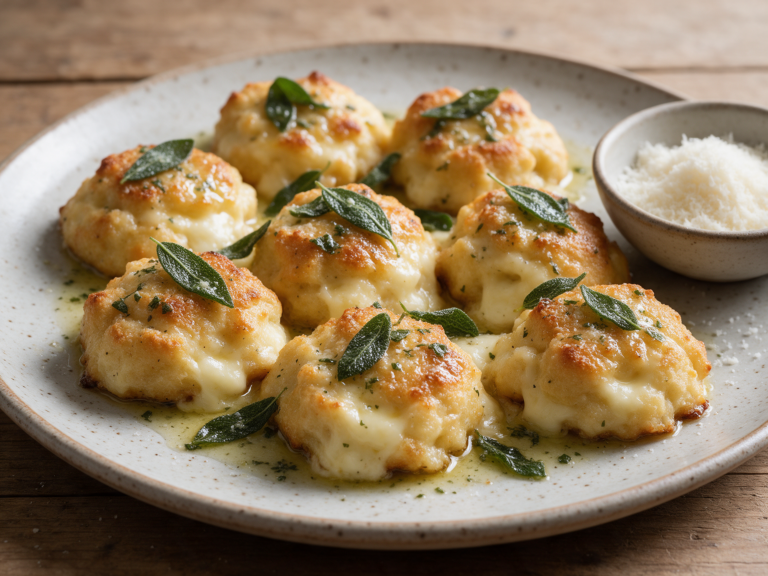
Mulun di Talamona is a baked dish of milk-soaked stale bread and Casera cheese, shaped into mounds and finished with sage butter. The name points to Talamona, a town in Lombardy’s Valtellina, in the Sondrio province. Recipes vary from kitchen to kitchen, and this is the version I make.
The texture defines the dish, not the cheese. Bread soaked for 20 minutes turns soft enough to hold the mounds together, and the oven gives the tops a crisp, golden shell while the centers stay tender.
One judgment call matters. If the mix feels loose, the mounds will spread into flat discs on the tray. Stir in a tablespoon of flour until a shaped mound holds its peak.
Total time is about 68 minutes, most of it hands-off, and it uses day-old bread and a modest wedge of cheese. Two mounds per person make a light main course.
Why You’ll Love This Recipe
- Uses day-old bread and one modest wedge of cheese
- Crisp golden tops with soft, tender centers
- Shape ahead and bake straight from the fridge
- Freezes well and reheats in 20 to 25 minutes
Ingredient Notes
- Stale country bread: Use a dense loaf that’s at least 2 days old. Soft sandwich bread turns to paste in the milk, so dry it in a 120 C / 250 F oven for 15 minutes if yours is fresh.
- Casera cheese: Casera DOP is a semi-hard Valtellina cow’s milk cheese that melts without turning greasy. Fontina is the closest substitute, used at the same weight.
- Whole milk: Whole milk gives the soaked bread a tender crumb. Low-fat milk works but the centers taste leaner.
- Parmigiano Reggiano: It adds salt and a nutty edge. Grana Padano is a fine budget swap.
- Fresh sage: Fresh leaves crisp in the butter and perfume the mounds. Dried sage is too dusty here, so use parsley if you have no fresh.
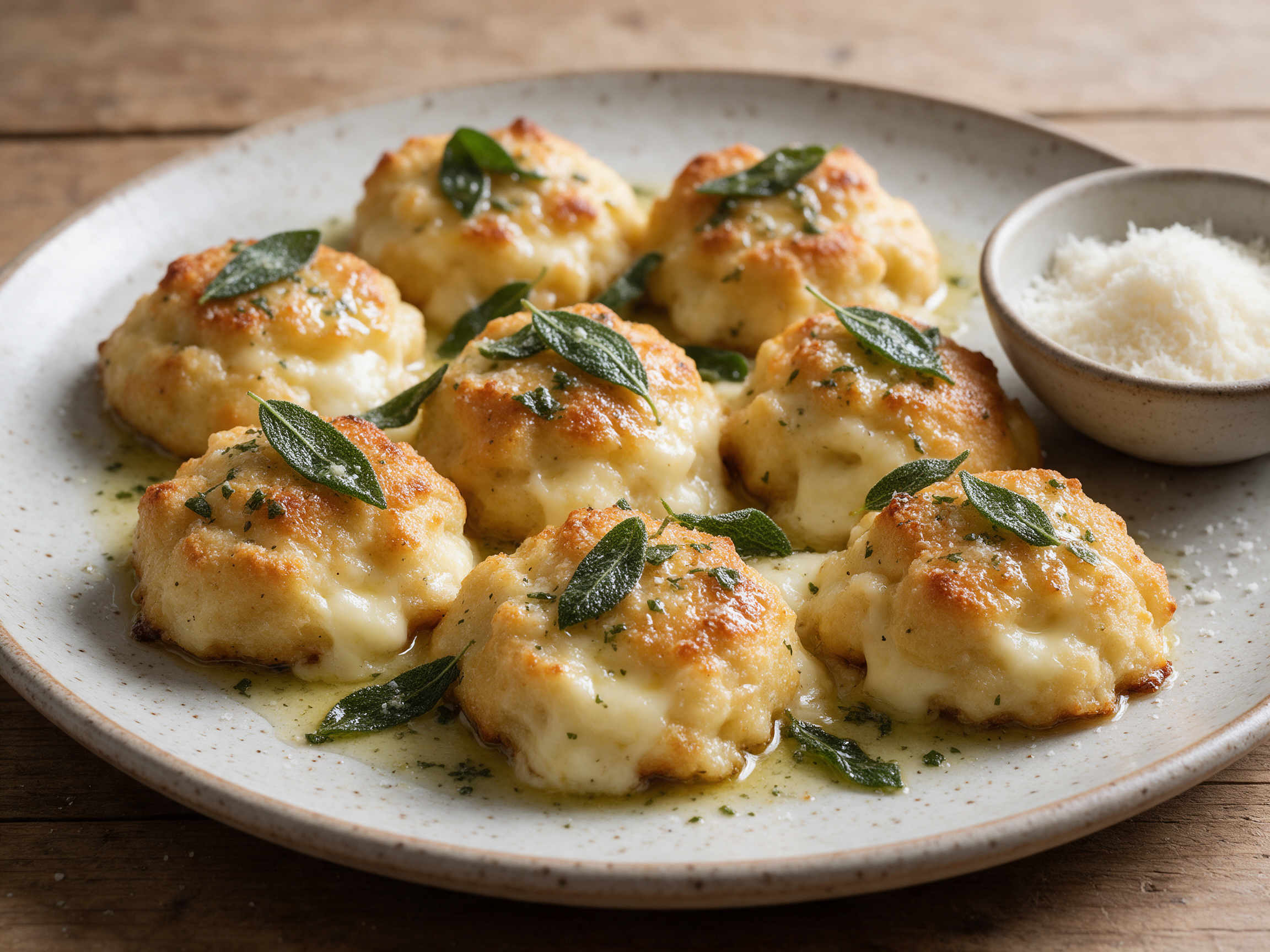
Mulun di Talamona: Baked Bread and Casera Cheese Mounds
Ingredients
Method
- Melt 20 g butter in a 20 cm / 8-inch skillet over medium-low heat. Add the onion and a pinch of the salt, and cook for 8 minutes, stirring now and then, until soft and pale with no browning. Let it cool.
- Put the bread cubes in a 28 cm / 11-inch mixing bowl and pour over the milk. Stir, then let it soak for 20 minutes, until the bread mashes easily between your fingers. While it soaks, set a rack in the middle of the oven, heat to 200 C / 390 F, and line a 33 x 46 cm / 13 x 18-inch sheet pan with parchment.
- Add the cooled onion, eggs, Parmigiano, flour, remaining salt, pepper and nutmeg to the bread. Squeeze and mix with your hands until the mixture holds together but still has some texture. Fold in the Casera cubes. If it feels loose, stir in 1 tablespoon of flour.
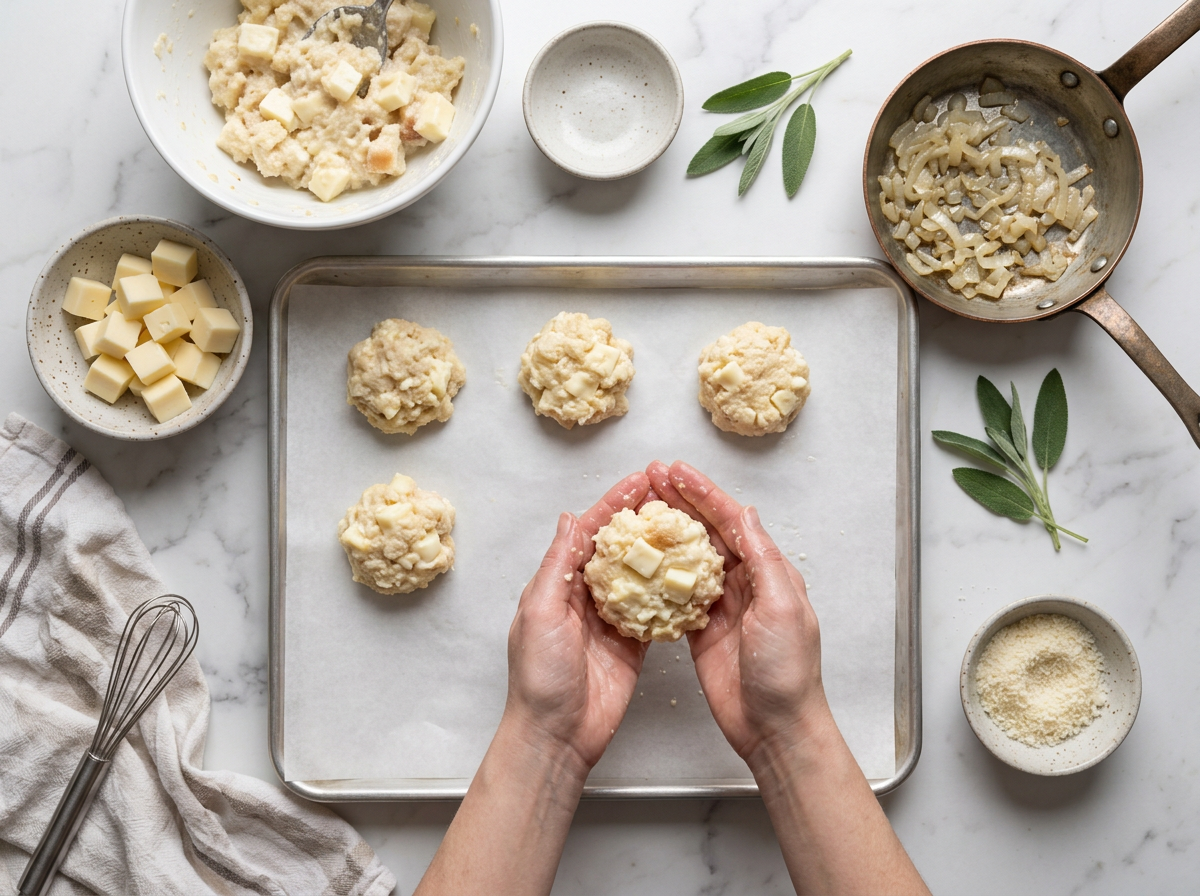
- With wet hands, shape the mixture into 8 mounds of about 115 g each, roughly the size of a small fist, with slightly peaked tops. Set them 4 cm apart on the sheet pan.
- Bake for 25 minutes, until the tops are golden brown and an instant-read thermometer in the center of a mound reads 160 F / 71 C.
- While the mounds bake, melt 30 g butter in a 16 cm / 6-inch saucepan over medium heat. Add the sage leaves and cook for 2 to 3 minutes, until the butter foams and the leaves crisp. Spoon it over the hot mounds and serve right away.
Notes
- Soak the bread for the full 20 minutes so it mashes easily between your fingers.
- Bake until the center reads 160 F / 71 C on an instant-read thermometer.
- Fold in the Casera cubes last so they stay in pockets.
- Serve right away, while the tops are crisp and the butter is hot.
Tips for Success
- Use bread at least 2 days old with a dense crumb, because soft sandwich loaf collapses into paste after soaking in milk.
- Cut the Casera into 1 cm cubes and fold it in last so it stays in distinct pockets inside each mound.
- Wet your hands before shaping each mound and rewet them whenever the mixture starts sticking to your palms.
- Space the mounds 4 cm apart on the parchment so the sides brown instead of steaming against each other.
- Spoon the sage butter over the mounds straight out of the oven, while the crust is hot and takes it up.
Variations
- Sauté 80 g of diced speck with the onion for a smoky, salty version that suits cold-weather dinners.
- Fold in 100 g of cooked spinach, squeezed completely dry, to add color and a mild mineral note.
- Swap the Casera for fontina or young Asiago at the same weight if your market doesn’t stock Valtellina cheese.
Storage and Reheating
Mulun di Talamona keeps in an airtight container in the fridge for 3 to 4 days. Reheat the mounds on a sheet pan at 180 C / 350 F for 12 to 15 minutes, until the centers are hot and the tops crisp again. The microwave works in a pinch but softens the crust.
For longer storage, freeze the cooled baked mounds on a tray, then move them to a bag for up to 2 months. Reheat from frozen at 180 C / 350 F for 20 to 25 minutes.
To prep ahead, shape the unbaked mounds, cover them, and refrigerate for up to 8 hours. Bake straight from the fridge and add about 5 minutes to the time. Make the sage butter fresh.
Serving Suggestions
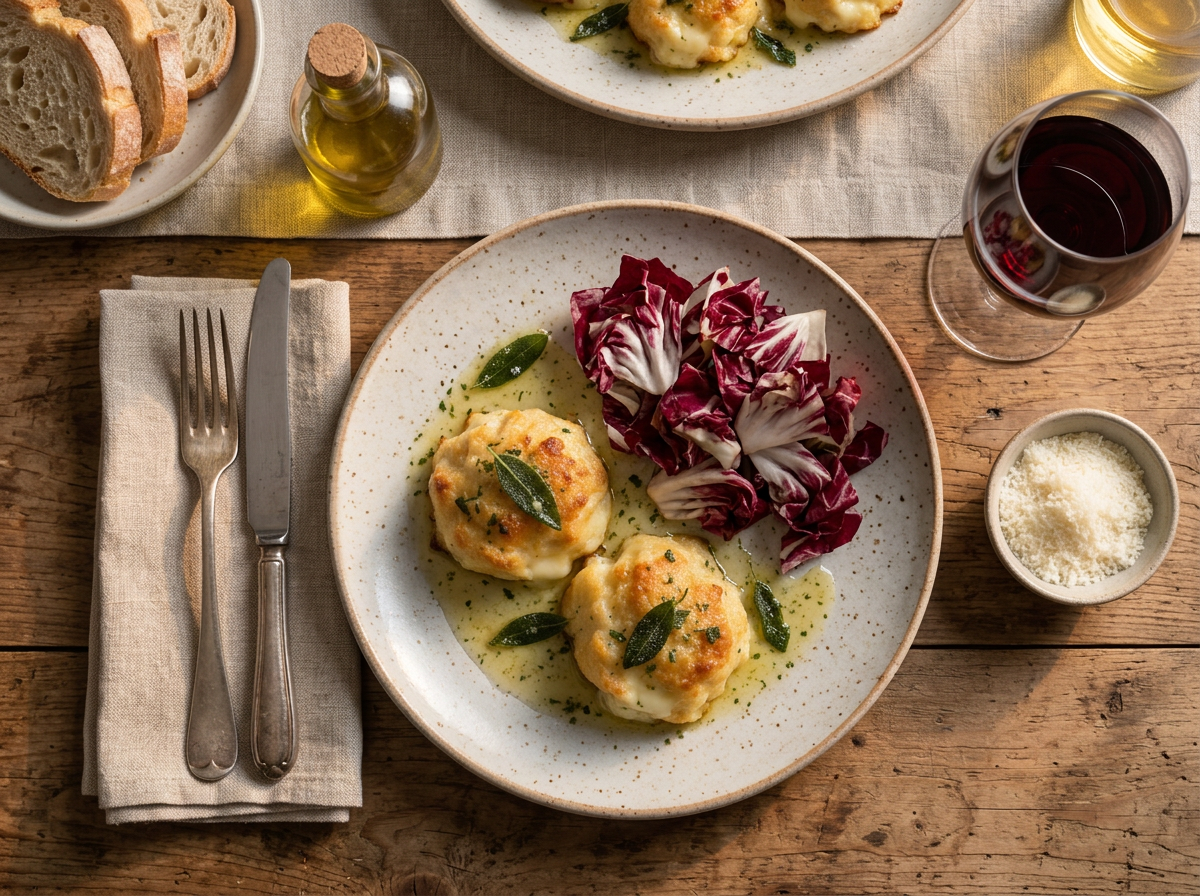
Mulun di Talamona works as a light main course at 2 mounds per person, with a sharp salad alongside. Radicchio or escarole dressed with lemon juice and olive oil cuts through the butter and cheese.
For a heartier table, add braised savoy cabbage or a few slices of bresaola. A glass of Rosso di Valtellina or another light, dry red suits it.
FAQ
Why are my Mulun di Talamona mounds spreading flat on the tray?
The mixture is too wet, usually from soft fresh bread or too much milk. Add 1 tablespoon of flour at a time until a mound holds its peak when shaped with wet hands. Dense, stale country bread absorbs the 250 ml of milk and stays put in the oven.
Can I use fontina instead of Casera in Mulun di Talamona?
Yes, use the same 150 g of fontina cut into 1 cm cubes. It’s milder and melts a little more, so the cheese runs slightly instead of staying in distinct pockets. Young Asiago works too, and rindless Taleggio adds a stronger, tangier edge.
Can I freeze baked Mulun di Talamona mounds?
Yes, freeze the cooled baked mounds on a tray, then bag them for up to 2 months. Reheat from frozen at 180 C / 350 F for 20 to 25 minutes on a sheet pan, until the centers are hot and the tops crisp. Skip the microwave, which softens the crust.
Which side dishes go well with Mulun di Talamona?
Bitter greens like radicchio or escarole, dressed with lemon and olive oil, cut through the butter and cheese. Braised savoy cabbage or a few slices of bresaola also fit the Valtellina theme. For a drink, a Rosso di Valtellina or any light, dry red works well.
Is Mulun di Talamona vegetarian?
It contains no meat, but Casera and Parmigiano Reggiano are traditionally made with animal rennet. Strict vegetarians should buy cheeses labeled as made with vegetarian rennet, or use a comparable melting cheese that is. It isn’t gluten free, since it relies on bread and a little flour.
What is the difference between Mulun di Talamona and canederli?
Mulun di Talamona as I make it is baked on a tray, while canederli from Trentino-Alto Adige are simmered in broth or water. Baking gives the mounds a browned crust and a firm outside, with Casera pockets inside. Canederli are rounder and soft all the way through.