The night before, feed your sourdough starter and let it sit at room temperature (21 C / 70 F) for 8 to 12 hours until domed and bubbly. It should float when dropped in water.
In a large mixing bowl, combine the rye flour, bread flour, and warm water. Mix by hand until no dry flour remains, then rest (autolyse) for 30 minutes.
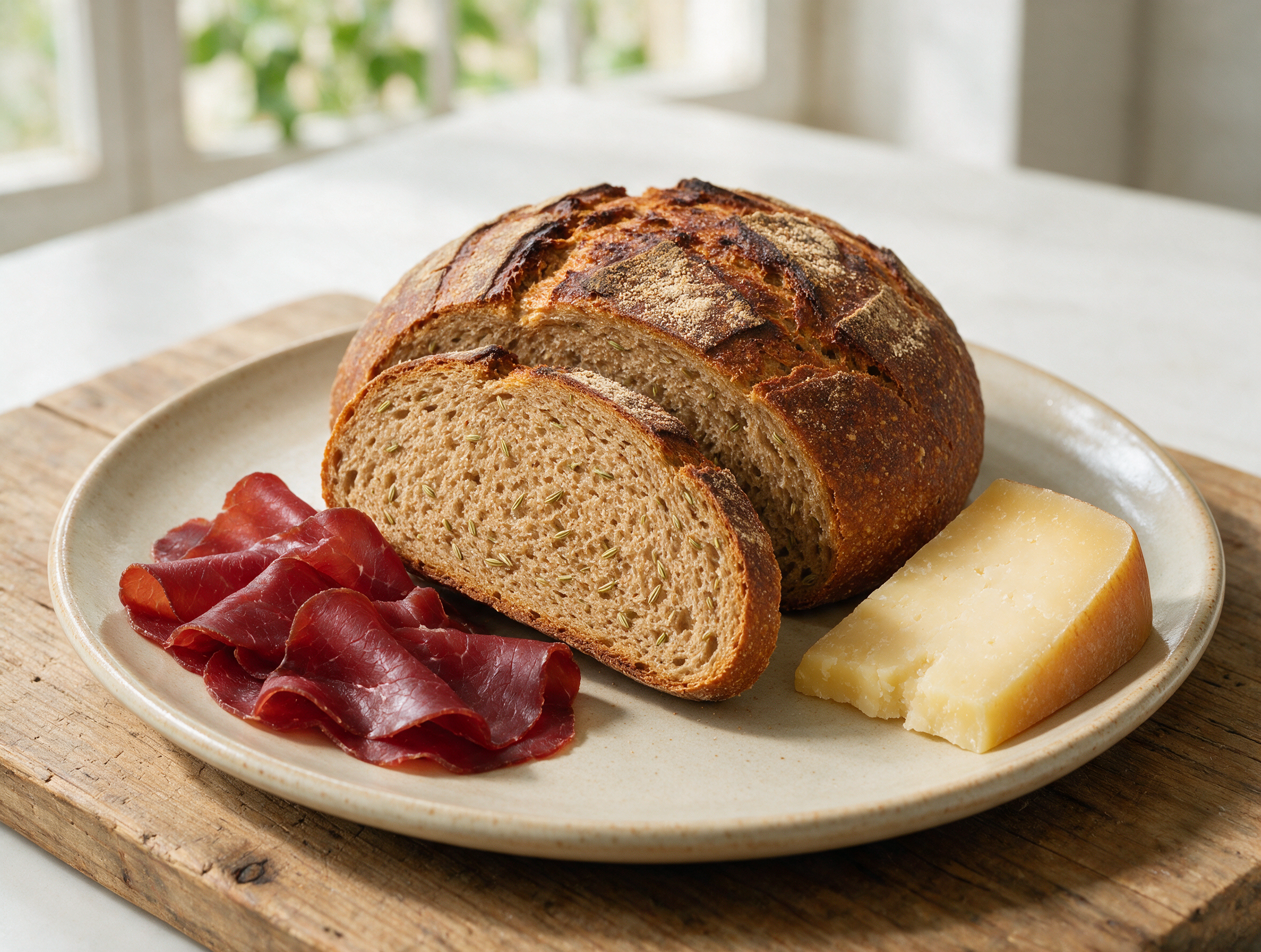
Add the active starter, salt, and fennel seeds to the dough. Mix and fold for 3 to 4 minutes until roughly combined. The dough will be sticky and shaggy, not smooth, which is normal for rye.
Cover the bowl and bulk ferment at room temperature for about 3 hours, folding the dough over on itself in the bowl every 45 minutes for the first 2 hours.
Turn the dough onto a lightly floured surface and shape it into a tight round loaf with a bench scraper. Rye dough won't hold shape as well as wheat, so work quickly and firmly.
Place the shaped loaf seam-side up in a well-floured banneton or a bowl lined with a floured kitchen towel. Cover and proof for 60 to 90 minutes, until it has grown but still springs back slowly when poked.
About 45 minutes before baking, place a 26 cm / 10-inch Dutch oven with its lid on in the oven and heat to 250 C / 480 F.
Turn the proofed loaf onto a piece of parchment, dust with rye flour, and score the top about 1 cm deep with a sharp blade.
Lower the loaf into the hot Dutch oven using the parchment as a sling, cover with the lid, and bake for 25 minutes.
Remove the lid, lower the oven to 220 C / 425 F, and bake uncovered for another 25 to 30 minutes, until the crust is deep brown and an instant-read thermometer inserted in the center reads 205 F / 96 C.
Lift the loaf onto a wire rack and cool completely, at least 2 hours, before slicing so the crumb has time to set.