
Jump to Recipe
Pasta e ceci alla romana is a Roman one-pot dish that pairs chickpeas and short pasta in a broth thickened by mashing some of the beans right into the pot. It’s a soffritto-based stew, not a brothy soup, and the texture – not the cream – defines the result.
Rome’s version leans on rosemary and a spoonful of tomato paste, cooked slowly with onion, celery, and carrot before the chickpeas and pasta go in. I use canned chickpeas here for a weeknight timeline, though dried chickpeas soaked overnight give a slightly firmer bite.
The one real judgment call in this recipe is pasta doneness. Since the pasta finishes cooking directly in the chickpea broth, it can go from al dente to mushy in under two minutes if you walk away, so taste it early and often.
Serve it with crusty bread and a drizzle of good olive oil. It’s thick enough to eat with a spoon and inexpensive enough to make on a Tuesday without a second thought.
Why You’ll Love This Recipe
- One pot, one hour, no fancy ingredients required
- Mashed chickpeas thicken the broth without any cream
- Canned chickpeas keep it weeknight-fast, dried chickpeas work too
- Leftovers thicken further and taste even better the next day
Ingredient Notes
- chickpeas: Canned chickpeas keep this weeknight-fast. For a firmer bite, soak 200 g dried chickpeas overnight and simmer 60 to 90 minutes before starting the soffritto.
- tomato paste: Just enough to add color and a little depth, not enough to make this a tomato soup. Sun-dried tomato paste works as a substitute in a pinch.
- short pasta: Tubetti or ditalini are traditional, but broken spaghetti or maltagliati give a more rustic look and are common in home kitchens in Rome.
- parmesan rind: Optional but worth saving from your cheese drawer. It simmers into the broth and adds savoriness without extra salt.
- rosemary: Fresh is best here since it infuses the oil during the soffritto. Use 1/2 tsp dried if that’s what you have, added with the garlic.
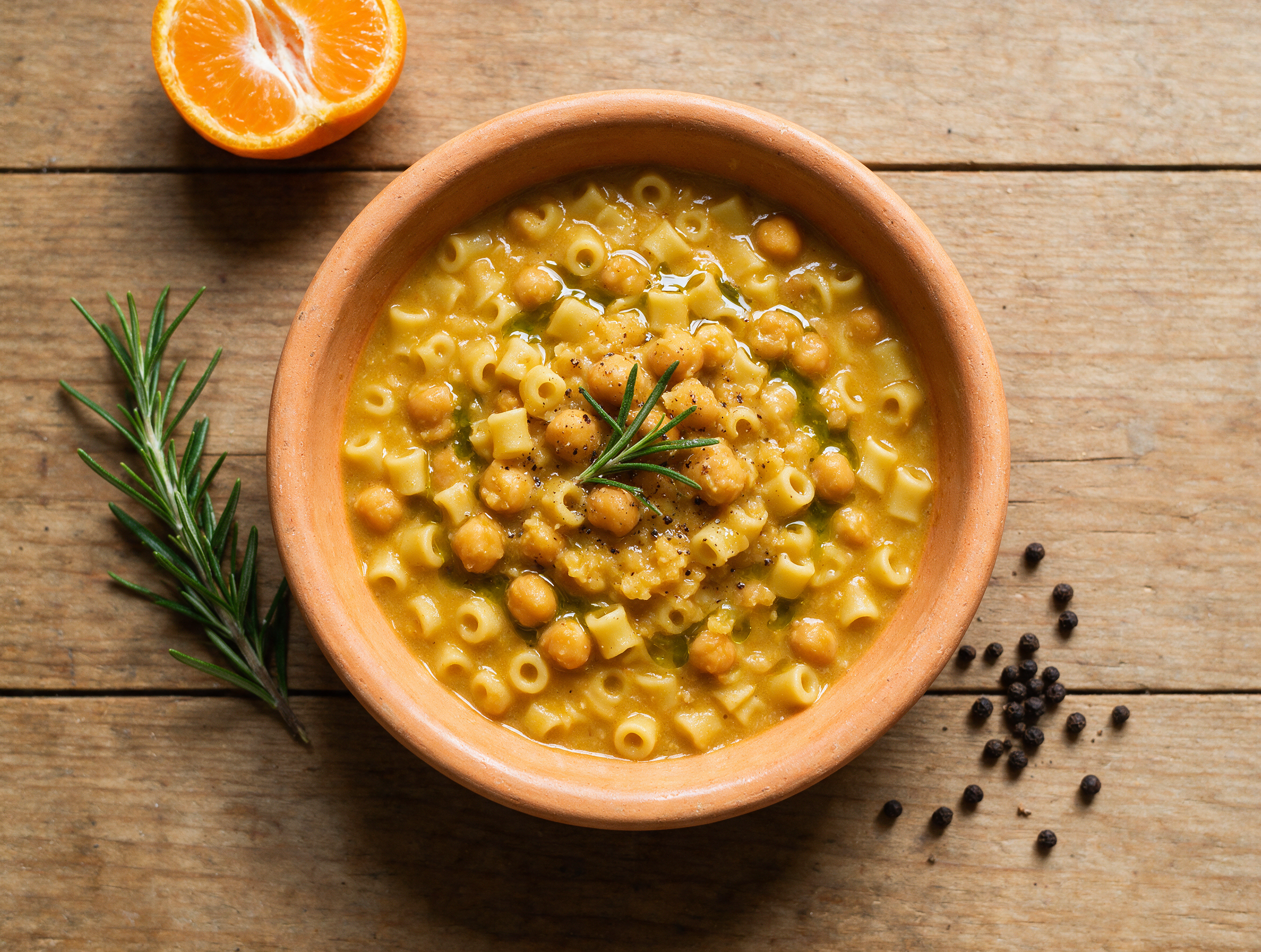
Pasta e Ceci alla Romana: Roman Chickpea Pasta Soup
Ingredients
Method
- Warm 3 tbsp olive oil in a 26 cm / 5-quart Dutch oven over medium heat. Add onion, celery, and carrot, and cook for 6 to 7 minutes, stirring occasionally, until softened and translucent.
- Add garlic and rosemary and cook for 1 minute until fragrant.
- Stir in tomato paste and red pepper flakes if using, and cook for 1 to 2 minutes until the paste darkens slightly.
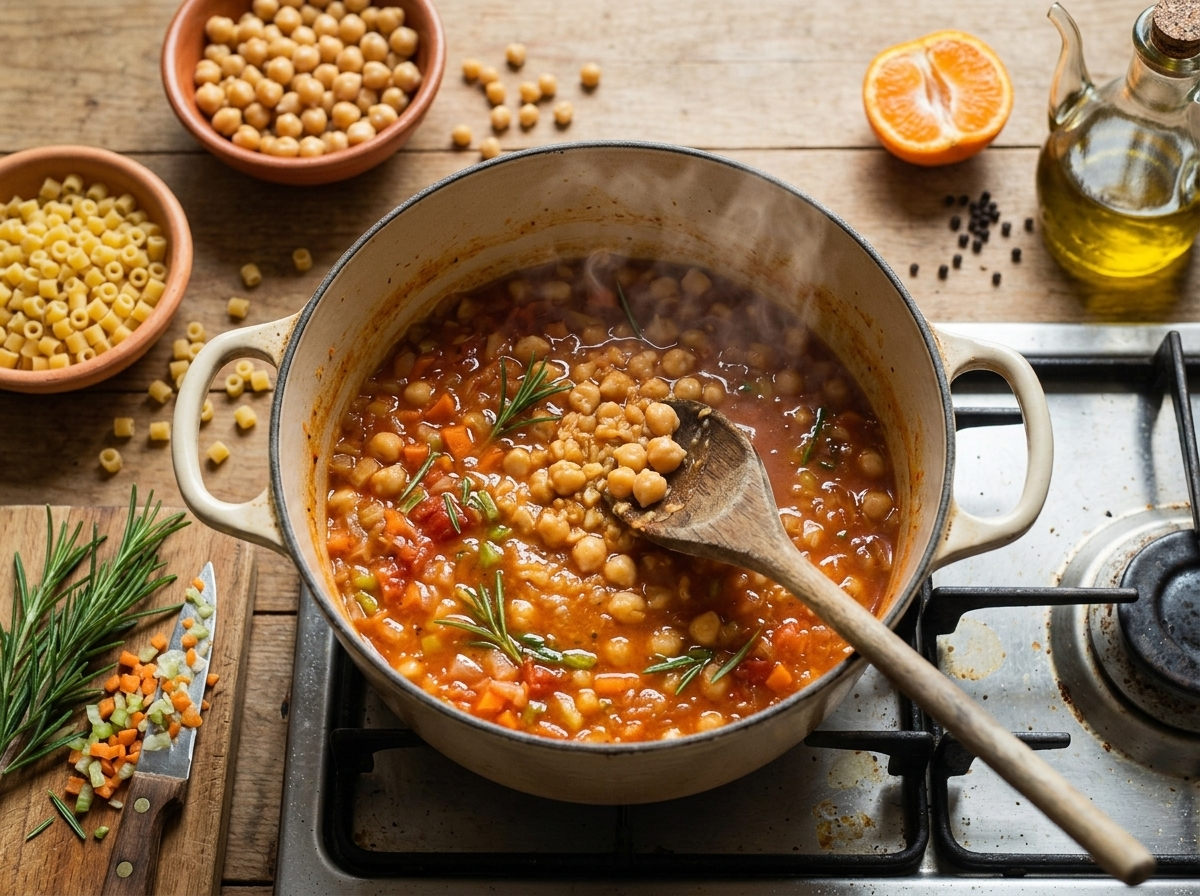
- Add the drained chickpeas. Use a potato masher or the back of a wooden spoon to mash about a third of them right in the pot, leaving the rest whole.
- Pour in the broth and add the parmesan rind if using. Bring to a simmer, then partially cover and cook for 15 minutes to let the flavors come together.
- Remove and discard the rosemary sprig and parmesan rind. Season with 1 tsp salt.
- Keep the pot at a steady simmer and stir in the pasta. Cook uncovered for 8 to 10 minutes, stirring occasionally, until al dente, checking a minute before the package time since it keeps cooking in the hot broth.
- Remove from heat once the pasta is al dente. The stew will continue to thicken as it sits.
- Ladle into bowls, drizzle with olive oil, and finish with black pepper, chopped parsley, and grated parmesan or pecorino.
Notes
- Mash only a third of the chickpeas so texture stays varied, not uniform.
- Remove the rosemary sprig before serving so no one bites into a stem.
- Undersalt the broth slightly since parmesan and pecorino add salt at the table.
- Cook pasta directly in the broth for the starch that thickens the stew.
Tips for Success
- Mash about a third of the chickpeas against the pot before adding broth to thicken the stew naturally.
- Add the pasta straight to the simmering broth so it releases starch and thickens the liquid as it cooks.
- Taste the pasta a minute before the package time since it keeps cooking in the hot broth off heat.
- Save a parmesan rind from your cheese drawer and simmer it in the broth for extra savoriness.
- Thin leftovers with a splash of broth or water since the pasta keeps absorbing liquid in the fridge.
Variations
- Swap canned chickpeas for 200 g dried chickpeas soaked overnight and simmered 60 to 90 minutes until tender before starting the soffritto.
- Use broken spaghetti or maltagliati instead of tubetti for a more rustic, home-style Roman texture.
- Stir in a handful of chopped escarole or kale in the last 5 minutes for a heartier, vegetable-forward bowl.
Storage and Reheating
Pasta e ceci alla romana keeps 3 to 4 days in the fridge in a sealed container. The pasta keeps absorbing broth as it sits, so the stew turns thick and almost gluey by day two, and that’s normal, not a sign it’s gone off.
Reheat gently on the stovetop over medium-low heat, stirring in 60 to 120 ml of water or broth per portion until it loosens back to a spoonable consistency. The microwave works too, 2 minutes at 50% power with a splash of water, stirred halfway through.
To freeze, portion the chickpea and soffritto base before adding pasta and freeze for up to 3 months. Cook fresh pasta separately and stir it in after thawing and reheating the base, since frozen pasta turns mushy.
Serving Suggestions
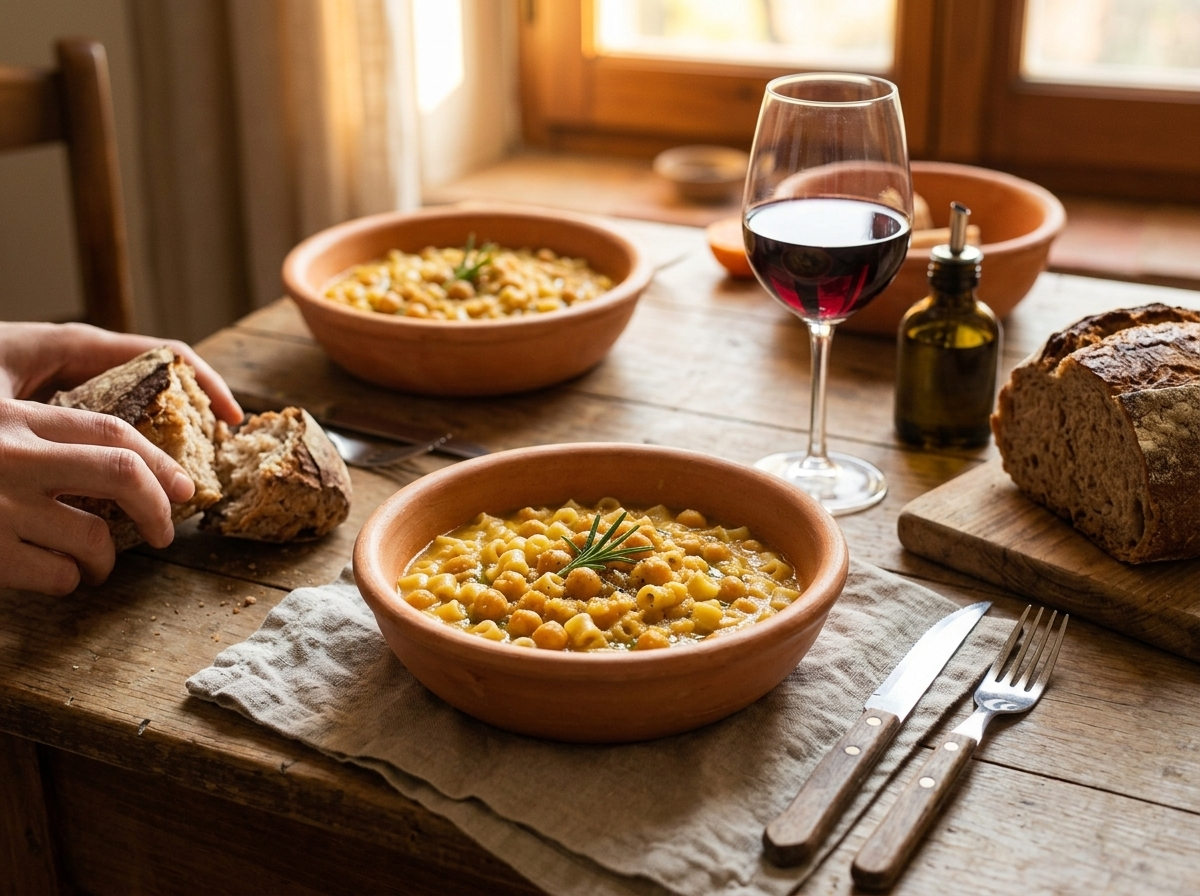
Pasta e ceci alla romana works as a full meal on its own, ladled into shallow bowls with a finish of good olive oil and black pepper. Grated parmesan or pecorino romano on top brings in salt the broth doesn’t have.
Serve it with crusty bread for scooping up the thick parts at the bottom of the bowl. A simple bitter greens salad with lemon on the side balances the richness of the soffritto.
For a bigger spread, this pairs well with grilled or pan-seared sausage on the side, the way it might show up as a primo before a simple secondo.
FAQ
Why is my pasta e ceci alla romana turning out gluey or too thick?
That’s the starch from the pasta cooking directly in the chickpea broth, and it’s normal here, not a mistake. Pasta e ceci alla romana is meant to be thick enough to eat with a spoon. If it’s too tight for your taste, stir in a splash of hot broth or water right before serving to loosen it back up.
Can I use dried chickpeas instead of canned for this recipe?
Yes, dried chickpeas work well and give a slightly firmer bite than canned. Soak 200 g dried chickpeas overnight, then simmer them in fresh water for 60 to 90 minutes until tender before starting the soffritto. Use the chickpea cooking liquid in place of some of the broth for extra depth.
Can I freeze pasta e ceci alla romana?
Freeze the chickpea and soffritto base before you add the pasta, since frozen pasta turns mushy once thawed. It keeps well in the freezer for up to 3 months. Cook fresh pasta separately when you’re ready to eat and stir it into the reheated base.
What goes well with pasta e ceci alla romana?
Crusty bread for scooping up the thick broth is the classic pairing, along with a drizzle of good olive oil and grated pecorino on top. A simple bitter greens salad with lemon works well alongside it, and grilled sausage turns it into a bigger spread if you’re feeding a crowd.
Is pasta e ceci alla romana gluten free?
Not as written, since it uses regular short pasta like tubetti or ditalini. Swap in your favorite gluten-free short pasta and add it to the broth in the last few minutes of cooking, checking it a little earlier since gluten-free pasta tends to soften fast and can turn mushy.
What’s the difference between pasta e ceci and pasta e fagioli?
Pasta e ceci uses chickpeas as its base, while pasta e fagioli is built on borlotti or cannellini beans. Pasta e ceci alla romana leans more on rosemary and tomato paste, and the chickpeas hold their shape a bit more than the softer beans in a typical pasta e fagioli.